Skip to content
The Charge Curve

HUB 01 · Home EV Chargers

The Best EV Chargers for a 100-Amp Panel

An older house with 100-amp service does not need a bigger charger. It needs one that turns down - and here is how far each of these will go, and what that costs you in miles per hour.

By Stephen V.Updated How we compare
#ad

We earn a commission when you buy through our Amazon links, at no extra cost to you. It never affects our rankings, and we say so when the cheaper product is the better buy. How this works.

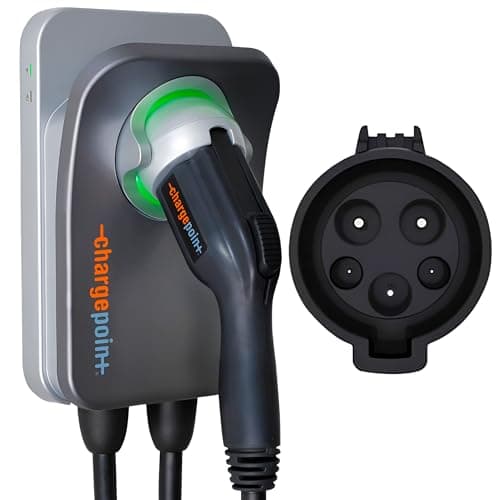
ChargePoint ChargePoint Home Flex

Our top pick

Best for a 100-Amp Panel

ChargePoint Home Flex

8.2/10
$599.00Check Price

$657.999% off

In stock at Amazon as of October 18, 2026.

#ad · we may earn a commission

Best for: Buyers who want the established brand + one app

The mature, well-supported pick — amperage you dial in up to 50A, wired into the biggest public-charging app in North America. You pay for the polish.

Read the full review ↓Compare all 5 picks ↓

The short answer

Quick picks

  • ChargePoint ChargePoint Home Flex
    01 ChargePoint Home Flex
    8.2

    The mature, well-supported pick — amperage you dial in up to 50A, wired into the biggest public-charging app in North America. You pay for the polish.

    Best for: Buyers who want the established brand + one app

    $599.00Amazon
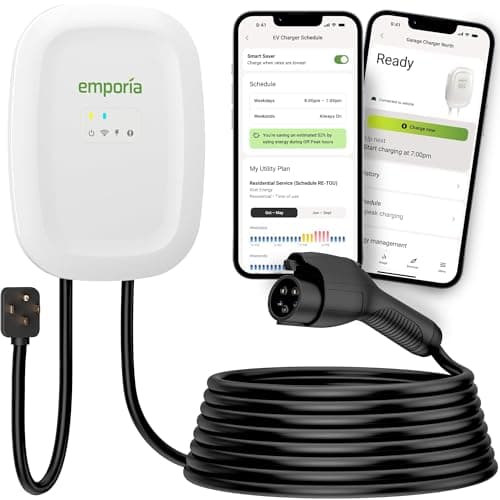
  • Emporia Emporia Level 2 (48A)
    02 Emporia Level 2 (48A)
    9.0

    The charger that refuses to charge you extra for being smart: full 48-amp speed and real energy monitoring at roughly the price of a plain plug-in box.

    Best for: Most homes that want speed and smarts

    Check priceAmazon

    No buyable offer at our last check

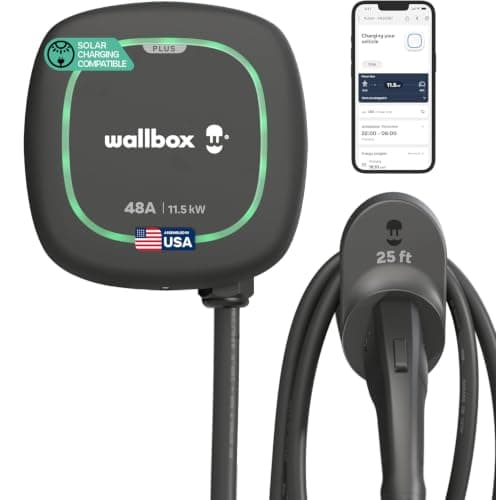
  • Wallbox Wallbox Pulsar Plus (48A)
    03 Wallbox Pulsar Plus (48A)
    8.4

    One of the smallest 48-amp chargers you can hang on a wall — full-speed hardwired charging in a box that barely announces itself.

    Best for: A compact, fast, hardwired install

    $699.00Amazon
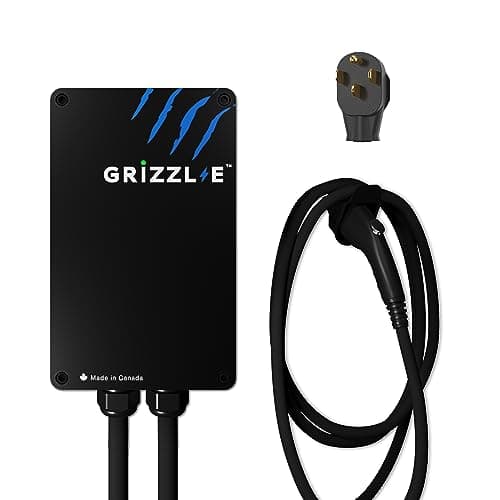
  • Grizzl-E Grizzl-E Classic (40A)
    04 Grizzl-E Classic (40A)
    8.0

    A UL-certified cast-aluminum box with no app to update and nothing in the cloud to fail — the durability default for people who want a charger, not a gadget.

    Best for: People who want a charger, not an app

    $299.99Amazon
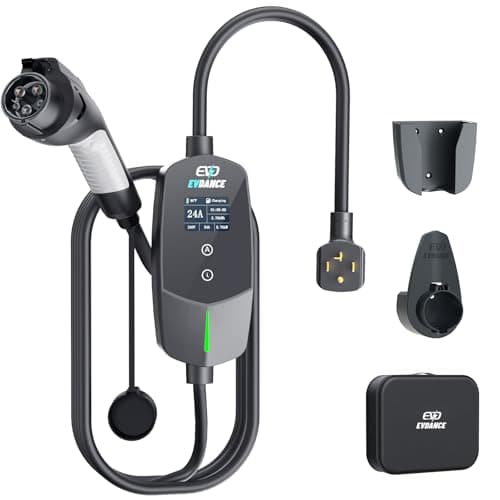
  • EVDANCE EVDANCE 24A NEMA 14-30 (J1772)
    05 EVDANCE 24A NEMA 14-30 (J1772)
    7.6

    Built for the dryer outlet rather than adapted to it: a 14-30 plug on the cord and a 24-amp ceiling, so even its highest setting stays inside what a 30-amp circuit may carry continuously.

    Best for: Most J1772 cars on a dryer outlet

    $269.99Amazon

#ad · Live prices from the Amazon Product API, as of October 18, 2026. Where we have no verified live price, we show none — we would rather leave a gap than print a number that has gone stale.

Buy the ChargePoint Home Flex. On a 100-amp service the winning feature is not speed, it is the ability to be set to exactly the amperage your load calculation leaves spare - and the Home Flex is selectable across the widest useful range while still being a plug-in unit you can put on a modest circuit. If you want that plus whole-home monitoring, the Emporia. If the calculation says there is genuinely nothing spare, the Wallbox Pulsar Plus with Power Boost throttles itself against the rest of the house in real time. If you would rather set the amps once with a dial and never think about it, the Grizzl-E Classic. And if you want to add no circuit at all, the EVDANCE 24-amp unit runs from the dryer outlet you already have.

Our guide on whether a charger fits a 100-amp panel answers the yes-or-no question and explains the load calculation. This page is the other half: once you know how many amps are spare, which charger do you actually buy? The ranking here is not about features. It is about how far down each unit goes, and what it needs from the house to get there.

The number that decides everything

EV charging is a continuous load under NEC Article 625, which means the circuit must be sized at 125 percent of the charger's draw - or, read the other way, the charger may draw no more than 80 percent of its breaker. That gives the ladder every tight-panel decision runs down:

BreakerMax continuous drawPower at 240VRough range added per hour
60A48A11.5 kWAbout 40 miles
50A40A9.6 kWAbout 33 miles
40A32A7.7 kWAbout 27 miles
30A (existing dryer circuit)24A5.8 kWAbout 20 miles
20A16A3.8 kWAbout 13 miles

Range figures assume roughly 3.5 miles per kilowatt-hour, which is a reasonable mid-point for a modern EV in mild weather - your car and your winter will move it. The point of the table is the shape of the curve: going from 48 amps to 24 amps does not halve your charging in any way you will notice overnight. Twenty miles an hour over a ten-hour window is two hundred miles, which is far more than the average US driver covers in a day.

What we ranked on

  • How low it goes. The minimum setting matters more than the maximum. A unit that only does 40 amps is useless if your load calculation says 24.
  • How the setting is made. A hardware dial set at install cannot be accidentally changed; an app setting can be adjusted later without an electrician. Both are defensible; they suit different owners.
  • Whether it can load-manage. A charger that measures whole-home draw and backs off can be sized above what a static calculation would allow.
  • Whether it needs a new circuit at all. The cheapest answer to a tight panel is often to use a circuit that already exists.
  • Safety listing. UL or ETL to UL 2594, as on every page here.

The three strategies, in the order we would try them

1. Dial the charger down

Simplest, cheapest and the right answer in most 100-amp houses. The electrician runs the calculation, finds you can spare a 40-amp circuit, and the charger is set to 32 amps and forgotten. No extra hardware, no monitoring, nothing to fail. Every pick on this page except the EVDANCE can do this; what differs is how low and how the setting is made.

2. Load management

If the calculation says there is nothing meaningful spare, a charger that watches the rest of the house can still be fitted - it throttles when the dryer and the oven are both running and returns to full speed when they stop. Wallbox calls this Power Boost and it works from a meter clamp on the main feed; Emporia's PowerSmart does the equivalent through its whole-home energy monitor. This buys real capacity but it adds a device and a dependency. Best load-balancing chargers ranks that hardware specifically.

3. Use a circuit you already have

A 240-volt dryer outlet is a 30-amp circuit, which is 24 amps continuous - about 20 miles of range per hour. If the laundry is anywhere near the car, a 24-amp charger with a NEMA 14-30 plug adds no load to the panel at all, because it uses capacity the calculation already accounted for. The caveat is obvious and important: you cannot run the dryer and the car at the same time unless you fit a listed splitter. See the dryer-outlet guide and best NEMA 14-30 chargers.

Only after all three have failed does a service upgrade make sense - and it is a real expense. A smart panel is sometimes the cheaper route; smart panels vs a panel upgrade compares them honestly.

How the five compare

ChargerRange of settingsSet how?Load management?Needs a new circuit?
ChargePoint Home FlexSelectable up to 50AAt setup, in the appNoYes (14-50 or hardwired)
Emporia Level 2Adjustable, up to 48A hardwiredIn the appYes, with its energy monitorYes
Wallbox Pulsar PlusUp to 48A hardwiredAppYes - Power Boost from a meterYes
Grizzl-E Classic40 / 32 / 24 / 16AInternal dial at installNoYes (14-50)
EVDANCE 24A (14-30)24A ceilingOn the unitNoNo - uses a dryer outlet

So, which one?

ChargePoint Home Flex as the default: set it to whatever the calculation allows, plug it into a 14-50, and raise it later if you ever upgrade the service. Emporia if you want the same flexibility plus a view of the whole house. Wallbox Pulsar Plus when the calculation genuinely leaves nothing and dynamic throttling is the only way in. Grizzl-E Classic if you want the amperage set in hardware and no app in the loop. EVDANCE 24A if the dryer outlet is near the car and you would rather spend nothing on electrical work.
In detail

The picks, in full

01
ChargePoint ChargePoint Home Flex

Buyers who want the established brand + one app

ChargePoint Home Flex

Adjustable to 50AJ1772NEMA 14-50 plugEnergy Star
8.2/10

The mature, well-supported pick — amperage you dial in up to 50A, wired into the biggest public-charging app in North America. You pay for the polish.

Charge speed
9
Build & weather
8
Smart features
9
Cable & connector
8
Value
7

Pros

  • Output is adjustable in the app up to 50A, so it matches whatever breaker you can install today and more later
  • Reports into the same ChargePoint app that maps and pays for a huge public network — home and away in one place
  • Long track record and responsive support that newer budget brands cannot match

Cons

  • Costs more than equally capable chargers from newer brands
  • The experience leans hard on the ChargePoint account and app; skip it and you are paying for an integration you will not use

Don't buy this if…

…price is your first filter. The Emporia matches most of what this does for meaningfully less — here you are paying for brand maturity and the unified app, which are real but not free.

$599.00View on Amazon

$657.999% off

Price as of October 18, 2026. Prices change — Amazon's is the one that counts.

#ad · we may earn a commission from this link to ChargePoint Home Flex

02
Emporia Emporia Level 2 (48A)

Most homes that want speed and smarts

Emporia Level 2 (48A)

Up to 48A / 11.5kWJ177225ft cableWi-Fi + app
9.0/10

The charger that refuses to charge you extra for being smart: full 48-amp speed and real energy monitoring at roughly the price of a plain plug-in box.

Charge speed
10
Build & weather
8
Smart features
9
Cable & connector
8
Value
10

Pros

  • 48-amp capable when hardwired — quicker than the 40-amp plug-in default most units top out at
  • Genuine energy tracking and scheduling in the app, priced below almost every other smart charger
  • The 25-foot cable reaches either side of a two-car garage

Cons

  • You only get 48 amps hardwired on a 60-amp circuit; the plug-in version is capped at 40A like everything else
  • The app and Wi-Fi are central to the experience, so first-time setup takes longer than a plug-and-go box

Don't buy this if…

…you never intend to open an app. A lot of what you are paying for is the software; if a sealed, silent box is what you actually want, the Grizzl-E Classic is the honest call.

Check price on Amazon →

No buyable offer at the last price check (October 18, 2026). We show nothing rather than a stale number.

#ad · we may earn a commission from this link to Emporia Level 2 (48A)

03
Wallbox Wallbox Pulsar Plus (48A)

A compact, fast, hardwired install

Wallbox Pulsar Plus (48A)

Hardwired 48A / 11.5kWJ177225ft cableEnergy Star + UL
8.4/10

One of the smallest 48-amp chargers you can hang on a wall — full-speed hardwired charging in a box that barely announces itself.

Charge speed
10
Build & weather
8
Smart features
8
Cable & connector
8
Value
8

Pros

  • Physically tiny for a 48-amp unit — the least obtrusive charger in our home roundup
  • Full 48-amp hardwired speed, matching the fastest home chargers
  • Energy Star and UL certified

Cons

  • Hardwired only at 48A — no plug-in convenience if you might move it
  • The app has historically drawn more owner complaints than the hardware itself

Don't buy this if…

…you rent or might take the charger with you. This is a permanent fixture — a plug-in unit or a portable EVSE is the right call for anyone who could move.

$699.00View on Amazon

$799.9913% off

Price as of October 18, 2026. Prices change — Amazon's is the one that counts.

#ad · we may earn a commission from this link to Wallbox Pulsar Plus (48A)

04
Grizzl-E Grizzl-E Classic (40A)

People who want a charger, not an app

Grizzl-E Classic (40A)

40A / 9.6kWJ1772NEMA 14-50 plugUL certified
8.0/10

A UL-certified cast-aluminum box with no app to update and nothing in the cloud to fail — the durability default for people who want a charger, not a gadget.

Charge speed
8
Build & weather
10
Smart features
5
Cable & connector
8
Value
9

Pros

  • Cast-aluminum enclosure rated for indoor and outdoor use — genuinely built to outlast plastic-bodied rivals
  • UL certified, which plenty of budget chargers on Amazon cannot claim
  • No mandatory app or Wi-Fi: it charges the day it arrives and keeps working if a server goes dark

Cons

  • No scheduling or energy monitoring — if you want off-peak automation or load sharing, look elsewhere
  • The stock cable stiffens in the cold, a recurring owner note in northern climates

Don't buy this if…

…you want app scheduling, energy tracking, or load sharing between two cars. The Grizzl-E is deliberately dumb, and if smart features are the point for you, the Emporia is the better buy.

$299.99View on Amazon

$399.0025% off

Price as of October 18, 2026. Prices change — Amazon's is the one that counts.

#ad · we may earn a commission from this link to Grizzl-E Classic (40A)

05
EVDANCE EVDANCE 24A NEMA 14-30 (J1772)

Most J1772 cars on a dryer outlet

EVDANCE 24A NEMA 14-30 (J1772)

24A max / 5.76kWJ1772NEMA 14-30 plug25ft, delay timer
7.6/10

Built for the dryer outlet rather than adapted to it: a 14-30 plug on the cord and a 24-amp ceiling, so even its highest setting stays inside what a 30-amp circuit may carry continuously.

Charge speed
6
Build & weather
8
Smart features
6
Cable & connector
9
Value
9

Pros

  • Tops out at 24 amps - the continuous limit of a 30-amp circuit - so there is no higher setting to get wrong
  • Adjustable from 10 to 24 amps for older or doubtful wiring, and a 1-12 hour delay start shifts charging to off-peak hours without an app
  • EVDANCE's product page lists it as ETL Listed to UL 2594 / UL 2251, with an IP66 control box rated from -22 to 122 degrees F
  • 25 feet of total cable reaches from a laundry-room outlet to a parking spot

Cons

  • 24 amps is its ceiling for good - if you later add a 50-amp circuit, this charger cannot use the extra capacity
  • No Wi-Fi app or charging history - the on-screen readout is the whole of the monitoring
  • 1-year warranty, and the plug end is not waterproof; the listing says to keep the connector capped when idle

Don't buy this if…

…you drive a Tesla or another NACS-port car (the NACS version is the one to buy), or you expect to add a 50-amp circuit soon - then a 40-amp charger you can dial down today, like the Grizzl-E Mini, is the better long-term buy.

$269.99View on Amazon

Price as of October 18, 2026. Prices change — Amazon's is the one that counts.

#ad · we may earn a commission from this link to EVDANCE 24A NEMA 14-30 (J1772)

How we picked

We do not run a testing lab

We compiled published specifications from manufacturer manuals and spec sheets, verified the safety listings (UL / ETL), computed the real running and installation costs, checked the wiring math against the NEC continuous-load rule, and read aggregated owner reviews — then scored each product against a published rubric. The scores are judgments from documented research — they are not bench measurements, because we do not have a test lab and we are not going to pretend we do. Every spec and cost figure is cited in Sources.

Questions

Frequently asked

Can you install a Level 2 EV charger on a 100-amp panel?

Usually yes, at a reduced amperage. A licensed electrician runs a load calculation under NEC Article 220 to find the spare capacity, and the charger is then set to fit it - commonly 24 or 32 amps rather than 40 or 48. That still adds roughly 20 to 27 miles of range an hour, which covers most driving. Our 100-amp panel guide walks through the calculation.

How many amps can I spare on a 100-amp service?

There is no general answer, which is exactly why the load calculation exists. It depends on what else is electric: a gas furnace, gas water heater and gas range leave far more room than an all-electric house with a heat pump. Do not guess from the panel label - the calculation uses your actual connected loads and demand factors, and it is the document the permit office wants to see.

Is a 24-amp charger fast enough?

For most households, yes. 24 amps at 240 volts is 5.8 kW, roughly 20 miles of range per hour, so a ten-hour overnight window adds about 200 miles. It becomes a constraint if you drive high mileage, share one charger between two cars, or need a fast turnaround between trips. Run your own numbers with home charging times.

Does load management let me skip the panel upgrade?

Often, yes - that is its purpose. A charger with dynamic load management measures the whole house at the main feed and reduces its own draw when other loads spike, so the service is never over-subscribed. Wallbox Power Boost and Emporia's whole-home monitoring both do this. It is a real alternative to an upgrade, but it adds a metering device and a dependency, and your electrician still has to sign off on the design.

Will dialing a charger down damage it or the car?

No. Amperage limiting is a designed feature, communicated to the car over the J1772 control pilot as the maximum current it may draw - the car simply charges slower. Every adjustable charger here is doing what its manufacturer documents. What is not safe is the opposite: running a charger at more amps than the circuit is rated for.

Is it cheaper to upgrade the panel or buy a smaller charger?

Almost always the charger. A service upgrade is a utility-coordinated job with a permit and meaningful labor; setting an adjustable charger to 32 amps costs nothing. Upgrade when you are adding other large electric loads anyway - a heat pump, an electric range, a second EV - rather than to shave a few hours off an overnight charge. Compare the routes in do I need a panel upgrade.

Keep reading

More in this section

More Home EV Chargers

All home ev chargers →

Receipts

Sources

We do not run a testing lab, and we do not pretend to. Where a measured number came from someone else's lab, we name them and link them. Where we could not verify something, we say so on the page rather than quietly leaving it out. Read our full method.