Skip to content
The Charge Curve

HUB 01 · Home EV Chargers

The Best UL-Listed and Safety-Certified EV Chargers

A 40-amp continuous load runs unattended in your garage for hours at a time. These are the chargers whose safety listings are real, plus how to check the claim yourself in about two minutes.

By Stephen V.Updated How we compare
#ad

We earn a commission when you buy through our Amazon links, at no extra cost to you. It never affects our rankings, and we say so when the cheaper product is the better buy. How this works.

The short answer

Quick picks

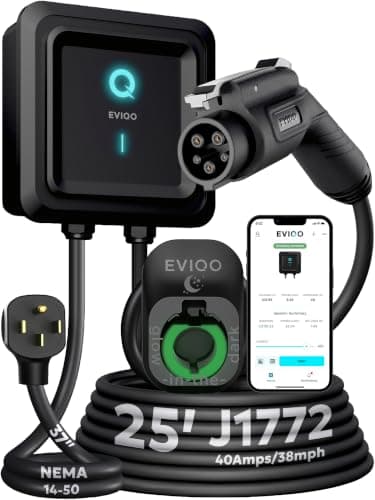
  • EVIQO EVIQO Level 2 (40A)
    01 EVIQO Level 2 (40A)
    8.6

    A double-listed (UL and ETL), IP66-weatherproof smart charger that keeps landing at the bottom of the price band — a lot of certified hardware for the money.

    Best for: Budget buyers who still want smart features

    $429.99Amazon
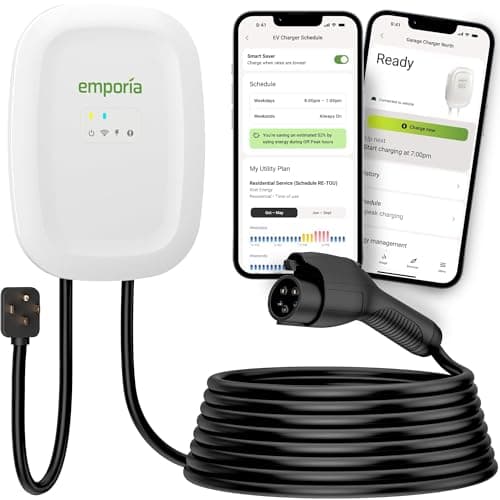
  • Emporia Emporia Level 2 (48A)
    02 Emporia Level 2 (48A)
    9.0

    The charger that refuses to charge you extra for being smart: full 48-amp speed and real energy monitoring at roughly the price of a plain plug-in box.

    Best for: Most homes that want speed and smarts

    $449.00Amazon
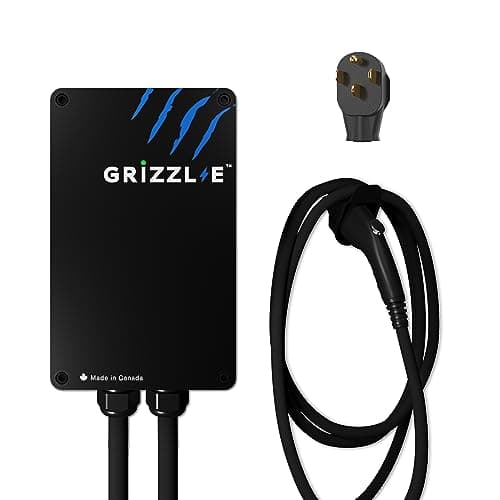
  • Grizzl-E Grizzl-E Classic (40A)
    03 Grizzl-E Classic (40A)
    8.0

    A UL-certified cast-aluminum box with no app to update and nothing in the cloud to fail — the durability default for people who want a charger, not a gadget.

    Best for: People who want a charger, not an app

    $399.00Amazon
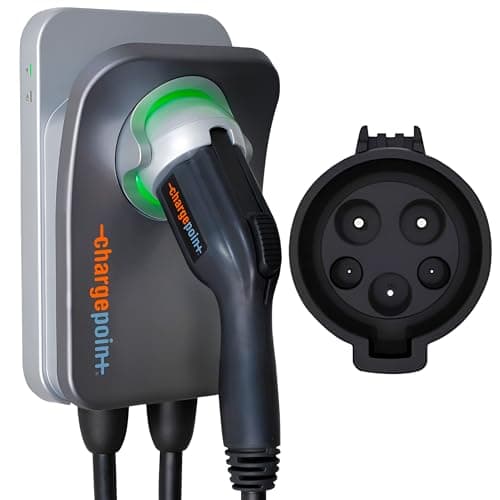
  • ChargePoint ChargePoint Home Flex
    04 ChargePoint Home Flex
    8.2

    The mature, well-supported pick — amperage you dial in up to 50A, wired into the biggest public-charging app in North America. You pay for the polish.

    Best for: Buyers who want the established brand + one app

    $599.00Amazon
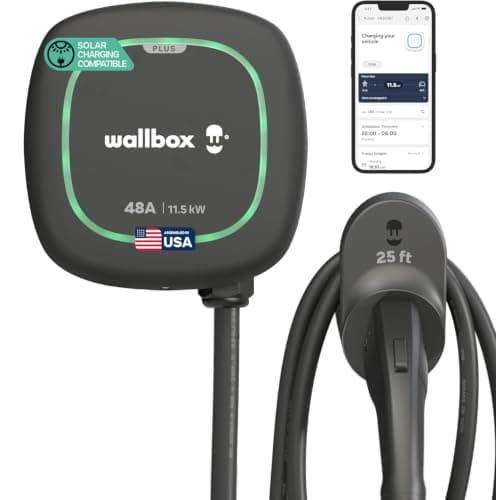
  • Wallbox Wallbox Pulsar Plus (48A)
    05 Wallbox Pulsar Plus (48A)
    8.4

    One of the smallest 48-amp chargers you can hang on a wall — full-speed hardwired charging in a box that barely announces itself.

    Best for: A compact, fast, hardwired install

    $799.99Amazon
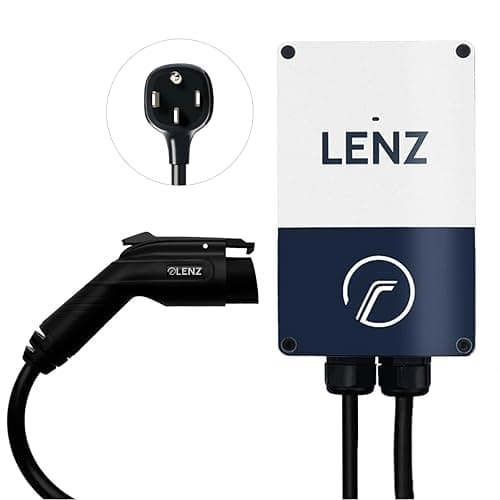
  • LENZ LENZ Level 2 (40A)
    06 LENZ Level 2 (40A)
    7.4

    A no-frills, ETL-listed plug-in wall charger in a weatherproof NEMA 4X shell, at about the lowest price of any listed 40-amp unit — the simple pick when you don't want to pay for software you'll never open.

    Best for: A simple, inexpensive plug-in wall charger

    $298.99Amazon

#ad · Live prices from the Amazon Product API, as of Sep 18, 2026. Where we have no verified live price, we show none — we would rather leave a gap than print a number that has gone stale.

The EVIQO Level 2 wins this one because it carries both a UL and an ETL listing plus an IP66 / NEMA 4 weather rating, at the bottom of the price band - more third-party certification per dollar than anything else we track. The Emporia Level 2 is the pick if you want the same assurance with 48-amp speed and real energy monitoring, the Grizzl-E Classic is the UL-listed choice for people who want no app at all, and the LENZ is the cheapest genuinely listed 40-amp wall unit we would put on a wall.

A home charger is one of the harshest jobs in residential electrics. It draws 32 to 48 amps continuously - for hours, unattended, often overnight, frequently outdoors, through a cable that gets dragged across concrete and driven over. The National Electrical Code treats it as a continuous load for exactly that reason. This is not a category where an unlisted bargain box is a clever saving, and it is the one product page on this site where we rank certification above price, features and speed.

What the standards actually cover

"UL listed" is three different standards doing three different jobs, and knowing which is which is what lets you read a spec sheet properly:

  • UL 2594 is the one that matters most: the ANSI/UL Standard for Safety for Electric Vehicle Supply Equipment, covering Level 1 and Level 2 AC equipment rated up to 250 volts. It is the standard the charger as a finished product is listed to, and it is harmonized with the Canadian (CSA C22.2 No. 280) and Mexican equivalents.
  • UL 2231-1 and UL 2231-2cover personnel protection systems for EV supply circuits - the charge circuit interrupting device, or CCID, which is the EVSE's built-in equivalent of a GFCI. It is the part that cuts power in milliseconds if current starts finding a path it should not.
  • UL 2251 covers the plugs, receptacles and couplers - the connector on the end of the cable and the inlet it mates with.

A charger listed to all three is fully covered end to end. The Emporia NACS listing is the most explicit example we have seen, naming UL 2594, 2231, 2251, 817 and 991 alongside NEC Article 625; ChargePoint's Home Flex datasheet names UL 2594 and UL 2231 with UL and cUL marks. Most listings just say "UL listed" and leave you to assume the rest.

ETL is not a lesser mark

This trips people up constantly. UL is both a standards body and a testing lab; Intertek's ETL mark is a different lab testing to the same UL standard. Both are OSHA-recognised Nationally Recognized Testing Laboratories, and OSHA does not prefer one NRTL over another when both are recognised for the same standard. An ETL-listed charger tested to UL 2594 has been through the same requirements as a UL-listed one, and building inspectors accept both. Treat "ETL listed to UL 2594" as equivalent - which is precisely why the budget LENZ earns a place here and a cheaper unlisted box does not.

The phrases that mean nothing

Amazon listings in this category are full of language engineered to sound like certification without being it. Learn these four and the field halves:

  • "Manufactured to UL standards" / "UL compliant" - a claim by the seller about its own product. Nobody independent tested anything.
  • "UL-recognised components" - some part inside is certified. The assembly is not.
  • "Tested to UL 2594" - tested by whom, and did it pass? A listing is a certification plus ongoing factory surveillance, not a one-off test report.
  • "CE" or "FCC" offered as the safety credential - CE is a European self-declaration and FCC covers radio emissions. Neither says anything about whether the thing will start a fire.

Also keep two genuinely different claims apart. UL / ETL is a safety listing. IP66, IP67, NEMA 3R and NEMA 4 are ingress ratings - how much dust and water the enclosure keeps out. A charger can be beautifully weatherproof and electrically untested. And Energy Star is neither: it is a standby-power and connected-functionality programme, useful mainly because some utility rebates require it.

How to verify a listing in two minutes

You do not have to take the bullet point on faith. Certified products are entered in the certifying body's public directory - UL Solutions' Product iQ, or Intertek's equivalent - so you can search the brand or the file number and see whether the product is really there. Then check the physical unit when it arrives: the mark belongs on the charger itself, not only on the carton or the cable. If the listing claims a certification the directory does not show, that is your answer.

The picks

The EVIQO Level 2 takes the top spot on certification density. It carries both UL and ETL listings and an IP66 / NEMA 4 enclosure rating, and it sits at the bottom of the price band - the combination that most directly rebuts the assumption that a cheap charger must be an uncertified one. It is 40 amps and plug-in, which is the right specification for most homes anyway.

The Emporia Level 2 is the pick if you want the listing and the capability: UL listed and Energy Star certified, 48 amps hardwired, with the energy monitoring covered in our monitoring roundup. For a NACS driveway, the Emporia NACS version has the most fully enumerated listing stack we have seen on any home charger.

The Grizzl-E Classicis the answer for anyone whose safety instinct is "fewer things to fail": UL certified, cast aluminum, NEMA 4 / IP67, and no app, no Wi-Fi and no cloud account anywhere in the design. The ChargePoint Home Flex publishes the clearest certification documentation of the group - UL and cUL to UL 2594 and UL 2231, stated on its own datasheet - which is exactly the transparency this page is arguing for. The Wallbox Pulsar Plus is UL listed and Energy Star certified in the smallest full-speed body available.

The LENZ Level 2 closes the list as the budget entry that still clears the bar: ETL listed to UL 2594, a NEMA 4X / IP67 metal enclosure, and no app to maintain. It is the unit to buy when the temptation is a no-name box for twenty dollars less.

The listing is necessary, not sufficient. A certified charger on bad wiring is still dangerous. The receptacle, the breaker, the conductor size and the workmanship are where most home-charging failures actually start - see wire and breaker sizing, why a plug gets hot, and permits and inspection. Pulling a permit is not bureaucracy; it is a second qualified person checking work you cannot see.

In detail

The picks, in full

01
EVIQO EVIQO Level 2 (40A)

Budget buyers who still want smart features

EVIQO Level 2 (40A)

40A / 9.6kWJ177225ft cableUL & ETL, IP66/NEMA 4
8.6/10

A double-listed (UL and ETL), IP66-weatherproof smart charger that keeps landing at the bottom of the price band — a lot of certified hardware for the money.

Charge speed
8
Build & weather
9
Smart features
8
Cable & connector
8
Value
10

Pros

  • Carries both UL and ETL listings plus an IP66 / NEMA 4 weatherproof rating — unusually well-certified for the price
  • Wi-Fi app with scheduling that undercuts the established brands
  • Long 25-foot cable and a simple plug-in NEMA 14-50 install

Cons

  • Newer brand with a shorter track record than ChargePoint or Wallbox
  • 40-amp ceiling, so not the fastest if your panel could do more

Don't buy this if…

the reassurance of a long-established brand and support network matters most to you. The hardware is well-listed, but if brand maturity is what you are buying, the ChargePoint is the safer pick.

$429.99View on Amazon

$469.999% off

Price as of Sep 18, 2026. Prices change — Amazon's is the one that counts.

#ad · we may earn a commission from this link to EVIQO Level 2 (40A)

02
Emporia Emporia Level 2 (48A)

Most homes that want speed and smarts

Emporia Level 2 (48A)

Up to 48A / 11.5kWJ177225ft cableWi-Fi + app
9.0/10

The charger that refuses to charge you extra for being smart: full 48-amp speed and real energy monitoring at roughly the price of a plain plug-in box.

Charge speed
10
Build & weather
8
Smart features
9
Cable & connector
8
Value
10

Pros

  • 48-amp capable when hardwired — quicker than the 40-amp plug-in default most units top out at
  • Genuine energy tracking and scheduling in the app, priced below almost every other smart charger
  • The 25-foot cable reaches either side of a two-car garage

Cons

  • You only get 48 amps hardwired on a 60-amp circuit; the plug-in version is capped at 40A like everything else
  • The app and Wi-Fi are central to the experience, so first-time setup takes longer than a plug-and-go box

Don't buy this if…

you never intend to open an app. A lot of what you are paying for is the software; if a sealed, silent box is what you actually want, the Grizzl-E Classic is the honest call.

$449.00View on Amazon

Price as of Sep 18, 2026. Prices change — Amazon's is the one that counts.

#ad · we may earn a commission from this link to Emporia Level 2 (48A)

03
Grizzl-E Grizzl-E Classic (40A)

People who want a charger, not an app

Grizzl-E Classic (40A)

40A / 9.6kWJ1772NEMA 14-50 plugUL certified
8.0/10

A UL-certified cast-aluminum box with no app to update and nothing in the cloud to fail — the durability default for people who want a charger, not a gadget.

Charge speed
8
Build & weather
10
Smart features
5
Cable & connector
8
Value
9

Pros

  • Cast-aluminum enclosure rated for indoor and outdoor use — genuinely built to outlast plastic-bodied rivals
  • UL certified, which plenty of budget chargers on Amazon cannot claim
  • No mandatory app or Wi-Fi: it charges the day it arrives and keeps working if a server goes dark

Cons

  • No scheduling or energy monitoring — if you want off-peak automation or load sharing, look elsewhere
  • The stock cable stiffens in the cold, a recurring owner note in northern climates

Don't buy this if…

you want app scheduling, energy tracking, or load sharing between two cars. The Grizzl-E is deliberately dumb, and if smart features are the point for you, the Emporia is the better buy.

$399.00View on Amazon

Price as of Sep 18, 2026. Prices change — Amazon's is the one that counts.

#ad · we may earn a commission from this link to Grizzl-E Classic (40A)

04
ChargePoint ChargePoint Home Flex

Buyers who want the established brand + one app

ChargePoint Home Flex

Adjustable to 50AJ1772NEMA 14-50 plugEnergy Star
8.2/10

The mature, well-supported pick — amperage you dial in up to 50A, wired into the biggest public-charging app in North America. You pay for the polish.

Charge speed
9
Build & weather
8
Smart features
9
Cable & connector
8
Value
7

Pros

  • Output is adjustable in the app up to 50A, so it matches whatever breaker you can install today and more later
  • Reports into the same ChargePoint app that maps and pays for a huge public network — home and away in one place
  • Long track record and responsive support that newer budget brands cannot match

Cons

  • Costs more than equally capable chargers from newer brands
  • The experience leans hard on the ChargePoint account and app; skip it and you are paying for an integration you will not use

Don't buy this if…

price is your first filter. The Emporia matches most of what this does for meaningfully less — here you are paying for brand maturity and the unified app, which are real but not free.

$599.00View on Amazon

$657.999% off

Price as of Sep 18, 2026. Prices change — Amazon's is the one that counts.

#ad · we may earn a commission from this link to ChargePoint Home Flex

05
Wallbox Wallbox Pulsar Plus (48A)

A compact, fast, hardwired install

Wallbox Pulsar Plus (48A)

Hardwired 48A / 11.5kWJ177225ft cableEnergy Star + UL
8.4/10

One of the smallest 48-amp chargers you can hang on a wall — full-speed hardwired charging in a box that barely announces itself.

Charge speed
10
Build & weather
8
Smart features
8
Cable & connector
8
Value
8

Pros

  • Physically tiny for a 48-amp unit — the least obtrusive charger in our home roundup
  • Full 48-amp hardwired speed, matching the fastest home chargers
  • Energy Star and UL certified

Cons

  • Hardwired only at 48A — no plug-in convenience if you might move it
  • The app has historically drawn more owner complaints than the hardware itself

Don't buy this if…

you rent or might take the charger with you. This is a permanent fixture — a plug-in unit or a portable EVSE is the right call for anyone who could move.

$799.99View on Amazon

Price as of Sep 18, 2026. Prices change — Amazon's is the one that counts.

#ad · we may earn a commission from this link to Wallbox Pulsar Plus (48A)

06
LENZ LENZ Level 2 (40A)

A simple, inexpensive plug-in wall charger

LENZ Level 2 (40A)

40A / 9.6kWJ1772NEMA 14-50 plugETL, NEMA 4X
7.4/10

A no-frills, ETL-listed plug-in wall charger in a weatherproof NEMA 4X shell, at about the lowest price of any listed 40-amp unit — the simple pick when you don't want to pay for software you'll never open.

Charge speed
8
Build & weather
9
Smart features
4
Cable & connector
8
Value
8

Pros

  • ETL listed to UL 2594 — a genuine third-party safety listing that plenty of bargain boxes skip
  • Plug-in NEMA 14-50 install with a 24-foot cable and an included wall holster — no electrician needed if a rated outlet exists
  • A weatherproof NEMA 4X / IP67 metal enclosure and no app or cloud to fail: plug-and-charge at about the lowest price of any listed 40-amp wall unit

Cons

  • No app, scheduling, or energy monitoring — if you want off-peak automation, look elsewhere
  • 40-amp ceiling

Don't buy this if…

you want energy monitoring or off-peak scheduling. For a little more the Emporia or EVIQO adds real smart features — the LENZ's whole appeal is a listed, weatherproof box at the lowest price.

$298.99View on Amazon

Price as of Sep 18, 2026. Prices change — Amazon's is the one that counts.

#ad · we may earn a commission from this link to LENZ Level 2 (40A)

How the six compare

ChargerAmps / kWPlug typeCableSmart / Wi-FiSafety listingPrice tier
EVIQO Level 26-40A / 9.6 kWNEMA 14-50 plug25 ftWi-Fi app, schedulingUL and ETL, IP66 / NEMA 4Budget
Emporia Level 26-48A / up to 11.5 kWNEMA 14-50 plug (40A) or hardwired (48A)25 ftWi-Fi app, scheduling + energy monitoringUL listed, Energy StarValue
Grizzl-E Classic40A / 9.6 kW (adjustable 16-40A)NEMA 14-50 plug24 ftNone - no app, no cloudUL certified, cast aluminum NEMA 4 / IP67Value
ChargePoint Home Flex16-50A / up to 12.0 kWNEMA 14-50 plug (to 40A) or hardwired (to 50A)23 ftWi-Fi, ChargePoint appUL / cUL per UL 2594 and UL 2231, Energy StarPremium
Wallbox Pulsar Plus48A / 11.5 kWHardwired25 ftWi-Fi + Bluetooth, myWallboxUL listed, Energy StarPremium
LENZ Level 240A / 9.6 kWNEMA 14-50 plug24 ftNone - no app, no cloudETL listed to UL 2594, NEMA 4X / IP67Budget

Listings above are as stated by each manufacturer on its live listing or datasheet, and you should verify any of them in the certifying body's directory before you buy. We compile and compare documented certifications; we do not test to any standard ourselves, and our methodology says exactly that.

The buyer's guide

1. Confirm the listing, then shop on everything else

Treat certification as a gate rather than a ranking factor. Once a charger is listed by an NRTL to UL 2594, the difference between it and another listed charger is features, speed, cable and price - not safety. That is why the cheapest unit on this page is also the top pick: it passes the gate. The corollary is that no feature list rescues a charger that does not. Our are cheap EV chargers safe guide is the long version of this argument.

2. Level 1 cords need a listing too

The 120-volt cord that sits in a household outlet all night is the least regulated corner of this market and the one people scrutinise least. It draws 12 to 16 amps continuously through an ordinary receptacle that may be decades old, which is a genuine fire pathway. Buy a listed cord, and never run one through a household extension cord or power strip - see best Level 1 chargers and extension cord safety.

3. Amps, kW and the continuous-load rule

Volts times amps over 1,000 gives kilowatts: at 240 volts, 32A is 7.7 kW, 40A is 9.6 kW and 48A is 11.5 kW. The safety-relevant half is the other direction: because charging is continuous, the NEC sizes the circuit at 125 percent of the load, so 40 amps needs a 50-amp breaker and 48 needs 60. Undersized wire is the single most common way a correctly listed charger ends up in an unsafe install. See wire and breaker size and the load calculation.

4. NACS vs J1772: the coupler is certified separately

UL 2251 covers the connector, and it applies whichever shape you buy. A native-NACS charger from a listed brand is no less safe than a J1772 one; what does deserve scrutiny is the pile of cheap adapters that has grown up around the transition, since an adapter adds a coupling that carries full current. Buy the connector your car has where you can - check the port - and buy listed hardware when you cannot.

5. Hardwired vs plug-in: the receptacle becomes part of the safety story

Hardwiring removes the highest-failure component in a plug-in setup - the receptacle itself. A NEMA 14-50 outlet carrying 40 amps continuously is working far harder than the dryer outlet it resembles, and cheap ones overheat. If you go plug-in, buy an industrial-grade listed receptacle and have it installed properly: best NEMA 14-50 outlets and hardwired vs plug-in.

6. GFCI, CCID and nuisance trips

A listed charger already contains a CCID certified to UL 2231, which is why stacking a GFCI breaker on top of one can cause nuisance trips - two protective devices watching the same leakage and both reacting. What your installation requires depends on the local code adoption and the authority having jurisdiction, and outdoor receptacles have their own Article 625 requirements. Read GFCI breakers and EV chargers before arguing with your electrician about it.

So, which one?

EVIQO Level 2 for the most certification per dollar - UL and ETL both, IP66, budget price. Emporia Level 2 if you want a UL-listed unit that also does 48 amps and real energy monitoring. Grizzl-E Classic if your idea of safe is a sealed metal box with no software in it. ChargePoint Home Flex if published, checkable certification documentation is what reassures you. Wallbox Pulsar Plus for a listed full-speed unit in the smallest body. And the LENZ Level 2 when the budget is genuinely tight - it is the line below which you should not go.
How we picked

We do not run a testing lab

We compiled published specifications from manufacturer manuals and spec sheets, verified the safety listings (UL / ETL), computed the real running and installation costs, checked the wiring math against the NEC continuous-load rule, and read aggregated owner reviews — then scored each product against a published rubric. The scores are judgments from documented research — they are not bench measurements, because we do not have a test lab and we are not going to pretend we do. Every spec and cost figure is cited in Sources.

Questions

Frequently asked

Do EV chargers have to be UL listed?

The NEC requires equipment to be listed and labelled by a recognised testing laboratory, and your local authority having jurisdiction enforces that at inspection - so in practice an unlisted charger can fail an inspection and complicate an insurance claim. It does not have to be UL specifically: any OSHA-recognised NRTL listing to the relevant standard, including Intertek's ETL, satisfies the requirement.

What is the difference between UL listed and ETL listed?

The lab, not the standard. UL and Intertek are both OSHA-recognised Nationally Recognized Testing Laboratories, and an ETL-listed charger has been tested to the same UL standard - UL 2594 for EVSE. OSHA does not prefer one over the other, and inspectors accept both. "ETL listed to UL 2594" is a real certification; "UL compliant" is not.

What does UL 2594 cover?

UL 2594 is the ANSI/UL Standard for Safety for Electric Vehicle Supply Equipment, covering Level 1 and Level 2 AC charging equipment rated to a maximum of 250 volts AC. It is the standard the charger as a whole product is listed to. Two companions complete the picture: UL 2231 for the personnel-protection device inside it, and UL 2251 for the connector on the end of the cable.

How can I check whether an EV charger is really certified?

Search the certifying body's public directory - UL Solutions' Product iQ, or Intertek's directory for ETL - for the brand or the file number on the listing. Then check that the mark is on the physical unit when it arrives, not just the box or the cable. If the directory does not show the product, treat the Amazon bullet point as marketing.

Is Energy Star the same as a safety certification?

No. Energy Star for EV chargers is about standby power consumption and connected functionality, not electrical safety. It is worth having - some utility rebate programmes require it - but a charger can be Energy Star certified and still need a separate UL or ETL listing for the safety question. They answer different things.

Does an IP66 or NEMA 4 rating mean a charger is safe?

It means the enclosure keeps out dust and water to a defined degree. That is a durability and weather claim, not an electrical-safety one - a unit can be thoroughly waterproof and never have been tested to UL 2594. Look for both: the listing for the electrics, the ingress rating for the wall it will hang on. Our best outdoor chargers page covers the NEMA ratings in detail.

Keep reading

More in this section

More Home EV Chargers

All home ev chargers

Receipts

Sources

We do not run a testing lab, and we do not pretend to. Where a measured number came from someone else's lab, we name them and link them. Where we could not verify something, we say so on the page rather than quietly leaving it out. Read our full method.