Skip to content
The Charge Curve

HUB 01 · Home EV Chargers

The Best EV Chargers With Energy Monitoring

Every smart charger claims to track energy. The useful ones tell you kilowatt-hours, dollars and where the charging sits against the rest of the house - and are honest about how accurate that number is.

By Stephen V.Updated How we compare
#ad

We earn a commission when you buy through our Amazon links, at no extra cost to you. It never affects our rankings, and we say so when the cheaper product is the better buy. How this works.

The short answer

Quick picks

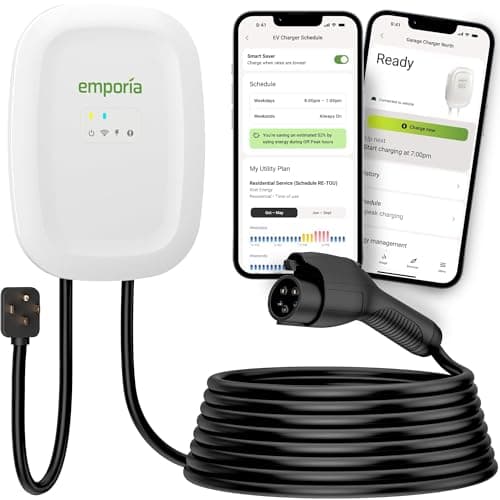
  • Emporia Emporia Level 2 (48A)
    01 Emporia Level 2 (48A)
    9.0

    The charger that refuses to charge you extra for being smart: full 48-amp speed and real energy monitoring at roughly the price of a plain plug-in box.

    Best for: Most homes that want speed and smarts

    $449.00Amazon
  • Emporia Emporia NACS (48A)
    02 Emporia NACS (48A)
    8.8

    The energy-monitoring charger with a Tesla-style plug: the same detailed consumption data Emporia is known for, now without an adapter hanging off the handle.

    Best for: Tracking what charging actually costs

    Check priceAmazon
  • ChargePoint ChargePoint Home Flex
    03 ChargePoint Home Flex
    8.2

    The mature, well-supported pick — amperage you dial in up to 50A, wired into the biggest public-charging app in North America. You pay for the polish.

    Best for: Buyers who want the established brand + one app

    $599.00Amazon
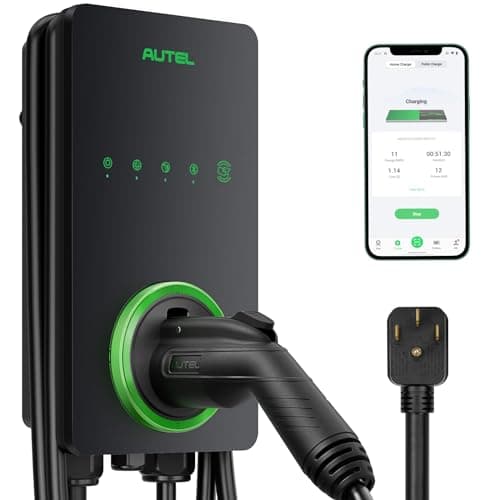
  • Autel Autel MaxiCharger (40A)
    04 Autel MaxiCharger (40A)
    8.6

    The everything-in-the-box option: Wi-Fi and Bluetooth both, a weather-rated shell, and a holster included so the install is tidy from day one.

    Best for: Feature-maximalists who want a clean install

    $446.50Amazon
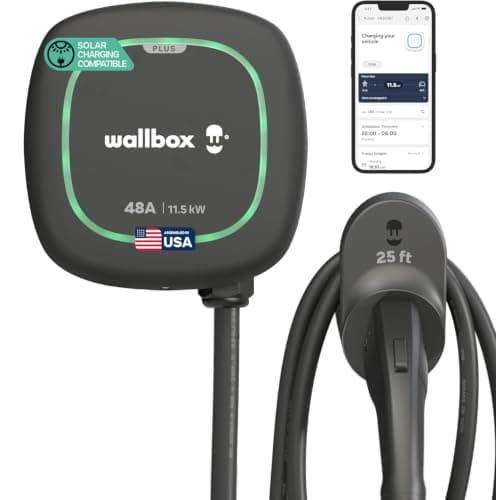
  • Wallbox Wallbox Pulsar Plus (48A)
    05 Wallbox Pulsar Plus (48A)
    8.4

    One of the smallest 48-amp chargers you can hang on a wall — full-speed hardwired charging in a box that barely announces itself.

    Best for: A compact, fast, hardwired install

    $799.99Amazon
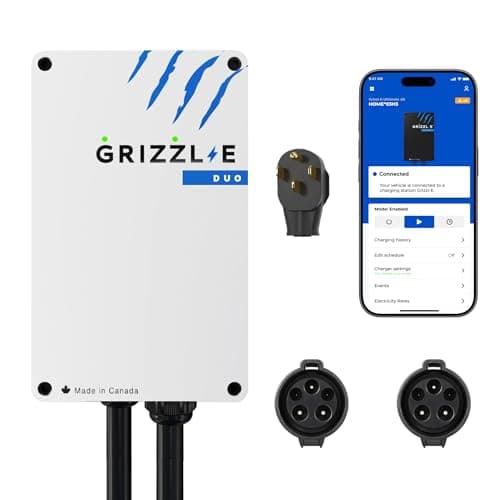
  • Grizzl-E Grizzl-E Duo (dual 40A)
    06 Grizzl-E Duo (dual 40A)
    8.4

    Two 25-foot cables splitting one circuit — the honest answer for a two-EV household that isn't going to run a second line.

    Best for: Two EVs sharing one circuit

    $899.99Amazon

#ad · Live prices from the Amazon Product API, as of Sep 18, 2026. Where we have no verified live price, we show none — we would rather leave a gap than print a number that has gone stale.

Buy the Emporia Level 2. Energy monitoring is Emporia's actual business - its charger reports per-session kilowatt-hours and cost, and paired with the company's Vue panel monitor it puts your charging next to the rest of the house rather than in a silo. The Emporia NACS does the same behind a Tesla-style plug. The ChargePoint Home Flex is the pick if you want home and public charging in one history, and the Autel MaxiCharger is the best of the rest at a lower price.

This is a narrower question than the smart-charger roundup, which ranks Wi-Fi units on everything they do. Here there is exactly one criterion: how well does the charger measure and report the energy it delivers? That matters for three specific reasons, and if none of them apply to you, you can stop reading and buy a cheaper charger with a clear conscience.

  • You want to know what the car actually costs to run. Charging shows up on your bill as one undifferentiated lump. A charger that logs kWh per session turns that into cents per mile - the number that decides whether the EV is really cheaper than the car it replaced. Our cost-to-charge guide does the math once you have the kWh.
  • You are on a time-of-use rate and want to verify the schedule worked. A schedule you cannot audit is a schedule you have to trust. Monitoring is what closes the loop on off-peak charging.
  • You need a number for someone else. Reimbursement from an employer, a split with a housemate, a utility rebate that asks for charging data, or a landlord who wants the EV metered separately.

What a charger's meter can and cannot tell you

Here is the part most roundups skip. A home charger's internal meter is a good instrument, not a legal one. Metering that is used to sell electricity in the United States falls under NIST Handbook 44 and the National Type Evaluation Program, and home EVSE is not certified to that standard - the requirement applies to equipment processing commercial transactions. What that means in practice:

  • Treat the number as accurate enough to act on, not to bill on. It is fine for cost tracking and for confirming a schedule ran. It is not a revenue-grade meter, and a housemate who wants an exact split should not be handed one as though it were.
  • The charger measures what it delivered, not what the battery received. Charging losses in the cable, the car's onboard charger and battery conditioning mean the kWh at the wall is meaningfully higher than the kWh in the pack. That gap is real energy you paid for, which is why the charger-side number is the right one for cost - but it will never match the car's own display, and neither of them is broken.
  • Your utility bill is the ground truth. If the two disagree badly, believe the meter on the side of the house. If you need a legally separate figure, that is a dedicated EV meter from the utility, not an app.

The picks

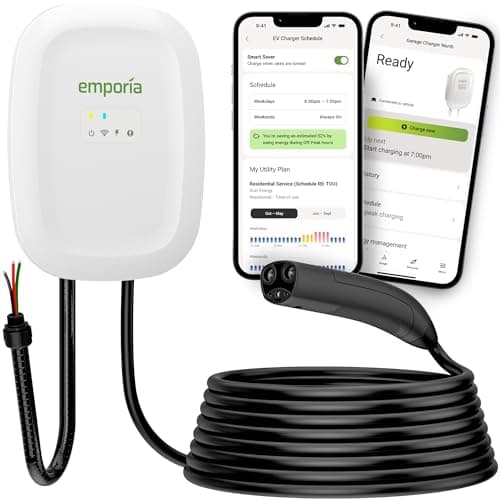
The Emporia Level 2wins because Emporia came to EV charging from home energy monitoring rather than the other way round. The charger reports session energy and cost in the app, and the company's Vue panel monitor - a separate product, so this is an upgrade path rather than a bundled claim - puts charging alongside every other circuit in the house, which is the context that makes the number useful. It also drives the excess-solar behaviour covered in our solar-compatible chargers roundup. It is also the cheapest charger in this field, which is why it wins most of our rankings.

The Emporia NACS is the identical proposition with a native Tesla-style plug and a documented stack of UL listings. Rank it first instead if your driveway is NACS.

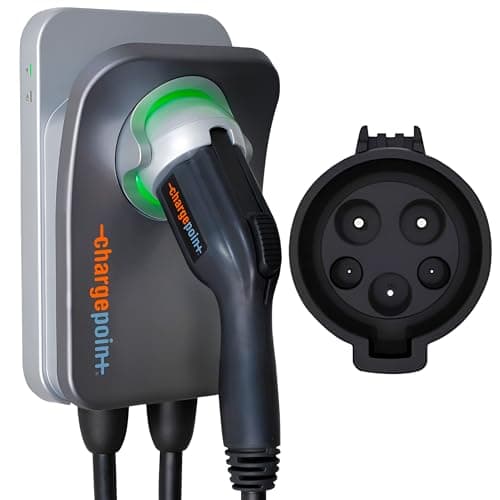
The ChargePoint Home Flexhas the most complete picture of your charging life rather than your house: home sessions and public sessions land in one history, with energy, cost and miles added. You can let the app look up your utility's rate plan or type your own per-kWh price in, which is what turns kWh into dollars. If you charge away from home often, that single history is worth more than a prettier home dashboard.

The Autel MaxiCharger does the fundamentals well for less: per-session power, cost, amperage and duration, plus monthly consumption, with your local energy price entered once. Its Bluetooth radio also means the data still syncs when garage Wi-Fi drops, which is a more common failure than anyone admits. The Wallbox Pulsar Plus logs sessions in myWallbox and becomes genuinely powerful with the separately sold Power Meter, which is what unlocks whole-home load management and solar charging - without it the monitoring is charger-only. The Grizzl-E Duo is the two-car answer: Grizzl-E Connect adds real-time monitoring and energy statistics, and with two cables you can see which vehicle used what.

Cheaper alternative worth knowing about. If monitoring is the only smart feature you want, a whole-home energy monitor clamped in your panel measures the charger circuit directly and works with any charger - including a sealed, app-free one like the Grizzl-E Classic. It costs less than the premium for a smart charger and it also meters the dryer, the heat pump and everything else. Buy the smart charger for scheduling and control; buy the panel monitor if you only want the numbers.

In detail

The picks, in full

01
Emporia Emporia Level 2 (48A)

Most homes that want speed and smarts

Emporia Level 2 (48A)

Up to 48A / 11.5kWJ177225ft cableWi-Fi + app
9.0/10

The charger that refuses to charge you extra for being smart: full 48-amp speed and real energy monitoring at roughly the price of a plain plug-in box.

Charge speed
10
Build & weather
8
Smart features
9
Cable & connector
8
Value
10

Pros

  • 48-amp capable when hardwired — quicker than the 40-amp plug-in default most units top out at
  • Genuine energy tracking and scheduling in the app, priced below almost every other smart charger
  • The 25-foot cable reaches either side of a two-car garage

Cons

  • You only get 48 amps hardwired on a 60-amp circuit; the plug-in version is capped at 40A like everything else
  • The app and Wi-Fi are central to the experience, so first-time setup takes longer than a plug-and-go box

Don't buy this if…

you never intend to open an app. A lot of what you are paying for is the software; if a sealed, silent box is what you actually want, the Grizzl-E Classic is the honest call.

$449.00View on Amazon

Price as of Sep 18, 2026. Prices change — Amazon's is the one that counts.

#ad · we may earn a commission from this link to Emporia Level 2 (48A)

02
Emporia Emporia NACS (48A)

Tracking what charging actually costs

Emporia NACS (48A)

Up to 48A / 11.5kWNative NACS (J3400)24ft cable, hardwiredUL listed + Energy Star
8.8/10

The energy-monitoring charger with a Tesla-style plug: the same detailed consumption data Emporia is known for, now without an adapter hanging off the handle.

Charge speed
10
Build & weather
8
Smart features
9
Cable & connector
8
Value
9

Pros

  • Native NACS with the charge-port-door button, and Emporia's app gives the most detailed real-time energy and cost data of any pick here
  • UL listed and Energy Star certified, with the listing naming UL 2594, UL 2231, UL 2251, UL 817 and UL 991 alongside NEC 625 - a full set of listings, not a single mark
  • Ships preconfigured for a hardwired install with the whip attached, on a 24-foot cable

Cons

  • This SKU is hardwired only, so an electrician and a 60-amp circuit are part of the cost
  • The Wi-Fi app is the reason to buy it; on a flat electricity rate you are paying for monitoring you may rarely open

Don't buy this if…

you want to unplug the charger and take it with you when you move. This is a wired-in fixture - the plug-in EVIQO 40A NACS travels, this does not.

Check price on Amazon →

No buyable offer at the last price check (Sep 18, 2026). We show nothing rather than a stale number.

#ad · we may earn a commission from this link to Emporia NACS (48A)

03
ChargePoint ChargePoint Home Flex

Buyers who want the established brand + one app

ChargePoint Home Flex

Adjustable to 50AJ1772NEMA 14-50 plugEnergy Star
8.2/10

The mature, well-supported pick — amperage you dial in up to 50A, wired into the biggest public-charging app in North America. You pay for the polish.

Charge speed
9
Build & weather
8
Smart features
9
Cable & connector
8
Value
7

Pros

  • Output is adjustable in the app up to 50A, so it matches whatever breaker you can install today and more later
  • Reports into the same ChargePoint app that maps and pays for a huge public network — home and away in one place
  • Long track record and responsive support that newer budget brands cannot match

Cons

  • Costs more than equally capable chargers from newer brands
  • The experience leans hard on the ChargePoint account and app; skip it and you are paying for an integration you will not use

Don't buy this if…

price is your first filter. The Emporia matches most of what this does for meaningfully less — here you are paying for brand maturity and the unified app, which are real but not free.

$599.00View on Amazon

$657.999% off

Price as of Sep 18, 2026. Prices change — Amazon's is the one that counts.

#ad · we may earn a commission from this link to ChargePoint Home Flex

04
Autel Autel MaxiCharger (40A)

Feature-maximalists who want a clean install

Autel MaxiCharger (40A)

40A / 9.6kWJ177225ft cable + holsterWi-Fi + Bluetooth
8.6/10

The everything-in-the-box option: Wi-Fi and Bluetooth both, a weather-rated shell, and a holster included so the install is tidy from day one.

Charge speed
8
Build & weather
9
Smart features
9
Cable & connector
9
Value
8

Pros

  • Comes with an in-body holster, so you get proper cable management out of the box instead of buying it later
  • Both Wi-Fi and Bluetooth — app control still works when garage Wi-Fi is weak, which it usually is
  • Weather-rated enclosure for indoor or outdoor mounting

Cons

  • 40-amp ceiling, so it is not the fastest choice if your panel could support a 48A circuit
  • The feature set is more than a set-and-forget overnight charger buyer actually needs

Don't buy this if…

your panel can support a 48-amp circuit and raw speed is the goal. The 48A Emporia or Wallbox adds range faster; the Autel's edge is breadth and the in-box holster, not top speed.

$446.50View on Amazon

$470.005% off

Price as of Sep 18, 2026. Prices change — Amazon's is the one that counts.

#ad · we may earn a commission from this link to Autel MaxiCharger (40A)

05
Wallbox Wallbox Pulsar Plus (48A)

A compact, fast, hardwired install

Wallbox Pulsar Plus (48A)

Hardwired 48A / 11.5kWJ177225ft cableEnergy Star + UL
8.4/10

One of the smallest 48-amp chargers you can hang on a wall — full-speed hardwired charging in a box that barely announces itself.

Charge speed
10
Build & weather
8
Smart features
8
Cable & connector
8
Value
8

Pros

  • Physically tiny for a 48-amp unit — the least obtrusive charger in our home roundup
  • Full 48-amp hardwired speed, matching the fastest home chargers
  • Energy Star and UL certified

Cons

  • Hardwired only at 48A — no plug-in convenience if you might move it
  • The app has historically drawn more owner complaints than the hardware itself

Don't buy this if…

you rent or might take the charger with you. This is a permanent fixture — a plug-in unit or a portable EVSE is the right call for anyone who could move.

$799.99View on Amazon

Price as of Sep 18, 2026. Prices change — Amazon's is the one that counts.

#ad · we may earn a commission from this link to Wallbox Pulsar Plus (48A)

06
Grizzl-E Grizzl-E Duo (dual 40A)

Two EVs sharing one circuit

Grizzl-E Duo (dual 40A)

Dual J1772Up to 40A sharedTwo 25ft cablesNEMA 14-50 plug
8.4/10

Two 25-foot cables splitting one circuit — the honest answer for a two-EV household that isn't going to run a second line.

Charge speed
7
Build & weather
10
Smart features
8
Cable & connector
9
Value
8

Pros

  • Charges two vehicles from a single circuit by dividing the available current between them
  • Two long 25-foot cables reach both bays of most garages
  • The same rugged cast-aluminum Grizzl-E enclosure as the Classic
  • Wi-Fi connected: the Grizzl-E Connect app adds charge scheduling, real-time monitoring and energy statistics, and charging still works with the connection down

Cons

  • The two cars share the circuit's amperage — plug in the second and the rate to the first drops
  • Overkill and more expensive if you only ever charge one vehicle
  • The advanced OCPP integration is a paid unlock — Grizzl-E charges a one-time activation fee on top of the hardware

Don't buy this if…

you only charge one car. You are paying for a second cable you will never use — buy the single-cable Classic and keep the difference.

$899.99View on Amazon

Price as of Sep 18, 2026. Prices change — Amazon's is the one that counts.

#ad · we may earn a commission from this link to Grizzl-E Duo (dual 40A)

How the six compare

ChargerAmps / kWPlug typeCableWhat the app reportsSafety listingPrice tier
Emporia Level 26-48A / up to 11.5 kWNEMA 14-50 or hardwired25 ftSession kWh + cost; whole-home context with the Vue monitorUL listed, Energy StarValue
Emporia NACSUp to 48A / 11.5 kWHardwired (NACS)24 ftSame Emporia reporting, native NACS plugUL listed (2594/2231/2251/817/991), Energy StarValue
ChargePoint Home Flex16-50A / up to 12.0 kWNEMA 14-50 or hardwired23 ftHome + public sessions, energy, cost, miles; utility rate lookupUL / cUL (UL 2594, UL 2231), Energy StarPremium
Autel MaxiCharger40A / 9.6 kWNEMA 14-50 plug25 ft + holsterPer-session kWh, cost, amps, duration; monthly totalsNEMA 4X weather-rated shell; no UL mark named in our spec setMid
Wallbox Pulsar Plus48A / 11.5 kWHardwired25 ftSession history; whole-home and solar with the Power Meter add-onUL listed, Energy StarPremium
Grizzl-E DuoUp to 40A shared / 9.6 kWNEMA 14-50 plug, two cablesTwo x 25 ftReal-time monitoring and energy statistics per Grizzl-E ConnectCast-aluminum enclosure; UL not named on the live listingPremium

App capabilities above are the manufacturers' published descriptions of their own software. We read the documentation and the live listings; we do not run a test lab and we did not audit any of these meters against a reference standard.

The buyer's guide

1. Decide whether you need per-session or per-house data

Per-session data answers "what did that charge cost?". Whole-house data answers "how much of my bill is the car?". A charger gives you the first for free; the second needs either a panel monitor (Emporia Vue, Wallbox Power Meter) or a separate utility meter. Most people want the first and think they want the second.

2. Enter your real electricity rate, once

Every app on this page multiplies kWh by a price to show dollars, and every one of them defaults to a number that is not yours. The US residential average is a starting point, not your rate - state averages vary by more than a factor of three, and a time-of-use plan has two or three different prices in a day. Find the per-kWh figure on your bill and type it in. Our cost by state page has the published averages if you want a sanity check.

3. Amps, kW and why the meter reads high

Kilowatts are volts times amps over 1,000 - at 240 volts, 40 amps is 9.6 kW and 48 amps is 11.5 kW. A kilowatt-hour is one kilowatt sustained for an hour, so a 9.6 kW charger running for four hours delivers about 38 kWh at the wall. The battery will show less, because charging is lossy. Both numbers are correct; the wall number is the one you are billed for.

4. NACS or J1772 first, features second

Monitoring quality is the same on both sides of the connector divide - the Emporia J1772 and the Emporia NACS run the same app. Pick the plug your car has, then pick on features. If you are unsure, check the port before ordering anything.

5. Hardwired vs plug-in changes nothing here

Metering works identically either way. The install choice is about speed (a plug caps you at 40 amps / 9.6 kW) and permanence, not data - see hardwired vs plug-in. One genuine caveat: all of this reporting depends on Wi-Fi, so a charger in a steel-sided detached garage with a weak signal will have gaps in its history. That is the argument for the Autel's Bluetooth fallback, and for reading when a charger will not connect to Wi-Fi before you blame the hardware.

6. Load management is monitoring with teeth

The same current sensing that produces a pretty graph can also throttle the charger when the rest of the house is drawing hard, which is how a full-speed unit lives on a panel that could not otherwise carry it. If your service is tight, that is worth more than the dashboard - see chargers with load balancing.

So, which one?

Emporia Level 2 for almost everyone - the best energy data on the site at the lowest price, with a real upgrade path to whole-home monitoring. Emporia NACS if your car has a Tesla-style port. ChargePoint Home Flex if you charge in public often enough to want one combined history and a utility-rate lookup. Autel MaxiCharger for solid per-session tracking with a Bluetooth safety net at a mid price. Wallbox Pulsar Plus if you will add the Power Meter and want load management and solar too. Grizzl-E Duo if two cars share the circuit and you want to see both.
How we picked

We do not run a testing lab

We compiled published specifications from manufacturer manuals and spec sheets, verified the safety listings (UL / ETL), computed the real running and installation costs, checked the wiring math against the NEC continuous-load rule, and read aggregated owner reviews — then scored each product against a published rubric. The scores are judgments from documented research — they are not bench measurements, because we do not have a test lab and we are not going to pretend we do. Every spec and cost figure is cited in Sources.

Questions

Frequently asked

Do EV chargers show how much electricity they use?

Wi-Fi chargers do. Every unit on this page reports kilowatt-hours per session in its app, and most convert that to dollars once you enter your electricity rate. Chargers with no app - a Grizzl-E Classic, a LENZ, most on-box-timer units - report nothing at all; for those you need a whole-home energy monitor clamped on the charger circuit.

How accurate is an EV charger's energy monitoring?

Accurate enough to track costs, not accurate enough to bill someone. Metering used to sell electricity in the US falls under NIST Handbook 44 and NTEP type evaluation, and residential EVSE is not certified to that standard. Treat the app figure as a good estimate, and treat the utility meter on the side of the house as the truth.

Why does my charger report more kWh than my car received?

Because they measure different things. The charger measures energy delivered at the wall; the car reports energy that reached the battery. The difference is charging losses in the cable, the onboard charger and battery conditioning - typically a meaningful percentage, and larger in cold weather. You pay for the wall number, so that is the one to use for cost.

Can I monitor EV charging without a smart charger?

Yes, and it is often the cheaper route. A whole-home energy monitor with current clamps on the charger's breaker measures the circuit directly and works with any charger, app or no app. It also meters everything else in the panel. Buy a smart charger when you want scheduling and remote control; buy a panel monitor when you only want the numbers.

Which EV charger has the best app for energy tracking?

Emporia's, on the strength of the company's home-energy background and the integration with its Vue panel monitor, which puts charging in the context of the whole house. ChargePoint's is the best if you also charge in public, because home and public sessions land in one history with cost and miles added.

Does energy monitoring help me get a utility rebate?

Sometimes. A number of utility EV programs ask for charging data or require an Energy Star certified, connected charger to qualify - which is one practical reason the certification matters beyond standby power. Check your own utility's programme before you buy; our rebates roundup covers what is available.

Keep reading

More in this section

More Home EV Chargers

All home ev chargers

Receipts

Sources

We do not run a testing lab, and we do not pretend to. Where a measured number came from someone else's lab, we name them and link them. Where we could not verify something, we say so on the page rather than quietly leaving it out. Read our full method.