HUB 02 · Cables & Adapters
Can a Tesla Wall Connector Charge a Non-Tesla EV?
You moved into a house with a Tesla charger on the garage wall, or a friend offered you theirs. It will charge your Mach-E, Ioniq or ID.4 - once you have the right adapter, which is probably not the one that came with your car.
We earn a commission when you buy through our Amazon links, at no extra cost to you. It never affects our rankings, and we say so when the cheaper product is the better buy. How this works.
Yes. A Tesla Wall Connector will charge almost any non-Tesla EV sold in North America, at full speed, through a passive NACS-to-J1772 adapter that costs less than a tank of gas. The charger does not know or care what badge is on the car - it is a 240-volt AC supply with a handshake, and the handshake is the same standard every car speaks. The only problem is the shape of the plug. Two things to get right: buy an adapter listed to UL 2252, and do not try to use the NACS adapter your car's manufacturer gave you for Superchargers, because that is a different part that explicitly will not work here.
Why it works at all
Level 2 AC charging is not really done by the box on the wall. The charger supplies 240-volt AC and signals, over a single pilot wire, the maximum current available. The car's own onboard charger does the actual conversion to DC and draws up to that limit and no further. Every car in North America implements the same signalling, whether its inlet is J1772 or NACS - which is why a dumb mechanical adapter is sufficient, and why nothing electronic needs to happen in between.
So a Tesla Wall Connector set to 48 amps feeds a Mustang Mach-E exactly what it would get from a 48-amp J1772 charger. The speed limit is still your car: Teslas accept 11.5 kW, plenty of other cars stop at 7.2 or 11 kW, and a plug-in hybrid may stop near 7. The adapter changes nothing about that.
The three ways to do it
| Route | What it costs | Works at | Best when |
|---|---|---|---|
| Passive NACS-to-J1772 adapter (UL 2252) | The cheapest option by a wide margin | Wall Connector, Destination Charger, Mobile Connector - AC only | The Tesla unit is already on the wall |
| Tesla Universal Wall Connector | A charger purchase, bought direct | Both connectors, nothing to lose | You are specifying the charger for a mixed driveway |
| Replace it with a J1772 charger | A charger plus an electrician | Every J1772 car, no adapter ever | The unit is yours and no Tesla will park there |
| Your car maker's NACS adapter | Typically $185 to $235 | DC Superchargers only - NOT a Wall Connector | Road trips. Never for this job |
1. A NACS-to-J1772 adapter on the existing Wall Connector
The default, and the cheapest. The adapter slips onto the Tesla handle and presents a J1772 plug to your car. Lectron's own documentation lists its adapter as compatible with Tesla Wall Connectors, Destination Chargers and Mobile Connectors - those are the three AC sources - and the parts we would buy are ranked on best NACS to J1772 adapters.
2. A Universal Wall Connector, if you are buying the charger
Tesla sells a version of the Wall Connector with the J1772 adapter integrated into the handle. Nothing dangles, nothing gets lost, and a Tesla and a J1772 car can share one unit. If you are specifying a charger for a mixed driveway rather than inheriting one, this is usually the better buy - Wall Connector vs Universal has the price argument.
3. Replace it with a J1772 charger
If the Tesla unit is yours to remove and no Tesla will ever park there, swapping it for a J1772 charger removes the adapter from your life entirely. It is a hardwired unit, so this is electrician work - and the circuit it sits on is already correct, which is the expensive part of any install. Our best Level 2 chargers ranking is the field.
The mistake almost everyone makes
The NACS adapter your car's manufacturer sent you is for DC fast charging. It will not work on a Wall Connector. This is not our opinion. Volkswagen's NACS adapter is documented as intended for DC chargers and "not level 2 chargers like Tesla Destination Chargers". Audi says the same thing about its own: the adapters are exclusively compatible with DC fast-charging stations and will not work with NACS-capable Level 1 or 2 AC chargers. Those parts cost $185 to $235 and they are the wrong tool for a garage.
The reverse error is just as common and more expensive: a passive NACS-to-J1772 adapter will not get you into a Supercharger. Lectron prints the warning on its own page. The physics are in do NACS adapters work at Superchargers. Two adapters, two jobs, and the cheap one is the one that works at home.
What to look for in the adapter
- UL 2252. That is the standard for an EV coupler adapter - distinct from UL 2594 for the charger itself. This part carries full charging current through a connection made by hand, every night, for years. It is not the place to save ten dollars.
- A current rating at or above your charger's setting. A home Wall Connector goes to 48 amps. Adapters in this class are published anywhere from 48 to 80 amps, so this is easy to satisfy - but check it rather than assume it.
- A locking or positively retained interface, if the adapter is going to live on the wall unit outdoors rather than in the car.
- Realistic weather expectations.An adapter's IP rating is normally quoted unmated. Volex publishes IP67 unmated and IP54 mated for its comparable part - and mated is how yours lives. Point the connector down and keep it out of standing water.
Then watch it for the first week. A warm connector is normal; one that is too hot to hold is not, and do NACS adapters overheat covers what to do about it.
Will it charge at full speed?
Yes, within your car's limit. There is no adapter penalty in a correctly made connection - the pilot signal still offers the charger's full current and your car still takes what it can use. If charging is slower than you expect, the cause is almost always the charger's own current setting, the car's onboard limit, or a cold battery, none of which the adapter affects. Our slow home charging guide works through the causes in order.
The bottom line
A Tesla Wall Connector is a perfectly good charger for a non-Tesla, and inheriting one with a house is a small windfall - the 60-amp circuit behind it is worth more than the charger. Buy a UL 2252 NACS-to-J1772 adapter, leave your manufacturer's DC adapter in the trunk where it belongs, and you are done for about the price of a nice dinner.
The gear
Recommended gear for this guide
The products this guide refers to, with prices pulled live from Amazon and dated on each card.
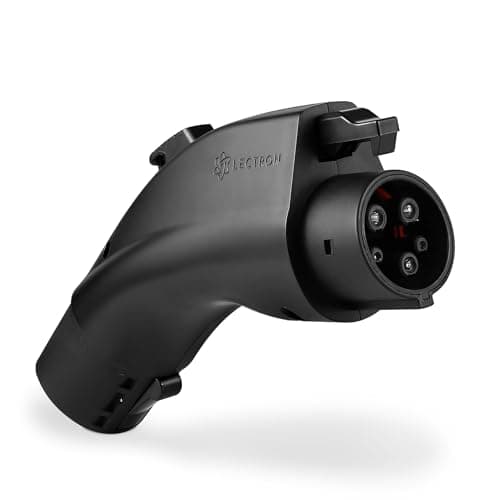
A J1772 car using NACS chargers
Lectron NACS → J1772 Adapter
The default adapter that lets a J1772 car draw from a Tesla-style (NACS) home or destination charger — rated for the full 48 amps.
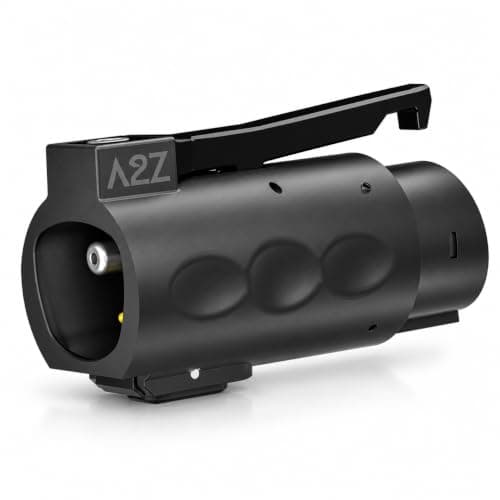
The most certified option
A2Z EV Stellar Plug (NACS to J1772)
The most thoroughly certified NACS-to-J1772 adapter you can buy — UL2252 and CSA certified, dual thermal sensors, IP67 body, and it locks into the port while charging.
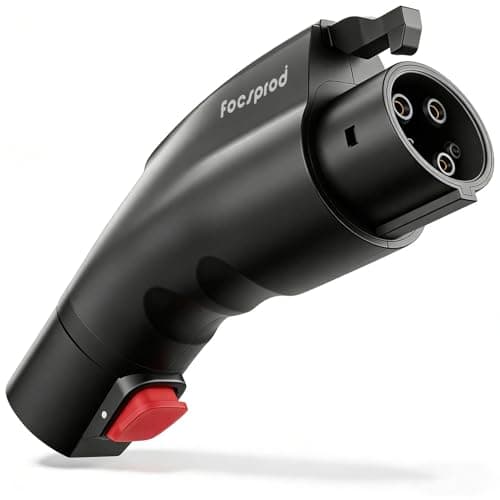
Listed, without the premium
FOCSPROD NACS to J1772 (60A)
A UL 2252 adapter at a mid-market price, rated to 60 amps — more than a home Wall Connector will ever ask of it.
#ad · As an Amazon Associate we earn from qualifying purchases.
Questions
Frequently asked
Can I charge a Ford, Hyundai or VW from a Tesla Wall Connector?
Yes, with a passive NACS-to-J1772 adapter listed to UL 2252. The Wall Connector supplies ordinary 240-volt AC and the standard pilot signal, so your car charges at its normal rate. The adapter costs a small fraction of the charger and nothing else needs to change.
Can I use the NACS adapter that came with my car?
Almost certainly not. Manufacturer NACS adapters are DC fast-charging parts: Volkswagen documents its adapter as intended for DC chargers and not Level 2 units like Tesla Destination Chargers, and Audi states its adapter will not work with NACS-capable Level 1 or 2 AC chargers at all. For a Wall Connector you need a passive AC adapter instead.
Does a Tesla Wall Connector charge a non-Tesla slower?
No. The limit is your car's onboard charger and the unit's current setting, not the adapter. A Wall Connector set to 48 amps offers 11.5 kW; a car that accepts 7.2 kW will take 7.2 kW from it, exactly as it would from a J1772 charger.
Is it safe to leave the adapter attached to the charger?
It is common practice, but prefer a locking design, hang the connector pointing down, and do not rely on the box's IP rating - that figure is usually measured unmated, and a mated connector is rated considerably lower. Check the connector temperature after the first few long sessions.
What about a Tesla Destination Charger at a hotel?
Same hardware, same adapter - a Destination Charger is a Wall Connector in a car park. The etiquette, signage and whether the host minds are a separate question, covered in charging an EV at a hotel.
Should I just replace the Tesla charger with a J1772 one?
Only if no Tesla will ever use it. The expensive part of a charger install is the 60-amp circuit, and that is already done - so swapping the box is cheap but buys you only the removal of one adapter. If the driveway is mixed, a Universal Wall Connector or a J1772 charger plus a J1772-to-NACS adapter for the Tesla serves both cars.
Keep reading
Related
- Best NACS to J1772 adaptersThe adapters that do this job, ranked on the safety listing.
- Wall Connector vs UniversalWhether the built-in J1772 adapter is worth the premium.
- Do NACS adapters work at Superchargers?The AC / DC line a passive adapter cannot cross.
- Mixed Tesla and J1772 householdsOne charge point, two connector standards, ranked.
- Grizzl-E vs Tesla Wall ConnectorIf the Tesla unit is yours to replace, the alternative.
More in this section
More Cables & Adapters
Receipts
Sources
- Lectron - Tesla (NACS) to J1772 adapter (UL 2252 certified and tested by SGS, an NRTL; compatible with all J1772 EVs and with Tesla Destination Chargers, Mobile Connectors and Wall Connectors; explicitly NOT compatible with Tesla Superchargers)
- Tesla - Universal Wall Connector (a NACS cable with an integrated J1772 adapter, so one wall unit charges both Tesla and J1772 vehicles)
- Tesla - Wall Connector support (hardwired, Wi-Fi, adjustable output, four-year residential warranty)
- Electrek - Volkswagen EVs get Supercharger access (ID.4 and ID. Buzz from November 18, 2025; a $200 VW-approved NACS adapter through dealers and parts.vw.com; model year 2026 and later VW EVs include it as standard; the adapters are only intended for use with DC chargers, not Level 2 chargers like Tesla Destination Chargers)
- electrive - Audi and Porsche EV drivers gain NACS adapters (soft launch September 9, 2025; the Audi adapter ships with new 2025 Q6 e-tron, A6 Sportback e-tron and e-tron GT; Audi states the Q4 e-tron cannot currently use the Audi NACS DC charging adapter or the Tesla NACS Partner Supercharger network; the adapters are exclusively compatible with DC fast-charging stations and will not work with NACS-capable Level 1 or 2 AC chargers)
- Volex - J1772 to NACS adapter datasheet (UL 2252, rated to 80A, IP67 unmated and IP54 when mated - why an adapter's headline weather rating is not its in-use rating)
- EC&M - NEC requirements for EV equipment (Article 625: EVSE is a continuous load, circuits sized at 125 percent of the load)
We do not run a testing lab, and we do not pretend to. Where a measured number came from someone else's lab, we name them and link them. Where we could not verify something, we say so on the page rather than quietly leaving it out. Read our full method.