HUB 02 · Cables & Adapters
EV Charger Plug or Adapter Stuck in the Car
The latch is almost never broken. In nearly every case the car is still holding it on purpose, and there is an order of operations that releases it.
We earn a commission when you buy through our Amazon links, at no extra cost to you. It never affects our rankings, and we say so when the cheaper product is the better buy. How this works.
Do not pull. In nearly every case the connector is not jammed - the car is deliberately holding it, because a charging session has not ended or the vehicle is still locked. Work through it in this order: end the session in the car or the app, unlock the car and open the driver's door, press and hold the release button on the connector handle, then pull straight out with no twist. If the button will not depress at all, stop and find the manual release documented in your owner's manual rather than forcing it.
That sequence works because of how the connection is designed. On a J1772 connector the handle has a latch that hooks the charge port, and a proximity pin that tells the car you have pressed the release - which is the car's signal to wind the current down before the contacts separate. Many vehicles add a lock actuator on top of that, which physically pins the connector in place while charging or while the car is locked. So a connector that will not move is usually a connector doing its job.
The release order, in full
- Stop the charge.In the car's screen, in the charger's app, or by pressing the button on the connector handle once and waiting a couple of seconds. The current has to stop before the latch will let go.
- Unlock the car. This is the step people skip. Many vehicles keep the charge connector locked for exactly as long as the doors are locked, so that nobody can unplug you in a car park.
- Open the driver's door. On several makes this is what actually releases the actuator, and it is why the fix sometimes looks like magic.
- Press and hold the release button, then pull straight. No twisting, no levering, no side-to-side. A J1772 latch is a hook; twisting binds it.
- If nothing moves, check for a scheduled charge or preconditioning. A car that intends to resume charging at 11pm, or that is warming the cabin while plugged in, is still in a session as far as the lock is concerned. Cancel the schedule, then retry from step one.
The one rule: if the release button will not depress, do not pull hard. The button is what retracts the latch; pulling against an engaged latch damages the charge port, which is a far more expensive repair than the connector. Published owner guidance is consistent on this point.
When it is cold
Sub-freezing weather is the single most common physical cause. Water gets into the latch recess, freezes, and the mechanism cannot retract. The fix is heat, patiently applied: a hair dryer or a heat gun on its lowest setting, from a distance, for a few minutes - never a flame and never boiling water poured onto a 240-volt connector. Warm the area around the latch rather than the cable.
Prevention is cheaper than the cure. Keep the connector docked in a holster rather than hanging where it collects rain and snow, shake water off before you plug in, and in deep winter park with the port out of the prevailing weather. Our winter EV charging guide and maintenance and care guide cover the rest of the cold-weather routine.
When it is an adapter, not the connector
An adapter adds a second latching joint, and that is where the problem usually sits - the adapter stays in the car while the charger's connector comes off the adapter, or the reverse. Work the joints one at a time:
- Identify which joint is stuck. Charger-to-adapter, or adapter-to-car. They release differently.
- Release the car-side joint last.End the session, unlock the car, then free the adapter from the port using the adapter's own release - several listed adapters have a locking pin or a positive latch of their own, which is a feature until you forget it is there.
- Do not lever the adapter. An adapter is a rigid lump on the end of a heavy cable, and it gives you far more mechanical advantage against the charge port than a bare connector does. That is exactly why adapter-related port damage happens.
- Check you are using the right adapter at all. A DC fast-charging adapter will not run an AC session - Volvo, for instance, states that its NACS adapter is for DC fast charging only and is not compatible with Level 1 or Level 2 AC charging. A session that never started can look like a session that will not end. Our adapter compatibility by brand page sorts out which is which.
This is also an argument for buying a properly listed adapter rather than the cheapest one. A UL 2252-listed unit with a positive locking pin and a sealed body is the one that still releases cleanly in year three - our NACS-to-J1772 adapter roundup ranks that field, and do NACS adapters overheat covers the related failure mode, because a connector that has run hot is a connector whose plastics have moved.
The manual release
Most EVs include a mechanical override for the charge-port lock, precisely because an actuator can fail or the 12-volt system can go flat with a connector in place. It is commonly a small pull cable or tab reached from inside the trunk or behind a liner near the charge port. Find yours in the owner's manual beforeyou need it - search the index for "charge port" or "manual release" - and note the page. Thirty seconds now saves a tow later.
If there is no manual release, or it does not free the connector, that is the point to stop and call roadside assistance or the dealer. A stuck connector is an inconvenience; a cracked charge port is a body-shop repair and a car that cannot charge at all.
After it is out
Look at both halves before you plug in again. You are checking for three things: melted or discoloured plastic around the pins, a latch hook that no longer springs back crisply, and debris or corrosion in the recess. Any of the first two means retire the connector or the adapter rather than nurse it - a damaged latch is what causes the next stuck plug, and heat-affected plastics never recover.
Then fix the cause. A connector that lives in a holster off the ground stays dry and clean; a connector that lives on the garage floor collects grit, water and the occasional tire. Both picks below are inexpensive, and our holster and dock roundup plus cable managementcover the tidy version of the same fix. If the charger's own connector is the damaged part, EV charger not charging and EV charger plug getting hot are the next pages to read.
The gear
Recommended gear for this guide
The products this guide refers to, with prices pulled live from Amazon and dated on each card.
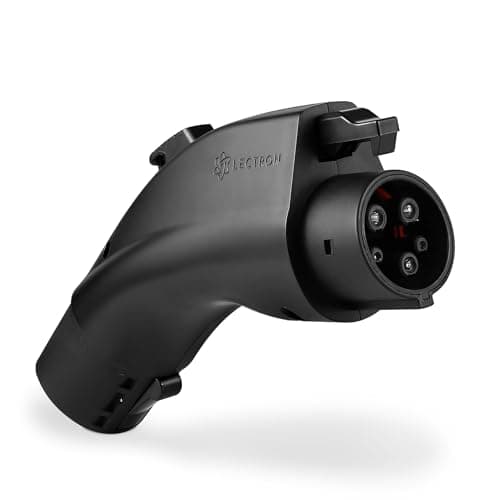
A J1772 car using NACS chargers
Lectron NACS → J1772 Adapter
The default adapter that lets a J1772 car draw from a Tesla-style (NACS) home or destination charger — rated for the full 48 amps.
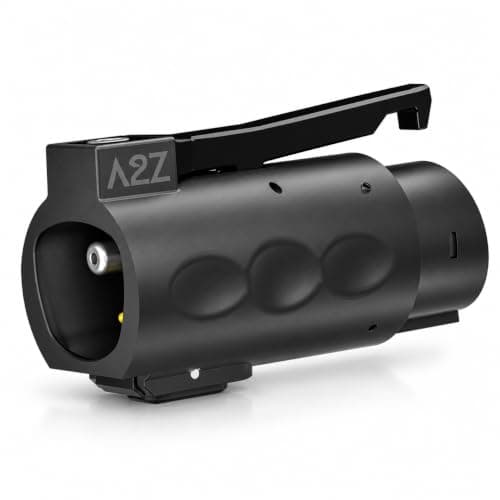
The most certified option
A2Z EV Stellar Plug (NACS to J1772)
The most thoroughly certified NACS-to-J1772 adapter you can buy — UL2252 and CSA certified, dual thermal sensors, IP67 body, and it locks into the port while charging.
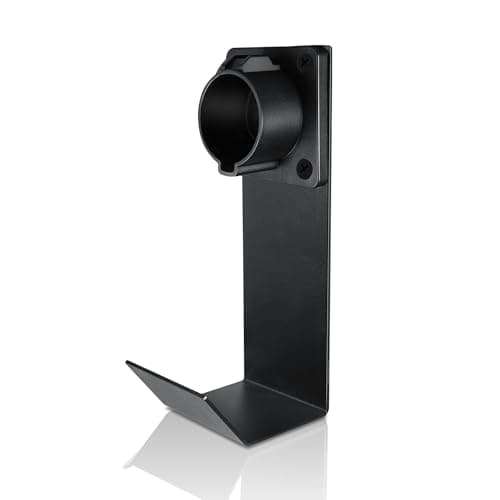
Docking a J1772 connector
Lectron J1772 Holster + J-Hook
A connector dock and cable hook in one — the cheapest fix for a J1772 plug that otherwise sits on the garage floor.
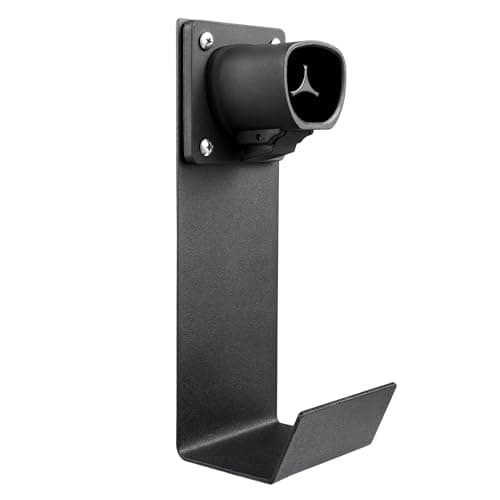
Tesla and NACS connectors
Lectron NACS Holster + J-Hook
The same dock-plus-hook idea cut for the NACS connector — the one accessory a Tesla Wall Connector owner is most likely to actually need.
#ad · As an Amazon Associate we earn from qualifying purchases.
Questions
Frequently asked
Why won't the charger come out of my EV?
Almost always because the car is still holding it: a charging session that has not ended, a scheduled charge waiting to resume, preconditioning running while plugged in, or simply a locked car. End the session, unlock the car, open the driver's door, then press the release button on the handle and pull straight out.
My NACS adapter is stuck in the charge port. What now?
Work out which joint is stuck first - charger-to-adapter or adapter-to-car. End the session and unlock the car, then use the adapter's own release; several listed adapters have a locking pin of their own. Do not lever the adapter against the port, which is how charge ports get damaged.
Can I pull the charging cable out if the button is stuck?
No. The release button retracts the latch, so pulling against an engaged latch loads the charge port rather than the connector - and the port is the expensive part. Find the manual release documented in your owner's manual, or call for assistance.
The latch is frozen. How do I thaw it safely?
Gentle, indirect heat: a hair dryer or a heat gun on its lowest setting, held back from the connector, aimed at the latch area for a few minutes. Never a flame, never hot water poured over a 240-volt connector. Then dry the recess before you plug in again, and dock the connector in a holster so it stops filling with water.
Where is the charge port manual release?
It varies by make and model - commonly a pull cable or tab inside the trunk or behind a panel near the charge port. Look it up in your owner's manual under "charge port" or "manual release" and note the page now, while the car is not stuck to a wall.
Should I replace the connector or adapter afterwards?
If the plastic around the pins is discoloured or melted, or the latch no longer springs back crisply, yes - retire it. Heat-affected plastics do not recover and a tired latch is what causes the next stuck plug. Our do NACS adapters overheat page explains what to look for.
Keep reading
Related
- Do NACS adapters overheat?The failure mode that leaves a latch deformed.
- Best EV charger cable holstersThe cheap fix for a connector that keeps filling with water.
- Winter EV chargingWhy this happens most in January, and the rest of the cold routine.
- EV charger plug getting hotWhat to do if the connector came out discoloured.
More in this section
More Cables & Adapters
Receipts
Sources
- SAE J1772 specification (the AC connector, the control pilot and proximity signalling, and the connector latch)
- SAE International - J3400 (the NACS connector standard)
- Range Confidence - how to fix a stuck charging cord (the latch and release button, the locked-while-charging case, and the owner's-manual manual release)
- Volvo Cars US - charging your Volvo at a Tesla Supercharger (the NACS fast-charging adapter is for DC fast charging only and is not compatible with Level 1 or Level 2 AC chargers)
- US DOE / fueleconomy.gov - EV charging basics (Level 1, Level 2 and DC fast charging)
- Intertek - UL 2594 testing and certification for electric vehicle supply equipment
We do not run a testing lab, and we do not pretend to. Where a measured number came from someone else's lab, we name them and link them. Where we could not verify something, we say so on the page rather than quietly leaving it out. Read our full method.