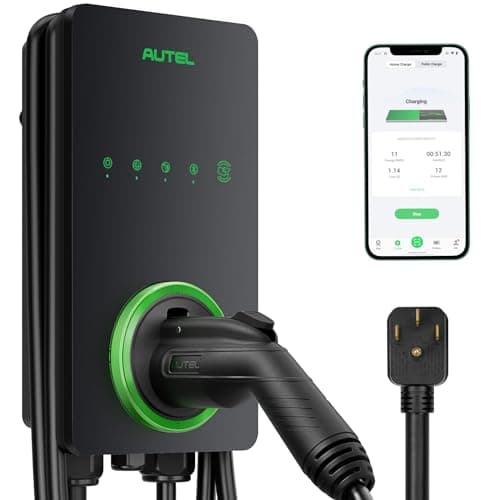
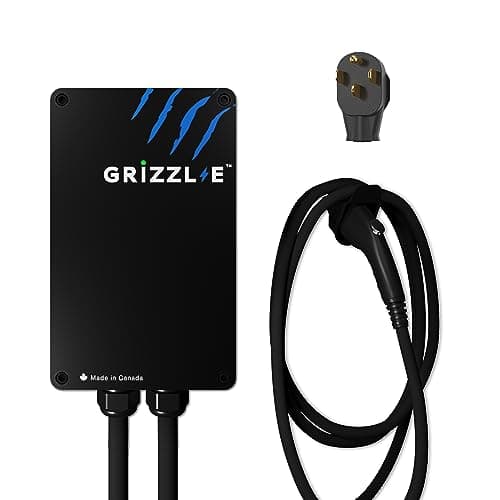
For a Wrangler 4xe or Grand Cherokee 4xe, buy a 40-amp-capable charger and set it to 32 amps - the Grizzl-E Classic on its internal dial is our pick. The engineering press, quoting Jeep's own vehicle synthesis manager, puts the 4xe's maximum charge rate over a J1772 connector at 7.2 kW. That is about 30 amps at 240 volts. Mopar's own at-home wall unit for these cars is a 7.7 kW box, which tells you where Jeep thinks the ceiling is. A 48-amp charger pushes exactly the same energy into a 4xe as a 32-amp one, on a circuit that costs considerably more to install. The one Jeep where the big units earn their money is the Wagoneer S, and it is at the bottom of this page.
Two Jeeps, two different purchases
This is the thing every generic "best charger" list gets wrong about this brand. Jeep's electrified lineup splits down the middle, and the split is the entire buying decision:
| Car | Battery | Max AC rate | Charger setting worth paying for |
|---|
| Wrangler 4xe | 17.3 kWh | 7.2 kW (J1772) | 32A - more buys nothing |
| Grand Cherokee 4xe | 17.3 kWh | 7.2 kW (J1772) | 32A - more buys nothing |
| Wagoneer S (battery EV) | About 100 kWh gross | About 11 kW, per independent spec data | 40-48A |
Two caveats we are not going to paper over. The 7.2 kW figure and the 3-to-4-hour Level 2 time come from an SAE engineering feature that attributes them to Jeep, not from a current Jeep spec page - jeep.com blocks automated access, so we could not re-verify there. And Jeep does not publish an onboard-charger rating for the Wagoneer S at all; the roughly 11 kW figure above is what independent specification databases list for a 400-volt, 100.5 kWh-gross car. If you own a Wagoneer S, the number in your owner's manual beats both of us.
Why the 4xe is the cheapest car on this site to charge properly
A 17.3 kWh pack is small. That has three consequences that run in the owner's favour:
- Level 1 is genuinely viable. The same source puts Level 1 at 12 to 14 hours for a full charge. Plug in at 6pm, drive at 7am, and the car is full on an ordinary household outlet, with no electrician and no permit. The DOE makes the same point about small-battery plug-ins generally, provided the outlet is on a dedicated branch circuit.
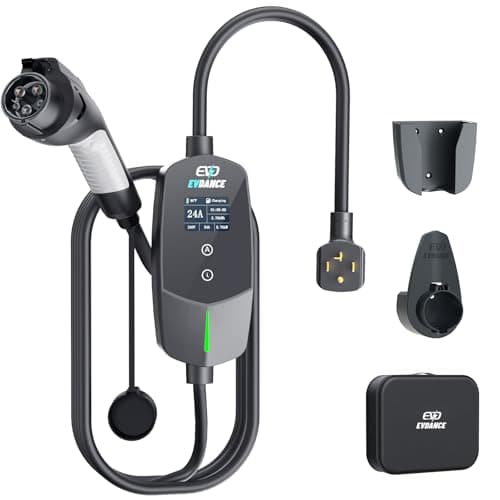
- A dryer outlet is nearly full speed. A four-prong NEMA 14-30 caps charging at 24 amps - 5.8 kW - which is 80 percent of everything a 4xe can accept. No new circuit, no trench, no inspection. For a battery EV that is a compromise; for a 4xe it is close to free performance.
- No DC fast charging to plan around. The 4xe charges on AC only. There is no 350 kW road-trip story to engineer your home setup around - the wall box is the whole system.
The deeper version of this argument, across every plug-in hybrid rather than just Jeep, is on our best chargers for plug-in hybrids page, and the running-cost side is in what it costs to charge a PHEV at home.
How we ranked these
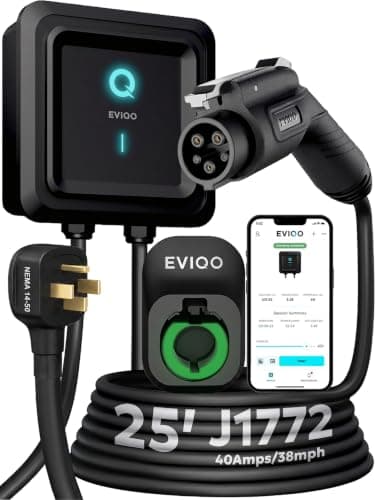
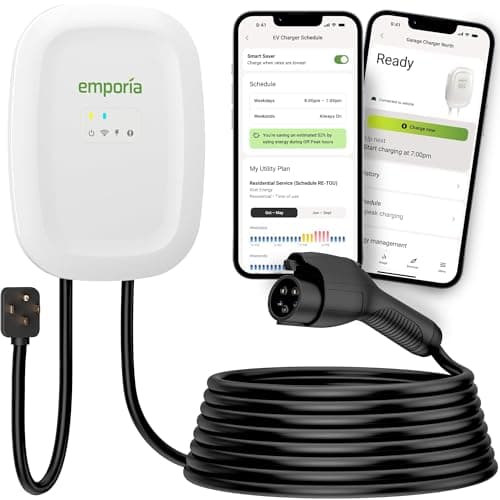
- Can it be set to 32 amps? 32 amps covers the 4xe with headroom. The method matters as much as the number - an internal dial set once (Grizzl-E), an app slider (EVIQO, Emporia) and a commissioning choice are three different ownership experiences.
- A verified UL or ETL listing to UL 2594.Not "built to UL standards". This box runs unattended in a garage next to a car with a fabric roof.
- Does it survive a Jeep's life? Mud, dust, a garage that is half workshop, doors open in winter. Enclosure rating and operating temperature range carry real weight here, which is why cast metal does well on this page.
- Cable length and routing.A Wrangler's charge port is on the driver's-side front fender. If you back into the garage, that is the far corner.
- Can it come along? A plug-in unit that lives in the trunk for a cabin weekend is a real feature on this brand in a way it is not on a commuter sedan.
- Headroom for the next car.The one honest argument for 40 or 48 amps on a 4xe: you expect a battery EV in the driveway within the charger's lifetime.
What to skip, specifically
- 48 amps and up, on a 4xe. It needs a 60-amp circuit, because the NEC sizes a continuous load at 125 percent, and it is usually hardwire-only. Your 4xe will use about 60 percent of it. The 80-amp tier is further still from making sense.
- Paying extra for DC-related features. The 4xe has no DC port. Anything sold on fast-charging compatibility is irrelevant to it.
- Adapters you do not need. Every Jeep plug-in sold in the US takes a J1772 plug for AC charging - the 4xe natively, the Wagoneer S through the AC half of its CCS1 inlet. A J1772 wall charger plugs straight in, with nothing in between. The NACS adapter conversation only starts at a Tesla connector, and our adapter explainer covers when that applies.
- Subscriptions. No charger in this registry needs one.
The short version
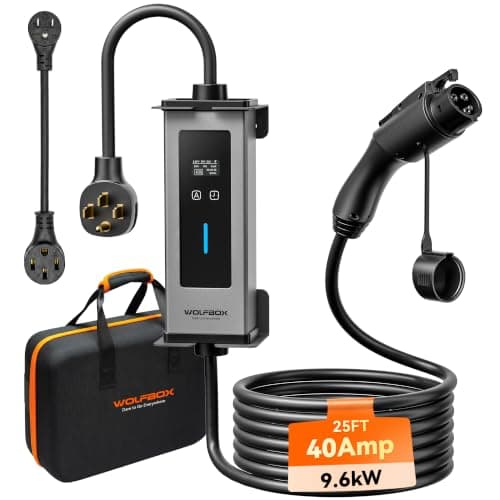
- Wrangler or Grand Cherokee 4xe, new circuit going in: a 40-amp unit set to 32 amps. Done, for years.
- 4xe with a dryer outlet in the garage: a 24-amp 14-30 charger. Nearly the full rate, zero electrical work.
- 4xe, short commute, outlet where you park: run the cordset for a month before buying anything.
- Wagoneer S: a 40-to-48-amp unit. This is the Jeep that can use it.
Find one number before you spend anything
Your car's maximum AC charge rate in kilowatts, from the owner's manual. Divide it by 240 and you have the amps the car will draw - and that is the biggest charger worth owning, because under the SAE J1772 standard the charging handshake only ever offers the car a maximum and the car takes what it can convert. For the 4xe that arithmetic lands at roughly 30 amps. For the Wagoneer S it lands near 46, which is why the same brand needs two answers.
Then check these four
- Adjustable current, with the method named. You want to be able to set 32 amps today and 40 later without buying a second charger.
- UL or ETL to UL 2594, from an OSHA-recognised laboratory. ETL is not the lesser mark - it is the same standard tested by Intertek rather than UL Solutions.
- An enclosure rating if it lives outside - NEMA 4 / 4X or IP65 and above - and an operating temperature range that covers your winter. Our cold-weather ranking is the deep version.
- A warranty longer than twelve months. Budget units cluster at one year; the better ones run three or more.
The six picks below are the registry units that fit a Jeep, ranked, each with its live price and the one reason not to buy it.