HUB 04 · Charging Costs
What Winter Actually Does to Your EV Charging Bill
Losing 40 percent of your range does not mean paying 40 percent more. Here is the difference between the two numbers, and the habit that shrinks the gap.
We earn a commission when you buy through our Amazon links, at no extra cost to you. It never affects our rankings, and we say so when the cheaper product is the better buy. How this works.
Winter makes an EV less efficient, so it does cost more to run. But the number people quote - a 40 percent range loss - is not the number that lands on your electricity bill, and confusing the two causes a lot of unnecessary alarm. Your bill goes up in proportion to the extra energy you actually use, over the months it is actually cold, and a good chunk of that is optional. Here is how to work out your own figure.
Why the bill rises less than the range falls
Three things separate the headline from the invoice:
- You pay per kilowatt-hour, not per percent. Cost tracks the energy you put in, and you only put in what you use. Driving the same miles less efficiently costs more - but it scales with your mileage, not with the range figure on the dashboard.
- Winter is a season, not a year. The worst-case efficiency figures are for genuinely cold days. Averaged over twelve months, a few hard months move an annual total far less than they move a January one.
- The big cost is cabin heat, and it is partly avoidable. US Department of Energy figures attribute about two-thirds of the extra cold-weather energy to heating the cabin. Heat the cabin from the wall instead of the pack and much of that never touches your driving efficiency at all.
The distinction that matters: range loss is about how far one charge takes you. Cost is about how many kilowatt-hours a month of driving takes. The second is the one you pay for, and it is the one to calculate.
Work out your own seasonal number
The method is the same one used across this hub, with one adjustment - use your winter efficiency rather than your annual average:
- Take your monthly miles and your observed winter efficiency in miles per kWh. Your car reports this; write down the figure on a cold week rather than trusting the sticker.
- Divide the miles by that efficiency to get energy into the battery, then divide by about 0.90 for charging losses to get energy drawn from the wall.
- Multiply by your own electricity rate.
- Do the same with your summer efficiency. The difference between the two totals is your real winter premium.
The calculator below does the arithmetic - run it twice, once with each efficiency figure. The full derivation is in cost to charge at home, and the monthly framing is in cost to charge an EV per month.
Run it for your car
Cost-to-charge calculator
Put in your electricity rate, your battery size and your car's efficiency. The math is the same one shown above, with a 10% charging loss included so the number is realistic.
- $8.09
- A 10% to 80% charge
- $11.56
- A full (empty to 100%) charge
- $0.05
- Cost per mile
- $5.08
- Cost per 100 miles
Estimate only. Actual cost depends on your exact utility rate (including any time-of-use pricing and fees), your car's real efficiency, temperature, and charging losses. Check your electric bill for your true rate.
Charging losses rise in the cold too
One extra effect worth knowing about: in cold weather a larger share of the energy you draw from the wall goes into warming the pack rather than into the battery, so the roughly 10 percent charging loss the formula assumes is larger on a freezing night. This is a real cost and a small one, and it is another argument for charging in a garage rather than on an exposed driveway where you have the choice - garage vs outdoor charging covers the trade-offs.
Four ways to shrink the winter premium
- Precondition while plugged in. The single biggest lever, because it moves cabin heating off the battery and onto the grid at your home rate. See preconditioning while plugged in.
- Charge off-peak. A time-of-use rate cuts the price of every kilowatt-hour you buy, which matters more in the months you buy more of them - off-peak and time-of-use charging has the mechanics, and a scheduling charger such as the Emporia automates it.
- Use seat and wheel heaters. Heating you costs a fraction of heating the whole cabin.
- Keep tires at pressure. Pressure drops with temperature, and low pressure is a quiet efficiency tax for the whole season.
Keep it in proportion
Even at its winter worst, home charging remains dramatically cheaper per mile than gasoline - the comparison is in EV vs gas - and dramatically cheaper than public fast charging, per home vs public charging cost. Winter narrows the advantage; it does not remove it. And the range side of the story, which is the part people actually feel, is in cold-weather range loss.
The gear
Recommended gear for this guide
The products this guide refers to, with prices pulled live from Amazon and dated on each card.
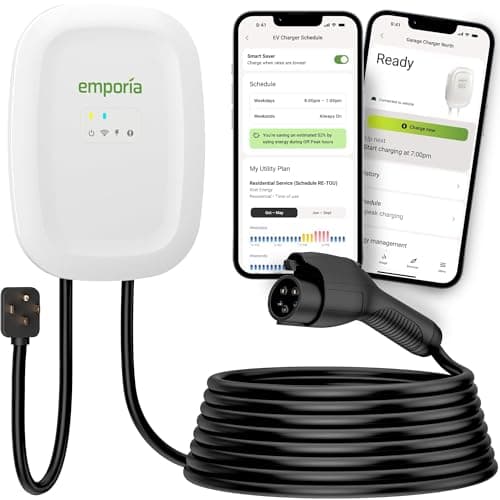
Most homes that want speed and smarts
Emporia Level 2 (48A)
The charger that refuses to charge you extra for being smart: full 48-amp speed and real energy monitoring at roughly the price of a plain plug-in box.
#ad · As an Amazon Associate we earn from qualifying purchases.
Questions
Frequently asked
Does it cost more to charge an EV in winter?
Yes, because the car uses more energy per mile - mostly for cabin heating. But the increase applies to the months that are actually cold and scales with your mileage, so the annual effect is much smaller than the headline range-loss percentage suggests.
How do I calculate my winter charging cost?
Use your observed winter miles per kWh rather than your annual average: monthly miles divided by that efficiency, divided by about 0.90 for charging losses, times your electricity rate. Run the calculator twice - once with summer efficiency, once with winter - and compare.
Does preconditioning increase my electricity bill?
Slightly, and it is worth it. You are moving cabin heating from the battery to the wall, which costs a small amount at your home rate and buys back range you would otherwise lose. It is one of the cheapest trades in EV ownership.
Is charging less efficient in the cold?
Yes. A larger share of the energy drawn from the wall goes into warming the pack rather than into the battery, so the usual charging loss is somewhat higher on a freezing night. It is a real but modest cost.
Keep reading
Related
- Cold-Weather Range LossThe range side of the same seasonal story.
- Preconditioning While Plugged InThe habit that shrinks the winter premium most.
- Off-Peak & Time-of-Use ChargingCheaper kilowatt-hours in the months you buy more of them.
- Cost to Charge at HomeThe formula this page adjusts for winter.
- Cold Weather & Battery HealthWhy none of this is doing damage to the pack.
More in this section
More Charging Costs
Receipts
Sources
- US DOE / EPA fueleconomy.gov - cold weather effects on EVs (range about 41% lower at 20F with cabin heating; about two-thirds of the extra energy heats the cabin; about 12% lower with the heater off)
- US EIA - average retail price of electricity by state and sector
- US DOE AFDC - charging an EV at home
We do not run a testing lab, and we do not pretend to. Where a measured number came from someone else's lab, we name them and link them. Where we could not verify something, we say so on the page rather than quietly leaving it out. Read our full method.