HUB 03 · Charging Guides
Getting an EV Charger Approved by a Condo or HOA
You own the unit, the association owns the garage, and the electricity comes from a meter nobody wants to argue about. Here is how these approvals really get won.
We earn a commission when you buy through our Amazon links, at no extra cost to you. It never affects our rankings, and we say so when the cheaper product is the better buy. How this works.
Condo and HOA charging is a harder problem than renting, and for an unexpected reason: there is no single person who can say yes. A landlord can approve a request over coffee. A board has governing documents, shared infrastructure, a reserve fund, and a duty to treat every owner the same. That means the winning move is not persuasion, it is paperwork - a proposal that fits the rules the board already has to follow.
First, establish three facts
Everything downstream depends on these, and most people start arguing before they know them:
- Is your parking deeded, assigned, or common? A deeded space you own is the strongest position. An assigned space you have exclusive use of is next. A common first-come space is the hardest, because a charger there serves everyone or no one.
- Where would the power come from?Your unit's panel (best - you pay for what you use) or a house meter (hardest - the association buys your electricity unless it is metered). This single question decides most of the objections.
- What do the governing documents say? Read the declaration and the rules for architectural change, alterations to common elements, and any existing EV language. Some associations already have a procedure and nobody has used it.
Know the ground rules where you live
A number of states have enacted right-to-charge provisions that limit how far a condo association can refuse an owner's reasonable request, usually with conditions about insurance, licensed installation and the owner bearing the cost. The details vary a great deal, and this is not a place to rely on a general article. Look your own state up in the DOE laws and incentives database and read the actual provision before you cite it - and cite it politely, as context rather than a threat. Boards respond far better to a cooperative owner than a litigious one.
Write the proposal the board needs
A board approves things that are specific, insured, and free to the association. Include:
- Scope and location - the exact space, the exact equipment, the route the conduit takes, and a drawing or photo.
- Electrical source and metering - which panel, and how consumption is measured and paid. If it is a house meter, propose the sub-meter or reimbursement mechanism yourself; see do I need a separate meter for EV charging.
- Load capacity- a licensed electrician's confirmation that the building service supports it, and load management if it does not. This is the technical objection boards raise most, and load management instead of a service upgrade is usually the answer that unlocks it.
- Licensed and insured contractor, permits, inspection - name them, and attach the certificate of insurance.
- Liability and maintenance - your written acceptance of responsibility for the equipment, its maintenance, and any damage.
- Removal or transfer - what happens when you sell.
Make it about the building, not about you. The strongest framing is a precedent the association can reuse: propose a standard that any owner could follow, and offer to be the pilot. Boards that fear one-off exceptions are often happy to adopt a policy - and you have just written it for them.
The pragmatic interim
Approvals take months. In the meantime, a 120-volt outlet in a garage is often already there, and a Level 1 cord overnight covers a lot of ordinary driving - the arithmetic is in Level 1 vs Level 2. If there is a 240-volt outlet anywhere you can reach, a portable Level 2 unit is a real solution that requires no approval at all. Do not let a slow board stop you owning the car; the options are ranked in charging an EV at an apartment and can you own an EV without home charging.
Think one step ahead
The best proposals solve the association's next problem too. When a second and third owner want chargers, a building that installed one dedicated circuit has to start over; a building that installed a shared, load-managed backbone just adds a unit. Say so. Boards worried about fairness respond well to a plan that scales, and the multi-unit hardware conversation is in chargers with load balancing. For a single deeded spot with its own circuit, the ordinary home units in the best Level 2 chargers for home are all that is needed.
The gear
Recommended gear for this guide
The products this guide refers to, with prices pulled live from Amazon and dated on each card.
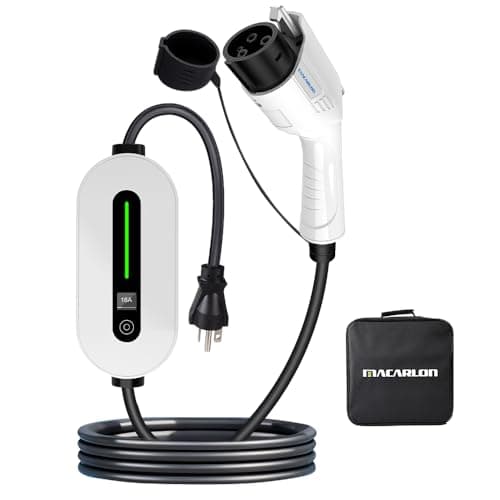
A 120V cord with a 240V upgrade path
MACARLON 16A Level 1/2
A 120-volt cord that also does Level 2 - it ships with a NEMA 6-20 plug and a 5-15 adapter, so a spare 240-volt outlet roughly doubles your charging speed for no extra hardware.
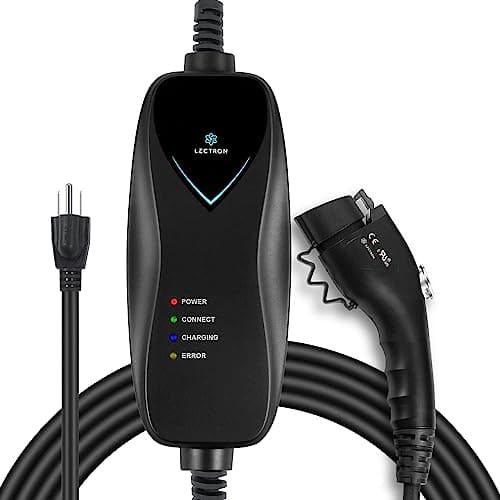
The certified 120V cord
Lectron Level 1 (15A)
The Level 1 cord to buy if you buy only one: ETL certified to UL 2594 and Energy Star listed, which most of the 120-volt field on Amazon cannot claim.
#ad · As an Amazon Associate we earn from qualifying purchases.
Questions
Frequently asked
Can my HOA refuse to let me install an EV charger?
It depends on your state and your governing documents. Several states have right-to-charge provisions that limit refusal for an owner willing to meet conditions such as licensed installation, insurance and bearing the cost. Check your state in the DOE laws and incentives database.
Who pays for the electricity in a condo garage?
It depends which meter feeds the space. If it is your unit's panel, you already do. If it is a house meter, propose a sub-meter or a reimbursement mechanism up front - this is the objection boards raise most often.
What if my parking space is not assigned to me?
That is the hardest case, because a charger in a shared space benefits whoever parks there. The realistic path is a shared, load-managed installation the association adopts as a policy, rather than a private charger.
What can I do while the approval is pending?
Use what already exists. A 120-volt outlet plus a Level 1 cord covers a lot of ordinary daily driving overnight, and a portable Level 2 unit on any existing 240-volt outlet needs no approval at all.
Keep reading
Related
- Asking a Landlord for a ChargerThe rental version of the same negotiation.
- Charging an EV at an ApartmentEvery option while approval is pending.
- Load Management vs a Service UpgradeThe answer to a board's capacity objection.
- Chargers with Load BalancingThe hardware that lets a building add units one at a time.
- Do I Need a Separate Meter?How to settle the who-pays-for-power question.
More in this section
More Charging Guides
Receipts
Sources
- US DOE AFDC - laws and incentives database (search your state for right-to-charge and EVSE rules)
- EC&M - NEC requirements for EV equipment (Article 625)
- US DOE AFDC - charging an EV at home
We do not run a testing lab, and we do not pretend to. Where a measured number came from someone else's lab, we name them and link them. Where we could not verify something, we say so on the page rather than quietly leaving it out. Read our full method.