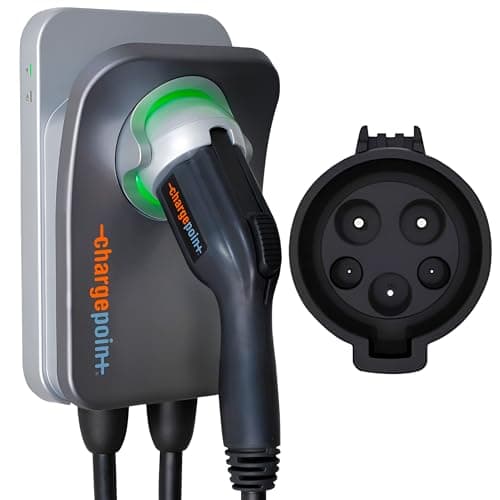
The highest published output of any charger we track is the ChargePoint Home Flex at 50 amps and 12 kW - but it needs a 70- or 80-amp breaker and a car that accepts more than 11.5 kW, and almost no car does. For nearly everyone the real answer is the Emporia Level 2: 48 amps, 11.5 kW, the same speed as every other full-speed unit here, at the lowest price of any of them. If you cannot hardwire, the Autel MaxiCharger's 40 amps / 9.6 kW is the ceiling of what a plug can deliver, and it is enough for most cars.
This page ranks chargers on one number: the kilowatts they put into a car. Not amp class, not features, not price. That makes it the shortest ranking on the site to state and the easiest one to misread, because a charger's kW rating is a ceiling, not a promise. Three separate limits sit between the number on the box and the rate on your dash, and whichever is lowest wins:
- Your circuit.EV charging is a continuous load, so the National Electrical Code sizes the breaker at 125 percent of the charger's draw. A 48-amp charger needs a 60-amp breaker; a 50-amp setting needs 70 or 80. If your panel cannot carry it, the charger gets dialed down and the extra kilowatts stay on the shelf.
- Your connector. A NEMA 14-50 plug sits on a 50-amp circuit, which caps the charger at 40 amps / 9.6 kW. Every unit above 40 amps on this page is hardwired for exactly that reason.
- Your car. The onboard AC charger inside the vehicle sets the hard limit. Many EVs cap at 7.7 kW (32A) or 9.6 kW (40A); a fast one accepts 11.5 kW (48A). Buy 12 kW for a car that accepts 7.7 and you have bought a slower charger with a bigger price tag.
Work out your own three numbers first - the what amp charger do I need guide does the arithmetic, and how fast will my EV charge converts them into miles per hour for your specific car. Then come back and buy the cheapest unit on this list that clears them.
What the kilowatt ladder actually looks like
Kilowatts are volts times amps divided by 1,000, and a home Level 2 circuit is 240 volts. That gives the whole ladder in one line of arithmetic:
- 50A = 12.0 kW - the top of home AC charging, and a 70/80-amp breaker.
- 48A = 11.5 kW - the practical ceiling. A 60-amp breaker and a hardwire.
- 40A = 9.6 kW - the fastest a NEMA 14-50 plug can go. A 50-amp breaker.
- 32A = 7.7 kW - a 40-amp breaker, and the exact rate many EVs accept anyway.
- 12-16A = 1.4-1.9 kW - Level 1 on a household outlet, roughly 3-5 miles of range per hour.
In range terms the DOE puts Level 2 at roughly 25 miles of range per hour, rising to about 30 at 9.6 kW and about 40 at 11.5 kW on a car that can take it. The step from 40 amps to 48 is real but modest - on a normal overnight charge it is the difference between finishing at 2am and finishing at 1am, which is worth nothing at all. The step from Level 1 to Level 2 is the one that changes how you live with the car.
The catch nobody puts on the box
Two cars on sale accept meaningfully more than 11.5 kW of AC: the Lucid Air charges at up to 19.2 kW, and the 2022-2023 F-150 Lightning Extended Range does the same on Ford's 80-amp Charge Station Pro (2024-onward Lightnings dropped to 48 amps / 11.5 kW). Nothing on this page reaches 19.2 kW, because an 80-amp charger needs a 100-amp circuit and is a different class of install. If you own one of those two cars and have the panel for it, buy the manufacturer's 80-amp unit. Everyone else is choosing between 12 kW and 11.5 kW, which is a 4 percent difference and not worth a panel upgrade.
The picks
The ChargePoint Home Flextakes the top of the ladder on its published number: selectable 16 / 24 / 32 / 40 / 48 / 50 amps, and 12 kW at the top setting. ChargePoint's own installation guidance is unusually clear about the price of that setting - 48 amps wants a 60-amp breaker, 50 amps wants a 70- or 80-amp one - and it is the only unit here that will actually use a 70-amp circuit if you have one.
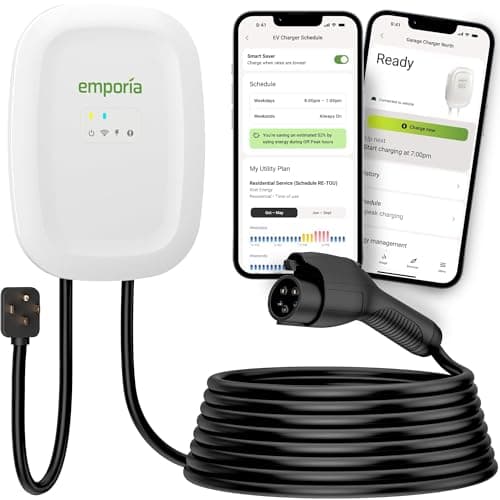
The Emporia Level 2 is the pick for the overwhelming majority. Hardwired it delivers the full 48 amps / 11.5 kW, its output is adjustable in single-amp steps from 6 to 48, and it costs less than everything else in the full-speed field. It is the same unit that wins our main Level 2 roundup and our 48-amp roundup, for the same reason each time.
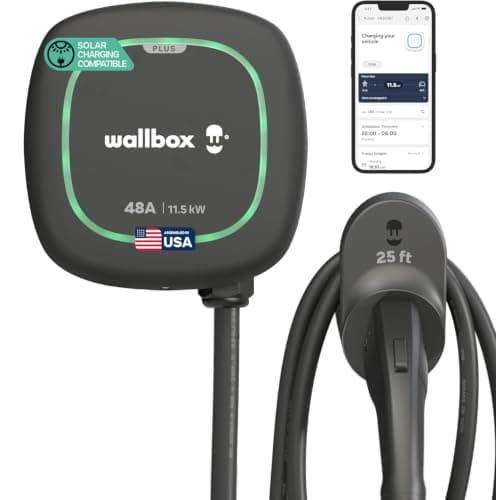
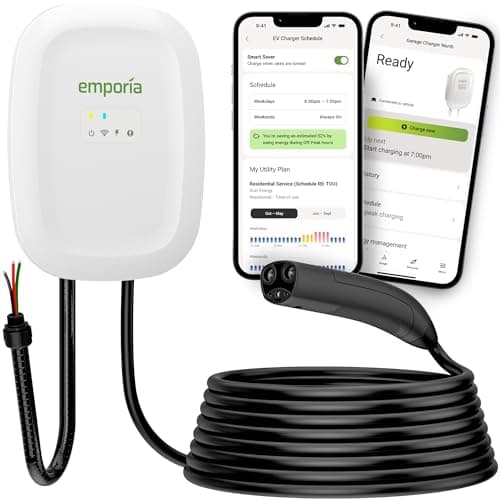
The Wallbox Pulsar Plus matches that 11.5 kW in the smallest body of any full-speed charger here, and adds Power Boost load management if your panel is the constraint. The Emporia NACS is the same 48 amps behind a native Tesla-style plug, for a driveway where no adapter should be involved. The Grizzl-E Ultimate is the rugged version of 11.5 kW - a cast-aluminum IP67 shell for a wall that gets weather - though as of our last price check no J1772 version had a buyable Amazon listing, so it shows no price.
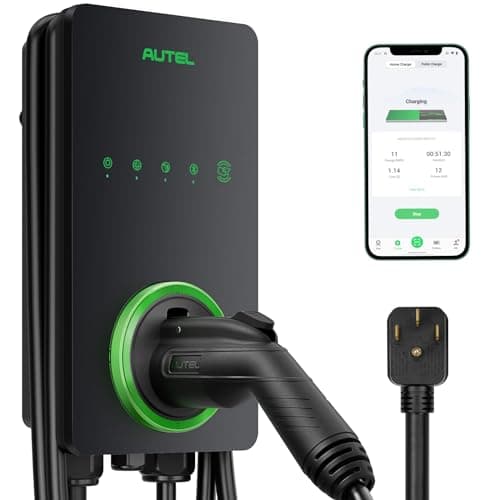
The Autel MaxiCharger closes the ladder at 40 amps / 9.6 kW, and it is here on purpose: it is the fastest speed you can get without an electrician wiring a unit permanently into your panel. Plug it into a rated NEMA 14-50 and you are at the plug-in ceiling.
None of this is DC fast charging.The 150 kW and 350 kW numbers you see on a road trip come from DC chargers that bypass the car's onboard AC charger entirely. They are not a home product at any price - see DC fast charging vs Level 2 for why, and AC vs DC charging for the mechanism.
How the six compare
| Charger | Amps / kW | Plug type | Cable | Smart / Wi-Fi | Safety listing | Price tier |
|---|
| ChargePoint Home Flex | 16-50A / up to 12.0 kW | NEMA 14-50 plug (to 40A) or hardwired (to 50A) | 23 ft | Wi-Fi, ChargePoint app | UL / cUL (UL 2594, UL 2231), Energy Star | Premium |
| Emporia Level 2 | 6-48A / up to 11.5 kW | NEMA 14-50 plug (40A) or hardwired (48A) | 25 ft | Wi-Fi, Emporia app | UL listed, Energy Star | Value |
| Wallbox Pulsar Plus | 48A / 11.5 kW | Hardwired | 25 ft | Wi-Fi + Bluetooth, myWallbox | UL listed, Energy Star | Premium |
| Emporia NACS | Up to 48A / 11.5 kW | Hardwired (NACS connector) | 24 ft | Wi-Fi, Emporia app | UL listed (2594/2231/2251/817/991), Energy Star | Value |
| Grizzl-E Ultimate | 16-48A / up to 11.5 kW | Hardwired | 25 ft | None - no app, no cloud | UL certified, IP67 / NEMA 4X | Premium |
| Autel MaxiCharger | 40A / 9.6 kW | NEMA 14-50 plug | 25 ft + holster | Wi-Fi + Bluetooth, Autel Charge | NEMA 4X weather-rated shell; no UL mark named in our spec set | Mid |
Every figure above is the manufacturer's published claim from its live listing, datasheet or install guide. We compile and compare documented specifications, safety listings and code requirements; we do not bench-measure charging rates, and our methodology page says so in those words.
The buyer's guide: how to actually get the kW you paid for
Level 1 vs Level 2, in one paragraph
Level 1 is the cord that came with the car in an ordinary 120-volt household outlet: 12 to 16 amps, 1.4 to 1.9 kW, roughly 3 to 5 miles of range per hour. Level 2 is a 240-volt circuit - the same class of supply as an electric dryer or range - at 16 to 50 amps, 3.8 to 12 kW, and roughly 25 to 40 miles per hour. There is no Level 1 product on this page because no amount of engineering makes a 120-volt outlet fast. The full comparison lives in Level 1 vs Level 2.
Amps to kW, and kW to miles
Multiply amps by 240 volts and divide by 1,000. 32A = 7.7 kW. 40A = 9.6 kW. 48A = 11.5 kW. 50A = 12.0 kW. To turn kilowatts into miles per hour, divide by the car's consumption - roughly 0.3 kWh per mile for a typical EV, so 9.6 kW is about 32 miles per hour of charging and 11.5 kW about 38. A big SUV or truck consumes more and gains fewer miles from the same kilowatt-hours. Full working in what kW means in EV charging.
NACS vs J1772: a shape, not a speed
The connector on the end of the cable changes nothing about the rate. A 48-amp NACS charger and a 48-amp J1772 charger both deliver 11.5 kW; what the plug decides is whether your car needs an adapter. Teslas and a growing list of 2025-onward models have a native NACS port; most other EVs use J1772. Check the car, not the badge - how to tell which port you have takes thirty seconds, and J1772 vs NACS covers the transition.
Hardwired vs plug-in is a speed decision here
On most pages this is a convenience question. On this one it is the ceiling: a NEMA 14-50 plug lives on a 50-amp circuit, and the continuous-load rule caps the charger at 40 amps / 9.6 kW. Anything above that must be hardwired. So if 11.5 kW is the goal, you are hiring an electrician - budget for it before you buy the charger. If you rent, might move, or simply want the unit to come with you, take the 9.6 kW and stop worrying about it. See hardwired vs plug-in, and the best plug-in chargers if that is your answer.
Load management: the way to be fast on a small panel
If an NEC load calculation says your service cannot spare 60 amps, the choice is not automatically "buy a slower charger". Dynamic load management watches the whole house and throttles the charger only when everything else is running, which lets a full-speed unit sit on a panel that could not otherwise carry it. Wallbox calls it Power Boost and drives it from a clamp meter; Emporia does the same through its app. It is usually far cheaper than a service upgrade - the details are in chargers with load balancing and the load calculation guide.
So, which one?
Buy the Emporia Level 2. It hits the practical ceiling of home charging at the lowest price in the field, and it dials down to whatever your panel can spare. Buy the ChargePoint Home Flex only if you have a 70-amp circuit and a car that accepts more than 11.5 kW - otherwise you are paying for a setting you cannot use. Take the Wallbox if the charger has to be small or your panel needs load management, the Emporia NACS if every car in the driveway has a Tesla-style port, and the Grizzl-E Ultimate if the wall it hangs on gets rained on. And if hardwiring is not happening, the Autel MaxiCharger at 9.6 kW is not a compromise for most cars - it is simply the whole answer.