HUB 03 · Charging Guides
Preconditioning Your EV While Plugged In
The one winter habit that pays for itself every single morning: heat the car with grid electricity before you unplug, not with the battery after you leave.
We earn a commission when you buy through our Amazon links, at no extra cost to you. It never affects our rankings, and we say so when the cheaper product is the better buy. How this works.
If you take one habit from this entire site into a cold winter, make it this one. Warm the car while it is still plugged in, and the energy comes from the wall instead of the battery. The US Department of Energy recommends it in exactly those terms, and the reason it matters so much is arithmetic: about two-thirds of an EV's extra winter energy use goes to heating the cabin. Move that load to the grid and you have recovered the largest single chunk of your winter range penalty - for the price of a few cents of electricity.
What preconditioning actually does
Preconditioning means bringing the car to operating temperature before you drive: warming the cabin, clearing the glass, and on most modern EVs warming the battery pack itself. When the car is plugged in, it draws that energy from the charger. When it is not, it draws it from the pack, and every mile of range spent on heat is a mile you do not drive.
Note the two halves, because they matter differently:
- Cabin preconditioning is a comfort and range feature. This is the big energy number, and it is the one you control every morning.
- Battery preconditioning is a performance feature. A warm pack accepts charge faster and delivers power more willingly. Before a DC fast charge it is transformative, which is the subject of battery preconditioning for fast charging. Before a commute it is a smaller, quieter benefit.
How to set it up
Every EV does this slightly differently, but the pattern is the same everywhere. Look for a scheduled departure or preconditioningsetting in the car's climate menu or its phone app, set the time you actually leave, and - this is the part people miss - set it to run only while plugged in if that option exists. Then leave the car connected overnight even when it does not need much charge, because being plugged in is what makes the trick work.
Pair it with your off-peak window. Scheduled departure and scheduled charging are different settings and people routinely set one and not the other. Line them up so charging finishes in the cheap overnight window and preconditioning runs at the end of it, just before you leave - off-peak and time-of-use charging explains the rate side. A smart charger with scheduling, like the Emporia, makes the charging half easy if your car's own scheduler is awkward.
What it costs
Very little, and this is the part that surprises people. Preconditioning draws household electricity for a short window - the same rate you pay for charging, which is a fraction of what public charging costs and a small fraction of gasoline. You are not adding a significant line to your bill; you are moving a load that was going to happen anyway from the expensive place (your battery, costing you range) to the cheap place (the wall). Our winter charging cost page does the seasonal math, and cost to charge at home has the formula for your own rate.
The other things it buys you
- No scraping. The defroster has been running on grid power; the glass is clear when you open the door.
- A warm pack for the drive. Regenerative braking is often limited on a cold battery, which is why a freezing EV coasts strangely for the first few miles. Preconditioning shortens that.
- Better fast-charging if you leave straight onto a trip. A pack that starts warm reaches useful DC charging power sooner.
The catch worth knowing
If the car is not plugged in, preconditioning costs you range rather than saving it - you are running the heater on battery power before you have even left. On a cold morning with a half-empty pack and no charger, skip it and use the seat heater instead. That is the whole reason this page is titled the way it is: the value is in the plug, not the button.
Which is also, quietly, an argument for having a charger where you park - a habit that needs a plug is only free if the plug exists. If that is your gap, start with the Level 2 roundup, or with the no-home-charging options if a wall charger is not available to you.
The gear
Recommended gear for this guide
The products this guide refers to, with prices pulled live from Amazon and dated on each card.
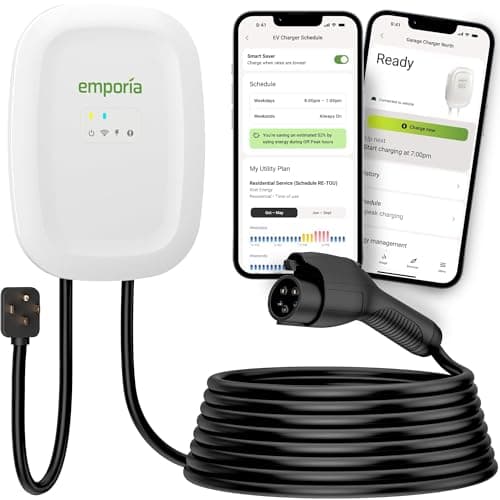
Most homes that want speed and smarts
Emporia Level 2 (48A)
The charger that refuses to charge you extra for being smart: full 48-amp speed and real energy monitoring at roughly the price of a plain plug-in box.
#ad · As an Amazon Associate we earn from qualifying purchases.
Questions
Frequently asked
Does preconditioning use the battery or the charger?
If the car is plugged in, it draws from the charger, so your range is untouched. If it is not plugged in, it comes out of the battery. That is why the habit is specifically to precondition while connected.
How much range does preconditioning save?
It targets the largest slice of winter loss: US Department of Energy figures attribute about two-thirds of an EV's extra cold-weather energy use to cabin heating. Moving that to grid power recovers a substantial share of the penalty.
Should I precondition every morning in winter?
If the car is plugged in, yes - it costs a few cents of household electricity and buys range, comfort and clear glass. If it is not plugged in, it is usually not worth the battery energy.
Is scheduled departure the same as scheduled charging?
No, and setting only one is a common mistake. Scheduled charging picks when the car draws power; scheduled departure picks when it warms up. Line both up with your off-peak window.
Keep reading
Related
- Cold-Weather Range LossThe penalty this habit is designed to claw back.
- Preconditioning for Fast ChargingThe DC side of the same idea.
- Off-Peak & Time-of-Use ChargingLine the warm-up up with the cheap window.
- Winter EV ChargingThe rest of the cold-weather routine.
- Cold Weather & Battery HealthWhy a warm pack is a happier pack.
More in this section
More Charging Guides
Receipts
Sources
- US DOE / EPA fueleconomy.gov - cold weather effects on EVs (range about 41% lower at 20F with cabin heating; about two-thirds of the extra energy heats the cabin; about 12% lower with the heater off; preheat while plugged in)
- US DOE AFDC - charging an EV at home
- US DOE / fueleconomy.gov - EV charging basics
We do not run a testing lab, and we do not pretend to. Where a measured number came from someone else's lab, we name them and link them. Where we could not verify something, we say so on the page rather than quietly leaving it out. Read our full method.