HUB 03 · Charging Guides
How Long Do Home EV Chargers Last?
Long enough that the question is really about which part gives up first - and on a plug-in install, the answer is usually not the charger at all.
We earn a commission when you buy through our Amazon links, at no extra cost to you. It never affects our rankings, and we say so when the cheaper product is the better buy. How this works.
A well-made, properly installed home charger is a decade-plus appliance - it has no moving parts except a contactor, and the standard it is listed to assumes years of daily duty. The useful question is not "how long does the box last" but "which part fails first", and on a plug-in install the honest answer is usually the outlet, not the charger.
We cannot give you a mean-time-to-failure figure, because nobody credible publishes one and we do not run a test lab. What we can do is name the four things that actually fail, in rough order of likelihood, and tell you which specifications on a product page change those odds. The companion question - who pays if it fails inside the covered period - is answered in EV charger warranties compared, which sets each manufacturer's published term side by side.
The four things that fail, in order
1. The receptacle, on a plug-in install
This is the most common failure in home charging and it is not a charger failure at all. A 40-amp continuous draw through a builder-grade NEMA 14-50 receptacle - the kind sold for occasional range or RV use - heats the contacts, the heat relaxes the spring tension, the looser contact heats more, and the cycle ends with a charred outlet and a melted plug. The melted-outlet photographs circulating online are almost always this, and almost never the charger.
The fix is cheap and it belongs in the original install: an industrial-grade or purpose-built EV receptacle, torqued to spec. Our best NEMA 14-50 outlets roundup ranks the ones worth buying, and EV charger plug getting hot covers the warning signs. Hardwiring removes this failure mode entirely, which is one of the real arguments for it - hardwired vs plug-in weighs it against the loss of portability.
2. The cable and its strain relief
The charging cable is the only part of the system that gets handled every day, dragged across concrete, driven over, and coiled in the cold. Failures show up where the cable meets the enclosure and where it meets the connector - the two strain reliefs - and as cracking in the jacket on units whose cable stiffens badly in winter. A 25-foot cable that lives on the floor ages faster than a 16-foot one that lives on a hook.
This is the failure you have the most control over. A holster and a J-hook, so the connector never touches the ground and the cable hangs in a wide loop rather than a tight kink, is the single highest-value thing you can add to an install - see cable holsters and organizers and cable management.
3. The connector contacts
The J1772 coupler is a designed-for-duty part: the specification covers the power contacts, the control pilot and the proximity pin, and the coupler is built for repeated mating rather than occasional use. In practice the things that kill a connector early are grit ground into the contacts from being dropped on a driveway, water sitting in an upward-facing connector left uncapped, and physical damage from being run over. All three are handling problems, not wear-out.
4. The electronics and the contactor
Inside the box there is a relay or contactor that closes to energize the cable, a ground-fault sensing circuit, a pilot-signal generator, and on smart units a radio and a processor. The contactor is the only part that mechanically cycles, and it cycles once or twice a day rather than thousands of times an hour. Electronics failures do happen - they are what a warranty is for - but they are not a wear-out mechanism on a normal domestic duty cycle.
On a connected charger there is a fifth category that is not a hardware failure at all: the service going away. The box keeps charging, but scheduling, monitoring and app control stop when a vendor shuts a platform down. That is a real consideration on a ten-year purchase, and it is the main argument of our chargers without Wi-Fi ranking.
What on the spec sheet actually changes the odds
| Specification | What it buys you | What to look for |
|---|---|---|
| Safety listing | Independent testing of the enclosure, the protective functions and the construction | UL or ETL to UL 2594, verified in the lab's directory |
| Enclosure rating | Resistance to rain, dust, hose spray and condensation | NEMA 4 or 4X, or IP65 and up; NEMA 3R is the minimum for outdoors |
| Enclosure material | Impact and UV resistance over years on an exposed wall | Cast aluminum or a thick engineering polymer, not a thin shell |
| Cable jacket and cold rating | Flexibility that survives winter handling | A published low-temperature rating, and TPE or similar rather than cheap PVC |
| Warranty length | The manufacturer's own confidence, and your recourse on an electronics failure | Check the current published term before you buy; it varies by brand and SKU |
| Replaceable cable | Whether the most-handled part can be renewed without replacing the whole unit | Rare on domestic units - treat it as a bonus, not an expectation |
The install decides more than the brand does
Two identical chargers, one on a torqued industrial receptacle under a soffit with a holster on the wall, the other on a hardware-store outlet on a south-facing wall with the connector on the ground, will not last the same length of time. The things that extend a charger's life are mostly free:
- Mount it so the cable hangs, not drapes. Connector in a holster, cable in a wide loop. Our mounting guide covers heights and positions.
- Get the circuit right once. Correct conductor size, correct termination torque, and the right breaker. See wire and breaker size.
- Shelter it if it is outdoors. A rated enclosure handles weather; shade and a bit of cover handle UV and standing water, and cost nothing. See weatherproofing an outdoor install.
- Inspect twice a year. Warmth at the plug, grit in the connector, cracks at the strain relief. Five minutes - the routine is in maintenance and care.
When to replace rather than repair
Domestic chargers are rarely economic to repair: they are sealed, listed assemblies, and opening one voids both the listing and the warranty. The honest decision points are these. Replace if the enclosure is cracked or water has been inside. Replace if the cable jacket is split or the connector has visible arcing damage, since neither is user-serviceable on most units. Replace if it faults repeatedly after the receptacle and the circuit have been ruled out - our fault code guide and not-charging checklist cover the ruling out. And consider replacing, rather than repairing, when the unit is old enough that a newer one would also buy you adjustable amperage or a connector change you want anyway.
Do not replace because the app stopped working, until you have checked whether the charger still charges. It usually does.
What to look for in a charger you want to keep for a decade
- A verified UL or ETL listing to UL 2594. The floor, not a feature.
- A metal or heavy-gauge enclosure with a real outdoor rating, NEMA 4 / 4X or IP65 and above, even if the unit will live in a garage - garages flood and condense.
- As little software as you need. Every connected feature is a dependency with a support window. Buy the ones you will use and no more.
- Adjustable amperage, so the unit survives a move to a different circuit or a different house.
- And budget for the receptacle. On a plug-in install it is the part most likely to fail, and it is the cheapest part to get right.
The picks below are the registry items that fit: two cast-aluminum chargers built for longevity, one listed value unit, and the EV-rated receptacle that stops the most common failure of all.
The gear
Recommended gear for this guide
The products this guide refers to, with prices pulled live from Amazon and dated on each card.
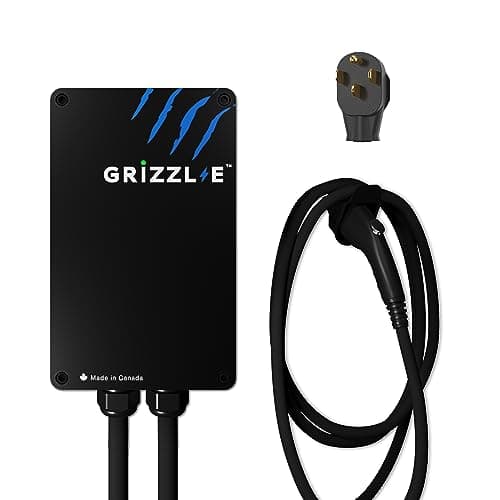
People who want a charger, not an app
Grizzl-E Classic (40A)
A UL-certified cast-aluminum box with no app to update and nothing in the cloud to fail — the durability default for people who want a charger, not a gadget.
- Guide
A permanent, weatherproof 48A install
Grizzl-E Ultimate (48A)
A dedicated 48-amp charger in a cast-aluminum, IP67 shell - the toughest full-speed box here, built to be hardwired to a wall and left to work.
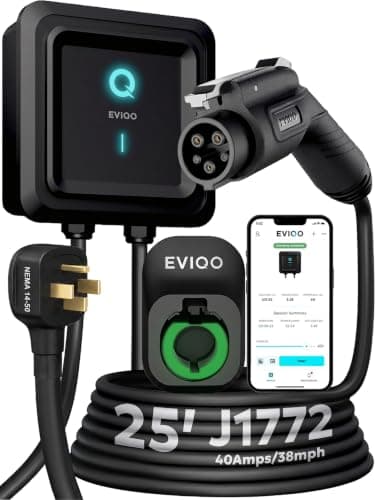
Budget buyers who still want smart features
EVIQO Level 2 (40A)
A double-listed (UL and ETL), IP66-weatherproof smart charger that keeps landing at the bottom of the price band — a lot of certified hardware for the money.
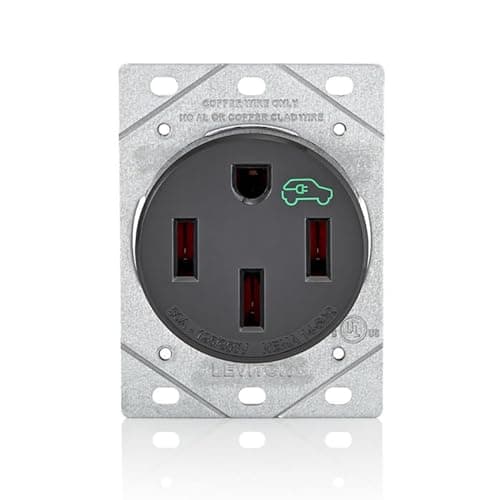
The dedicated EV-rated receptacle
Leviton 1450R EV Receptacle
The receptacle Leviton built specifically for EV charging - rated for the long charge sessions and constant plug cycles a home charger puts a range outlet through, from a brand electricians already trust.
#ad · As an Amazon Associate we earn from qualifying purchases.
Questions
Frequently asked
How long does a home EV charger last?
There is no published industry figure, but a listed unit with a rated enclosure, properly installed, is a decade-plus appliance - it has one mechanical part that cycles once or twice a day. What tends to end a charging setup earlier is the receptacle on a plug-in install, or damage to the cable and connector from handling. Both are preventable.
What part of an EV charger fails first?
On a plug-in install, the NEMA 14-50 receptacle - a continuous 40-amp draw through a light-duty outlet loosens and chars the contacts. After that, the cable's strain reliefs and the connector, because they are the parts handled daily and dropped on concrete. The electronics inside the box are the least likely failure on a normal domestic duty cycle.
Can you repair a home EV charger?
Generally no, and you should not try. Domestic units are sealed listed assemblies; opening one voids the UL or ETL listing that makes it safe to run unattended, and the warranty with it. Warranty replacement is the normal path for an electronics failure. What you can fix yourself is everything around it: the receptacle, the mounting, the cable management.
Does leaving an EV charger plugged in all the time wear it out?
No. A charger sits in a low-power standby state when no car is connected and energizes the cable only after the handshake with the vehicle completes. Leaving it powered is the normal operating condition. Leaving the connector lying on the ground, exposed to grit and water, is what causes damage - which is what a holster solves.
Is a more expensive charger more durable?
Sometimes, and the price is not the signal - the spec sheet is. What correlates with durability is a cast metal enclosure, a NEMA 4 / 4X or IP65-plus rating, a cable with a published cold rating, and a verified safety listing. Plenty of mid-priced units have all four; plenty of expensive ones are paying for an app. Our best outdoor chargers ranking is sorted largely on exactly these properties.
What happens to my charger if the manufacturer goes out of business?
It keeps charging. The handshake with the car, the GFCI protection and the contactor are all local to the box. What stops is anything served from the vendor's cloud: app control, scheduling, energy history, firmware updates. If that prospect bothers you on a ten-year purchase, buy a charger with no radio at all - see best chargers without Wi-Fi.
Keep reading
Related
- EV charger maintenance and careThe twice-a-year routine that prevents most of what fails here.
- Best NEMA 14-50 outletsThe part most likely to fail on a plug-in install, done properly.
- EV charger plug getting hotThe early warning for the most common failure in home charging.
- Hardwired vs plug-inHardwiring removes the receptacle failure mode entirely.
- Weatherproofing an outdoor installEnclosure ratings, and the free measures that matter as much.
- Best outdoor chargersThe field ranked on the enclosure properties that drive longevity.
More in this section
More Charging Guides
Receipts
Sources
- Intertek - UL 2594 testing and certification for electric vehicle supply equipment
- Intertek - the ETL Listed Mark and OSHA Nationally Recognized Testing Laboratory (NRTL) status
- SAE J1772 specification (the AC coupler, control pilot and proximity detection)
- EC&M - NEC requirements for EV equipment (Article 625: EVSE is a continuous load, circuits sized at 125 percent of the load)
- United Chargers - Grizzl-E Classic (UL certified, cast aluminum, indoor or outdoor, NEMA 14-50 plug)
- United Chargers - Grizzl-E Ultimate 48 (IP67 cast aluminum, adjustable 16-48A, hardwired)
- US DOE / fueleconomy.gov - EV charging basics (Level 1, Level 2 and DC fast charging)
We do not run a testing lab, and we do not pretend to. Where a measured number came from someone else's lab, we name them and link them. Where we could not verify something, we say so on the page rather than quietly leaving it out. Read our full method.