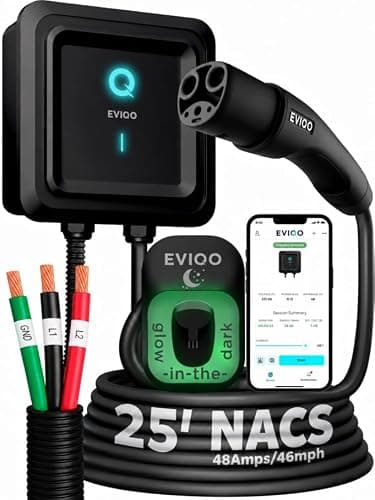
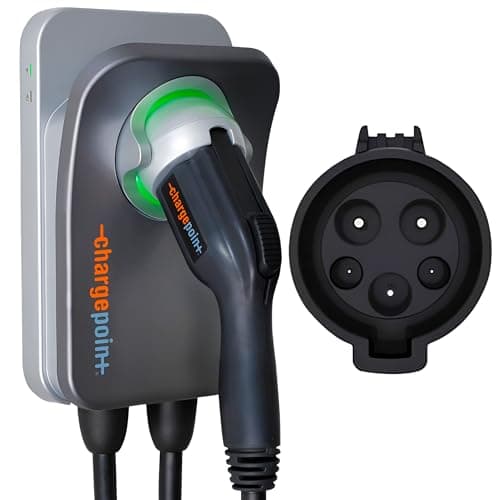
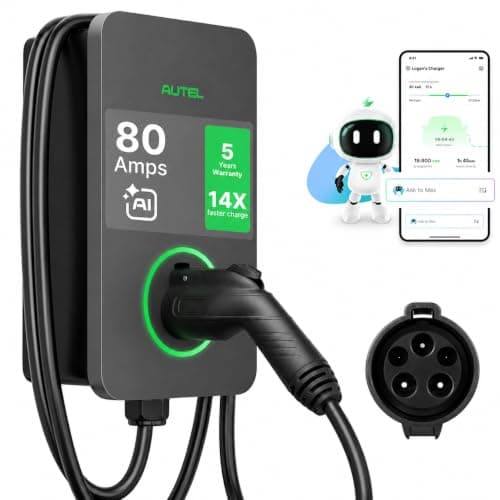
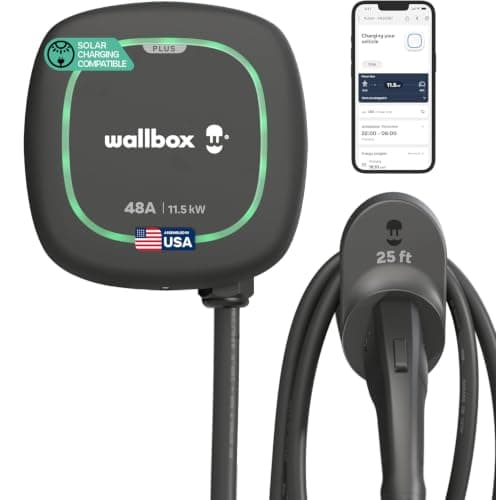
Buy a 48-amp hardwired charger on a 60-amp circuit. That is the right answer for nearly every electric truck on sale, because 48 amps / 11.5 kW is what nearly every electric truck accepts on AC - Tesla publishes 11.5 kW as its onboard-charger maximum, Ford lists 48 amps for F-150 Lightning trims without the Charge Station Pro, and Chevrolet lists 11.5 kW as standard on the Silverado EV. Our pick is the Wallbox Pulsar Plus at 48 amps: full speed, a 25-foot cable that actually reaches around a long vehicle, UL 2594 and UL 2231 listings, and power sharing for the day a second EV arrives. The 80-amp tier is real and we rank two units in it - but it only pays on the specific trims rated to accept 19.2 kW, and it wants a 100-amp circuit.
Why trucks are different: the pack, not the plug
Most of the advice in this category was written for a 60-to-80 kWh crossover, where an overnight charge is never in question. A pickup breaks that assumption in three ways at once.
The pack is enormous. An extended-range F-150 Lightning is around 131 kWh; the Cybertruck is around 123 kWh; the Silverado EV runs past 200 kWh in its longest-range form, and the Hummer EV is in the same territory. Those are two to three times the compact-EV figure, and the hours scale with it. At 11.5 kW, refilling 100 kWh takes something like nine to ten hours once you allow for charging losses - which fits an overnight window, but only just.
The real-world consumption is worse than the badge.Tow something, load the bed, fit the off-road tires, and a truck's miles per kilowatt-hour drops hard. The nights after a towing day are exactly when a slow charger shows up as a problem.
The vehicle is physically huge. Nineteen feet of pickup in a garage bay changes where the box can go and how far the cable has to travel. This is the most frequently underestimated spec on the page, and it is the one that has no software fix.
What your truck actually accepts on AC
Three limits set your charging speed, and the lowest one wins: the breaker, the connector, and the truck's onboard charger. For trucks, the third one is usually the binding constraint, and these are the published figures:
| Truck | Published AC acceptance | What that means at home |
|---|
| Tesla Cybertruck | Up to 11.5 kW / 48A (Tesla's onboard-charger page) | A 48-amp charger is the ceiling. Nothing above it helps. |
| Ford F-150 Lightning | 48A / 11.5 kW; 80A / 19.2 kW on trims equipped with the Charge Station Pro, per Ford's charging FAQ | Check your trim. This is the one mainstream truck where 80 amps can be real. |
| Chevrolet Silverado EV | Up to 11.5 kW AC standard, with a 19.2 kW option (Chevrolet) | GM sells both tiers itself - PowerUP at 11.5 kW / 48A and PowerUP+ at 19.2 kW / 80A. |
| Rivian R1T / R1S | Published at a 48-amp onboard charger, 11.5 kW | 48 amps, and no reason to install more. |
Read that table as one instruction: find your truck's AC number before you shop, because it decides whether you are buying a 60-amp circuit or a 100-amp one, and the gap between those two installations is the largest cost on this page. Our how fast will my EV charge guide works the three limits through with examples.
48 amps or 80 amps, decided honestly
EV charging is a continuous load, so the NEC sizes the circuit at 125 percent of the charger's draw. That single rule produces the whole decision:
| 48-amp charger | 80-amp charger |
|---|
| Power at 240V | 11.5 kW | 19.2 kW |
| Dedicated circuit | 60 A | 100 A |
| Share of a 200-amp service | 30 percent | 50 percent |
| Install type | Hardwired | Hardwired |
| Add 100 kWh (with losses) | About 9-10 hours | About 5-6 hours |
| Trucks that can use it | All of them | Only the specific trims rated at 19.2 kW |
Half of a typical 200-amp residential service is a serious ask. It normally triggers an NEC Article 220 load calculation and sometimes a service upgrade, which is a four-figure conversation before the charger is even priced. So the 80-amp tier is worth it in a narrow set of cases: a 19.2 kW-capable trim, a pack you genuinely run down, and a panel with the capacity to spare. Our 80-amp roundup goes deeper on that tier, and the load calculation guide explains what your electrician is adding up.
The naming trap worth knowing:model numbers in this tier do not reliably state output. Always read the kilowatt figure and the amp figure, never the number in the product name - we have seen an "80" in a model name refer to the circuit rather than the charger output.
Connector: this is where trucks split
The transition to the NACS connector cuts straight through this vehicle class. Some electric trucks have a J1772 port, some have a native NACS port, and on several brands it changed by model year rather than by model. A charger with the wrong connector still works through an adapter, but a native connector is tidier and one less thing to lose.
Do not guess from the badge. Look at the port on your own truck - how to tell if your EV has NACS or J1772 shows what each looks like - and then buy the charger that matches. If you need to bridge the gap, our J1772-to-NACS adapters and NACS-to-J1772 adapters pages rank the UL 2252-listed options, and adapter compatibility by brand has the by-make breakdown. For a driveway with a Tesla and a non-Tesla truck in it, mixed-connector households is the page to read.
Cable length, measured around a truck
A 25-foot cable is the practical minimum for a pickup and we would treat anything shorter as a constraint to check twice. The arithmetic is unforgiving: a pickup can be more than nineteen feet long, charge ports sit at opposite ends on different trucks, and a cable has to route down the wall and across the floor rather than flying straight to the port. A 20-foot cable that was generous for a hatchback can leave you parking nose-in on Monday and nose-out on Tuesday.
Measure the real path before you buy: wall position to port position, down and along, with the truck parked where it will actually live. Our cable length guide has the method, and long-cable chargers ranks the units that reach. What you must not do is solve reach with a household extension cord - see extension cord safety for why, and purpose-built EVSE extensions if you have no alternative.
Three truck-specific things the spec sheets will not tell you
- Export power is not a charger feature. The outlets in the bed that run tools or a job site come from the truck, not from your wall unit, so no charger on this page makes them better. What they do affect is your overnight demand, because a day of running tools is a day of range spent.
- Powering a house is separate hardware. Bidirectional home backup needs a specific manufacturer system - an inverter, a transfer switch and in some cases a particular charger - not a standard Level 2 box. Our bidirectional charging explainer sets out what is actually required.
- A big pack makes off-peak rates worth more. The more kilowatt-hours you buy each night, the more a time-of-use rate is worth, and a faster charger fits more of the charge inside the cheap window. Run your own numbers in the cost-to-charge calculator and see off-peak charging.
The short version
- Nearly every truck:48 amps, hardwired, 60-amp circuit, 25-foot cable, in your truck's connector.
- A 19.2 kW-rated trim and a panel with room: 80 amps on a 100-amp circuit, after a load calculation.
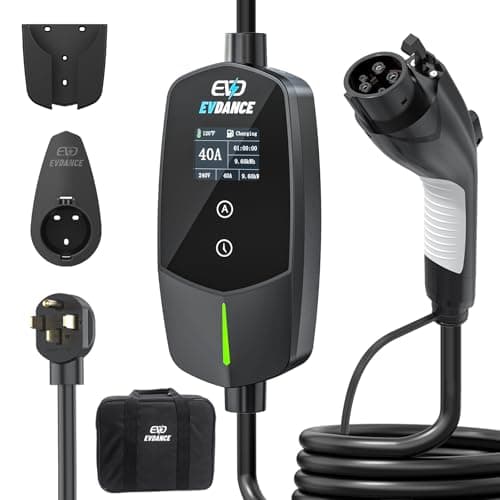
- Renting, or the truck lives at two places: a 40-amp portable on a NEMA 14-50, and accept the 9.6 kW ceiling.
- Never: buy 80 amps before confirming your truck accepts 19.2 kW. On a 48-amp truck it charges exactly as fast as a charger costing far less, on a far more expensive circuit.