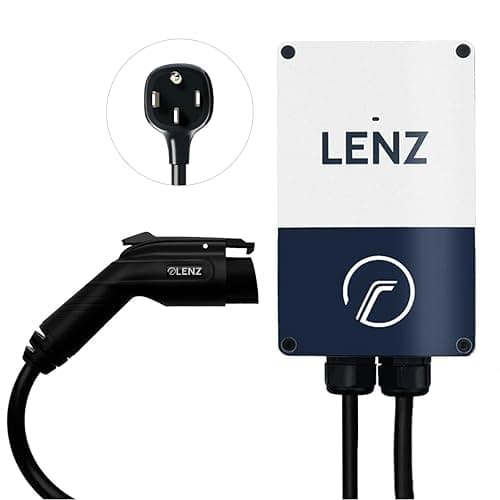
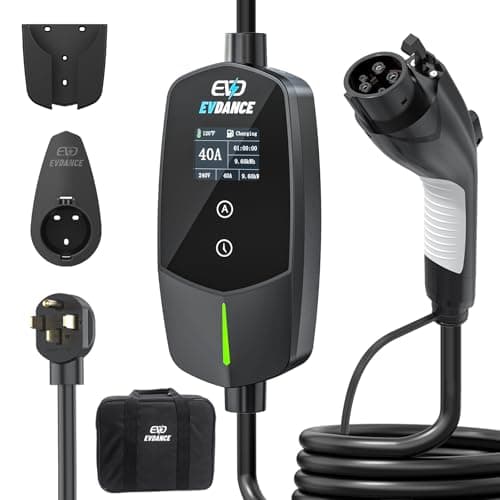
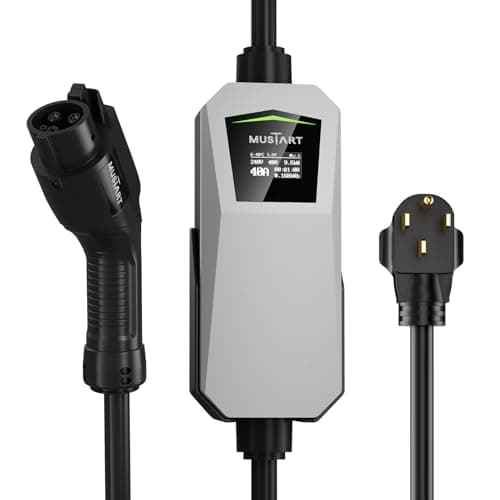
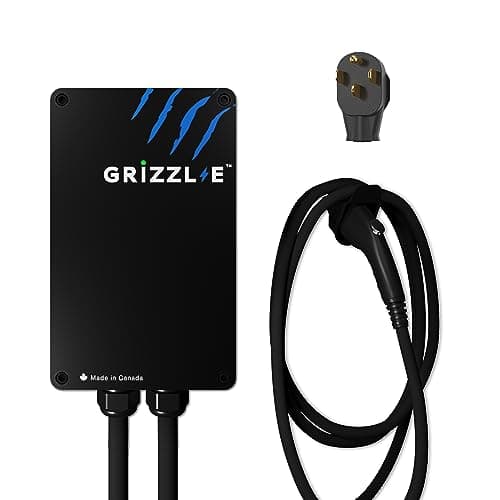
Buy the Grizzl-E Classic. It is a UL-certified cast-aluminum box with an internal amperage dial, a NEMA 14-50 plug and no software of any kind - the most charger you can buy that has nothing to update, nothing to log into and no cloud service that can be discontinued. Want the same thing at the full 48 amps? The Grizzl-E Ultimate. Want the cheapest listed wall unit with no app? The LENZ. Need off-peak charging without Wi-Fi? The EVDANCE portable has an on-unit delay timer. Want the least money for a capable 40-amp cord? The MUSTART.
This is the inverse of our best smart chargers ranking, and it is not a consolation prize. A charger is a contactor, a ground-fault detector and a conversation with the car over the J1772 control pilot. None of that needs an internet connection. What an app adds is scheduling, energy reporting and load sharing - genuinely useful to some households, irrelevant to others, and in every case a dependency on a company continuing to run a server.
Note the difference between "no Wi-Fi" and "Wi-Fi optional". Most smart chargers, including the Emporia and the ChargePoint Home Flex, charge perfectly well with the network down - they just lose their features. The units on this page have no radio at all. If you only want to avoid a mandatory account, a smart charger is fine; if you want no attack surface, no firmware and nothing to outlive its support window, you want this page.
What we ranked on
With software off the table, the ranking comes down to the things that are physical and verifiable.
- Safety listing. UL or ETL to UL 2594, verified rather than claimed. A charger with no app still runs 32 to 40 amps unattended for hours.
- Enclosure. Cast metal and a real outdoor rating beat a plastic shell, because a dumb charger is bought to last ten years rather than two.
- Amperage adjustment without an app. An internal dial or an on-unit button is the only way a non-connected charger can be matched to a smaller circuit.
- Cable and connector. Length, flexibility in cold, and a connector that survives hundreds of mating cycles.
- Anything that replaces a lost app feature. On this page that means an on-board delay timer, which is the only way to hit an off-peak window with no network.
How the five compare
| Charger | Amps | Listing | Enclosure | Set amps how? | Off-peak timer? |
|---|
| Grizzl-E Classic | 40A | UL certified | Cast aluminum, indoor/outdoor | Internal dial | No |
| Grizzl-E Ultimate | 48A | UL tested and certified | Cast aluminum, IP67 / NEMA 4X | Adjustable 16-48A | No |
| LENZ Level 2 | 40A | ETL listed to UL 2594 | Metal, NEMA 4X / IP67 | Not published | No |
| EVDANCE 40A portable | 40A | Listed cable assembly | Portable, IP-rated body | On-unit, 10 to 40A | Yes - delay timer |
| MUSTART 40A portable | 40A | Listed cable assembly | Portable, LCD on the box | On-unit | No |
What you actually lose
Two things, and it is worth being honest about both because one of them has a real cost.
1. Scheduling, which matters only on a time-of-use rate
If your utility charges less overnight, a charger that cannot schedule means charging whenever you plug in - potentially at the peak rate. There are three fixes, in order of how much we like them. Use the car's own departure or scheduled-charging setting, which almost every EV has and which costs nothing. Buy a unit with an on-board delay timer, like the EVDANCE. Or accept the rate and move on. Our off-peak and time-of-use guide shows how much is actually at stake per month, and the chargers with scheduling ranking covers the other side.
2. Energy reporting, which is nice rather than necessary
A connected charger tells you the kWh it delivered. Without one, you can read the car's own lifetime efficiency figure, or do the arithmetic from your rate - our cost-to-charge calculator does it in one step. What you cannot easily do is submeter the charger for a reimbursement or a split bill. If someone else is paying for your charging, buy a charger that meters.
You do not lose load sharing between two cars in any meaningful way, because a dual-port unit like the Grizzl-E Duo splits one circuit in hardware. And you do not lose safety: GFCI protection, ground monitoring and over-temperature shutdown are built into the unit, not into the app.
The reason people buy these on purpose
A home charger is wired into the house for a decade or more. App-connected hardware has a support window, and when the window closes the features go with it - the EV charging category has already watched one major brand's cloud service lapse and strand its owners' scheduling. A charger with no radio has no support window to outlive. It also has no account to breach, no firmware update that can brick it overnight, and no dependence on a garage Wi-Fi signal that is one brick wall away from useless.
The flip side, stated plainly: if you are on a time-of-use rate and your car has no decent scheduling of its own, a smart charger will probably save you more money than this page will. Check do I need Wi-Fi for an EV charger before deciding.
So, which one?
Grizzl-E Classic for the default - a listed metal box, 40 amps, a dial, a plug. Grizzl-E Ultimate if your car and panel justify 48 amps and you want the IP67 shell. LENZ for the lowest price on a listed, weatherproof wall unit. EVDANCE portable if you need off-peak charging with no network, or you want a charger that can travel. MUSTART if the budget is the whole brief.