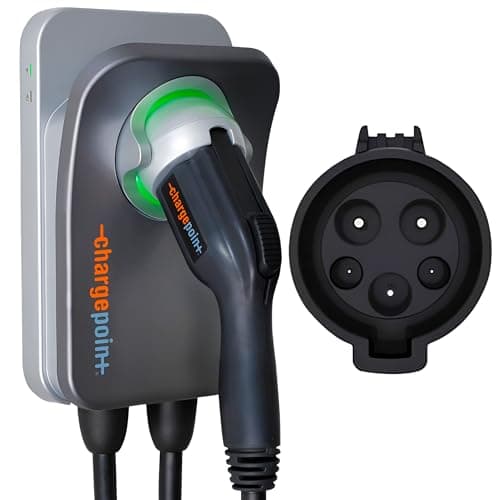
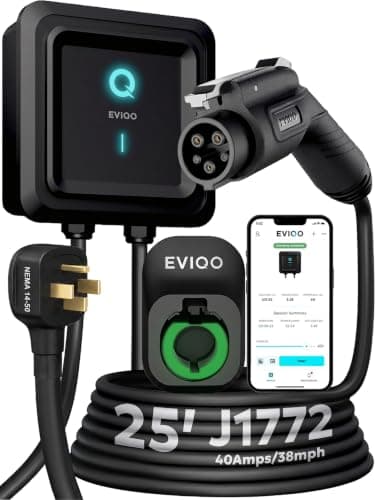
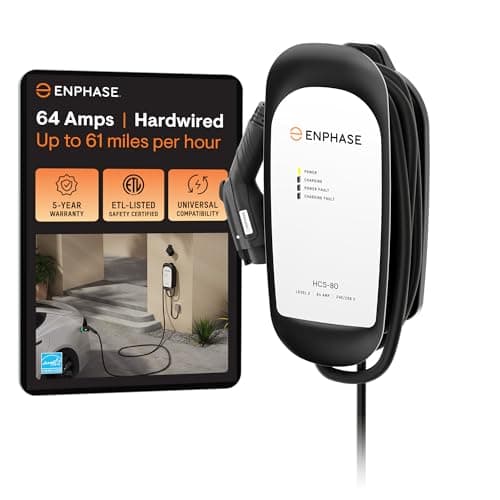
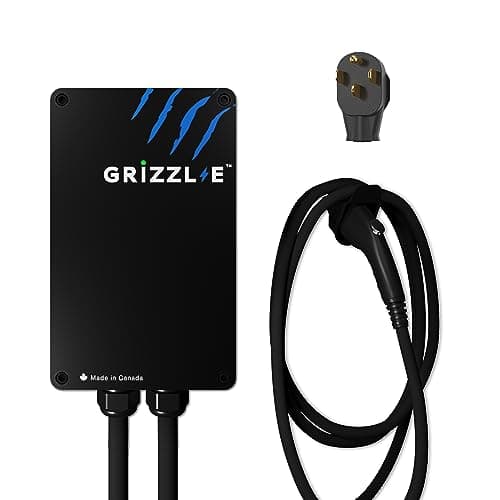
On warranty terms alone, the Grizzl-E Classic is the one to buy. United Chargers covers Grizzl-E Level 2 units with either a 3-year or a 5-year replacement warranty against defects in materials and workmanship, and says plainly that there is no registration process - you keep the receipt and that is the whole requirement. A replacement term with no registration trap is the strongest shape of coverage in this category, and almost nobody else offers it. If support matters more than years, the ChargePoint Home Flex pairs a 3-year parts warranty with 24/7 phone support. The EVIQO gives you 3 years that activate at purchase with an optional extension to 4. For the longest flat term, Enphase backs its EV chargers with 5 years. And the Tesla Wall Connector carries 4 years for residential use.
A home charger is an unusual appliance: it draws 32 to 48 amps continuously, for hours, usually unattended, often outdoors, and it is bolted to the wall. Nothing else in a house has that duty cycle. So the warranty is not a nice-to-have - it is the thing that decides whether a failure in year three is an afternoon or a thousand dollars. Our how long do EV chargers last guide covers the service life itself; this page is about who pays when it ends early.
Every term we could source, in one table
These figures come from each manufacturer's own published page or datasheet, fetched on 11 October 2026 and cited in Sources. Terms change and they vary by SKU and by region, so confirm on the listing before you buy - but this is where the category actually sits.
| Brand / unit | Published term | Repair or replace | Registration | Notes |
|---|
| Grizzl-E (Classic, Ultimate, Duo, Mini) | 3 or 5 years | Replacement | None - keep the receipt | The 5-year term is a purchase option on some SKUs |
| Enphase IQ EV chargers | 5 years | Limited warranty | Per Enphase registration flow | Longest flat term in the group |
| Tesla Wall Connector | 4 years residential, 1 year commercial | Limited warranty | Tied to purchase date | The commercial distinction matters for rentals |
| ChargePoint Home Flex | 3 years | Parts | Tied to purchase date | 24/7 driver support line |
| Emporia | 3 years | Defects in materials and workmanship | From date of delivery | Runs from delivery, not from installation |
| Wallbox Pulsar Plus | 3 years | Defects in materials and workmanship | From date of purchase | - |
| EVIQO | 3 years, extendable to 4 | Standard warranty | None - activates at purchase | Extension is a paid option |
| Autel MaxiCharger AC Home | 36 months | Per datasheet | Per Autel support | Stated on the product datasheet |
| DEWALT Level 2 | 3 years limited | Limited | Per DEWALT | 24/7 technical support line |
Four clauses that matter more than the number of years
1. Replacement beats repair, by a lot
A wall charger is hardwired or plugged into a 50-amp outlet behind a cable you cannot easily coil. "We will repair it" means a shipping label, weeks without a charger, or a service visit. "We will replace it" means a new box arrives and an electrician swaps it. Grizzl-E is explicit that its term is a replacement warranty; most of the others describe coverage against defects without committing to the remedy.
2. When the clock starts
Emporia's term runs from the date of delivery following the original retail purchase. That is the common construction, and it is not the same as the date your electrician energised the unit. If the charger sits in a box for two months waiting on a panel upgrade, those two months came out of your coverage. Buy the charger when the install is booked, not when the car is ordered.
3. Residential versus commercial
Tesla's Wall Connector warranty is four years for residential use and one year for commercial use. If you are installing at a short-term rental, a duplex you let out or a small business, read that line carefully before you assume the long term applies to you - our rental-property roundup is written for exactly that reader.
4. What voids it
The universal exclusions are the ones you control: installation by someone unlicensed, use outside the stated enclosure rating, and damage from a circuit that was never right. Published insurance guidance makes the same point from the other direction - coverage can be refused if a licensed electrician did not install the charging station. A permitted install by a licensed electrician protects both the warranty and the claim, which is why the permit and inspection guide is on the must-read list and can I install an EV charger myself is more honest about the trade-off than most.
What a warranty cannot do for you
It cannot substitute for a safety listing. A warranty is a commercial promise from a company that may or may not exist in year four; a UL or ETL listing to UL 2594 is a third-party attestation that the device was built to a standard for this duty. You want both, and if you can only verify one, verify the listing - our UL-listed charger roundup and are cheap EV chargers safe make that case in full.
It also cannot cover the thing most likely to fail. In a plug-in install, the component under the most stress is not the charger - it is the NEMA 14-50 receptacle carrying 40 amps for ten hours a night, and it carries no EV charger's warranty at all. Specify a proper industrial-grade outlet; the 14-50 outlet roundup explains what separates one from a builder-grade part.
And it cannot help with a brand that leaves the market. The cautionary example in this category is already on the site: a charger whose cloud service and support disappeared while the hardware kept working. JuiceBox vs Wallbox Pulsar Plus covers what that actually feels like to own, and it is the strongest argument on this page for buying a unit that charges without a cloud at all.