HUB 03 · Charging Guides
How to Test an EV Charger
The pins are dead until the car asks. That single fact explains why most home EV charger testing goes wrong, and it points at what you should measure instead.
We earn a commission when you buy through our Amazon links, at no extra cost to you. It never affects our rankings, and we say so when the cheaper product is the better buy. How this works.
If you put a multimeter across the two power pins of an EV charger's connector and read zero volts, the charger is probably fine. An EVSE keeps its contactor open until the car completes a handshake over the control pilot line, so the power pins are deliberately dead with nothing plugged in. That is the safety feature working. To test a home charger you measure the things that can be measured: the outlet, the breaker, the charger's own indicators, and the car - using substitution to isolate which of the three is at fault.
This matters because the wrong test produces a confident wrong conclusion. People read zero volts, decide the charger is dead, and replace a working unit - or worse, keep probing a connector in the hope of waking it up. The J1772 design is explicit: the control pilot signals between the EVSE and the vehicle, the proximity pin confirms the connector is seated, and only then does the EVSE close its contactor and energise the AC pins. No car, no handshake, no voltage.
What you can actually test, in order
1. The outlet or the breaker (the real measurement)
This is where a multimeter earns its keep, and it is the only place in a home install where the voltage is simply present. On a NEMA 14-50 receptacle you should see roughly 240 volts between the two hot slots and roughly 120 volts from each hot to neutral. If one leg is missing you have found the fault, and it is in the panel or the circuit rather than in the charger.
If you are not comfortable putting probes into a live 50-amp receptacle, do not - this is a reasonable thing to pay an electrician fifteen minutes for, and it is also exactly what they will check first. Our EV charger tripping breaker guide covers the related case where the circuit is present but keeps opening, and GFCI breakers and EV chargers covers the nuisance-trip pattern that looks like a dead charger.
2. The charger's own status
Every listed EVSE performs a self-test at power-up and reports through its indicator lights or screen. That report is more informative than any measurement you can take from outside the box: it distinguishes no power, a ground fault, a failed self-test and a normal standby state. Read it against the manual rather than guessing at colours - our fault codes and warning lights guide decodes the common patterns.
3. Substitution - the test that actually isolates the fault
There are exactly three things in a home charging setup: the circuit, the charger and the car. Swap one at a time and you will know which within ten minutes.
| Test | What it proves |
|---|---|
| Plug the car into a different charger, or a public Level 2 station | Charges elsewhere: the car is fine and the problem is at home. Fails everywhere: it is the car |
| Plug a different car into your charger | Charges: your charger and circuit are fine |
| Plug a known-good portable cordset into the same 14-50 outlet | Works: the outlet and circuit are fine, so the wall charger is the suspect. This is why a cheap portable is the single most useful diagnostic tool an EV owner can own |
| Plug the portable into a 120-volt outlet on a different circuit | Confirms the car accepts a charge at all, independently of your 240-volt circuit |
That third row is the trick worth remembering. A Level 1 or Level 1/2 portable cordset is cheap, lives in the trunk, and doubles as a reference device that tells you whether the outlet and the car are talking. One of the picks below has a live current and voltage readout on the control box, which turns it into a genuine measuring instrument for about the price of a decent multimeter.
How to test a charger with no car at all
You cannot do it with a multimeter, and you can do it two other ways.
- Power-up self-test. Energise the unit with nothing connected and read the indicators. A charger that reports normal standby has passed its internal checks, including its ground-fault circuitry.
- An EVSE test adapter. These simulate the vehicle side of the J1772 handshake - the resistance states that tell the EVSE a car is connected and ready - so the charger closes its contactor and you can confirm it delivers voltage and current. This is what a shop uses, and it is the only honest way to test an EVSE on a bench.
Insulation resistance testing with a megohmmeter, and the earth-loop and RCD tests an electrician runs on the circuit, are real tests - and they are theirs, not yours. They involve applying hundreds of volts to conductors and interpreting the result against a standard.
Three things never to do
- Do not bridge or jumper the connector pins to try to force the contactor closed. You are defeating the one interlock that keeps 240 volts off an exposed connector.
- Do not test a connector that is wet, or one whose plastics are discoloured or deformed. Dry it, or retire it - EV charger plug getting hot explains what heat damage means.
- Do not conclude anything from a single slow session.Charging power is capped by the lowest of three limits - the circuit, the charger and the car's onboard charger - and derating in heat or cold is normal behaviour, not a fault. How fast will my EV charge sets the baseline and EV charging slow at home walks the diagnosis.
What a test result actually tells you
| What you found | What it means | Next page |
|---|---|---|
| No voltage at the outlet or breaker | Circuit fault - panel, breaker or wiring | Tripping breaker |
| Voltage present, charger shows a fault | The charger is reporting a real condition - read the code | Fault codes |
| Known-good cordset works, wall charger does not | The wall unit is the suspect | Charger not charging |
| Everything works, just slower than expected | Usually a limit, not a fault - amps, car or temperature | Charging slow at home |
| Session starts then stops repeatedly | Ground fault, connector seating or a vehicle-side setting | Charging keeps stopping |
| Charger charges but will not connect to Wi-Fi | Not a charging fault at all - charging works without the network | Wi-Fi not connecting |
Work down that table and you will usually land on one row, with evidence, which is the whole point of testing in a sensible order. The gear below is what makes the substitution tests possible: two portable cordsets that serve as reference devices, a proper industrial 14-50 receptacle if the outlet turns out to be the weak link, and a listed wall charger if the answer is that the wall unit is done.
The gear
Recommended gear for this guide
The products this guide refers to, with prices pulled live from Amazon and dated on each card.
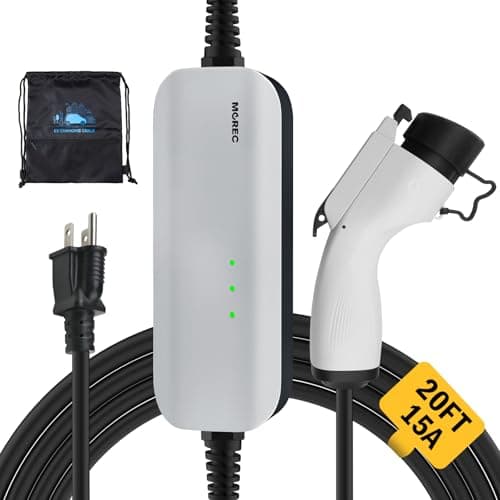
A 120V cord with a live readout
Morec Level 1 (15A)
A plain 15-amp household cord with an LCD that reports voltage, current and temperature while it charges — the one that tells you what the outlet is actually doing.
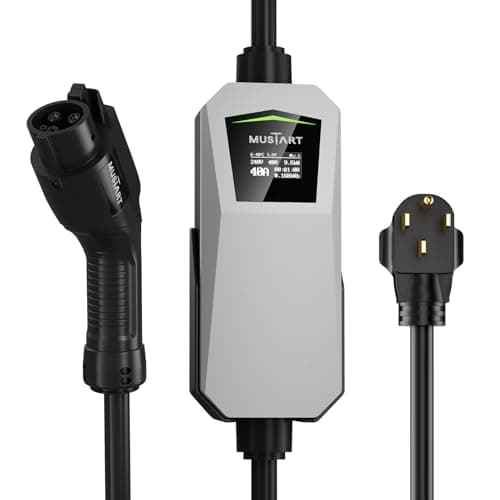
The cheapest capable portable
MUSTART 40A Portable
A budget 40-amp portable with an LCD readout — the value pick when you just need 240V charging that moves with you.
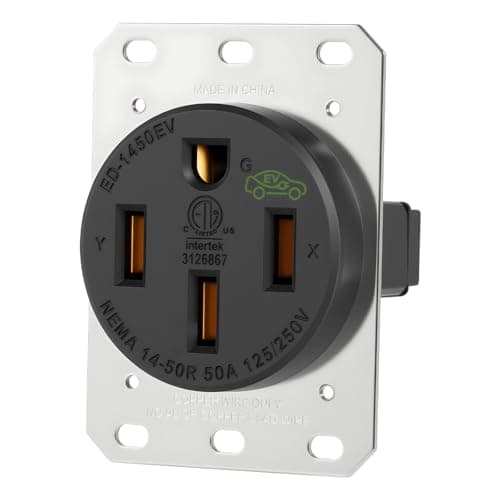
The outlet a plug-in charger needs
Industrial NEMA 14-50 Outlet
The receptacle a plug-in charger actually plugs into — buy the industrial-grade, listed version, because the cheap ones are the exact part that fails.
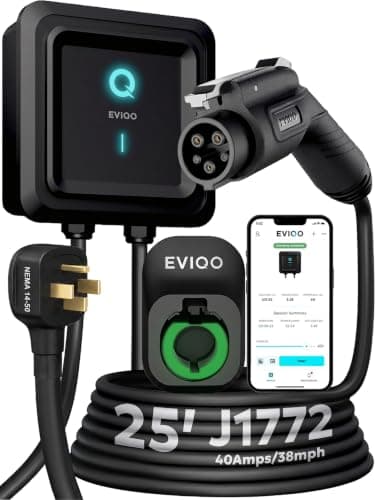
Budget buyers who still want smart features
EVIQO Level 2 (40A)
A double-listed (UL and ETL), IP66-weatherproof smart charger that keeps landing at the bottom of the price band — a lot of certified hardware for the money.
#ad · As an Amazon Associate we earn from qualifying purchases.
Time to replace it?
If the fix does not hold, here is what we would buy
Most of the time the steps above get a charger working again, and you should give them a fair run first. But when the same fault keeps coming back after you have worked through them, or the unit is out of warranty, it is worth doing the math: replacing a home charger is often cheaper than paying for a service call to diagnose it, and the new one arrives with a fresh warranty. We are not saying yours is broken - only that if it is, these are the Level 2 chargers we would replace it with. All three lead our ranked Level 2 roundup, and every price is pulled live from Amazon.
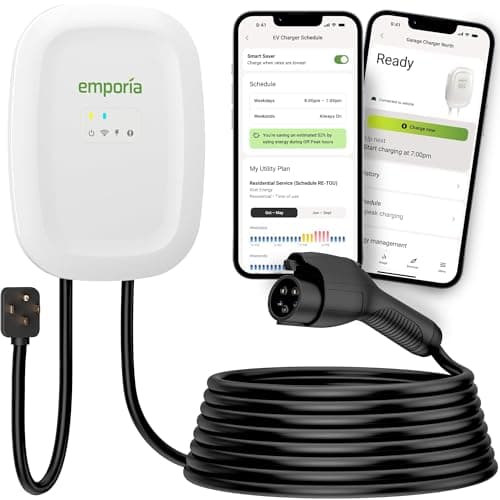
Most homes that want speed and smarts
Emporia Level 2 (48A)
Our top Level 2 pick: 48-amp capable when hardwired, real energy monitoring, priced like a plain plug-in box.
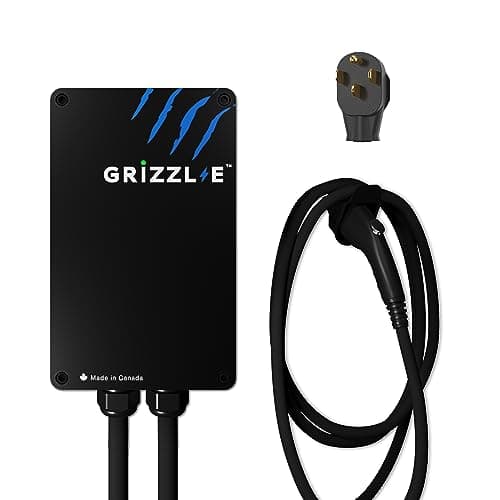
People who want a charger, not an app
Grizzl-E Classic (40A)
The no-app alternative: a UL-certified cast-aluminum box with no Wi-Fi to fail and nothing in the cloud to go dark.
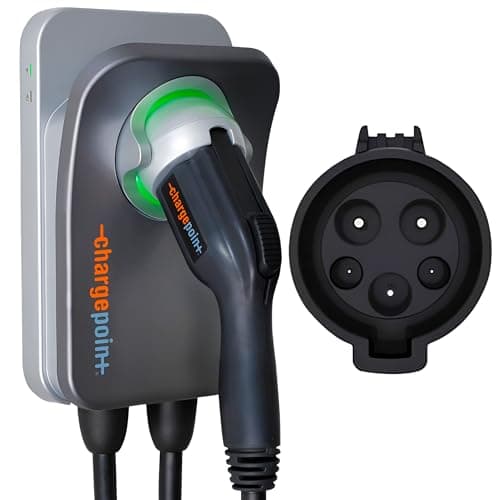
Buyers who want the established brand + one app
ChargePoint Home Flex
The established brand: adjustable up to 50 amps, and one app covers home and public charging.
Full review: Emporia Level 2 →See every Level 2 charger we rank →
#ad · we may earn a commission · As an Amazon Associate we earn from qualifying purchases.
Questions
Frequently asked
How do I test an EV charger with a multimeter?
Measure at the outlet or the breaker, not at the connector. A NEMA 14-50 receptacle should read about 240 volts between the hot slots and about 120 volts from each hot to neutral. The connector's power pins read zero with no car attached, by design - the EVSE keeps its contactor open until the vehicle completes the control-pilot handshake.
Why does my multimeter read 0 volts at the J1772 connector?
Because that is how the standard works. The EVSE only energises the AC pins after the car signals readiness over the control pilot line and the proximity pin confirms the connector is seated. Zero volts at rest is the safety interlock doing its job, not a dead charger.
Can I test an EV charger without a car?
Partly. You can power it up and read its self-test indicators, which confirms it has power and passed its internal checks including ground-fault detection. To make it actually deliver current you need an EVSE test adapter that simulates the vehicle's side of the handshake - a multimeter alone cannot do it.
What is the quickest way to tell whether the charger or the car is at fault?
Substitution. Take the car to a public Level 2 station: if it charges, the car is fine. Plug a known-good portable cordset into the same outlet at home: if that works, the circuit is fine and the wall unit is the suspect. Two tests, ten minutes, no probes.
Do I need a special EV charger tester?
Not for home diagnosis. The useful substitute is a cheap Level 1 or Level 1/2 portable cordset, ideally one with a current and voltage readout, which doubles as a reference device and as a backup charger. Dedicated EVSE testers and insulation testers are tools for electricians and service shops.
Is it safe to probe an EV charging connector?
There is nothing to measure there at rest, and bridging the pins to force the contactor closed defeats the interlock that keeps 240 volts off an exposed connector. Measure at the outlet with the charger unplugged from the car, or have an electrician do it.
Keep reading
Related
- EV charger not chargingThe symptom-first triage this page gives you the measurements for.
- Fault codes and warning lightsReading what the charger is already telling you.
- EV charger tripping breakerWhen the circuit is present but keeps opening.
- Portable chargers for emergenciesThe reference device that makes substitution testing possible.
More in this section
More Charging Guides
Receipts
Sources
- SAE J1772 specification (the AC connector, the control pilot and proximity signalling, and the connector latch)
- Intertek - UL 2594 testing and certification for electric vehicle supply equipment
- Intertek - the ETL Listed Mark and OSHA Nationally Recognized Testing Laboratory (NRTL) status
- US DOE / fueleconomy.gov - EV charging basics (Level 1, Level 2 and DC fast charging)
- US DOE AFDC - charging an electric vehicle at home
- EC&M - NEC requirements for EV equipment (Article 625: EVSE is a continuous load, so the branch-circuit conductors and overcurrent device are sized at not less than 125 percent of the maximum load)
- EVIQO - Level 2 EV chargers (40A, UL and ETL listed, IP66 / NEMA 4)
We do not run a testing lab, and we do not pretend to. Where a measured number came from someone else's lab, we name them and link them. Where we could not verify something, we say so on the page rather than quietly leaving it out. Read our full method.