Skip to content
The Charge Curve

HUB 02 · Cables & Adapters

The Best EV Charger Outlet Adapters

Your charger ends in a 14-50 plug and your garage does not have one. These are the cords that bridge the gap - ranked on the four things that matter, with the current limit you must set before you use any of them.

By Stephen V.Updated How we compare
#ad

We earn a commission when you buy through our Amazon links, at no extra cost to you. It never affects our rankings, and we say so when the cheaper product is the better buy. How this works.

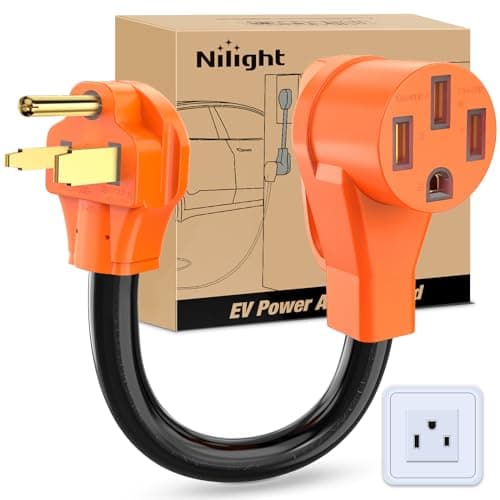
Nilight Nilight 14-30P to 14-50R Adapter

Our top pick

Best Outlet Adapter

Nilight 14-30P to 14-50R Adapter

8.0/10
$24.99Check Price

In stock at Amazon as of October 18, 2026.

#ad · we may earn a commission

Best for: A modern 4-prong (14-30) dryer outlet

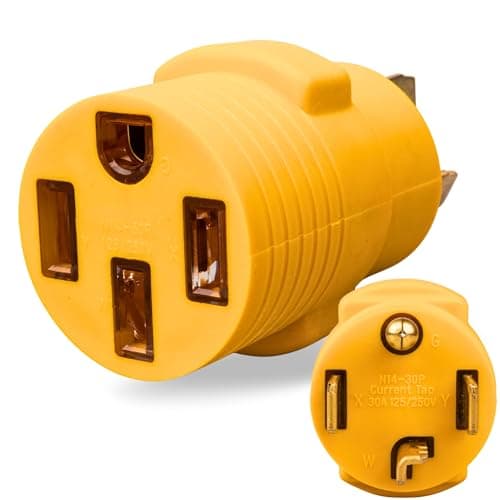
The one to buy if your laundry room has the modern 4-prong dryer outlet: 10-gauge pure copper, and the 14-30 plug carries a real equipment ground rather than borrowing the neutral.

Read the full review ↓Compare all 6 picks ↓

The short answer

Quick picks

  • Nilight Nilight 14-30P to 14-50R Adapter
    01 Nilight 14-30P to 14-50R Adapter
    8.0

    The one to buy if your laundry room has the modern 4-prong dryer outlet: 10-gauge pure copper, and the 14-30 plug carries a real equipment ground rather than borrowing the neutral.

    Best for: A modern 4-prong (14-30) dryer outlet

    $24.99Amazon
  • ACKING ACKING 10-30P to 14-50R Adapter
    02 ACKING 10-30P to 14-50R Adapter
    8.0

    The pick for a pre-1996 house: a 3-prong 10-30 dryer plug on one end, a 14-50 socket on the other, and an ETL listing - which almost nothing in this niche carries.

    Best for: An old 3-prong (10-30) dryer outlet

    $22.99Amazon
  • MECMO MECMO 14-30P to 14-50R Adapter
    03 MECMO 14-30P to 14-50R Adapter
    7.8

    The cheapest honest one: the only cord here that prints the 24-amp ceiling and the not-for-RV warning in the listing title instead of burying them.

    Best for: The budget 4-prong dryer adapter

    $19.99Amazon
  • Nilight Nilight 6-50P to 14-50R Adapter
    04 Nilight 6-50P to 14-50R Adapter
    7.8

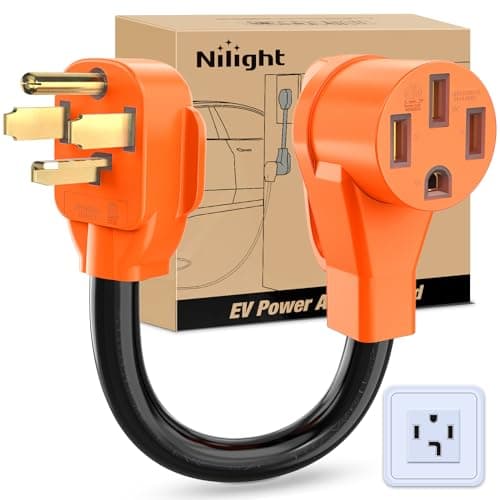
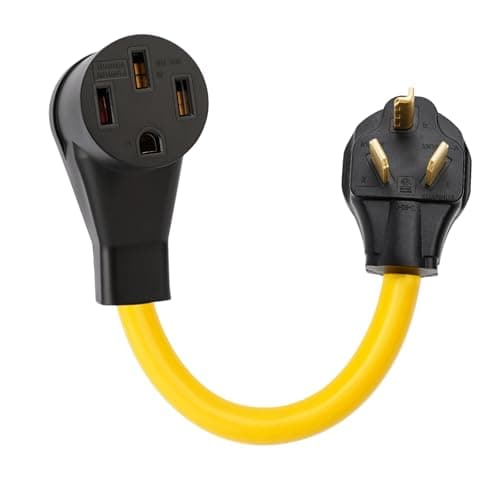
    For a garage that already has a welder outlet: a 6-50 plug into a 14-50 socket, 10-gauge copper, and a genuine 50-amp circuit behind it instead of a 30-amp one.

    Best for: A 6-50 welder outlet in the garage

    $24.99Amazon
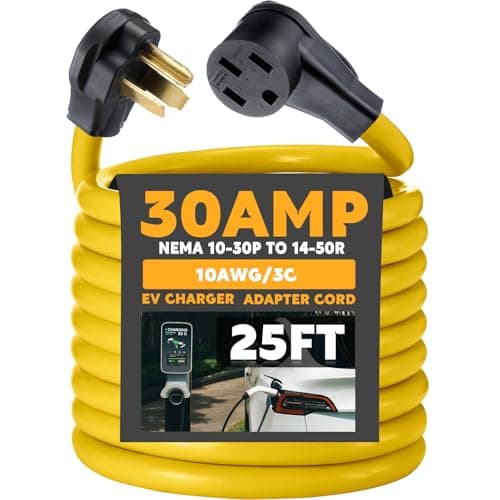
  • Tellegloww Tellegloww 25 ft 10-30P to 14-50R Cord
    05 Tellegloww 25 ft 10-30P to 14-50R Cord
    7.8

    The one that solves distance: 25 feet of 10 AWG between a laundry-room dryer outlet and a car parked outside, ETL Listed, at roughly three times the price of a short cord.

    Best for: A dryer outlet nowhere near the car

    $79.99Amazon
  • Splitvolt Splitvolt 14-30/14-50 Splitter Switch
    06 Splitvolt 14-30/14-50 Splitter Switch
    7.8

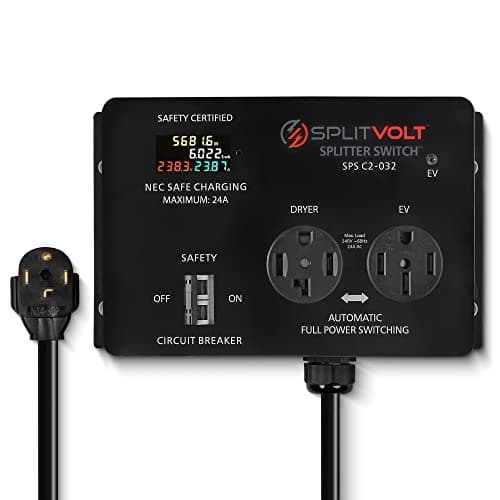
    The listed way to keep the dryer and charge the car from one 14-30 outlet: it switches the circuit's power automatically between a dryer socket and an EV socket, behind its own 24-amp breaker.

    Best for: Sharing one outlet with the dryer

    $410.00Amazon

#ad · Live prices from the Amazon Product API, as of October 18, 2026. Where we have no verified live price, we show none — we would rather leave a gap than print a number that has gone stale.

If your dryer outlet has four slots, buy the Nilight 14-30P to 14-50R cord - it is 10-gauge copper and it starts from an outlet with a real equipment ground. If it has three slots and an L-shaped hole, you have an older NEMA 10-30 and the ACKING cord is the pick, because it is one of the very few in this category that is actually ETL Listed. If the outlet is in the laundry room and the car is outside, the 25-foot Tellegloww cord is what closes the distance. And if the garage has a welder outlet, the Nilight 6-50P cord is the best buy on this page, because a 6-50 is usually on a genuine 50-amp circuit.

Every one of these products exists because of the same mismatch. Level 2 EV chargers are overwhelmingly sold with a NEMA 14-50 plug on the end, because 14-50 is the outlet electricians install for EVs. But the 240-volt outlet most houses already have is the dryer's, and that is a 14-30 or a 10-30. A workshop might have a 6-50 for a welder. None of those accepts a 14-50 plug, and cutting the plug off a charger voids its listing and its warranty.

An adapter cord solves that for about twenty dollars. It is genuinely the cheapest useful thing in home EV charging - and it is also the single easiest way to overload a circuit, because of one fact that almost no listing explains properly.

An adapter changes the plug. It does not change the breaker, and it does not change what your charger will try to draw. Plug a 40-amp charger into a 14-50 socket that is really fed by a 30-amp dryer circuit and the charger has no way of knowing. It will ask for 40 amps and the breaker will trip - or, if the breaker is old and tired, it will not. Before you charge on any adapter in this roundup, set the charger's current limit to 24 amps in its app or on its dial.

Where the 24-amp number comes from

EV charging is what the National Electrical Code calls a continuous load - three hours or more at full draw - and Article 625 requires the circuit to be sized at 125 percent of that load. Run the arithmetic backwards and a continuous load may not exceed 80 percent of the breaker rating. On a 30-amp dryer circuit that is 30 x 0.8 = 24 amps. On a 50-amp circuit it is 40 amps, which is why 14-50 outlets and 40-amp chargers go together.

Twenty-four amps at 240 volts is 5.76 kW. At a fairly typical 3.5 miles per kilowatt-hour that is roughly 20 miles of range per hour, so a ten-hour overnight session adds about 200 miles. For almost every driver that is more than enough, and it is the reason the dryer-outlet route is worth taking seriously rather than treating as a stopgap. Our what amp EV charger do I need guide runs the same maths against a range of daily mileages.

Work out which outlet you actually have

This is the whole decision. Look at the socket, not at the appliance plugged into it, and count the slots:

OutletLooks likeTypical circuitHas a ground?Max chargingBuy
NEMA 14-30Four slots, one L-shaped30 A, 240 V dryerYes - separate ground wire24 A (5.76 kW)Nilight 14-30 or MECMO 14-30
NEMA 10-30Three slots, one L-shaped30 A, 240 V dryer, pre-1996No - neutral doubles as ground24 A (5.76 kW)ACKING 10-30, or Tellegloww for reach
NEMA 6-50Three slots, two angled blades50 A, 240 V welderYes - two hots plus ground, no neutral32 A on a 10-gauge cordNilight 6-50
NEMA 14-50Four slots, one straight, one L-shaped50 A, 240 V range or EVYes40 A (9.6 kW)Nothing - your charger already fits

If you land on the last row, stop here: you do not need an adapter, you need a good receptacle to plug into. See our best NEMA 14-50 outlets instead, because the cheap builder-grade receptacle is the part that fails on an EV circuit.

The Tesla Mobile Connector trap

This one deserves its own heading because it catches people out constantly. The Tesla Mobile Connector sets its charging current automatically from whichever Tesla adapter is fitted - the 14-30 and 10-30 adapters drop it to 24 amps, the 14-50 and 6-50 adapters allow 32 amps. That is a genuinely good design, and it is exactly why you should not put a third-party conversion cord in front of it.

If you plug Tesla's NEMA 14-50 adapter into one of the 14-50 sockets on this page, the Mobile Connector sees a 14-50 and sets itself to 32 amps - on a 30-amp breaker. NeoCharge, which sells charging hardware for exactly this situation, puts it plainly: they do not recommend using a NEMA adapter with the Tesla Mobile Connector, because it "will automatically set the charge amperage to 32A, possibly tripping the breaker." If you drive a Tesla and your only 240-volt outlet is a dryer outlet, buy Tesla's own 14-30 or 10-30 adapter for the Mobile Connector rather than any cord in this roundup. The cords here are for chargers whose current limit you control - an Emporia, a Grizzl-E, a ChargePoint, a Wallbox, or any of the adjustable units in our adjustable chargers roundup.

The cords, side by side

ProductConvertsSafety listingConductorLengthCircuit behind itPrice tier
Nilight 14-30P to 14-50R4-prong dryer to EVNone stated10 AWG pure copperNot published30 A - set charger to 24 ABudget
ACKING 10-30P to 14-50R3-prong dryer to EVETL ListedNot publishedNot published30 A - set charger to 24 ABudget
MECMO 14-30P to 14-50R4-prong dryer to EVNone statedNot publishedNot published30 A - listing states 24 A maxBudget
Nilight 6-50P to 14-50RWelder outlet to EVNone stated10 AWG pure copperNot published50 A - we cap at 32 ABudget
Tellegloww 25 ft 10-30P to 14-50R3-prong dryer to EV, at distanceETL Listed10 AWG25 ft30 A - set charger to 24 AMid
Splitvolt 14-30/14-50 Splitter SwitchShares one 14-30 circuitcETLus certifiedNot publishedUnit, not a cord30 A - internal 24 A breakerPremium

The picks

The Nilight 14-30P to 14-50R wins on the thing that is easiest to overlook: the outlet it starts from. A NEMA 14-30 is a four-wire circuit - two hots, a neutral and a separate equipment grounding conductor - so the ground pin in the 14-50 socket it presents is connected to an actual ground wire. Every 10-30 adapter on this page has to fake that. Nilight publishes a 10-gauge pure copper conductor, which is heavier than most of this category bothers with, and the cord is a single molded assembly rather than a stack of separate adapters. What it does not have is a stated UL or ETL listing, and nothing in it stops a charger asking for 40 amps. Both of those are on you to manage.

The ACKING 10-30P to 14-50Ris the pick for an older house, and it earns the position with its ETL listing. ETL is Intertek's mark, and Intertek is an OSHA-recognized Nationally Recognized Testing Laboratory - the same status UL holds - so an ETL Listed cord has been evaluated against a safety standard rather than self-declared. In a category where almost nothing carries a listing, that is worth more than a few dollars of price difference. The trade-off is structural and unavoidable: a 10-30 outlet has no separate ground, so the adapter ties the 14-50 socket's ground pin to the circuit's neutral. That is legal only because NEC 250.140 grandfathers existing 3-wire dryer circuits; you may not install a new one.

The MECMO 14-30P to 14-50Rdoes the same job as the Nilight for a few dollars less, and it is here for its honesty as much as its price. It is the only cord in the group that prints "Max 24Amp 240V" and "not for 3-prong dryer / RV" in the listing title itself, where a buyer will actually read them. It does not publish a conductor gauge and it states no safety listing, so it sits behind the Nilight on build and behind the ACKING on certification - but if you already understand the 24-amp rule, it is the cheapest correct answer for a 4-prong outlet.

The Nilight 6-50P to 14-50R is the best value on the page for the minority of readers it applies to. A 6-50 welder outlet is normally fed by a real 50-amp breaker, so unlike every dryer-outlet pick here it does not force you down to 24 amps. We would still not run 40 amps through a 10-gauge adapter cord - Tesla caps its own 6-50 adapter at 32 amps, and 32 amps (7.7 kW, around 27 miles of range per hour) is the sensible setting. One quirk to understand: a 6-50 has two hots and a ground but no neutral, so the 14-50 socket this cord presents has no 120-volt leg. An EV charger never uses it. An RV would, which is why you must not use this cord to plug in a trailer. The difference between the two outlets is covered in our NEMA 14-50 vs 6-50 guide.

The Tellegloww 25 ft 10-30P to 14-50R exists for a specific, common and otherwise expensive problem: the dryer outlet is in a laundry room on the wrong side of the house and the car is on the driveway. Twenty-five feet of 10 AWG, ETL Listed, and the listing is unusually explicit that it fits only the 3-prong L-shaped 10-30R. It costs roughly three times what a short cord costs, which is still a fraction of what running a new circuit costs. Route it properly though - a 25-foot supply cord plus a 25-foot charger cable is fifty feet of cable, and it must not cross a doorway, a walkway or a tire.

The Splitvolt 14-30/14-50 Splitter Switchis a different class of product and it is ranked last on purpose, because it costs more than most of the chargers we recommend. It is the answer to one question only: what if I cannot give up the dryer outlet? It plugs into the 14-30, gives you a 14-30 socket for the dryer and a 14-50 socket for the car, switches automatically between them, and protects the circuit with its own 24-amp breaker. It is cETLus certified by Intertek, which none of the plain cords here can claim. Splitvolt still tells you plainly that "to use your existing 30amp circuit you must adjust your EV or adjustable charger to 24 amps max output" - the breaker is a backstop, not a substitute for setting the charger correctly.

The cheaper answer might be a different charger, not an adapter. Several manufacturers sell Level 2 chargers that end in a 14-30 plug from the factory and are hard-set to 24 amps, so there is no adapter, no stacked connection and no setting to remember. If you are still choosing the charger, read the best NEMA 14-30 chargers before you buy a 14-50 unit and a cord to work around it. Adapters are for the charger you already own.

In detail

The picks, in full

01
Nilight Nilight 14-30P to 14-50R Adapter

A modern 4-prong (14-30) dryer outlet

Nilight 14-30P to 14-50R Adapter

14-30P to 14-50R10 AWG pure copper4-prong, grounded30A to 50A
8.0/10

The one to buy if your laundry room has the modern 4-prong dryer outlet: 10-gauge pure copper, and the 14-30 plug carries a real equipment ground rather than borrowing the neutral.

Safety listing
6
Build quality
8
Fit
9
Value
9

Pros

  • Starts from a NEMA 14-30 outlet, which has a separate equipment grounding conductor - the safest of the three dryer-outlet paths on this page
  • Listed as 10-gauge pure copper conductor, heavier than the thin cords that dominate this category
  • A single purpose-built cord rather than a stack of adapters, so there is one connection to fail instead of three
  • Cheap enough that improvising with hardware-store parts makes no sense

Cons

  • The listing states no UL or ETL safety listing, unlike the ACKING and Tellegloww cords here
  • Nothing in the cord limits current - it presents a 14-50 socket, so the charger will happily try to pull 40 amps off a 30-amp breaker unless you dial it down to 24
  • Cord length is not published, so plan for the charger to sit beside the outlet

Don't buy this if…

…your dryer outlet is the older 3-prong L-shaped type. That is a NEMA 10-30 and this plug will not enter it - you want the ACKING or the Tellegloww instead.

$24.99View on Amazon

Price as of October 18, 2026. Prices change — Amazon's is the one that counts.

#ad · we may earn a commission from this link to Nilight 14-30P to 14-50R Adapter

02
ACKING ACKING 10-30P to 14-50R Adapter

An old 3-prong (10-30) dryer outlet

ACKING 10-30P to 14-50R Adapter

10-30P to 14-50RETL Listed3-prong dryer plug30A to 50A
8.0/10

The pick for a pre-1996 house: a 3-prong 10-30 dryer plug on one end, a 14-50 socket on the other, and an ETL listing - which almost nothing in this niche carries.

Safety listing
9
Build quality
7
Fit
8
Value
8

Pros

  • ETL Listed, meaning a Nationally Recognized Testing Laboratory evaluated it - rare at this price and the single best reason to pick it
  • Fits the 3-prong L-shaped dryer outlet found in most houses wired before the 1996 NEC required 4-wire dryer circuits
  • Cheaper than the long-cord alternatives when the charger can live beside the outlet
  • Solves the most common no-install charging problem in an older home without touching the panel

Cons

  • A NEMA 10-30 outlet has no separate equipment grounding conductor, so the adapter has to tie the 14-50 socket's ground pin to the circuit's neutral - allowed only because NEC 250.140 grandfathers existing 3-wire dryer circuits
  • Cord length is not published on the listing
  • Presents a full 14-50 socket, so a charger left on its default setting will try for 40 amps on a 30-amp breaker

Don't buy this if…

…your dryer outlet has four slots. That is a 14-30, it has a real ground, and the Nilight or MECMO 14-30 cord is the better buy - there is no reason to give up the grounding conductor.

$22.99View on Amazon

Price as of October 18, 2026. Prices change — Amazon's is the one that counts.

#ad · we may earn a commission from this link to ACKING 10-30P to 14-50R Adapter

03
MECMO MECMO 14-30P to 14-50R Adapter

The budget 4-prong dryer adapter

MECMO 14-30P to 14-50R Adapter

14-30P to 14-50RMax 24A / 240V stated4-prong, groundedNot for RV use
7.8/10

The cheapest honest one: the only cord here that prints the 24-amp ceiling and the not-for-RV warning in the listing title instead of burying them.

Safety listing
6
Build quality
7
Fit
9
Value
9

Pros

  • States Max 24Amp 240V on the listing itself, which is the number that keeps a 30-amp breaker alive - most sellers leave the buyer to work that out
  • Explicitly marked not for 3-prong dryers or RVs, so it is hard to buy the wrong one by accident
  • Usually the lowest-priced 14-30 adapter of the group
  • MECMO also makes the J1772 holster we rank, so the brand is a known quantity in this category

Cons

  • No UL or ETL listing is stated on the listing
  • Conductor gauge is not published, so the heavier-cord claim goes to the Nilight
  • The 24-amp limit is printed, not enforced - you still have to set it in the charger

Don't buy this if…

…you want a stated safety listing on the cord itself. The ACKING 10-30 cord is ETL Listed and this one is not, which on a part carrying 5.8 kW is worth a few dollars.

$19.99View on Amazon

Price as of October 18, 2026. Prices change — Amazon's is the one that counts.

#ad · we may earn a commission from this link to MECMO 14-30P to 14-50R Adapter

04
Nilight Nilight 6-50P to 14-50R Adapter

A 6-50 welder outlet in the garage

Nilight 6-50P to 14-50R Adapter

6-50P to 14-50R10 AWG pure copper250V, 50A to 50AWelder outlet
7.8/10

For a garage that already has a welder outlet: a 6-50 plug into a 14-50 socket, 10-gauge copper, and a genuine 50-amp circuit behind it instead of a 30-amp one.

Safety listing
6
Build quality
8
Fit
8
Value
9

Pros

  • A 6-50 welder outlet is normally on a real 50-amp circuit, so this is the one adapter here that does not force you down to 24 amps
  • Listed as 10-gauge pure copper, the same conductor spec as Nilight's 14-30 cord
  • A 6-50 outlet already has a proper equipment ground - no neutral-as-ground compromise
  • Turns an existing workshop circuit into a charging point with no electrician and no panel work

Cons

  • A 6-50 has two hots and a ground but no neutral, so the 14-50 socket it presents has no 120-volt leg - fine for an EV charger, useless and unsafe for an RV
  • We would still cap the charger at 32 amps on a 10-gauge adapter cord rather than the 40 amps a 50-amp circuit allows; Tesla's own 6-50 adapter limits to 32 amps
  • No UL or ETL listing is stated on the listing
  • Confirm the welder outlet really is on a 50-amp breaker before assuming the higher rate - check the panel, not the socket

Don't buy this if…

…the only 240-volt outlet you have is the dryer's. This plug will not fit it, and the amperage argument for buying it disappears on a 30-amp circuit anyway.

$24.99View on Amazon

Price as of October 18, 2026. Prices change — Amazon's is the one that counts.

#ad · we may earn a commission from this link to Nilight 6-50P to 14-50R Adapter

05
Tellegloww Tellegloww 25 ft 10-30P to 14-50R Cord

A dryer outlet nowhere near the car

Tellegloww 25 ft 10-30P to 14-50R Cord

25 ft cord10-30P to 14-50R10 AWG, ETL Listed30A rated
7.8/10

The one that solves distance: 25 feet of 10 AWG between a laundry-room dryer outlet and a car parked outside, ETL Listed, at roughly three times the price of a short cord.

Safety listing
9
Build quality
8
Fit
8
Value
6

Pros

  • 25 feet of reach turns an indoor laundry outlet into a driveway charge point without relocating the charger every night
  • ETL Listed and stated as 10 AWG heavy-duty cable - both the length and the gauge are published, which is unusual in this category
  • The listing is explicit that it fits only the 3-prong L-shaped NEMA 10-30R outlet, so the fit question is settled before you order
  • Far cheaper than the electrical work that would achieve the same reach

Cons

  • Costs roughly three times a short adapter cord for the same electrical function
  • Inherits the 10-30 grounding compromise - a 3-wire circuit has no separate ground, whatever the cord costs
  • A 25 ft supply cord plus a 20-25 ft charger cable is a lot of cable to route safely; it must not cross a doorway or sit under a tire

Don't buy this if…

…the charger can simply be mounted next to the dryer outlet. Length is the only thing the extra money buys, and spare cord is a trip hazard rather than a feature.

$79.99View on Amazon

Price as of October 18, 2026. Prices change — Amazon's is the one that counts.

#ad · we may earn a commission from this link to Tellegloww 25 ft 10-30P to 14-50R Cord

06
Splitvolt Splitvolt 14-30/14-50 Splitter Switch

Sharing one outlet with the dryer

Splitvolt 14-30/14-50 Splitter Switch

cETLus listed14-30P in14-30R dryer + 14-50R EV24A breaker, display
7.8/10

The listed way to keep the dryer and charge the car from one 14-30 outlet: it switches the circuit's power automatically between a dryer socket and an EV socket, behind its own 24-amp breaker.

Usefulness
9
Build quality
8
Fit
7
Value
7

Pros

  • cETLus listed (Intertek), which a homemade Y-splitter never is
  • Automated switching between the dryer socket and the EV socket, with an integrated, resettable 24-amp breaker and a live power display
  • Plug-in: no electrical installation, per Splitvolt

Cons

  • Its EV socket is a 14-50, so the 14-30-plug chargers on this page do not fit it - pair it with a 14-50-plug charger set to 24 amps, such as the Grizzl-E Mini
  • Your charger or car must be set to 24 amps or less; Splitvolt says so plainly before you buy
  • Costs more than most of the 24-amp chargers on this page, with a 1-year warranty

Don't buy this if…

…unplugging the dryer on charging nights is no hardship, or you can add a dedicated circuit - the better long-term fix.

$410.00View on Amazon

Price as of October 18, 2026. Prices change — Amazon's is the one that counts.

#ad · we may earn a commission from this link to Splitvolt 14-30/14-50 Splitter Switch

How to choose an outlet adapter

1. Identify the outlet by counting slots, not by asking the internet

Four slots with one L-shaped neutral is a 14-30. Three slots with one L-shaped slot is a 10-30. Three slots with two angled blades and a round ground is a 6-50. They are not interchangeable and a cord bought for the wrong one simply will not go in. If the outlet is behind the dryer, photograph it before you order. And check the breaker while you are at it - the number stamped on the handle is what actually limits you, not the socket.

2. Set the charger's current limit before the first session

This is the step that makes the difference between a working setup and a nuisance-tripping one. Every adapter here hands your charger a 14-50 socket, and a 14-50 socket means 40 amps to a charger that has no other information. In an Emporia or a ChargePoint it is a slider in the app; on a Grizzl-E it is a physical DIP switch inside the unit; on some portables it is a button on the control box. Set it to 24 amps on any 30-amp dryer circuit before you plug the car in. If you skip this and the breaker starts tripping, the cause is almost always this and not the charger - our EV charger tripping the breaker guide walks the rest of the diagnosis.

3. Prefer a 14-30 over a 10-30 whenever you have the choice

A NEMA 14-30 circuit has four wires and a dedicated equipment grounding conductor. A NEMA 10-30 has three, and the appliance frame is grounded through the neutral. NEC 250.140 permits that only for existing installations, and only where the grounded conductor is 10 AWG copper or larger - new 3-wire dryer circuits have not been allowed since the 1996 code. So a 10-30 adapter is not doing anything illegal, but it is inheriting a compromise the code stopped accepting three decades ago. If a licensed electrician is going to be in the house anyway, upgrading that circuit to four wires is a far better use of the money than any cord on this page.

4. Never stack adapters, and never add a household extension cord

Two adapters in series means four more connections, each one a place for resistance and heat to build in a joint that is carrying 24 amps continuously for eight hours. If no single cord makes your connection, that is the code telling you to run a proper circuit. And a 240-volt adapter is not an extension cord - the only safe way to add length between charger and car is an EVSE extension cable built for the job, which we cover in the best EV charging extension cables and in the extension cord safety guide.

5. Check the plug temperature after the first long session

An hour into the first full charge, feel the adapter body and the face of the wall outlet. Warm is normal. Hot enough that you would not hold it is not, and the usual cause is a tired receptacle rather than the adapter - a dryer outlet that has done twenty years of light duty is being asked to do something it has never done before, which is to pass current for eight hours straight. If it runs hot, stop and have the receptacle replaced. The same failure mode on a 14-50 is covered in our EV charger plug getting hot guide.

6. Know what this setup is not

  • It is not a dedicated circuit. A dryer circuit serves the dryer. Running both at once on a shared outlet is what the Splitvolt exists to prevent, and a plain Y-splitter from a hardware store is not a substitute for it.
  • It is not faster than the circuit. No adapter adds capacity. If you want 40 or 48 amps you need a new circuit - what that costs is the honest comparison to make before spending $80 on a long cord.
  • It is not a permanent installation. These are cords. They belong unplugged and coiled when they are not in use, not buried behind a dryer for five years.

So, which one?

Four-slot dryer outlet: the Nilight 14-30, or the MECMO if you want to save a few dollars and you have already internalized the 24-amp rule. Three-slot dryer outlet: the ACKING, for the ETL listing. Dryer outlet far from the car: the Tellegloww 25-footer. Welder outlet: the Nilight 6-50, set to 32 amps. Cannot give up the dryer socket: the Splitvolt Splitter Switch, at a price that should also make you price up a dedicated circuit before you commit. In every case, set the current limit in the charger first - the cord will not do it for you.
How we picked

We do not run a testing lab

We compiled published specifications from manufacturer manuals and spec sheets, verified the safety listings (UL / ETL), computed the real running and installation costs, checked the wiring math against the NEC continuous-load rule, and read aggregated owner reviews — then scored each product against a published rubric. The scores are judgments from documented research — they are not bench measurements, because we do not have a test lab and we are not going to pretend we do. Every spec and cost figure is cited in Sources.

Questions

Frequently asked

Can I really charge my EV from a dryer outlet with an adapter?

Yes, and it is one of the better-value moves in home charging - but on one condition. A dryer circuit is 30 amps, and the NEC limits a continuous load to 80 percent of the breaker, so the charger must be set to 24 amps. That gives 5.76 kW, roughly 20 miles of range per hour, or about 200 miles overnight. The adapter itself does not enforce the limit; you set it in the charger. Our dryer outlet charging guide covers the sharing and safety questions in more depth.

What happens if I do not turn the charger down to 24 amps?

The charger sees a NEMA 14-50 socket and assumes a 50-amp circuit, so it will try to draw up to 40 amps. On a healthy 30-amp breaker that trips, usually within minutes - annoying but safe. On an old or weak breaker it may not trip promptly, and you are then running 40 amps through wiring sized for 30 for hours at a time. That is the scenario the 24-amp rule exists to prevent, and it is why we will not recommend an adapter to anyone using a charger with no adjustable current setting.

Is a NEMA 10-30 adapter safe if the outlet has no ground?

It is legal and it is what the entire category is built around, but it is a compromise. A 10-30 circuit has two hots and a neutral, so the adapter bonds the 14-50 socket's ground pin to the neutral. NEC 250.140 permits that for existing branch circuits only, and only where the grounded conductor is at least 10 AWG copper - new 3-wire dryer circuits have not been allowed since 1996. If your outlet has four slots, use a 14-30 adapter instead and keep the real ground. If it has three and an electrician is coming anyway, upgrading the circuit is the better spend.

Can I use one of these adapters with a Tesla Mobile Connector?

We would not. The Mobile Connector sets its own charging current from whichever Tesla adapter it detects - fit the 14-50 adapter and it goes to 32 amps, which is too much for a 30-amp dryer circuit. Putting a third-party 14-50 conversion cord in front of it defeats that safety logic. Buy Tesla's own NEMA 14-30 or 10-30 adapter instead; those drop the connector to 24 amps automatically. The cords on this page are for chargers where you set the limit yourself.

How fast will I charge on a 30-amp dryer circuit?

24 amps at 240 volts is 5.76 kW. At a typical 3.5 miles per kilowatt-hour that is about 20 miles of range per hour, so a 10-hour overnight window adds roughly 200 miles - comfortably more than the average US driver covers in a day. A full 40-amp 14-50 circuit gives 9.6 kW, around 33 miles per hour. The gap matters if you drive a lot or need a fast turnaround; for most people it does not. Our how fast will my EV chargeguide runs the numbers for your car's onboard charger.

Can I plug two adapters together to reach an outlet?

No. Each adapter adds two more connections, and every connection is a place for resistance and heat to accumulate on a circuit carrying current continuously for hours. Use one purpose-built cord of the right length - the 25-foot Tellegloww exists precisely so nobody has to stack a short adapter onto something else. If no single cord reaches, the honest answer is a new circuit rather than a longer chain.

Will an outlet adapter void my charger's warranty?

Using a listed adapter cord within its ratings normally will not, because the charger is still being used as sold. Cutting the plug off the charger to fit a different outlet absolutely will, and it also voids the unit's UL or ETL listing - the listing covers the assembly as it was tested, plug included. If you find yourself reaching for wire cutters, buy a charger with the right plug or the right adapter instead.

Keep reading

More in this section

More Cables & Adapters

All cables & adapters →

Receipts

Sources

We do not run a testing lab, and we do not pretend to. Where a measured number came from someone else's lab, we name them and link them. Where we could not verify something, we say so on the page rather than quietly leaving it out. Read our full method.