HUB 02 · Cables & Adapters
Does My Nissan Need a Charging Adapter?
Nissan is the one brand where the answer at home is a clean no. The third-generation LEAF carries both plugs, which means the adapter question moves off your driveway entirely.
We earn a commission when you buy through our Amazon links, at no extra cost to you. It never affects our rankings, and we say so when the cheaper product is the better buy. How this works.
At home, no Nissan needs an adapter. Not one of them. That is a genuinely unusual answer in 2026, and it is deliberate engineering rather than luck: Nissan fitted the third-generation LEAF with twocharge ports. A familiar J1772 inlet on the driver's-side fender for Level 1 and Level 2 charging, and a NACS inlet on the passenger side that unlocks the Tesla Supercharger network. Nissan says exactly that in its own press kit. So you plug an ordinary J1772 wall charger into the ordinary J1772 port, and the adapter conversation never reaches your garage.
What you have, and what it needs
| Car | AC port (home) | DC port (road) | Adapter at home | Adapter for Superchargers |
|---|---|---|---|---|
| 2026 LEAF and later | J1772, driver side | NACS, passenger side | None | None - native |
| ARIYA | J1772 (AC half of CCS1) | CCS1 | None | Nissan NACS DC adapter, offered since 2024 |
| LEAF through 2025 | J1772 | CHAdeMO | None | Not possible - different standard |
- 2026 LEAF and later:two ports. J1772 on the driver's side for home and public Level 2; NACS on the passenger side for DC fast charging at more than 20,000 Superchargers. It is also the first Nissan with Plug & Charge. No adapter needed at home, and none needed at a Supercharger either.
- ARIYA: a CCS1 inlet, whose AC half is a plain J1772 socket. So again no home adapter - a J1772 charger plugs straight in. For Superchargers, Nissan has made a NACS adapter available for the ARIYA since 2024, ordered through Nissan.
- LEAF through 2025: J1772 for AC and CHAdeMO for DC fast charging. No home adapter needed. CHAdeMO is a dead end on the fast-charging side - no NACS adapter changes that, because the connector standard itself is different.
The two-port decision is cleverer than it looks
Most of the industry handled the NACS transition by replacing the inlet - which fixes Supercharging and quietly breaks home charging, because the installed base of home and public Level 2 equipment is overwhelmingly J1772. A Hyundai Ioniq 5 with a native NACS port needs a small adapter to use an ordinary wall charger, and that trade is the subject of our Hyundai and Kia page.
Nissan declined the trade. Two inlets costs the company a little packaging and a little money per car, and it means a LEAF owner never buys an adapter for anything. The port positions are a practical detail too: the NACS inlet is on the passenger-side fender, which is the side that reaches a Supercharger cable without parking across two stalls.
So what should a LEAF or ARIYA owner actually buy?
An ordinary J1772 Level 2 charger, sized to the car rather than to the marketing. Nissan publishes a 7.2 kW onboard charger for the 2026 LEAF, which is about 30 amps at 240 volts. That is the ceiling. A 32-amp charger feeds it completely; a 48-amp charger feeds it exactly the same 7.2 kW while requiring a 60-amp circuit, because the NEC sizes a continuous load at 125 percent of the draw. Our 32-amp ranking is the right shelf, and best chargers for a Nissan is the brand-specific version.
If the daily drive is short, do the cheap experiment first. The DOE notes that many owners meet their daily range needs charging overnight on Level 1, with no installation cost, given an outlet on a dedicated branch circuit near where they park. A 75 kWh LEAF is too big for that to be the whole answer for most people, but it is free to find out.
When a Nissan owner does buy an adapter
One situation, and it is becoming common: somebody else's Tesla Wall Connector. A friend's garage, a new house with a Tesla unit already on the wall, a hotel Destination Charger. Those are NACS AC connectors, and the LEAF's NACS port is for DC fast charging - so the part you want is a passive NACS-to-J1772 adapter, used on the J1772 port. That is the picks block below, and the full ranking is best NACS to J1772 adapters.
Two warnings. First, do not try to put a NACS-to-J1772 AC adapter on a Supercharger - it will not work, and the reason is in do NACS adapters work at Superchargers. Second, if you own an older CHAdeMO LEAF, no adapter in this category applies to your DC port at all.
The bottom line
Buy a J1772 wall charger that can do 32 amps, plug it in, and ignore the adapter aisle. Keep a listed NACS-to-J1772 adapter in the car if you expect to visit Tesla wall units. If you have an ARIYA and plan road trips, claim the Nissan NACS adapter for Superchargers - and remember it is a DC part that does nothing for you at home.
The gear
Recommended gear for this guide
The products this guide refers to, with prices pulled live from Amazon and dated on each card.
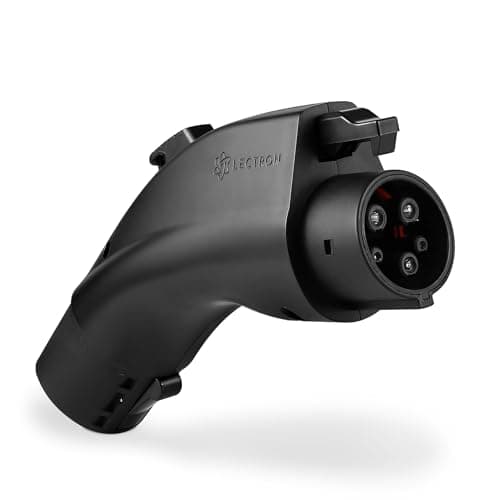
A J1772 car using NACS chargers
Lectron NACS → J1772 Adapter
The default adapter that lets a J1772 car draw from a Tesla-style (NACS) home or destination charger — rated for the full 48 amps.
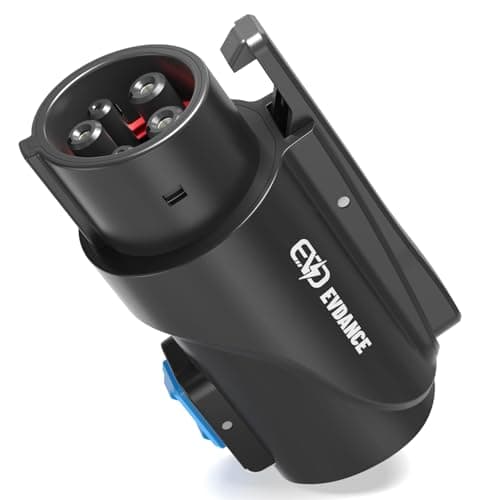
The value NACS → J1772 adapter
EVDANCE NACS → J1772 Adapter
An 80-amp-rated NACS-to-J1772 adapter that usually comes in cheaper than the Lectron — same job, better price.
#ad · As an Amazon Associate we earn from qualifying purchases.
Questions
Frequently asked
Does the 2026 Nissan LEAF need an adapter at home?
No. Nissan's own press kit describes a J1772 charge port on the driver's-side fender for charging at home and at Level 2 public chargers, alongside a separate NACS port on the passenger side for Supercharging. An ordinary J1772 wall charger plugs directly into the J1772 inlet.
Does the Nissan ARIYA need a NACS adapter?
For Superchargers, yes - Nissan has made a NACS adapter available for ARIYA models since 2024. For home charging, no: the ARIYA's CCS1 inlet has a J1772 socket as its AC half, so a standard Level 2 charger plugs straight in.
Can an older Nissan LEAF use a Tesla Supercharger with an adapter?
No. LEAFs through 2025 use CHAdeMO for DC fast charging, which is a different connector standard from both CCS and NACS, and no passive adapter bridges it to a Supercharger. Those cars charge on CHAdeMO networks and on ordinary J1772 Level 2 equipment.
What amp charger does a Nissan LEAF need?
32 amps covers it. Nissan publishes a 7.2 kW onboard charger for the 2026 LEAF - about 30 amps at 240 volts - and the car cannot draw more than that regardless of the charger. A 48-amp unit delivers identical results on a more expensive circuit.
Can I charge my LEAF from a Tesla Wall Connector?
Yes, using a passive NACS-to-J1772 adapter on the car's J1772 port. The full walkthrough is in can a Tesla Wall Connector charge a non-Tesla EV.
Keep reading
Related
- Best home chargers for a NissanThe J1772 field a LEAF or ARIYA actually uses at home.
- NACS adapter compatibility by brandThe whole industry in one table.
- Best NACS to J1772 adaptersThe part to keep in the car for somebody else's Tesla charger.
- LEAF & ARIYA home charging costsThe overnight time and cost, where the connector is irrelevant.
- How to tell which port you haveThe 30-second check, for the car in your driveway right now.
More in this section
More Cables & Adapters
Receipts
Sources
- Nissan USA press kit - 2026 LEAF (a J1772 charge port on the driver's-side fender for charging at home and at Level 2 public chargers, plus a passenger-side NACS port that unlocks over 20,000 Tesla Superchargers; 7.2 kW onboard charger, 75 kWh battery, up to 150 kW DC, 10-80 percent in 35 minutes, first Nissan with Plug & Charge)
- Nissan (BusinessWire) - Nissan to adopt the North American Charging Standard for Ariya and future EV models (from 2024 Nissan makes a NACS charging adapter available for Ariya models)
- Lectron - Tesla (NACS) to J1772 adapter (UL 2252 certified and tested by SGS, an NRTL; compatible with all J1772 EVs and with Tesla Destination Chargers, Mobile Connectors and Wall Connectors; explicitly NOT compatible with Tesla Superchargers)
- US DOE AFDC - charging an electric vehicle at home
- EC&M - NEC requirements for EV equipment (Article 625: EVSE is a continuous load, circuits sized at 125 percent of the load)
We do not run a testing lab, and we do not pretend to. Where a measured number came from someone else's lab, we name them and link them. Where we could not verify something, we say so on the page rather than quietly leaving it out. Read our full method.