Skip to content
The Charge Curve

HUB 01 · Home EV Chargers

The Best 80-Amp EV Chargers

19.2 kW is double what a normal home charger delivers, and it needs a 100-amp circuit to get there. Ranked honestly - including whether your car can use a single amp of it.

By Stephen V.Updated How we compare
#ad

We earn a commission when you buy through our Amazon links, at no extra cost to you. It never affects our rankings, and we say so when the cheaper product is the better buy. How this works.

The short answer

Quick picks

  • Autel Autel MaxiCharger 80A
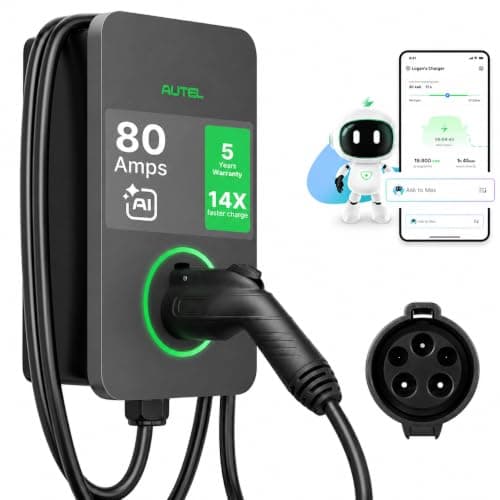
    01 Autel MaxiCharger 80A
    9.0

    The only 80-amp charger here priced like a normal home unit rather than a commercial one - and the one to buy if your car can genuinely take 19.2 kW.

    Best for: A home 19.2 kW install on a normal budget

    $908.98Amazon
  • Grizzl-E Grizzl-E Ultimate 80A (NACS)
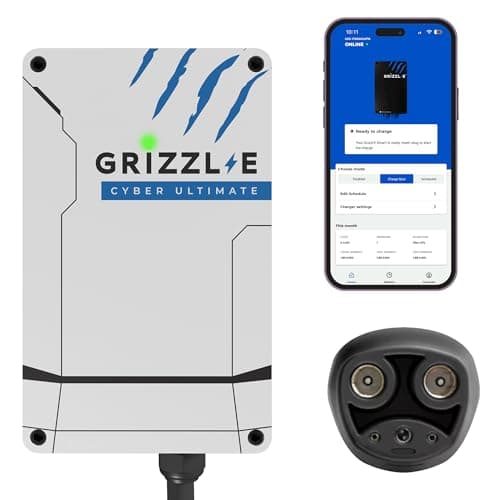
    02 Grizzl-E Ultimate 80A (NACS)
    9.0

    An 80-amp unit that is genuinely useful at every amperage below 80 too - adjustable in six documented steps down to 16 amps, in a UL Type 4 metal case.

    Best for: One charger that fits whatever circuit you end up with

    $899.00Amazon
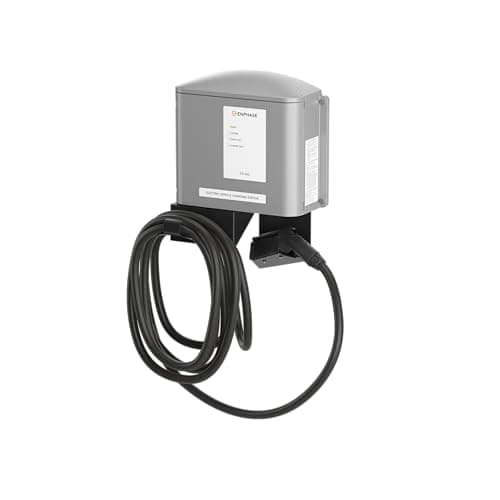
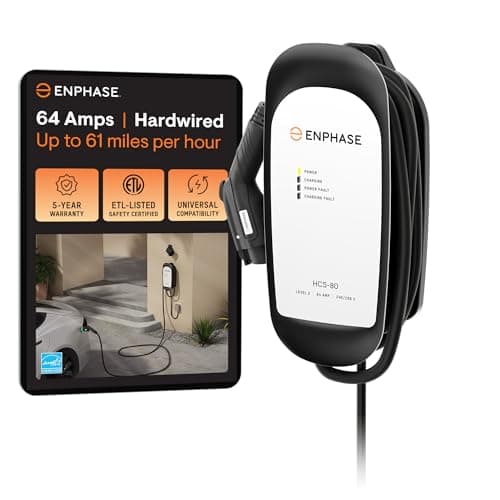
  • Enphase Energy Enphase HCS-80 (64A)
    03 Enphase HCS-80 (64A)
    7.4

    The unit that explains the category's naming trap: HCS-80 is the 80-amp CIRCUIT, not the output. It delivers 64 amps - and for the cars that can use it, that is the point.

    Best for: Cars that accept 15.4 kW, on an 80A circuit

    $1,600.00Amazon
  • Enphase Energy Enphase CS-100 (80A)
    04 Enphase CS-100 (80A)
    8.4

    A commercial charging station sold to homeowners: field-serviceable cable, automatic fault reclosure and building-energy integration, at a commercial price.

    Best for: A fleet, a shared lot or a genuinely commercial install

    $3,038.00Amazon
  • Emporia Emporia Level 2 (48A)
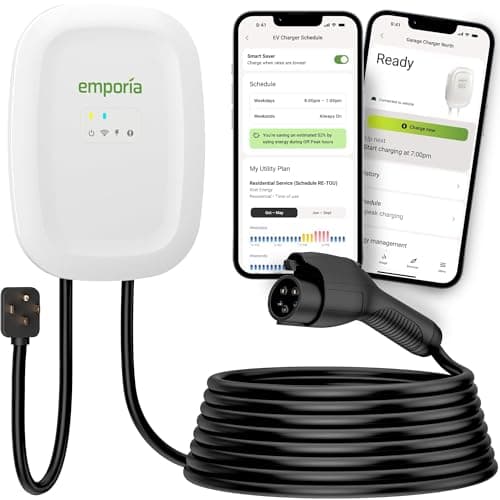
    05 Emporia Level 2 (48A)
    9.0

    The charger that refuses to charge you extra for being smart: full 48-amp speed and real energy monitoring at roughly the price of a plain plug-in box.

    Best for: Most homes that want speed and smarts

    $449.00Amazon

#ad · Live prices from the Amazon Product API, as of Sep 18, 2026. Where we have no verified live price, we show none — we would rather leave a gap than print a number that has gone stale.

The Autel MaxiCharger 80A is the 80-amp charger to buy: it is the only one here priced like a home appliance rather than a commercial fixture, it delivers the full 19.2 kW on a 100-amp circuit, and its listed certifications run to UL 2594 and UL 2231. The Grizzl-E Ultimate 80A is the pick if you want a metal box you can dial down to 16 amps and forget about. But read the next paragraph before you buy either, because for most people on this page the correct answer is a 48-amp charger.

Here is the thing nobody selling an 80-amp charger volunteers: almost no EV can use one.The charger sets a ceiling; the car's onboard AC charger sets the actual rate, and the lower of the two wins. Tesla publishes an 11.5 kW / 48-amp Level 2 acceptance for its cars, and 7.7 kW / 32 amps on rear-wheel-drive trims. That figure - 11.5 kW - is where the overwhelming majority of EVs on sale stop. Plug one of those into a 19.2 kW charger and it will draw 11.5 kW, exactly as it would from a charger costing a third as much on a circuit costing far less to install.

So this page is written for the small group for whom 80 amps is real: owners of a Lucid Air, which Lucid documents as accepting AC charging up to 19.2 kW, a GMC Hummer EV, an F-150 Lightning on the trims that support 80-amp AC, and anyone wiring a shared or fleet parking area where one high-output station is cheaper than several small ones. If that is not you, the 48-amp roundup is the page you actually want, and we would rather send you there than sell you a 100-amp circuit.

What 80 amps actually costs you before the charger

The charger is the cheap part. NEC Article 625 treats EV charging as a continuous load, so the branch circuit has to be sized at 125 percent of the charger's rating. Run the arithmetic in the direction that matters:

  • 80 amps continuous / 0.8 = a 100-amp dedicated circuit. Not 80. Every manufacturer on this page states the 100-amp requirement, and Autel says it plainly in its own listing.
  • A 100-amp branch circuit is half of a 200-amp service. Before an electrician will pull it, an NEC Article 220 load calculation has to show your service can carry it on top of the house. Plenty of 200-amp services cannot, which turns this into a service upgrade and a conversation with the utility.
  • The conductors get expensive fast. A 100-amp circuit is a much heavier copper run than the 60-amp circuit a 48-amp charger needs, and the price gap widens with every foot of distance from the panel. Our wire and breaker size guide has the full table.

Add it up and the install, not the hardware, is where the money goes. That is the honest reason the 48-amp tier dominates: 60-amp circuits fit inside services that already exist.

The naming trap: 80 can mean 64

This category has one genuinely confusing convention and it costs people money. The Enphase HCS-80 is not an 80-amp charger. The 80 refers to the circuit it requires; the output is 64 amps, or 15.4 kW. That is the same continuous-load rule read from the other end - 64 / 0.8 = 80 - and Enphase is upfront about it. The Enphase CS-100, by contrast, really does deliver 80 amps / 19.2 kW, on a 100-amp circuit. Two products, one brand, adjacent model numbers, completely different outputs.

The rule for reading any listing in this class: find the kilowatt figure, not the model number. 19.2 kW means 80 amps of output. 15.4 kW means 64. 11.5 kW means 48. If a listing gives you only a model name with a number in it, assume the number is the breaker.

Amps, kW and cable at a glance

ChargerAmps / kWCircuit neededPlug typeCableSmart / Wi-FiSafety listingPrice tier
Autel MaxiCharger 80A6-80A / up to 19.2 kW100A dedicatedHardwired, J177225 ftWi-Fi + Wi-SUN, Autel appUL certified by CSA (UL 2594, UL 2231)Mid
Grizzl-E Ultimate 80A16-80A / up to 19.2 kW100A dedicated (down to 20A)Hardwired, NACS25 ftWi-Fi, Grizzl-E ConnectUL tested and certified, UL Type 4Mid
Enphase HCS-8064A / 15.4 kW80A dedicatedHardwired, J177225 ftNone - no app, no cloudETL to UL 2594, Energy Star, NEMA 4Premium
Enphase CS-10080A / 19.2 kW100A dedicatedHardwired, J177225 ftCOSMOS load management + access controlUL certified, Energy Star, NEMA 3RCommercial
Emporia Level 2 (the sanity check)6-48A / up to 11.5 kW60A dedicatedNEMA 14-50 plug or hardwired25 ftWi-Fi, energy monitoringUL listed, Energy StarValue

The picks

The Autel MaxiCharger 80A wins because it is the only unit that makes an 80-amp install a normal purchase rather than a commercial project. Autel publishes an adjustable range from 6 to 80 amps with DIP-switch steps at the usual breaker sizes, a 25-foot J1772 cable, and a certification list running to UL 2594, UL 2231-1, UL 2231-2, UL 1998 and CSA C22.2 No.280, on a five-year warranty. Dual-network Wi-Fi plus Wi-SUN is a genuinely useful detail in a detached garage where one radio path is marginal.

The Grizzl-E Ultimate 80A is the one to buy if you would rather own a metal box than a platform. Its published amperage ladder is the best argument for it: 80 amps on a 100-amp breaker, 48 on a 60, 40 on a 50, 32 on a 40, 24 on a 30 and 16 on a 20. Buy it now at 48 amps on the circuit you have, and it still delivers 19.2 kW the day you upgrade the panel. The catch is the connector - the buyable SKU is NACS, so a J1772 car needs a J1772-to-NACS adapter.

The Enphase HCS-80 is the deliberately dumb one: no app, no Wi-Fi, no cloud account, ETL listed to UL 2594 in a sealed NEMA 4 enclosure with a five-year warranty. It is 64 amps, not 80, and Enphase names the cars that suit it rather than implying every EV benefits. The Enphase CS-100 is a commercial station - field-serviceable cable, automatic fault reclosure, COSMOS load sharing and access control - and it is priced accordingly. It belongs on a shared lot or a fleet yard, not in a single-car garage.

The Emporia Level 2 is on this page as the reality check. It is 48 amps, it runs on a 60-amp circuit, it adjusts in single-amp steps from 6 to 48, and for the large majority of cars it charges at exactly the same rate an 80-amp unit would - because the car, not the charger, is the limit.

Check your car's AC acceptance rate before you spend anything.If it is 11.5 kW - and it probably is - an 80-amp charger and its 100-amp circuit buy you nothing at all. The number is in the owner's manual under onboard charger or AC charging.

In detail

The picks, in full

01
Autel Autel MaxiCharger 80A

A home 19.2 kW install on a normal budget

Autel MaxiCharger 80A

Up to 80A / 19.2kWJ177225ft cableUL cert. by CSA
9.0/10

The only 80-amp charger here priced like a normal home unit rather than a commercial one - and the one to buy if your car can genuinely take 19.2 kW.

Charge speed
10
Build & weather
9
Smart features
9
Cable & connector
9
Value
8

Pros

  • Delivers the full 80A / 19.2 kW on a 100A circuit, and the manufacturer states the 100A requirement plainly rather than burying it
  • UL certified by CSA, with internal temperature monitoring and a flame-retardant enclosure, on a 5-year warranty
  • Dual-network Wi-Fi plus Wi-SUN, so the app keeps working when a single garage Wi-Fi link drops
  • Tamper-resistant screws and remote locking - the practical answer to a charger mounted where the public can reach it

Cons

  • Hardwired only, and a 100A dedicated circuit is a serious electrical job many 200A services cannot spare
  • Almost no EV can use all 80 amps, so most buyers are paying for headroom the car will never draw

Don't buy this if…

your car's onboard AC charger tops out at 11.5 kW, which covers the large majority of EVs on sale. You would be paying for a 100-amp circuit to feed a 48-amp car. Check the vehicle's AC acceptance rate first - if it is 11.5 kW, a 48-amp charger is the correct purchase.

$908.98View on Amazon

$1,069.0015% off

Price as of Sep 18, 2026. Prices change — Amazon's is the one that counts.

#ad · we may earn a commission from this link to Autel MaxiCharger 80A

02
Grizzl-E Grizzl-E Ultimate 80A (NACS)

One charger that fits whatever circuit you end up with

Grizzl-E Ultimate 80A (NACS)

16-80A / to 19.2kWNACS25ft cableUL Type 4 metal case
9.0/10

An 80-amp unit that is genuinely useful at every amperage below 80 too - adjustable in six documented steps down to 16 amps, in a UL Type 4 metal case.

Charge speed
10
Build & weather
10
Smart features
8
Cable & connector
8
Value
9

Pros

  • Amperage steps are published per breaker size - 80A on a 100A circuit, 48A on 60A, 40A on 50A, 32A on 40A, 24A on 30A, 16A on 20A - so one unit survives a future panel change
  • UL tested and certified, with over-current, over-voltage, under-voltage, missing-diode, ground-fault and over-temperature protection plus built-in GFCI
  • Heavy-duty UL Type 4 indoor/outdoor metal enclosure and an external Wi-Fi antenna, which matters in a detached garage
  • Ultimate Load Balancing shares power across multiple Grizzl-E chargers, with equal-share or priority modes

Cons

  • The buyable SKU is the NACS connector - a J1772 car needs a J1772-to-NACS adapter to use it
  • Hardwire-only, and Grizzl-E's heavy cable stiffens noticeably in deep cold

Don't buy this if…

your driveway is all J1772 and you would rather not own an adapter. The 48-amp Grizzl-E Ultimate is sold in J1772 and gives most cars identical real-world speed.

$899.00View on Amazon

Price as of Sep 18, 2026. Prices change — Amazon's is the one that counts.

#ad · we may earn a commission from this link to Grizzl-E Ultimate 80A (NACS)

03
Enphase Energy Enphase HCS-80 (64A)

Cars that accept 15.4 kW, on an 80A circuit

Enphase HCS-80 (64A)

64A / 15.4kWJ177225ft cableETL to UL 2594 · NEMA 4
7.4/10

The unit that explains the category's naming trap: HCS-80 is the 80-amp CIRCUIT, not the output. It delivers 64 amps - and for the cars that can use it, that is the point.

Charge speed
9
Build & weather
10
Smart features
3
Cable & connector
9
Value
6

Pros

  • ETL listed to UL 2594 by an OSHA-recognized NRTL and ENERGY STAR certified - the certification is spelled out, not implied
  • The ClipperCreek lineage: no app, no cloud account, no Wi-Fi to drop, in a fully sealed NEMA 4 enclosure with a 5-year warranty
  • The manufacturer names the cars it suits - Cadillac Lyriq, F-150 Lightning Extended Range, Lucid Air Dream, Tesla Model S 90D/100 - instead of implying every EV benefits
  • Integrated cable wrap and wall-mounted holster included, so 25 feet of heavy cable has somewhere to live

Cons

  • The name says 80 and the output is 64 - it still needs a full 80-amp dedicated circuit for its 15.4 kW
  • No app, scheduling or energy monitoring at a price where every rival has all three

Don't buy this if…

you want off-peak scheduling or energy data. This is deliberately a dumb, extremely durable appliance; if the app matters, the Autel 80A does more for less.

$1,600.00View on Amazon

Price as of Sep 18, 2026. Prices change — Amazon's is the one that counts.

#ad · we may earn a commission from this link to Enphase HCS-80 (64A)

04
Enphase Energy Enphase CS-100 (80A)

A fleet, a shared lot or a genuinely commercial install

Enphase CS-100 (80A)

80A / 19.2kWJ177225ft cableNEMA 3R · UL + Energy Star
8.4/10

A commercial charging station sold to homeowners: field-serviceable cable, automatic fault reclosure and building-energy integration, at a commercial price.

Charge speed
10
Build & weather
10
Smart features
9
Cable & connector
9
Value
4

Pros

  • Fully sealed NEMA 3R enclosure and an impact-resistant connector designed for high-traffic use rather than one car a night
  • COSMOS energy management brings load sharing, digital load management and access control - the features a multi-unit site actually needs
  • Automatic circuit reclosure resets minor faults instead of leaving the station dead until someone visits it
  • Field-serviceable cable: a damaged lead is replaced rather than condemning the whole unit

Cons

  • Costs several times what an 80-amp residential unit costs, and the extra buys serviceability and site management, not charging speed
  • Access control and load sharing are wasted on a single-car garage

Don't buy this if…

this is one charger for one household. Every feature separating the CS-100 from the Autel is a multi-user, high-uptime feature you will never use at home, and the price difference is enormous.

$3,038.00View on Amazon

Price as of Sep 18, 2026. Prices change — Amazon's is the one that counts.

#ad · we may earn a commission from this link to Enphase CS-100 (80A)

05
Emporia Emporia Level 2 (48A)

Most homes that want speed and smarts

Emporia Level 2 (48A)

Up to 48A / 11.5kWJ177225ft cableWi-Fi + app
9.0/10

The charger that refuses to charge you extra for being smart: full 48-amp speed and real energy monitoring at roughly the price of a plain plug-in box.

Charge speed
10
Build & weather
8
Smart features
9
Cable & connector
8
Value
10

Pros

  • 48-amp capable when hardwired — quicker than the 40-amp plug-in default most units top out at
  • Genuine energy tracking and scheduling in the app, priced below almost every other smart charger
  • The 25-foot cable reaches either side of a two-car garage

Cons

  • You only get 48 amps hardwired on a 60-amp circuit; the plug-in version is capped at 40A like everything else
  • The app and Wi-Fi are central to the experience, so first-time setup takes longer than a plug-and-go box

Don't buy this if…

you never intend to open an app. A lot of what you are paying for is the software; if a sealed, silent box is what you actually want, the Grizzl-E Classic is the honest call.

$449.00View on Amazon

Price as of Sep 18, 2026. Prices change — Amazon's is the one that counts.

#ad · we may earn a commission from this link to Emporia Level 2 (48A)

How to decide whether 80 amps is real for you

Four questions, in this order. Stop at the first one that answers no - the rest do not matter after that.

1. What is your car's onboard AC charger rated at?

This is the whole decision. The charger negotiates a maximum current with the car over the J1772 control pilot, and the car simply draws less if its onboard charger is smaller. Tesla documents 11.5 kW / 48 amps across its range and 7.7 kW / 32 amps on rear-drive trims, and most other manufacturers land in the same place. The exceptions are few and specific: the Lucid Air at up to 19.2 kW, the GMC Hummer EV, and F-150 Lightning trims equipped for 80-amp AC. If your car is not one of those, buy a 48-amp charger and stop reading.

2. Can your service carry a 100-amp branch circuit?

Continuous-load sizing means an 80-amp charger needs a 100-amp dedicated circuit, and a 100-amp circuit is a large fraction of a typical 200-amp residential service. An Article 220 load calculation decides it, not a rule of thumb. If the answer is no, your options are a service upgrade, a subpanel, or accepting a lower amperage - and the Grizzl-E Ultimate 80A is specifically the unit that lets you accept a lower amperage today without buying different hardware later.

3. Hardwired is not optional at this level

Every unit here is hardwire-only, and that is not a marketing choice. The NEMA 14-50 receptacle that makes plug-in charging convenient is a 50-amp device; there is no household plug standard that carries 80 amps continuously. Above 48 amps the conversation about hardwired versus plug-in simply ends. Budget for an electrician, a permit and an inspection - our permit and inspection guide covers what that involves.

4. Does the extra speed change anything you do?

Run the numbers before you spend. A 48-amp charger at 11.5 kW replaces a normal day's driving in an hour or two of overnight charging, and the car is parked for eight. Doubling the rate only matters if you routinely arrive near empty and need to leave again within a few hours, or if the pack is genuinely enormous - which is exactly why the Hummer EV is the poster car for this tier. For everyone else the gain is theoretical, and shifting to an off-peak window saves real money that a faster charger does not.

Level 1, Level 2 and where 80 amps sits

For orientation, since this page sits at the far end of a ladder most buyers meet in the middle:

  • Level 1 is a standard 120-volt outlet - roughly 1.4 kW, a few miles of range per hour. Fine for a plug-in hybrid, painful for anything else.
  • Level 2 is 240 volts and covers everything from 16 to 80 amps, or about 3.8 kW to 19.2 kW. The arithmetic is just volts times amps: 240 x 48 = 11,520 watts, or 11.5 kW. Every product on this page is Level 2 - the connector and the standard are identical to a cheap 32-amp unit, only the current ceiling differs.
  • DC fast charging is a different technology entirely and does not exist for homes. If you are here because you want DC speeds in your garage, the honest answer is that it is not available at any price - the comparison is here.

NACS or J1772 at 80 amps

Both connectors carry AC current identically - the plug shape is the only difference, and neither is faster than the other for a given amperage. What matters at this level is that your options are thin: the buyable 80-amp Grizzl-E is NACS, and the Autel, HCS-80 and CS-100 are J1772. If the connector on your chosen charger does not match your car, a passive adapter bridges it - but check the adapter is rated for the current you are actually running, because plenty are rated for less than 80 amps.

Load management is the alternative to a bigger circuit

If the reason you were looking at 80 amps is a busy household rather than one fast car, the cheaper answer is usually load management rather than more capacity. A charger that watches the rest of the house and backs off when the dryer and the oven are running lets you install more charging capacity on the service you already have. The Grizzl-E Ultimate does it across multiple chargers with equal-share or priority modes; other brands do it against the whole panel. Our load-balancing chargers roundup covers that route, and it is far cheaper than a service upgrade.

So, which one?

Buy the Autel MaxiCharger 80A if your car can genuinely take 19.2 kW and you want the full rate at a sane price. Buy the Grizzl-E Ultimate 80A if you want one metal box that works at 16, 24, 32, 40, 48 or 80 amps as your panel evolves - and you are fine with NACS. Buy the Enphase HCS-80 if you want a sealed, app-free appliance and 64 amps is enough. Buy the CS-100 only for a commercial or shared site. And if you got this far and your car tops out at 11.5 kW, buy the Emporia and spend the difference on nothing at all.
How we picked

We do not run a testing lab

We compiled published specifications from manufacturer manuals and spec sheets, verified the safety listings (UL / ETL), computed the real running and installation costs, checked the wiring math against the NEC continuous-load rule, and read aggregated owner reviews — then scored each product against a published rubric. The scores are judgments from documented research — they are not bench measurements, because we do not have a test lab and we are not going to pretend we do. Every spec and cost figure is cited in Sources.

Questions

Frequently asked

Do I need an 80-amp EV charger?

Almost certainly not. The car's onboard AC charger sets the real rate, and most EVs cap at 11.5 kW / 48 amps - Tesla publishes exactly that figure across its range. An 80-amp charger only delivers more to a car that can accept 19.2 kW, which today means a Lucid Air, a GMC Hummer EV, or an F-150 Lightning on the trims equipped for it. Check your owner's manual for the onboard charger rating before you spend anything.

What size breaker does an 80-amp EV charger need?

A 100-amp dedicated circuit. NEC Article 625 treats EV charging as a continuous load, so the circuit is sized at 125 percent of the charger's rating: 80 divided by 0.8 is 100. That is a large share of a typical 200-amp service, so an Article 220 load calculation has to show your service can carry it - see our load calculation guide.

Why is the Enphase HCS-80 only 64 amps?

Because the 80 in the name is the circuit, not the output. The same continuous-load rule runs both ways: 64 amps of continuous output requires an 80-amp breaker. The Enphase CS-100 is the one in that range that genuinely delivers 80 amps / 19.2 kW, and it needs a 100-amp circuit to do it. When you read any listing in this class, look for the kilowatt figure rather than the model number.

Can I plug an 80-amp charger into a NEMA 14-50 outlet?

No. A NEMA 14-50 receptacle is a 50-amp device, and no household plug standard carries 80 amps continuously. Every 80-amp charger is hardwire-only, which means an electrician, a permit and an inspection. If plug-in convenience matters more to you than the top rate, a plug-in charger on a 14-50 is the right product and 40 amps is your ceiling.

Is an 80-amp charger faster than a 48-amp one?

Only if the car can use it. At 240 volts, 80 amps is 19.2 kW and 48 amps is 11.5 kW - so on paper it is roughly double. In practice the charger and the car negotiate a maximum over the J1772 control pilot and the lower number wins, so a car with an 11.5 kW onboard charger draws 11.5 kW from both. Our fastest home chargers page ranks the whole ladder by delivered kilowatts.

Keep reading

More in this section

More Home EV Chargers

All home ev chargers

Receipts

Sources

We do not run a testing lab, and we do not pretend to. Where a measured number came from someone else's lab, we name them and link them. Where we could not verify something, we say so on the page rather than quietly leaving it out. Read our full method.