HUB 03 · Charging Guides
Charging an EV at a Hotel
An overnight stop is twelve idle hours, which is more than enough even at the slowest rate. The three ways hotels let you charge, in the order they are worth chasing.
We earn a commission when you buy through our Amazon links, at no extra cost to you. It never affects our rankings, and we say so when the cheaper product is the better buy. How this works.
Twelve hours parked is the whole point. Even a 120-volt outlet at 12 amps adds roughly 50 to 60 miles overnight, which covers the gap between most driving days - so the hotel question is rarely about speed, it is about whether you can plug in at all. Chase a real Level 2 destination charger first, ask about a standard outlet second, and plan for a nearby public charger third. Pack a Level 1 cordset either way.
This is a different problem from charging at an RV park, where there is a 50-amp NEMA 14-50 pedestal and a nightly fee, and from street parking, where the issue is that there is no outlet at all. A hotel usually has electricity within reach of a parking space, and the obstacle is permission and etiquette rather than physics.
The three tiers, in order
1. A destination Level 2 charger
Increasingly common, and worth filtering your booking on. These are ordinary wall units in the parking lot - some branded by a carmaker, some generic J1772, some on a network that takes a card or an app. A Level 2 charger adds roughly 25 miles of range per hour, so an overnight stay is a full charge for almost any car.
Two cautions. First, listings go stale: a hotel that installed two chargers five years ago may have one working, or may have fenced them off for staff. Second, "EV charging available" in a booking filter sometimes means a 120-volt socket. Confirm by phone, not by icon. The DOE's station locator is the most reliable public index of what is actually installed where.
2. A standard 120-volt outlet
This is the underrated answer. Exterior maintenance outlets, outlets in a parking garage, the socket by the loading door - plenty of hotels have one within a cord's reach of a space, and many will say yes if you ask politely at check-in. The Department of Energy makes the general point about Level 1 that applies exactly here: many owners meet their daily range needs charging overnight on Level 1 equipment, with no installation at all, provided there is an outlet on a dedicated branch circuit near where they park.
At 12 amps and 120 volts that is about 1.4 kW, or roughly 4 to 5 miles of range per hour - call it 50 to 60 miles over a long night. It will not refill an empty long-range EV, and it does not need to. It needs to replace what you drove yesterday.
3. A public charger nearby
If the hotel has nothing, the fallback is a DC fast charger or a Level 2 post within walking distance or a short drive - ideally one you visit on the way in rather than at 7 am on the way out. Our road trip charging guide covers sequencing stops, and public charging networks covers who runs what.
What to ask when you book
Four questions, and asking them by phone takes two minutes and saves an unpleasant morning.
- "Is the EV charger a Level 2 wall unit or a regular outlet?" This single question resolves most of the ambiguity in booking-site listings.
- "Which plug does it have, and is it on a network?" J1772 or a Tesla-style connector, and whether you need an app or a card. If it is the connector your car does not have, you need an adapter - see do I need an adapter.
- "Is it reserved for guests, and can I reserve one?" Some hotels will note it on the booking; at others it is first come, first served.
- "If there is no charger, may I use an exterior outlet overnight?" Ask this of the front desk rather than assuming. Offer to pay. Most places that say yes are glad to have been asked.
Etiquette, which is also self-interest
- Never run a cord across a walkway or a doorway. It is a trip hazard and it is the fastest way to get every future EV guest refused. If the cord cannot reach without crossing a path, the answer is no.
- Ask, every time, even if you charged there last month. Staff change and permission is not a property of the building.
- Offer to pay for the electricity. An overnight Level 1 charge is a genuinely small amount of money - our cost calculator will tell you what it is at local rates, and quoting the real figure makes the conversation easy.
- Move off a destination charger once you are full, especially at a hotel with one unit and three EVs in the lot. Set a charge limit so the car stops rather than idling on the connector.
- Do not use a household extension cord to reach. This is the one with a real safety cost - extension cord safety explains what is and is not acceptable, and why a continuous 12-amp draw for ten hours is not what a lamp cord is for.
Reading the outlet before you plug in
If you are offered a socket, take ten seconds to look at it. A standard 5-15 household outlet is what a Level 1 cordset expects. A 5-20 - one slot turned sideways - is also fine. Anything larger, round-pinned or industrial-looking is a different voltage or configuration and your cordset will not fit it; do not improvise an adapter in a hotel car park. And if the outlet is outdoors, it should be GFCI-protected and ideally in a weatherproof cover you can close over the plug.
Two practical notes. Older exterior outlets are sometimes on a circuit shared with other loads, and a 12-amp continuous draw can trip it overnight - if your car is not full in the morning, that is usually why. Most cordsets let you dial down to 8 amps, which is slower but far more likely to survive the night. And if the socket is a GFCI, a nuisance trip is possible; check the car in the morning rather than assuming.
What to pack
A small travel kit makes the difference between a hotel being a charging stop and being twelve wasted hours.
- The Level 1 cordset - the one that came with the car, or a better one with an adjustable current setting. This is the whole kit, if you only take one thing.
- Your connector adapter, if your car and the likely chargers do not match. A J1772-to-NACS or NACS-to-J1772 adapter is small, and it turns a useless post into a working one.
- A way to keep the connector off the ground - even a plastic bag and a hook beats laying it in a puddle.
What to look for in a travel cordset
The charger you take on the road is judged on different things from the one on your garage wall.
- Adjustable current, down to 8 amps. The single most useful travel feature, because unknown hotel circuits are often shared and a lower setting is what survives the night.
- Cable length, honestly assessed.20 to 25 feet reaches from a wall socket to a parked car in most lots. Longer is heavier; shorter leaves you depending on the hotel's parking geometry.
- A safety listing and an IP rating, because the unit will sit on wet asphalt at some point. ETL or UL to UL 2594, IP65 or better.
- Compact and boxless if it lives in the trunk. Weight and bulk are real costs on a cord you carry rather than mount.
- The right connector, or a dual-voltage unit that covers both the 120-volt hotel socket and a 240-volt outlet if you find one.
The picks below are the registry cordsets that fit that brief, including a NACS option.
The gear
Recommended gear for this guide
The products this guide refers to, with prices pulled live from Amazon and dated on each card.
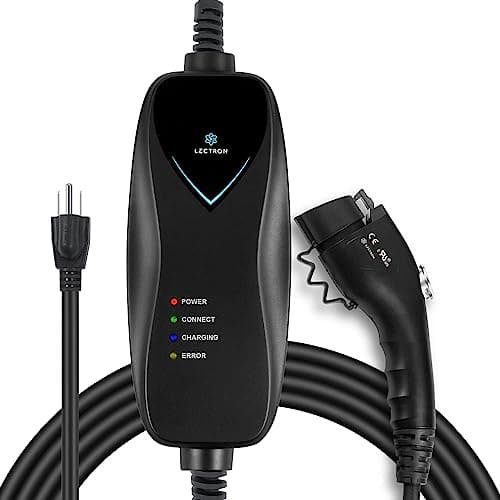
The certified 120V cord
Lectron Level 1 (15A)
The Level 1 cord to buy if you buy only one: ETL certified to UL 2594 and Energy Star listed, which most of the 120-volt field on Amazon cannot claim.
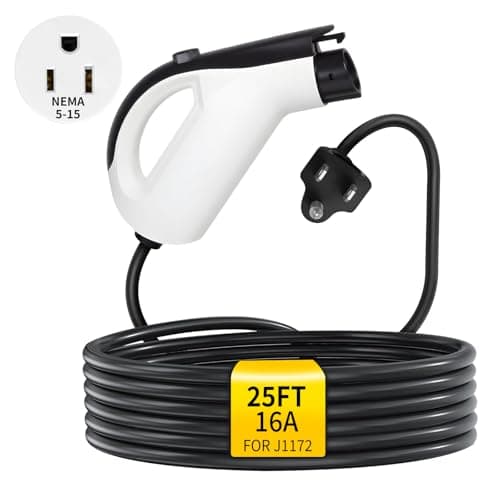
A simple long-cable trunk cord
WenStorm Level 1 (12A)
A deliberately plain 12-amp cord with a long 25-foot lead and no control box to hang - the one that coils smallest and lives in a trunk.
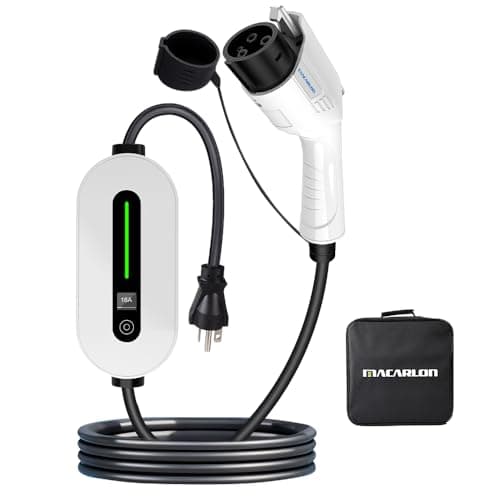
A 120V cord with a 240V upgrade path
MACARLON 16A Level 1/2
A 120-volt cord that also does Level 2 - it ships with a NEMA 6-20 plug and a 5-15 adapter, so a spare 240-volt outlet roughly doubles your charging speed for no extra hardware.
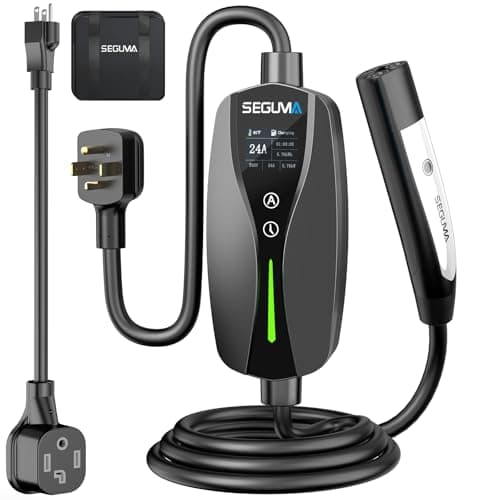
NACS cars that need a Level 1 backup
SEGUMA Level 1/2 NACS (14-30)
A NACS dryer-outlet charger with a NEMA 5-15 adapter in the box, so the same cord charges at Level 2 at home and at Level 1 from an ordinary outlet on the road.
#ad · As an Amazon Associate we earn from qualifying purchases.
Questions
Frequently asked
Can I charge my EV at a hotel?
Usually, in one of three ways: a Level 2 destination charger in the lot, a standard 120-volt outlet with the front desk's permission, or a public charger nearby. An overnight stay is long enough that even the slowest option adds roughly 50 to 60 miles. Confirm which one the hotel actually has by phone - booking-site EV icons are unreliable.
Is it OK to plug into a hotel's outdoor outlet?
Only with permission, which is usually given if you ask at check-in and offer to pay. Never run a cord across a walkway, never use a household extension cord to reach, and use the cordset's lowest practical current setting on an unknown circuit. An overnight Level 1 charge is a small amount of electricity, and saying so plainly makes the request easy to grant.
How much range will I get overnight on a 120-volt outlet?
At 12 amps and 120 volts, about 1.4 kW, or roughly 4 to 5 miles of range per hour - so 50 to 60 miles over a twelve-hour stay. Dialing down to 8 amps to protect an unknown circuit gives around two-thirds of that. It will not refill an empty long-range battery, but it replaces a normal driving day.
What should I ask a hotel before booking?
Whether the charging is a Level 2 wall unit or an ordinary outlet, which connector it has and whether it needs an app or card, whether it can be reserved, and - if there is no charger - whether you may use an exterior outlet overnight. Four questions, two minutes, and it is the difference between a planned stop and a problem.
Do I need an adapter to use a hotel charger?
Possibly. If the post is J1772 and your car has a NACS port, you need a NACS-side adapter; if the post is a Tesla-style destination charger and your car is J1772, you need the other direction. Both are small enough to live in the trunk. Our compatibility by brand table says which one your car needs.
Can I leave my car charging on a hotel charger all night?
Usually yes, and that is what destination chargers are for - but set a charge limit so the car stops when it is done rather than occupying the connector until morning. At a hotel with one charger and several EVs, moving the car once it is full is the difference between the hotel keeping the charger available to guests and quietly restricting it.
Keep reading
Related
- EV road trip charging guidePlanning the stops either side of the overnight one.
- Charging an EV at an RV parkThe 50-amp alternative when a hotel has nothing.
- Portable chargers for emergenciesThe cordset that makes any ordinary socket useful.
- EV charger extension cord safetyThe one rule that matters most when the outlet is just out of reach.
- Public charging networksWho runs the posts you will fall back on, and what they cost.
- Do I need an adapter?Which direction of adapter to pack before a trip.
More in this section
More Charging Guides
Receipts
Sources
- US DOE AFDC - charging an electric vehicle at home (many owners meet their daily range needs charging overnight on Level 1 equipment, given an outlet on a dedicated branch circuit)
- US DOE AFDC - electric vehicle charging station locations
- US DOE / fueleconomy.gov - EV charging basics (Level 1, Level 2 and DC fast charging)
- Intertek - UL 2594 testing and certification for electric vehicle supply equipment
- US DOE Energy Saver - electric vehicles
- SAE J1772 specification (the AC coupler, control pilot and proximity detection)
We do not run a testing lab, and we do not pretend to. Where a measured number came from someone else's lab, we name them and link them. Where we could not verify something, we say so on the page rather than quietly leaving it out. Read our full method.