HUB 04 · Charging Costs
Can You Own an EV Without Home Charging?
The answer is yes far more often than the internet says, and the honest caveats are not the ones you expect. It is rarely about range - it is about price per kilowatt-hour and dwell time.
We earn a commission when you buy through our Amazon links, at no extra cost to you. It never affects our rankings, and we say so when the cheaper product is the better buy. How this works.
Yes - a great many people do it.But this site's job is to be straight with you rather than encouraging, so here is the real trade. Owning an EV without home charging costs you the single biggest financial advantage of the car, and it replaces a habit that takes four seconds a night with one that takes planning. Whether that is a fair trade depends on two things: what charging you can reach, and what you would pay per kilowatt-hour for it.
What you are actually giving up
Not range. Not reliability. Two specific things:
- The cheapest energy. Home electricity - particularly on an overnight time-of-use rate - is the reason EVs are cheap to run. Public charging costs substantially more per kWh, as public charging cost and home vs public charging cost both lay out.
- The zero-effort routine.Home charging's real luxury is that you never think about it. Without it, charging becomes an errand you schedule - a small, recurring tax on your attention.
Everything else about the car is unchanged. It is still quiet, quick, and cheap to maintain.
The cost question, done properly
Do not compare public charging with gasoline and stop there - compare it with the home charging you are not getting, because that is the decision you are actually making. Work out your monthly energy need, then price it three ways: at your home rate (what you would have paid), at your realistic mix of workplace and public Level 2, and at DC fast charging rates. The calculator does each one - change the rate field and rerun.
Run it for your car
Cost-to-charge calculator
Put in your electricity rate, your battery size and your car's efficiency. The math is the same one shown above, with a 10% charging loss included so the number is realistic.
- $8.09
- A 10% to 80% charge
- $11.56
- A full (empty to 100%) charge
- $0.05
- Cost per mile
- $5.08
- Cost per 100 miles
Estimate only. Actual cost depends on your exact utility rate (including any time-of-use pricing and fees), your car's real efficiency, temperature, and charging losses. Check your electric bill for your true rate.
The result usually surprises people in both directions. A driver with free or cheap workplace charging can end up paying less than a home charger would have cost them. A driver relying mainly on DC fast charging can end up close to the running cost of an efficient gas car, at which point the financial argument for the EV largely disappears and you are buying it for other reasons - which is a completely legitimate thing to do, as long as you know that is what you are doing.
What a workable routine looks like
The people who do this happily almost all have one reliable anchor plus a backup, rather than a scattering of options:
- An anchor. Workplace charging is the best one, because the dwell time is long and the price is usually low - workplace charging cost. Failing that, a regular Level 2 spot where you already spend a couple of hours: a gym, a supermarket, a station car park.
- A backup. A known DC fast charger you can reach with margin, for the weeks the anchor fails.
- A trunk kit. A portable unit turns any outlet you can legitimately use into a slow top-up. Level 1 on a standard outlet is unglamorous and genuinely useful for an overnight stay - the picks are in best portable EV chargers.
- A higher floor. Keep the state of charge higher than a home charger would bother with. The margin replaces the plug.
Buy the battery, not the charger. Without home charging, a larger pack is worth real money to you - it stretches the interval between charging errands, which is the actual cost you are paying. This is one of the few situations where we would tell someone to spend up for range.
When we would tell you not to
Three situations where the honest advice is to wait or buy something else:
- No anchor at all. No workplace charging, no reliable Level 2 near where you spend time, and DC fast charging as the default. That is expensive and tiresome.
- High mileage with only slow options. If you drive a lot and your only realistic charging is Level 1, the arithmetic does not work - a 120-volt cord adds a modest amount overnight, per Level 1 vs Level 2.
- A cold climate plus outdoor-only public charging. Winter cuts range and slows charging at the same time, which makes a thin charging plan thinner - cold-weather range loss has the numbers.
In those cases a plug-in hybrid or a used efficient gas car is the honest recommendation until your parking situation changes. We would rather say that than sell you a charger you cannot install.
Before you conclude you have no options
Most people have more than they think. Check whether an existing outlet near your space could be used with permission, whether a nearby space with power can be rented, and whether your building or landlord would say yes to something small. Those conversations are in asking a landlord for a charger and condo and HOA charging, and the full option list is in charging an EV at an apartment. A single 120-volt outlet you are allowed to use changes this entire calculation.
The gear
Recommended gear for this guide
The products this guide refers to, with prices pulled live from Amazon and dated on each card.
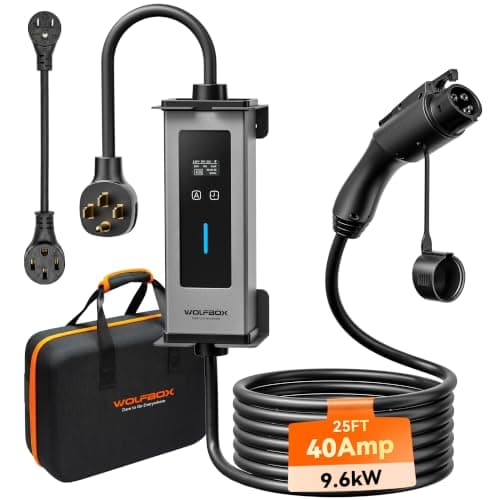
One charger for home and travel
WOLFBOX 40A Portable (Level 1/2)
A dual-level portable that doubles as a wall box — 40 amps on a NEMA 14-50, or Level 1 on a standard outlet with the included adapters. One weatherproof charger for the garage and the road.
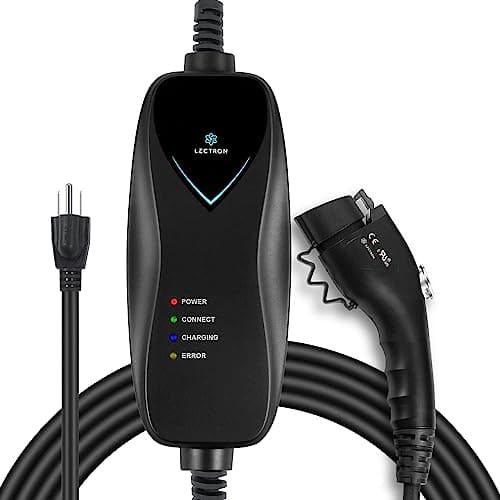
The certified 120V cord
Lectron Level 1 (15A)
The Level 1 cord to buy if you buy only one: ETL certified to UL 2594 and Energy Star listed, which most of the 120-volt field on Amazon cannot claim.
#ad · As an Amazon Associate we earn from qualifying purchases.
Questions
Frequently asked
Can you own an EV if you cannot charge at home?
Yes, and many people do. It works best with one reliable anchor - usually workplace charging or a regular Level 2 spot where you already spend time - plus a fast-charging backup. The cost, not the range, is the main trade-off.
How much more does it cost without home charging?
It depends entirely on your mix. Free or cheap workplace charging can beat home charging; relying mainly on DC fast charging can approach the running cost of an efficient gas car. Price your own monthly energy at each rate to find out.
Is Level 1 charging enough without a home charger?
For low-mileage drivers with access to a standard outlet, often yes - an overnight 120-volt charge covers a typical commute. For high-mileage drivers it is not enough on its own.
Should I buy a bigger battery if I have no home charging?
Usually yes. Without a nightly plug, a larger pack directly reduces how often you make a charging trip, which is the real cost of this situation. It is one of the few cases where paying for range is clearly worth it.
Keep reading
Related
- Workplace Charging CostThe anchor that makes this work most often.
- Charging with Street ParkingThe hardest version of this situation.
- Charging an EV at an ApartmentEvery option, ranked best to backup.
- Home vs Public Charging CostThe price gap you are choosing to pay.
- Asking a Landlord for a ChargerThe conversation that can end this problem entirely.
More in this section
More Charging Costs
Receipts
Sources
- US DOE AFDC - charging an EV at home
- US DOE / fueleconomy.gov - EV charging basics
- US EIA - average retail price of electricity by state and sector
We do not run a testing lab, and we do not pretend to. Where a measured number came from someone else's lab, we name them and link them. Where we could not verify something, we say so on the page rather than quietly leaving it out. Read our full method.