HUB 03 · Charging Guides
Garage vs Outdoor EV Charging
An unheated garage is worth more than people think, and an outdoor install is less of a problem than they fear. Here is what actually differs between the two.
We earn a commission when you buy through our Amazon links, at no extra cost to you. It never affects our rankings, and we say so when the cheaper product is the better buy. How this works.
Plenty of EV owners have no garage, and plenty who have one park on the driveway anyway. Charging outdoors is normal, safe and extremely common - EV charging equipment is designed for it. But the two situations are not identical, and the differences show up in which charger you should buy, how it is mounted, and what winter costs you. Here is the honest comparison.
Safety: not a differentiator
Let us dispose of the worry first. Level 2 charging equipment is built and listed for outdoor use, the connector is designed to be handled in the wet, and the system does not energize the pins until it has confirmed a proper connection. Rain is not a hazard - we cover that specifically in can I charge my EV in the rain. What matters is buying equipment with a stated outdoor rating and installing it correctly, not avoiding the outdoors.
What genuinely differs
| Factor | Garage | Outdoors |
|---|---|---|
| Enclosure rating | Any listed unit is fine | Buy a stated outdoor / weather rating and check the low end of its temperature range |
| Cable in deep cold | Stays pliable; easy to coil | Stiffens and fights you - the single most annoying part of an outdoor winter |
| Winter efficiency | Warmer start for cabin and pack; less energy to heat | Full cold-weather penalty every morning |
| Install | Usually a shorter, simpler run | May need conduit, exterior penetration, or a trench to a detached spot |
| Security | Behind a door | Consider a locking holster and a lockable connector |
| Connector care | Stays clean and dry | Dock it nose-down so water and grit do not sit in the contacts |
What an unheated garage is actually worth
This is the part that gets undersold. A garage does not need to be heated to help - it just needs to be a few degrees warmer and out of the wind. Because the dominant winter energy cost is heating the cabin from cold, a car that starts its morning at 40F instead of 5F has a meaningfully smaller hole to climb out of, and it has no snow or ice on it. Combine that with preconditioning while plugged in and most of the winter penalty described in cold-weather range loss stops being something you notice.
The outdoor equivalent: you cannot warm the driveway, but you can still precondition from the wall. An outdoor charger plus scheduled departure gets you most of the same practical result - a warm, de-iced car that starts the day full.
Buying for outdoors
Two specs matter more outside than in. First, a stated enclosure rating for outdoor use - a cast metal or properly sealed body rather than a unit whose listing is quiet about it. Second, the low end of the operating temperature range, which manufacturers publish and buyers skip. Our best outdoor chargers ranking sorts the field by enclosure, and best cold-weather chargers ranks it by the thing that actually fails in a freeze, which is the cable rather than the box.
Hardwiring is generally the better outdoor answer too: no receptacle exposed to weather, no plug as a wear point, and a tidier, more secure installation - the trade-offs are in hardwired vs plug-in, and the weather detailing is in weatherproofing an outdoor install.
Mounting and mess
Outdoors, mount the unit so the connector docks under some shelter if you can - under an eave, beside a door - so water is not sitting in the plug between sessions. Get the cable off the ground with a hook rather than letting it lie in slush and be driven over; cable management covers the cheap hardware, and where to mount an EV charger covers height and placement. If the parking spot is a detached garage or a distant carport, the run itself becomes the project - EV charger in a detached garage has that case.
The bottom line
Do not let the absence of a garage stop you installing a charger; outdoor charging is a solved problem and the equipment is built for it. Buy for the enclosure and the cable, mount it thoughtfully, hardwire it if you can, and use preconditioning to recover most of what the garage would have given you. Enclosure rating and cable length are both listed for every unit in our ranked Level 2 chargers, so the outdoor shortlist takes a minute.
The gear
Recommended gear for this guide
The products this guide refers to, with prices pulled live from Amazon and dated on each card.
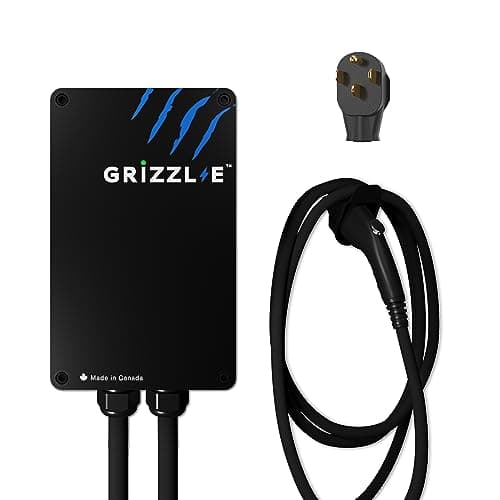
People who want a charger, not an app
Grizzl-E Classic (40A)
A UL-certified cast-aluminum box with no app to update and nothing in the cloud to fail — the durability default for people who want a charger, not a gadget.
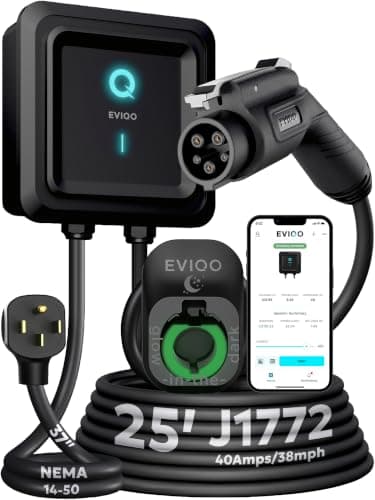
Budget buyers who still want smart features
EVIQO Level 2 (40A)
A double-listed (UL and ETL), IP66-weatherproof smart charger that keeps landing at the bottom of the price band — a lot of certified hardware for the money.
#ad · As an Amazon Associate we earn from qualifying purchases.
Questions
Frequently asked
Is it safe to charge an EV outside in rain or snow?
Yes. Level 2 equipment is designed and listed for outdoor use, and the connector does not energize until a proper connection is confirmed. Buy a unit with a stated outdoor rating and have it installed correctly.
Does an unheated garage really help in winter?
Yes, more than people expect. Being a few degrees warmer and out of the wind means less cabin heating energy and no ice to clear, which addresses the largest part of the winter range penalty.
What should I look for in an outdoor charger?
A stated outdoor enclosure rating and a published low-temperature limit that covers your climate - and pay attention to the cable, which is what actually stiffens and misbehaves in a hard freeze.
Should an outdoor charger be hardwired?
Usually yes. It removes a weather-exposed receptacle and a plug as a failure point, it is more secure, and it is required anyway to reach the full 48 amps.
Keep reading
Related
- Best Outdoor EV ChargersRanked by enclosure, for a driveway or exterior wall.
- Best Cold-Weather ChargersThe cable is what fails in a freeze, not the box.
- Weatherproofing an Outdoor InstallThe detailing that keeps water out.
- Preconditioning While Plugged InHow an outdoor car gets most of the garage benefit anyway.
- Cold-Weather Range LossThe penalty a warmer starting point reduces.
More in this section
More Charging Guides
Receipts
Sources
- US DOE AFDC - charging an EV at home
- EC&M - NEC requirements for EV equipment (Article 625)
- US DOE / EPA fueleconomy.gov - cold weather effects on EVs (range about 41% lower at 20F with cabin heating; about two-thirds of the extra energy heats the cabin; about 12% lower with the heater off; preheat while plugged in)
We do not run a testing lab, and we do not pretend to. Where a measured number came from someone else's lab, we name them and link them. Where we could not verify something, we say so on the page rather than quietly leaving it out. Read our full method.