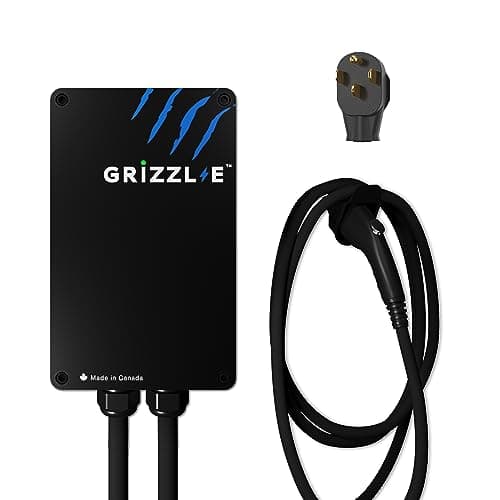
If your car has a J1772 port, buy the Grizzl-E. If it has a NACS port and you are happy inside Tesla's ecosystem, buy the Wall Connector. If your driveway has one of each, buy neither of these two and read the last section. That is the whole decision, and it is almost entirely about the plug on the end of the cable rather than the box on the wall. Both units land at 48 amps and 11.5 kW, both need a 60-amp circuit and a hardwired install at that setting, and both are built by companies that have been doing this for years. What separates them is philosophy: the Grizzl-E is cast metal with a dial inside and no account to create, and the Tesla is a connected appliance with a four-year residential warranty and a company-sized software commitment behind it.
The comparison, from published specifications
| Grizzl-E Ultimate | Tesla Wall Connector (Gen 3) |
|---|
| Maximum output | 48A / 11.5 kW | Adjustable to 48A / 11.5 kW |
| Connector | J1772 | NACS (Tesla) |
| Install | Hardwired | Hardwired |
| Cable | 25 ft | 24 ft |
| Enclosure | Cast aluminum, IP67 / Type 4 | Polycarbonate, indoor / outdoor rated |
| Connectivity | Optional, model dependent | Wi-Fi, over-the-air updates |
| Output setting | Internal dial, set at install | Commissioning via Wi-Fi |
| Warranty | Manufacturer terms by model | Four years residential, one year commercial |
| Buying route | Amazon and retail | Tesla direct |
The connector question settles it for most people
A Tesla Wall Connector ends in a NACS plug. A J1772 car cannot use it without a NACS-to-J1772 adapter hanging off the end - a part that works fine, but which you now reach past every single night, and which is one more thing to lose. The Grizzl-E ends in J1772, which is the connector on the overwhelming majority of non-Tesla cars sold in North America and on essentially every public Level 2 station.
So: Tesla, Cybertruck, or one of the newer native-NACS cars - the Wall Connector is the natural fit. Mach-E, Ioniq, ID.4, Bolt, Lightning, 4xe, R1T before model year 2026 - the Grizzl-E is the natural fit. Our 30-second port check settles which you have if the badge is not obvious.
Where the Grizzl-E genuinely wins
- It cannot be abandoned. The output is set on a physical dial inside the unit. There is no account, no cloud dependency, and nothing that stops working because a server was retired. For a device expected to last a decade on an outside wall, that is a feature with a long payoff - the argument our no-Wi-Fi ranking makes at length.
- Cast aluminum, IP67.The Ultimate's enclosure is metal, rated to Type 4, and the brand is built around surviving a Canadian winter outdoors.
- You can buy it today, from anywhere. Including with the price on this page, which is live.
- There is a cheaper rung. The 40-amp Classic does the same job on a 50-amp circuit for less money, and 40 amps is more than most cars accept anyway.
Where the Tesla genuinely wins
- The warranty. Tesla publishes four years for residential use. That is at the top of this market, and it is the clearest signal in the comparison.
- Power sharing that is actually supported. Multiple Wall Connectors can share one circuit as a documented feature rather than a workaround - relevant if a second EV is coming. See load-balancing chargers.
- One app for car and charger. If you drive a Tesla, scheduling and charge limits already live in the phone you are holding.
- Updates. Over-the-air firmware is a real benefit when it is backed by a company that keeps shipping it.
The mixed-driveway case, where both of these lose
A Tesla and a J1772 car sharing one charge point is the fastest-growing version of this question, and neither unit above is the right answer. Tesla's own Universal Wall Connector puts a J1772 adapter in the handle, so it serves both without a dangling part. A J1772 charger plus a cheap J1772-to-NACS adapter for the Tesla is the other route, and usually the cheaper one. We have a page on exactly this trade-off: best chargers for mixed Tesla and J1772 households.
What is identical, and therefore not worth arguing about
At 48 amps both need a 60-amp branch circuit, because the NEC treats charging as a continuous load and sizes the circuit at 125 percent of the draw - and that circuit will cost more than the price difference between these two chargers. Both are hardwired at that setting. Both deliver 11.5 kW, which is more AC power than most cars accept: Tesla publishes 11.5 kW for its own vehicles and 7.7 kW on rear-wheel-drive trims, and plenty of other cars stop at 7.2 or 11 kW. Check your own car's number in what amp charger do I need before paying for 48 amps at all.
The verdict
- J1772 car: Grizzl-E. Ultimate if you want 48 amps and metal, Classic if 40 amps on a 50-amp circuit is enough - and for most cars it is.
- Tesla or native-NACS car, one-car household: Wall Connector. The warranty and the ecosystem are worth it.
- One of each in the driveway: a Universal Wall Connector, or a J1772 unit plus an adapter.
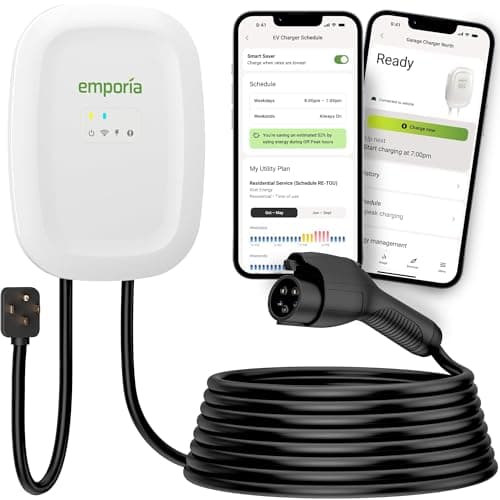
- You want data on what charging costs you: neither. An energy-monitoring unit like the Emporia is the pick, and it is on this page for that reason.