HUB 03 · Charging Guides
Smart Panels vs a Panel Upgrade for EV Charging
A service upgrade buys capacity. Load management buys the same outcome by making sure the charger never asks for capacity at the wrong moment - usually for far less money.
We earn a commission when you buy through our Amazon links, at no extra cost to you. It never affects our rankings, and we say so when the cheaper product is the better buy. How this works.
When a load calculation says the charger does not fit, there are two ways forward. Add capacity - a service upgrade, which is the expensive, disruptive, permanent answer. Or manage demand - make sure the charger backs off when the house is busy, so the peak never rises. For most homes the second is cheaper, faster and entirely legitimate. Here are the categories, what each actually does, and when the upgrade is still the right call.
Four ways to manage demand instead of adding capacity
- Load management built into the charger. The charger watches the service with a clamp sensor and throttles or pauses itself when the house approaches its limit. This is the cheapest route because there is no extra box - it is a feature you buy with the charger. Ranked in chargers with load balancing and power sharing.
- A standalone energy management device. A separate controller sits between the panel and the charger and cuts the charging circuit when total demand gets high. It works with a dumb charger, which is useful if you already own one or want a no-app unit.
- A circuit-sharing device. Rather than watching the whole service, these share one existing circuit between two loads - classically a dryer and a charger - so only one draws at a time. Cheap and narrow: it solves a breaker-space problem more than a capacity problem.
- A smart panel. A replacement load center with metering and remote control on every branch, able to shed lower-priority circuits so the charger keeps running. The most capable and by far the most expensive of the four, and it is a panel replacement - so if you are replacing the panel anyway, it competes directly with a plain upgrade.
Why inspectors accept this. Load management is not a loophole. If the equipment guarantees the charger cannot contribute to the peak, the calculation reflects that lower number - which is the same reasoning that lets an adjustable charger be counted at its set output. Your local authority still decides what it will approve, so confirm before you buy.
Choosing between them
Work down this order, because it runs cheapest-first and most people stop early:
- Can you just dial the charger down? Free, and usually invisible overnight. A 32-amp charger still adds far more range in eight hours than most people drive in a day. Start here - see what amp charger do I need.
- Is your problem capacity, or breaker spaces? A physically full panel with plenty of headroom is a different fix - a subpanel, or tandem breakers where the panel permits them.
- Would a load-managing charger solve it? If yes, this is the cheapest real hardware answer, because the capability comes bundled with a charger you were buying anyway.
- Do you want whole-home visibility and control? Then a smart panel earns its price - but compare it honestly against a plain service upgrade, since both involve replacing the panel.
When the upgrade is genuinely the right answer
Load management is not always the smart move. Pay for the service upgrade when the panel is old or unsafe and wants replacing on its own merits; when you are electrifying broadly - heat pump, induction range, heat-pump water heater, a second EV - and will run out of headroom regardless; or when the calculation fails so far short that managing demand would mean charging that is genuinely inadequate rather than merely slower. Doing it once, properly, beats three partial fixes.
Whichever way you go, get the calculation in front of you first - the load calculation guide shows what to ask for - and read do I need a panel upgrade for the decision framing. If you are on 100-amp service, the specific options are in the 100-amp guide. And whichever way the panel goes, the charger on the end of it comes from the Level 2 home chargers we rank - most of them adjustable, which is what makes the smart-panel route work.
The gear
Recommended gear for this guide
The products this guide refers to, with prices pulled live from Amazon and dated on each card.
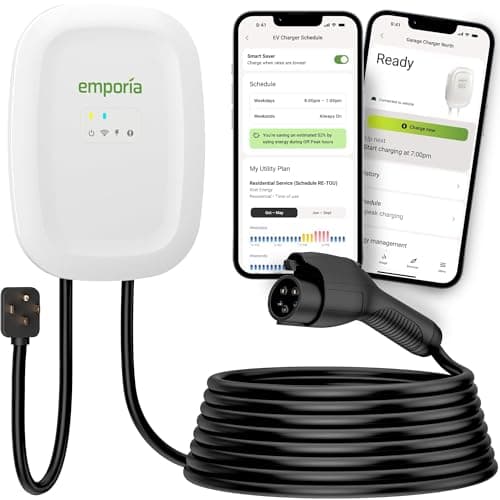
Most homes that want speed and smarts
Emporia Level 2 (48A)
The charger that refuses to charge you extra for being smart: full 48-amp speed and real energy monitoring at roughly the price of a plain plug-in box.
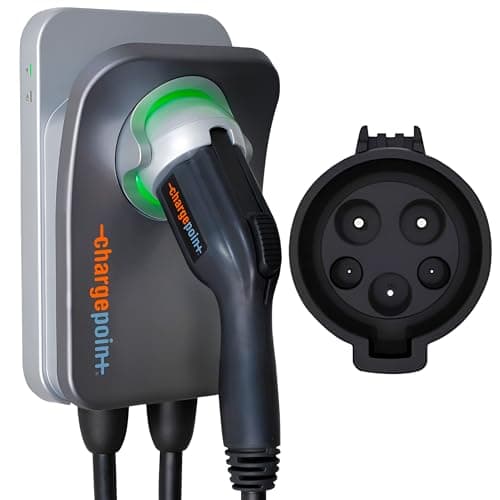
Buyers who want the established brand + one app
ChargePoint Home Flex
The mature, well-supported pick — amperage you dial in up to 50A, wired into the biggest public-charging app in North America. You pay for the polish.
#ad · As an Amazon Associate we earn from qualifying purchases.
Questions
Frequently asked
Can load management replace a panel upgrade?
Often, yes. If the equipment ensures the charger cannot add to the home's peak demand, the load calculation can reflect that, and no capacity needs to be added. Your local authority having jurisdiction decides what it accepts.
Is a smart panel worth it just to add an EV charger?
Usually not on its own - it is a panel replacement, so it competes with a plain service upgrade on cost. It makes more sense if you want whole-home circuit control and metering, or if you are electrifying several things at once.
What is the cheapest way to add a charger to a tight panel?
Dialing an adjustable charger down to a lower amperage. It costs nothing, it is accepted in the calculation, and overnight the difference in range added is rarely noticeable.
Does a circuit-sharing device work for EV charging?
For the narrow case it is designed for - sharing an existing 240-volt circuit such as a dryer so only one load draws at a time - yes. It solves breaker space more than service capacity, and it means you cannot charge and run that appliance simultaneously.
Keep reading
Related
- Chargers with Load BalancingThe units that manage demand without an extra box.
- Do I Need a Panel Upgrade?The decision this page is offering alternatives to.
- The Load CalculationThe arithmetic load management is designed to change.
- Do I Need a Subpanel?The fix when the problem is breaker spaces, not capacity.
- EV Charger on a 100-Amp PanelWhere these options matter most.
More in this section
More Charging Guides
Receipts
Sources
- EC&M - NEC requirements for EV equipment (Article 625)
- Electrical Contractor Magazine - determining and calculating existing loads (NEC 220.83 and the 220.87 maximum-demand method)
- US DOE AFDC - charging an EV at home
We do not run a testing lab, and we do not pretend to. Where a measured number came from someone else's lab, we name them and link them. Where we could not verify something, we say so on the page rather than quietly leaving it out. Read our full method.