HUB 03 · Charging Guides
Charging an EV When You Park on the Street
Curbside parking is the hardest home-charging situation there is - and it is still solvable, as long as you go in with an honest plan rather than an extension cord.
We earn a commission when you buy through our Amazon links, at no extra cost to you. It never affects our rankings, and we say so when the cheaper product is the better buy. How this works.
Street parking is the toughest EV charging situation, and it deserves a straight answer rather than an encouraging one. If you park on a public road with no reserved spot, you should plan your EV ownership around charging somewhere other than home - and then treat any home charging you can arrange as a bonus. Here is what genuinely works, and what to stop considering.
Start with the honest constraint
The reason curbside is hard is not electrical, it is legal and physical. You cannot rely on parking in the same place twice, and you cannot leave a cable where people walk. Every workable plan follows from accepting that rather than fighting it. If a driveway or a deeded spot ever comes with a move, the picture flips overnight - our ranked Level 2 chargers is the page for that day.
The cable-across-the-sidewalk question
This is the first idea everyone has, and it needs care. Running a charging cable from a house across a public sidewalk is regulated by your municipality - some cities have explicit permit schemes with approved cable covers or channels, and others prohibit it outright as a trip hazard and a liability. Ask your city before you assume either way. It is a genuinely different answer in different places, and it is not something an article can settle for you.
If you do get permission, two rules matter. Use a proper rated cable protector rather than a mat or a plank. And do not extend the charging cable to make the reach - EV charging equipment is not designed to run through a household extension cord, and that is a safety issue rather than a preference, as extension cord safety explains. A longer factory cable on the charger itself is the correct fix, and the units with the most reach are in best chargers with long cables.
What actually works, in order
- Workplace charging. If your employer has it, this quietly solves the entire problem: the car sits for eight hours anyway. It is often free or heavily subsidized - run the numbers in workplace charging cost.
- A rented parking space with power.Underused and often cheaper than people expect - a neighbor's driveway, a nearby garage, a commercial lot. This turns you into a normal home charger, and the landlord conversation is in asking a landlord for a charger.
- A regular public Level 2 habit. Not fast chargers - slow, cheap destination charging where you already spend time: a gym, a supermarket, a station car park. Level 2 while you do something else is the closest thing to home charging.
- Occasional DC fast charging. Fine as a top-up strategy, expensive as a way of life. The price gap is real - what public charging costs has the numbers.
- Opportunistic Level 1. If you can occasionally park where a standard outlet is legitimately available to you, a 120-volt cord adds meaningful range overnight and needs nothing installed.
The curbside reality check: before buying the car, spend two weeks pretending you already own it. Map where you would actually plug in on a normal Tuesday and on a bad Sunday. If you cannot answer that, the problem is the parking, not the car - and it is much cheaper to find that out first.
What to carry
A curbside owner benefits more than anyone from a flexible portable. A dual-level unit that does 120 volts on any household outlet and 240 volts on a NEMA 14-50 turns every outlet you can legitimately use into a charging opportunity, and it lives in the trunk rather than on a wall you do not own. The field is ranked in best portable EV chargers, with the case for it in a portable charger for emergencies. Keep the right adapter for your car's port with it too - the compatibility table says which one that is.
Is it worth it?
For many curbside drivers, yes - but the economics change, and you should know that going in. Without cheap overnight home charging you lose the biggest single financial advantage of an EV, and your running cost lands somewhere between home and full public rates. We do that math honestly in can you own an EV without home charging and home vs public charging cost. If the answer is still yes, the car is still quieter, cheaper to maintain and nicer to drive - just go in with the plan, not the hope.
The gear
Recommended gear for this guide
The products this guide refers to, with prices pulled live from Amazon and dated on each card.
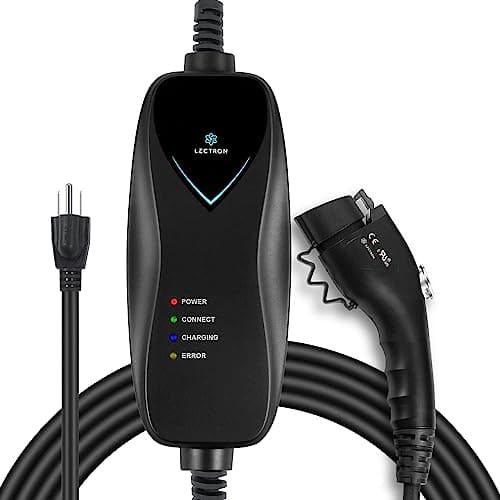
The certified 120V cord
Lectron Level 1 (15A)
The Level 1 cord to buy if you buy only one: ETL certified to UL 2594 and Energy Star listed, which most of the 120-volt field on Amazon cannot claim.
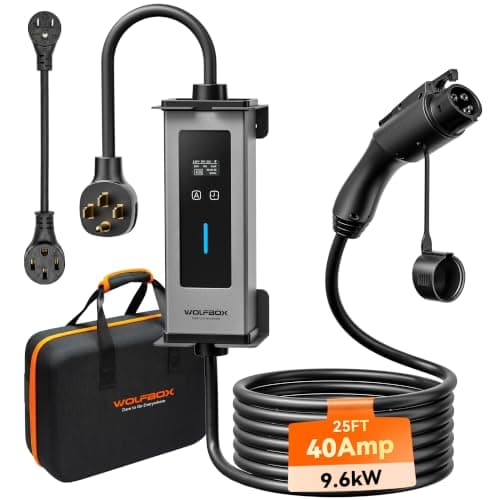
One charger for home and travel
WOLFBOX 40A Portable (Level 1/2)
A dual-level portable that doubles as a wall box — 40 amps on a NEMA 14-50, or Level 1 on a standard outlet with the included adapters. One weatherproof charger for the garage and the road.
#ad · As an Amazon Associate we earn from qualifying purchases.
Questions
Frequently asked
Can I run a charging cable across the sidewalk to my car?
It depends entirely on your municipality - some run permit schemes with approved cable channels, others prohibit it as a trip hazard. Ask your city directly, and never extend the reach with a household extension cord.
Can you own an EV with only street parking?
Yes, but plan it around charging somewhere else - workplace charging, a rented space with power, or a regular public Level 2 habit where you already spend time. Treat any home charging as a bonus rather than the plan.
Is a portable charger useful without a driveway?
Very. A dual-level portable turns any legitimately available outlet - 120 volts or 240 - into a charging opportunity, and it lives in the trunk rather than on a wall you do not own.
Is DC fast charging a reasonable substitute for home charging?
As an occasional top-up, yes. As a way of life it is expensive - public fast charging costs several times what home charging does - and slow Level 2 where you already park is usually the better habit.
Keep reading
Related
- Charging an EV at an ApartmentThe wider option list for anyone without a private garage.
- Can You Own an EV Without Home Charging?The honest cost and feasibility math.
- Best Portable EV ChargersThe trunk hardware a curbside owner actually needs.
- Workplace Charging CostThe option that quietly solves the whole problem.
- Extension Cord SafetyWhy you never solve a reach problem with a cord.
More in this section
More Charging Guides
Receipts
Sources
- US DOE AFDC - charging an EV at home
- US DOE / fueleconomy.gov - EV charging basics
- EC&M - NEC requirements for EV equipment (Article 625)
We do not run a testing lab, and we do not pretend to. Where a measured number came from someone else's lab, we name them and link them. Where we could not verify something, we say so on the page rather than quietly leaving it out. Read our full method.