Skip to content
The Charge Curve

HUB 01 · Home EV Chargers

The Best Home EV Chargers for a Honda or Acura EV

The Prologue and the ZDX are big-battery Ultium SUVs with an 11.5 kW onboard charger, so unlike a small hatchback they can genuinely use a 48-amp circuit. Ranked on where 40 amps is plenty and where the hardwire pays for itself.

By Stephen V.Updated How we compare
#ad

We earn a commission when you buy through our Amazon links, at no extra cost to you. It never affects our rankings, and we say so when the cheaper product is the better buy. How this works.

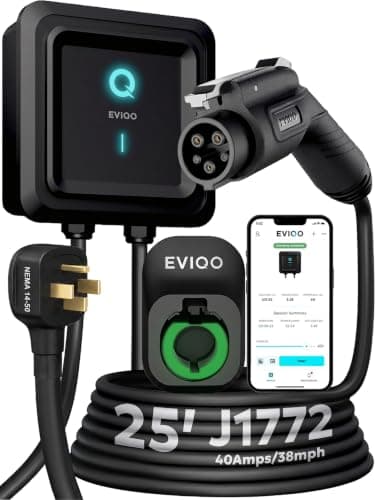
EVIQO EVIQO Level 2 (40A)

Our top pick

Best for Honda & Acura

EVIQO Level 2 (40A)

8.6/10
$449.98Check Price

$510.9912% off

In stock at Amazon as of November 5, 2026.

#ad · we may earn a commission

Best for: Budget buyers who still want smart features

A double-listed (UL and ETL), IP66-weatherproof smart charger that keeps landing at the bottom of the price band — a lot of certified hardware for the money.

Read the full review ↓Compare all 5 picks ↓

The short answer

Quick picks

  • EVIQO EVIQO Level 2 (40A)
    01 EVIQO Level 2 (40A)
    8.6

    A double-listed (UL and ETL), IP66-weatherproof smart charger that keeps landing at the bottom of the price band — a lot of certified hardware for the money.

    Best for: Budget buyers who still want smart features

    $449.98Amazon
  • Wallbox Wallbox Pulsar Plus (48A)
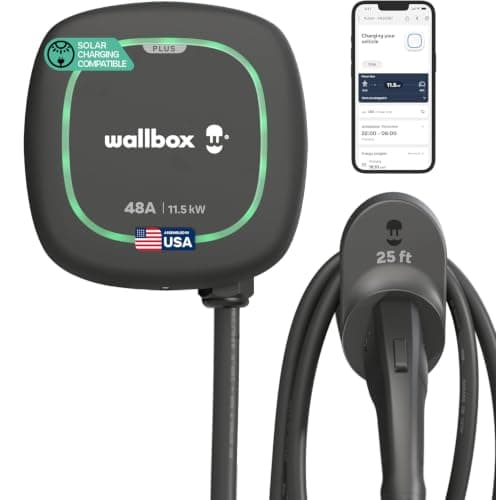
    02 Wallbox Pulsar Plus (48A)
    8.4

    One of the smallest 48-amp chargers you can hang on a wall — full-speed hardwired charging in a box that barely announces itself.

    Best for: A compact, fast, hardwired install

    $689.99Amazon
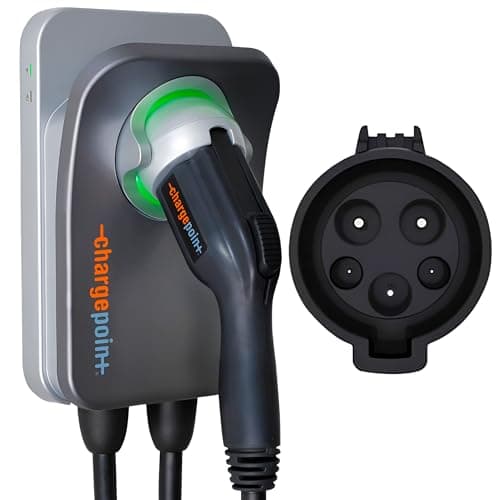
  • ChargePoint ChargePoint Home Flex
    03 ChargePoint Home Flex
    8.2

    The mature, well-supported pick — amperage you dial in up to 50A, wired into the biggest public-charging app in North America. You pay for the polish.

    Best for: Buyers who want the established brand + one app

    $599.00Amazon
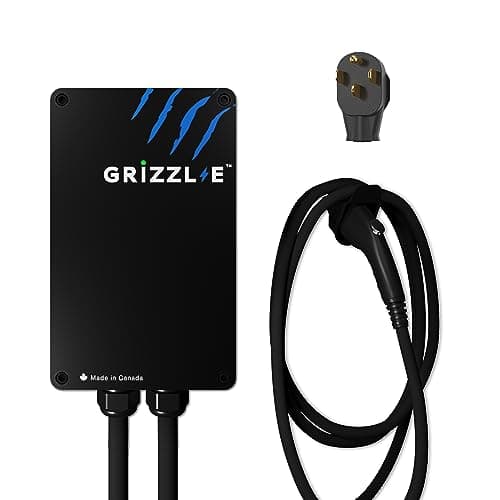
  • Grizzl-E Grizzl-E Classic (40A)
    04 Grizzl-E Classic (40A)
    8.0

    A UL-certified cast-aluminum box with no app to update and nothing in the cloud to fail — the durability default for people who want a charger, not a gadget.

    Best for: People who want a charger, not an app

    $299.99Amazon
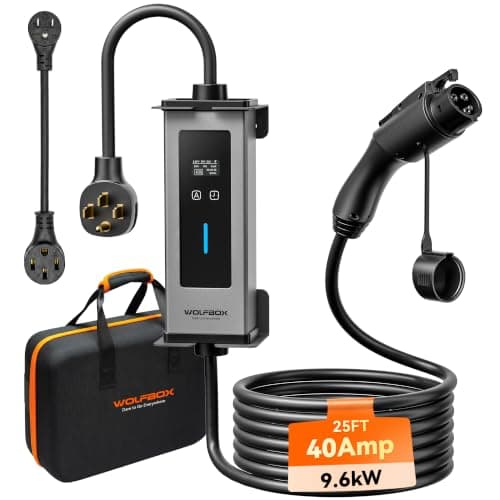
  • WOLFBOX WOLFBOX 40A Portable (Level 1/2)
    05 WOLFBOX 40A Portable (Level 1/2)
    8.6

    A dual-level portable that doubles as a wall box — 40 amps on a NEMA 14-50, or Level 1 on a standard outlet with the included adapters. One weatherproof charger for the garage and the road.

    Best for: One charger for home and travel

    $299.99Amazon

#ad · Live prices from the Amazon Product API, as of November 5, 2026. Where we have no verified live price, we show none — we would rather leave a gap than print a number that has gone stale.

For most Honda Prologue and Acura ZDX owners, the best home charger is the EVIQO Level 2: a double-listed (UL and ETL), IP66-weatherproof 40-amp unit with a 25-foot cable and a real app, at a price the premium brands do not match. If you can run a 60-amp circuit and want the full 11.5 kW these cars accept, the Wallbox Pulsar Plus hardwired at 48 amps is the step up that actually uses it. Both of these cars sit on GM's Ultium platform with an 11.5 kW onboard AC charger and a large battery, which puts them in the minority of EVs where paying for 48 amps is a defensible decision rather than a vanity purchase.

Honda's electric lineup in North America is short and specific. The Prologue is the volume car: an 85.0 kWh Ultium pack, an 11.5 kW onboard AC charger, up to 155 kW on DC fast charging, and an EPA figure of 296 miles in front-wheel drive or 273-281 miles with all-wheel drive. Its luxury sibling, the Acura ZDX, carries a larger 102 kWh pack and peaks at 190 kW on DC - and went out of production in September 2025, which makes it a used-market car and its charging setup a second-owner question. Everything on this page serves both. We compile published specifications and do the wiring arithmetic; we do not run a test lab.

What a Prologue or ZDX actually accepts

Honda PrologueAcura ZDX
Onboard AC charger11.5 kW (48 amps at 240V)Not published by Acura; spec databases list 11.5 kW (one lists 11 kW)
Battery85.0 kWh Ultium102 kWh Ultium
DC fast-charge peakUp to 155 kWUp to 190 kW
Acura / Honda AC claim-29.4 miles of range per hour
Home charging portJ1772 (the AC half of CCS1)J1772 (the AC half of CCS1)
Production2024 to an expected end in December 2026March 2024 to September 2025

Two numbers decide the whole page. The 11.5 kW onboard charger is the ceiling: no home charger can push a Prologue past 48 amps, and anything above that is wasted money. The 85 kWh battery is why the gap between 40 and 48 amps is worth more here than it is on a small EV - there is simply more energy to move, so a faster rate shortens a long charge rather than a short one.

40 amps or 48? The arithmetic, then the answer

EV charging is a continuous load under NEC Article 625, which means the branch circuit is sized at 125 percent of the load - the same thing as saying the load may not exceed 80 percent of the breaker. So:

CircuitMax chargingPower at 240VInstall
50 amp40 amps9.6 kWPlug-in on a NEMA 14-50, or hardwired
60 amp48 amps11.5 kWHardwired only

An 85 kWh pack taken from 20 to 90 percent is roughly 60 kWh of energy. At 9.6 kW that is about six and a quarter hours of charging; at 11.5 kW it is about five and a quarter. Both fit in an overnight window, which is the honest answer for the great majority of drivers: 40 amps is enough for a Prologue, and the 48-amp circuit buys back about an hour on the rare night you arrive home nearly empty and leave early.

The practical takeaway: if you already have a 14-50 outlet, or your panel makes a 50-amp circuit much cheaper than a 60, buy a certified 40-amp charger and stop thinking about it. Pay for 48 amps if you are having the circuit installed from scratch anyway, if you drive unusually long distances on consecutive days, or if a second EV will eventually share the panel - in which case read load-balancing chargers before you pick. The panel question itself is in the load calculation guide, and a licensed electrician settles it.

How we chose: five criteria

These are the tests every pick below had to pass, in the order we weighted them for this car.

  1. A verifiable third-party safety listing. UL or ETL to UL 2594, tested by an OSHA-recognized laboratory. A charger carries tens of amps for hours at a time next to your house; this is the one criterion with no trade-off attached.
  2. A path to the car's real ceiling. Either a solid 40 amps, or 48 amps where the panel allows it. Nothing above 48 amps appears here, because a Prologue cannot use it - which is why the 80-amp tier, covered in best 80-amp chargers, is the wrong aisle for this car.
  3. Cable reach for an SUV.The Prologue and ZDX are long vehicles whose charge port sits forward on the driver's side. A 25-foot cable is worth real money if the mount cannot go next to the port, and the cable length guide explains how to measure the actual path rather than the straight line.
  4. Weather rating matched to where it mounts. A published NEMA Type or IP rating for anything going on an outside wall, with the corrosion claim only where it is needed.
  5. Honest value. Where a cheaper unit does the same job to the same standard, it ranks higher. Brand recognition is not a feature.

Connector: J1772 at home, and Honda's own adapter for Superchargers

Both cars use a J1772 / CCS1 charge port, so every charger on this page plugs straight in at home with no adapter at all. The adapter question for a Honda or Acura EV is about DC fast charging on the road: since July 2025 Honda has sold an approved NACS-to-CCS DC adapter at $225 through Honda and Acura dealerships and the Honda DreamShop, which opens more than 23,500 Tesla Superchargers to Prologue and ZDX drivers. Electrek reported that sessions initially had to be started in the Tesla app, with plug-and-charge integration into HondaLink and the Acura EV app still in development.

That is a road-trip accessory, not a home-charging one, and it is the opposite direction from the cheap J1772-to-NACS adapters a Tesla-port car needs to use a J1772 wall charger. Which car needs which is laid out in NACS adapter compatibility by brand, and the background is in connector types explained.

Plug-in or hardwired for a Prologue

A 40-amp charger can plug into a NEMA 14-50 receptacle, which keeps the install simpler and lets you take the charger when you move. 48 amps means a hardwire - there is no plug rated for a 48-amp continuous load in a residential setting - so the charger becomes part of the house. The full argument is in hardwired vs plug-in, but for this car the short version is: plug-in if the outlet exists or you rent, hardwired if you are paying an electrician anyway and want the 11.5 kW.

If you go plug-in, spend the extra on the receptacle. A cheap 14-50 outlet carrying 40 amps all night is the single most common failure point in a home charging setup, which is why our NEMA 14-50 outlet guide and outlet roundup both exist.

A note for ZDX buyers specifically

Acura built the ZDX from March 2024 to September 2025, so you are almost certainly buying one used. Two things follow. First, check what came with the car: a previous owner may or may not have passed on the portable cord, and a missing one is a genuine cost to factor in. Second, the bigger 102 kWh pack is the strongest case on this page for a 48-amp circuit, because it is the most energy to move in one session. Acura does not publish the ZDX's onboard AC kW figure; it publishes a claimed 29.4 miles of range per hour, and third-party specification databases list 11.5 kW, with one listing 11 kW. We have not resolved that discrepancy, and it does not change the recommendation: a 48-amp charger covers whichever figure is right, and a 40-amp charger still fills the car overnight.

The picks, in order

Below the summary table each charger gets a full card with its score breakdown, pros, cons and a "don't buy this if" note. In short: the EVIQO wins on certified value for a car that is well served by 40 amps; the Wallbox Pulsar Plusis the 48-amp hardwired unit that uses a Prologue's full onboard rate; the ChargePoint Home Flex is the adjustable, established-brand option for a panel that might change; the Grizzl-E Classic is the sealed metal box with no app and a published UL file; and the WOLFBOX PE40 is the portable for a driveway with no permanent install yet. Every one of them charges a Prologue or a ZDX.

In detail

The picks, in full

01
EVIQO EVIQO Level 2 (40A)

Budget buyers who still want smart features

EVIQO Level 2 (40A)

40A / 9.6kWJ177225ft cableUL & ETL, IP66/NEMA 4
8.6/10

A double-listed (UL and ETL), IP66-weatherproof smart charger that keeps landing at the bottom of the price band — a lot of certified hardware for the money.

Charge speed
8
Build & weather
9
Smart features
8
Cable & connector
8
Value
10

Pros

  • Carries both UL and ETL listings plus an IP66 / NEMA 4 weatherproof rating — unusually well-certified for the price
  • Wi-Fi app with scheduling that undercuts the established brands
  • Long 25-foot cable and a simple plug-in NEMA 14-50 install

Cons

  • Newer brand with a shorter track record than ChargePoint or Wallbox
  • 40-amp ceiling, so not the fastest if your panel could do more

Don't buy this if…

…the reassurance of a long-established brand and support network matters most to you. The hardware is well-listed, but if brand maturity is what you are buying, the ChargePoint is the safer pick.

$449.98View on Amazon

$510.9912% off

Price as of November 5, 2026. Prices change — Amazon's is the one that counts.

#ad · we may earn a commission from this link to EVIQO Level 2 (40A)

02
Wallbox Wallbox Pulsar Plus (48A)

A compact, fast, hardwired install

Wallbox Pulsar Plus (48A)

Hardwired 48A / 11.5kWJ177225ft cableEnergy Star + UL
8.4/10

One of the smallest 48-amp chargers you can hang on a wall — full-speed hardwired charging in a box that barely announces itself.

Charge speed
10
Build & weather
8
Smart features
8
Cable & connector
8
Value
8

Pros

  • Physically tiny for a 48-amp unit — the least obtrusive charger in our home roundup
  • Full 48-amp hardwired speed, matching the fastest home chargers
  • Energy Star and UL certified

Cons

  • Hardwired only at 48A — no plug-in convenience if you might move it
  • The app has historically drawn more owner complaints than the hardware itself

Don't buy this if…

…you rent or might take the charger with you. This is a permanent fixture — a plug-in unit or a portable EVSE is the right call for anyone who could move.

$689.99View on Amazon

$799.9914% off

Price as of November 5, 2026. Prices change — Amazon's is the one that counts.

#ad · we may earn a commission from this link to Wallbox Pulsar Plus (48A)

03
ChargePoint ChargePoint Home Flex

Buyers who want the established brand + one app

ChargePoint Home Flex

Adjustable to 50AJ1772NEMA 14-50 plugEnergy Star
8.2/10

The mature, well-supported pick — amperage you dial in up to 50A, wired into the biggest public-charging app in North America. You pay for the polish.

Charge speed
9
Build & weather
8
Smart features
9
Cable & connector
8
Value
7

Pros

  • Output is adjustable in the app up to 50A, so it matches whatever breaker you can install today and more later
  • Reports into the same ChargePoint app that maps and pays for a huge public network — home and away in one place
  • Long track record and responsive support that newer budget brands cannot match

Cons

  • Costs more than equally capable chargers from newer brands
  • The experience leans hard on the ChargePoint account and app; skip it and you are paying for an integration you will not use

Don't buy this if…

…price is your first filter. The Emporia matches most of what this does for meaningfully less — here you are paying for brand maturity and the unified app, which are real but not free.

$599.00View on Amazon

$657.999% off

Price as of November 5, 2026. Prices change — Amazon's is the one that counts.

#ad · we may earn a commission from this link to ChargePoint Home Flex

04
Grizzl-E Grizzl-E Classic (40A)

People who want a charger, not an app

Grizzl-E Classic (40A)

40A / 9.6kWJ1772NEMA 14-50 plugUL certified
8.0/10

A UL-certified cast-aluminum box with no app to update and nothing in the cloud to fail — the durability default for people who want a charger, not a gadget.

Charge speed
8
Build & weather
10
Smart features
5
Cable & connector
8
Value
9

Pros

  • Cast-aluminum enclosure rated for indoor and outdoor use — genuinely built to outlast plastic-bodied rivals
  • UL certified, which plenty of budget chargers on Amazon cannot claim
  • No mandatory app or Wi-Fi: it charges the day it arrives and keeps working if a server goes dark

Cons

  • No scheduling or energy monitoring — if you want off-peak automation or load sharing, look elsewhere
  • The stock cable stiffens in the cold, a recurring owner note in northern climates

Don't buy this if…

…you want app scheduling, energy tracking, or load sharing between two cars. The Grizzl-E is deliberately dumb, and if smart features are the point for you, the Emporia is the better buy.

$299.99View on Amazon

$399.0025% off

Price as of November 5, 2026. Prices change — Amazon's is the one that counts.

#ad · we may earn a commission from this link to Grizzl-E Classic (40A)

05
WOLFBOX WOLFBOX 40A Portable (Level 1/2)

One charger for home and travel

WOLFBOX 40A Portable (Level 1/2)

6A-40AJ1772NEMA 14-50 + 5-15Level 1/2
8.6/10

A dual-level portable that doubles as a wall box — 40 amps on a NEMA 14-50, or Level 1 on a standard outlet with the included adapters. One weatherproof charger for the garage and the road.

Charge speed
8
Portability
9
Build & weather
9
Cable & connector
8
Value
9

Pros

  • Charges Level 2 at up to 40 amps on a NEMA 14-50 and drops to Level 1 on a standard 120-volt outlet with the included 5-15 and 6-20 adapters — one charger for home and the road
  • Adjustable from 6 to 40 amps with a 1-12 hour delay timer for off-peak charging, no app required
  • Mounts on a wall as a 2-in-1 station or packs into a trunk, in a rugged ETL-listed, IP66 aluminum body with a 25-foot cable

Cons

  • A portable lives on a hook, a wall bracket, or the floor rather than being permanently wired in
  • A 40-amp draw needs a properly rated 14-50 outlet — don't run it flat-out on a worn receptacle

Don't buy this if…

…you want a permanent, tidy hardwired install and never move the charger. A hardwired unit like the Wallbox looks cleaner and stays put.

$299.99View on Amazon

Price as of November 5, 2026. Prices change — Amazon's is the one that counts.

#ad · we may earn a commission from this link to WOLFBOX 40A Portable (Level 1/2)

How to choose a charger for a Honda Prologue or Acura ZDX

For this car the decision is a circuit decision first and a charger decision second. Work through it in this order.

1. Find out what your panel can give you

Before comparing chargers, find out whether a 60-amp circuit is realistic. A load calculation on your existing service answers it, and on an older 100-amp panel the answer is often no without either a panel upgrade or load management. Start with the load calculation guide, and if the panel is the constraint, chargers for a 100-amp panel covers the realistic options.

2. Decide whether the extra hour is worth it

On an 85 kWh Prologue, going from 40 to 48 amps saves roughly an hour on a deep charge. If you plug in at 7 pm and leave at 7 am, you will never notice. If you routinely arrive home at 11 pm nearly empty and leave at 6 am, you will. Be honest about which of those you are, because the 48-amp route costs heavier wire, a bigger breaker and the loss of the plug.

3. Keep the safety listing; cut the frills instead

The safe way to spend less is to give up app polish and brand cachet, never the UL or ETL listing. Every pick here holds one. What varies is how much software you are buying with it - and if your utility charges a flat rate and you schedule charging in the car, the software is worth very little to you. Do I need Wi-Fi for an EV charger is the quick test.

4. Match the enclosure to the wall

In a closed garage, any listed unit with an outdoor rating is over-specified and you should spend the money on cable length instead. On an exposed wall, want a published NEMA Type 4 or IP66 upward; within about a mile of salt air, want the corrosion-rated X. The two rating systems are not interchangeable, which is the subject of NEMA vs IP ratings.

5. Budget the install, not just the box

The charger is often the cheaper half. A new 50- or 60-amp circuit, a permit and an inspection add up, and the gap between them depends almost entirely on the distance from your panel to the wall you want. What an EV charger installation costs has the ranges, and what to ask on a quote keeps the number honest.

So, which one?

Buy the EVIQO Level 2 for most Prologues - certified, weatherproof, 40 amps, good value. Buy the Wallbox Pulsar Plusif you are running a 60-amp circuit and want the car's full 11.5 kW. Buy the ChargePoint Home Flex if you want an established brand and an output you can dial from 16 to 50 amps as your panel changes. Buy the Grizzl-E Classic if you want a sealed metal box with no account to create. Buy the WOLFBOX PE40 if there is no permanent circuit yet and you need to start charging this week.
How we picked

We do not run a testing lab

We compiled published specifications from manufacturer manuals and spec sheets, verified the safety listings (UL / ETL), computed the real running and installation costs, checked the wiring math against the NEC continuous-load rule, and read aggregated owner reviews — then scored each product against a published rubric. The scores are judgments from documented research — they are not bench measurements, because we do not have a test lab and we are not going to pretend we do. Every spec and cost figure is cited in Sources.

Questions

Frequently asked

How many amps does a Honda Prologue accept?

Up to 48 amps. The Prologue has an 11.5 kW onboard AC charger, which at 240 volts is 48 amps, so a 48-amp charger on a 60-amp hardwired circuit is the fastest home charging it can use. Anything above that is wasted on this car.

Is a 40-amp charger enough for a Honda Prologue?

For almost everybody, yes. A 40-amp charger delivers 9.6 kW, which takes an 85 kWh Prologue from 20 to 90 percent in about six and a quarter hours - comfortably inside an overnight window. Stepping up to 48 amps saves roughly an hour on that same deep charge. It is worth paying for if you are installing a circuit from scratch anyway, and not worth re-wiring for if you already have a 14-50 outlet.

What charger does an Acura ZDX need?

The same chargers as the Prologue - it is the Ultium sibling with a J1772 port. Acura does not publish the ZDX's onboard AC kW rating; it publishes a claimed 29.4 miles of range per hour, and third-party specification databases list 11.5 kW, with one listing 11 kW. Either way, a 48-amp charger covers it and a 40-amp charger fills the 102 kWh pack overnight. The bigger battery makes the ZDX the better case of the two for a 60-amp circuit.

Does a Honda Prologue need an adapter to charge at home?

No. The Prologue and ZDX use a J1772 / CCS1 charge port, which is what every home Level 2 charger on this page has on the end of its cable. The adapter Honda sells - the approved NACS-to-CCS DC adapter, $225 through dealerships and the Honda DreamShop - is for using Tesla Superchargers on the road, not for charging at home.

Can a Honda Prologue use Tesla Superchargers?

Yes, with Honda's approved NACS-to-CCS DC adapter, which opened access to more than 23,500 Superchargers from July 2025. Electrek reported at launch that sessions had to be started from the Tesla app, with plug-and-charge support in HondaLink and the Acura EV app still under development. None of this affects the home charger you buy.

Do I need to hardwire a charger for a Prologue?

Only if you want the full 48 amps. 40 amps can plug into a NEMA 14-50 receptacle, because a 14-50 outlet is rated for a 40-amp continuous load; 48 amps has no residential plug rated for it, so it must be hardwired on a 60-amp circuit. If you rent, or think you might move the charger, plug-in is the better call even though it costs you the top eight amps.

How long does it take to charge a Honda Prologue at home?

Roughly six and a quarter hours for a 20-to-90-percent charge at 40 amps, or about five and a quarter at 48 amps - that is 60 kWh of energy divided by 9.6 or 11.5 kW. On a 120-volt household outlet it is days rather than hours, which is why Level 2 is not optional on a car with an 85 kWh battery.

Keep reading

More in this section

More Home EV Chargers

All home ev chargers →

Receipts

Sources

We do not run a testing lab, and we do not pretend to. Where a measured number came from someone else's lab, we name them and link them. Where we could not verify something, we say so on the page rather than quietly leaving it out. Read our full method.