Skip to content
The Charge Curve

HUB 01 · Home EV Chargers

Best Home Chargers for a Lucid Air

Every other brand page on this site talks buyers out of the 80-amp tier. This is the one car where it is a real decision - and it is still a decision about your electrical panel, not your car.

By Stephen V.Updated How we compare
#ad

We earn a commission when you buy through our Amazon links, at no extra cost to you. It never affects our rankings, and we say so when the cheaper product is the better buy. How this works.

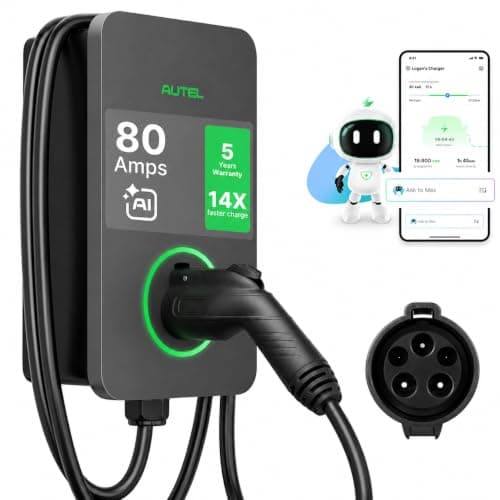
Autel Autel MaxiCharger 80A

Our top pick

Best for a Lucid Air

Autel MaxiCharger 80A

9.0/10
$1,069.00Check Price

$1,299.0018% off

In stock at Amazon as of November 5, 2026.

#ad · we may earn a commission

Best for: A home 19.2 kW install on a normal budget

The only 80-amp charger here priced like a normal home unit rather than a commercial one - and the one to buy if your car can genuinely take 19.2 kW.

Read the full review ↓Compare all 6 picks ↓

The short answer

Quick picks

  • Autel Autel MaxiCharger 80A
    01 Autel MaxiCharger 80A
    9.0

    The only 80-amp charger here priced like a normal home unit rather than a commercial one - and the one to buy if your car can genuinely take 19.2 kW.

    Best for: A home 19.2 kW install on a normal budget

    $1,069.00Amazon
  • ChargePoint ChargePoint Home Flex
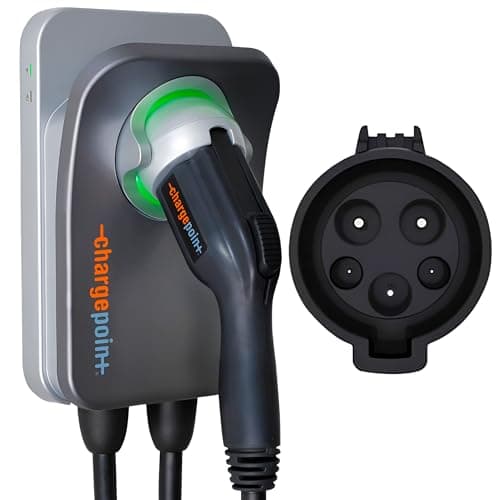
    02 ChargePoint Home Flex
    8.2

    The mature, well-supported pick — amperage you dial in up to 50A, wired into the biggest public-charging app in North America. You pay for the polish.

    Best for: Buyers who want the established brand + one app

    $599.00Amazon
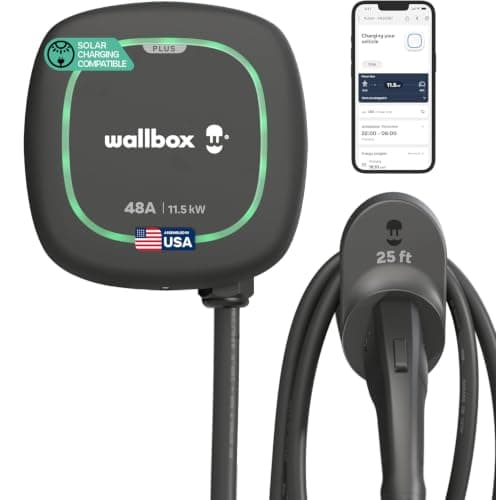
  • Wallbox Wallbox Pulsar Plus (48A)
    03 Wallbox Pulsar Plus (48A)
    8.4

    One of the smallest 48-amp chargers you can hang on a wall — full-speed hardwired charging in a box that barely announces itself.

    Best for: A compact, fast, hardwired install

    $689.99Amazon
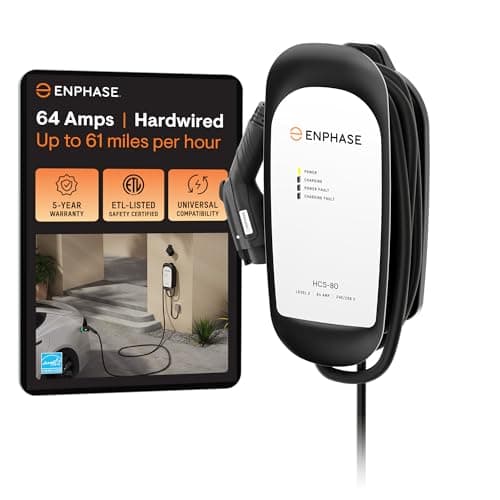
  • Enphase Energy Enphase HCS-80 (64A)
    04 Enphase HCS-80 (64A)
    7.4

    The unit that explains the category's naming trap: HCS-80 is the 80-amp CIRCUIT, not the output. It delivers 64 amps - and for the cars that can use it, that is the point.

    Best for: Cars that accept 15.4 kW, on an 80A circuit

    $1,600.00Amazon
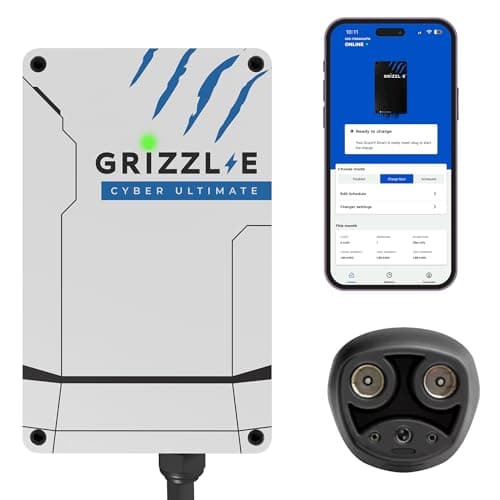
  • Grizzl-E Grizzl-E Ultimate 80A (NACS)
    05 Grizzl-E Ultimate 80A (NACS)
    9.0

    An 80-amp unit that is genuinely useful at every amperage below 80 too - adjustable in six documented steps down to 16 amps, in a UL Type 4 metal case.

    Best for: One charger that fits whatever circuit you end up with

    $899.00Amazon
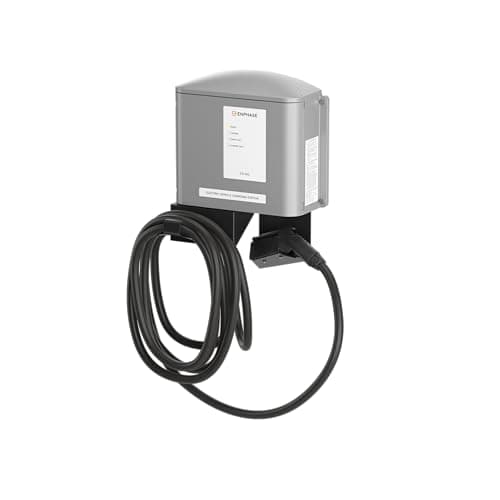
  • Enphase Energy Enphase CS-100 (80A)
    06 Enphase CS-100 (80A)
    8.4

    A commercial charging station sold to homeowners: field-serviceable cable, automatic fault reclosure and building-energy integration, at a commercial price.

    Best for: A fleet, a shared lot or a genuinely commercial install

    $3,038.00Amazon

#ad · Live prices from the Amazon Product API, as of November 5, 2026. Where we have no verified live price, we show none — we would rather leave a gap than print a number that has gone stale.

If a licensed electrician confirms your panel can carry a 100-amp branch circuit, buy the Autel MaxiCharger 80A - it is the only mainstream home charger that delivers the Air's full published 19.2 kW at a price that is not commercial. If the panel cannot, and for most houses it cannot, buy the ChargePoint Home Flex and set it to 48 or 50 amps. You will lose about three hours on a full charge and save thousands on electrical work. That is the entire decision on this page, and it is an electrical decision rather than a car one.

Why the Lucid gets its own page

Every per-brand charger page on this site ends the same way: your car tops out around 11 kW, so stop paying for amps it cannot take. The Air is the exception. Lucid's launch announcement put the car's onboard AC charger - the Wunderbox - at 19.2 kW, and independent specification databases list the same figure against a CCS1 inlet. Lucid introduced its own Connected Home Charging Station supporting up to 19.2 kW to match.

One honest caveat before you spend money on it: Lucid does not publish that number on its current charging page, which covers public networks and the NACS adapter instead. We are reporting a figure from Lucid's own launch communications as carried by the trade press and corroborated by spec databases - not from a current first-party spec sheet, and not from a measurement of our own. Before anyone pulls a 100-amp circuit for your house, confirm the rating for yourtrim in your owner's manual. Trims differ, and a wire pull is expensive to regret.

What each charging rate actually buys you

The arithmetic below assumes a large Air pack and roughly 10 percent charging loss, which is why the hours are approximate rather than precise. The column that matters is the last one.

Charger settingPowerCircuit requiredRoughly, empty to full
80A19.2 kW100A dedicatedAbout 6 hours
64A15.4 kW80A dedicatedAbout 7.5 hours
50A12 kW70A or 80A dedicatedAbout 9.5 hours
48A11.5 kW60A dedicatedAbout 10 hours
40A9.6 kW50A dedicatedAbout 12 hours

Look at the gap between the top row and the 48-amp row: about four hours, across an overnight window that is usually twelve hours long. If the car is parked from 7pm to 7am, every single row on that table finishes the job. The 80-amp tier only buys something real when your parking window is genuinely short - a mid-day turnaround between two long drives, or a narrow off-peak electricity window you need the whole charge to fit inside.

The number that decides it: a 100-amp circuit

80 amps of charging is a continuous load, and the NEC sizes continuous loads at 125 percent - so 80 divided by 0.8 gives a 100-amp dedicated branch circuit. On a typical 200-amp residential service that is half the house, before the air conditioning, the range, the dryer and the water heater are counted. It requires an NEC Article 220 load calculation by someone licensed, and on many houses the honest answer comes back as a service upgrade costing more than the car's wheels.

So the sequence for a Lucid owner is: get the load calculation first, then buy the charger the calculation allows. Not the other way round. Our load calculation guide explains what the electrician is actually doing, and smart panels vs a panel upgrade covers the ways to avoid the upgrade entirely - load management hardware is usually cheaper than copper.

Three practical notes on the 80-amp tier, all of which apply to every unit on this page: every 80-amp charger is hardwire-only (no household plug, the 14-50 included, carries 80 amps continuously), the wire gauge at that current makes the run length a real cost driver, and the install needs a permit and an inspection. Our 80-amp charger ranking is the deep version of this tier, written mostly to talk people out of it - the Lucid is the car it was waiting for.

How we ranked these

  1. Can it actually reach the car's rate, and can it be dialed down? Adjustability is worth more here than anywhere else on this site, because the circuit you end up with is decided by a load calculation you have not run yet. A unit that covers 48 and 80 amps is a unit you can buy before the electrician visits.
  2. The connector matches the car. The Air uses a CCS1 inlet, whose AC half is a J1772 socket, so a J1772 charger plugs straight in. One pick here is NACS and needs an adapter; it says so on its card and below.
  3. A verified safety listing to UL 2594, from an OSHA-recognized laboratory. At 80 amps continuous for years, this is not negotiable.
  4. Enclosure rating appropriate to where it will hang. A Type 4 or IP66 unit for an exposed wall; see our NEMA vs IP ratings guide for why those two are not the same claim.
  5. Cable length against a long car in a real garage.The Air's charge port is on the driver's side front; 25 feet is comfortable, shorter needs measuring.
  6. Price against what the circuit costs. On this page the charger is often the cheaper half of the project, which changes how much the charger price should sway you.

The one pick that needs an adapter

The Grizzl-E Ultimate 80A is the toughest thing in this tier - a UL Type 4 metal case, adjustable across every breaker size from 16 to 80 amps - but it ships with a NACS connector. A Lucid Air has a CCS1 inlet, so using it means a NACS-to-J1772 adapter rated for the current you are actually drawing. That is a real product with real listings - the A2Z Stellar Plug publishes 80 A and a UL 2252 listing - and it is also one more connection in a circuit carrying 80 amps all night. We would take the J1772 unit if the price difference is modest, and we would only go this route with a listed 80-amp-rated adapter. Our NACS-to-J1772 adapter ranking covers the field and adapter heat covers why the rating matters more than the price.

What about Lucid's own charger?

Lucid introduced a Connected Home Charging Station supporting up to 19.2 kW alongside the car. If you want the badge to match and your dealer will bundle it, that is a legitimate choice and we are not going to argue you out of it. What we can say is that it is not sold through the channel this site tracks, so we cannot show you a live price for it, and the units on this page deliver the same current to the same inlet. The case for the first-party unit is integration and support, not speed.

Do not forget the DC side

None of this touches road trips, and on a Lucid the road-trip story is the good part. Lucid's own charging page publishes app access to more than 34,000 Electrify America chargers and Tesla Superchargers, with an available NACS adapter opening over 30,000 additional DC fast chargers in North America. That adapter is a DC part - it does not help you at a Tesla Wall Connector, which is an AC source and needs the cheap passive adapter instead. We spelled that distinction out in can a Tesla Wall Connector charge a non-Tesla EV.

The short version

  • Load calculation says 100 amps is available: the Autel MaxiCharger 80A. Full published rate, normal-money price.
  • Panel is typical, which means it is not: the ChargePoint Home Flex set to 48 or 50 amps. Four extra hours overnight, thousands saved.
  • You want the smallest box and a tidy 48-amp install: the Wallbox Pulsar Plus.
  • You want an app-free appliance and 64 amps is enough: the Enphase HCS-80.
  • A shared lot, a fleet, or a genuinely commercial install: the Enphase CS-100, and only then.
In detail

The picks, in full

01
Autel Autel MaxiCharger 80A

A home 19.2 kW install on a normal budget

Autel MaxiCharger 80A

Up to 80A / 19.2kWJ177225ft cableUL cert. by CSA
9.0/10

The only 80-amp charger here priced like a normal home unit rather than a commercial one - and the one to buy if your car can genuinely take 19.2 kW.

Charge speed
10
Build & weather
9
Smart features
9
Cable & connector
9
Value
8

Pros

  • Delivers the full 80A / 19.2 kW on a 100A circuit, and the manufacturer states the 100A requirement plainly rather than burying it
  • UL certified by CSA, with internal temperature monitoring and a flame-retardant enclosure, on a 5-year warranty
  • Dual-network Wi-Fi plus Wi-SUN, so the app keeps working when a single garage Wi-Fi link drops
  • Tamper-resistant screws and remote locking - the practical answer to a charger mounted where the public can reach it

Cons

  • Hardwired only, and a 100A dedicated circuit is a serious electrical job many 200A services cannot spare
  • Almost no EV can use all 80 amps, so most buyers are paying for headroom the car will never draw

Don't buy this if…

…your car's onboard AC charger tops out at 11.5 kW, which covers the large majority of EVs on sale. You would be paying for a 100-amp circuit to feed a 48-amp car. Check the vehicle's AC acceptance rate first - if it is 11.5 kW, a 48-amp charger is the correct purchase.

$1,069.00View on Amazon

$1,299.0018% off

Price as of November 5, 2026. Prices change — Amazon's is the one that counts.

#ad · we may earn a commission from this link to Autel MaxiCharger 80A

02
ChargePoint ChargePoint Home Flex

Buyers who want the established brand + one app

ChargePoint Home Flex

Adjustable to 50AJ1772NEMA 14-50 plugEnergy Star
8.2/10

The mature, well-supported pick — amperage you dial in up to 50A, wired into the biggest public-charging app in North America. You pay for the polish.

Charge speed
9
Build & weather
8
Smart features
9
Cable & connector
8
Value
7

Pros

  • Output is adjustable in the app up to 50A, so it matches whatever breaker you can install today and more later
  • Reports into the same ChargePoint app that maps and pays for a huge public network — home and away in one place
  • Long track record and responsive support that newer budget brands cannot match

Cons

  • Costs more than equally capable chargers from newer brands
  • The experience leans hard on the ChargePoint account and app; skip it and you are paying for an integration you will not use

Don't buy this if…

…price is your first filter. The Emporia matches most of what this does for meaningfully less — here you are paying for brand maturity and the unified app, which are real but not free.

$599.00View on Amazon

$657.999% off

Price as of November 5, 2026. Prices change — Amazon's is the one that counts.

#ad · we may earn a commission from this link to ChargePoint Home Flex

03
Wallbox Wallbox Pulsar Plus (48A)

A compact, fast, hardwired install

Wallbox Pulsar Plus (48A)

Hardwired 48A / 11.5kWJ177225ft cableEnergy Star + UL
8.4/10

One of the smallest 48-amp chargers you can hang on a wall — full-speed hardwired charging in a box that barely announces itself.

Charge speed
10
Build & weather
8
Smart features
8
Cable & connector
8
Value
8

Pros

  • Physically tiny for a 48-amp unit — the least obtrusive charger in our home roundup
  • Full 48-amp hardwired speed, matching the fastest home chargers
  • Energy Star and UL certified

Cons

  • Hardwired only at 48A — no plug-in convenience if you might move it
  • The app has historically drawn more owner complaints than the hardware itself

Don't buy this if…

…you rent or might take the charger with you. This is a permanent fixture — a plug-in unit or a portable EVSE is the right call for anyone who could move.

$689.99View on Amazon

$799.9914% off

Price as of November 5, 2026. Prices change — Amazon's is the one that counts.

#ad · we may earn a commission from this link to Wallbox Pulsar Plus (48A)

04
Enphase Energy Enphase HCS-80 (64A)

Cars that accept 15.4 kW, on an 80A circuit

Enphase HCS-80 (64A)

64A / 15.4kWJ177225ft cableETL to UL 2594 · NEMA 4
7.4/10

The unit that explains the category's naming trap: HCS-80 is the 80-amp CIRCUIT, not the output. It delivers 64 amps - and for the cars that can use it, that is the point.

Charge speed
9
Build & weather
10
Smart features
3
Cable & connector
9
Value
6

Pros

  • ETL listed to UL 2594 by an OSHA-recognized NRTL and ENERGY STAR certified - the certification is spelled out, not implied
  • The ClipperCreek lineage: no app, no cloud account, no Wi-Fi to drop, in a fully sealed NEMA 4 enclosure with a 5-year warranty
  • The manufacturer names the cars it suits - Cadillac Lyriq, F-150 Lightning Extended Range, Lucid Air Dream, Tesla Model S 90D/100 - instead of implying every EV benefits
  • Integrated cable wrap and wall-mounted holster included, so 25 feet of heavy cable has somewhere to live

Cons

  • The name says 80 and the output is 64 - it still needs a full 80-amp dedicated circuit for its 15.4 kW
  • No app, scheduling or energy monitoring at a price where every rival has all three

Don't buy this if…

…you want off-peak scheduling or energy data. This is deliberately a dumb, extremely durable appliance; if the app matters, the Autel 80A does more for less.

$1,600.00View on Amazon

Price as of November 5, 2026. Prices change — Amazon's is the one that counts.

#ad · we may earn a commission from this link to Enphase HCS-80 (64A)

05
Grizzl-E Grizzl-E Ultimate 80A (NACS)

One charger that fits whatever circuit you end up with

Grizzl-E Ultimate 80A (NACS)

16-80A / to 19.2kWNACS25ft cableUL Type 4 metal case
9.0/10

An 80-amp unit that is genuinely useful at every amperage below 80 too - adjustable in six documented steps down to 16 amps, in a UL Type 4 metal case.

Charge speed
10
Build & weather
10
Smart features
8
Cable & connector
8
Value
9

Pros

  • Amperage steps are published per breaker size - 80A on a 100A circuit, 48A on 60A, 40A on 50A, 32A on 40A, 24A on 30A, 16A on 20A - so one unit survives a future panel change
  • UL tested and certified, with over-current, over-voltage, under-voltage, missing-diode, ground-fault and over-temperature protection plus built-in GFCI
  • Heavy-duty UL Type 4 indoor/outdoor metal enclosure and an external Wi-Fi antenna, which matters in a detached garage
  • Ultimate Load Balancing shares power across multiple Grizzl-E chargers, with equal-share or priority modes

Cons

  • The buyable SKU is the NACS connector - a J1772 car needs a J1772-to-NACS adapter to use it
  • Hardwire-only, and Grizzl-E's heavy cable stiffens noticeably in deep cold

Don't buy this if…

…your driveway is all J1772 and you would rather not own an adapter. The 48-amp Grizzl-E Ultimate is sold in J1772 and gives most cars identical real-world speed.

$899.00View on Amazon

Price as of November 5, 2026. Prices change — Amazon's is the one that counts.

#ad · we may earn a commission from this link to Grizzl-E Ultimate 80A (NACS)

06
Enphase Energy Enphase CS-100 (80A)

A fleet, a shared lot or a genuinely commercial install

Enphase CS-100 (80A)

80A / 19.2kWJ177225ft cableNEMA 3R · UL + Energy Star
8.4/10

A commercial charging station sold to homeowners: field-serviceable cable, automatic fault reclosure and building-energy integration, at a commercial price.

Charge speed
10
Build & weather
10
Smart features
9
Cable & connector
9
Value
4

Pros

  • Fully sealed NEMA 3R enclosure and an impact-resistant connector designed for high-traffic use rather than one car a night
  • COSMOS energy management brings load sharing, digital load management and access control - the features a multi-unit site actually needs
  • Automatic circuit reclosure resets minor faults instead of leaving the station dead until someone visits it
  • Field-serviceable cable: a damaged lead is replaced rather than condemning the whole unit

Cons

  • Costs several times what an 80-amp residential unit costs, and the extra buys serviceability and site management, not charging speed
  • Access control and load sharing are wasted on a single-car garage

Don't buy this if…

…this is one charger for one household. Every feature separating the CS-100 from the Autel is a multi-user, high-uptime feature you will never use at home, and the price difference is enormous.

$3,038.00View on Amazon

Price as of November 5, 2026. Prices change — Amazon's is the one that counts.

#ad · we may earn a commission from this link to Enphase CS-100 (80A)

Before you buy: two numbers and one phone call

  1. Your trim's onboard AC charger rating, from the owner's manual. 19.2 kW is the figure published for the Air at launch, but trims differ and we will not print a per-trim table we cannot source. Divide the kW by 240 for the amps the car will draw - that is the ceiling, because the J1772 handshake only ever offers a maximum and the car takes what it can convert.
  2. What your panel can spare, from a licensed electrician. An NEC Article 220 load calculation, not an estimate over the phone. This number, not the car, decides what you buy.
  3. The call: ask what the 100-amp circuit costs versus the 60-amp one. Get both quotes on the same visit. The gap between them is the real price of the top row of the table above, and it is often several times the price difference between the chargers.

Then check these four on whatever you buy

  • Adjustable current with the method named - an app, a commissioning step or an internal selector are three different ownership experiences over ten years.
  • A verified UL or ETL listing to UL 2594.Not "built to UL standards". Verify it in the laboratory's own directory.
  • An enclosure rating that matches the wall, and a published low-temperature limit if you get winters.
  • A warranty of three years or more. At this price point anything shorter is a red flag rather than a saving.

We do not run a test lab, and nothing on this page is a measurement of ours. Every specification is the manufacturer's published figure, cited in Sources; the charging times are arithmetic from those figures and are labeled approximate. Prices below are live and carry the date they were checked.

How we picked

We do not run a testing lab

We compiled published specifications from manufacturer manuals and spec sheets, verified the safety listings (UL / ETL), computed the real running and installation costs, checked the wiring math against the NEC continuous-load rule, and read aggregated owner reviews — then scored each product against a published rubric. The scores are judgments from documented research — they are not bench measurements, because we do not have a test lab and we are not going to pretend we do. Every spec and cost figure is cited in Sources.

Questions

Frequently asked

What charger does a Lucid Air need?

A J1772 Level 2 charger - the Air's CCS1 inlet takes a J1772 plug directly for AC charging. The size is the real question: the Air was announced with a 19.2 kW onboard charger, which is 80 amps at 240 volts and needs a 100-amp dedicated circuit, so most owners end up buying a 48-amp unit instead and losing only a few hours overnight.

Can a Lucid Air really charge at 19.2 kW at home?

The car was announced with a 19.2 kW onboard AC charger and independent spec databases list the same figure, so yes - if the house can feed it. That means an 80-amp charger on a 100-amp dedicated circuit, which on a 200-amp service is half the house and requires an NEC Article 220 load calculation. Confirm your trim's rating in the owner's manual before paying for the circuit.

Is an 80-amp charger worth it for a Lucid?

Only if your parking window is short or your off-peak rate window is narrow. Between 7pm and 7am, a 48-amp charger finishes a full charge comfortably - the 80-amp unit saves about four hours inside a twelve-hour window. The circuit is usually the expensive part, so get quotes for both a 100-amp and a 60-amp circuit before deciding.

Does a Lucid Air need an adapter for a home charger?

Not for a J1772 charger, which is nearly all of them - the AC half of a CCS1 inlet is a J1772 socket. You need an adapter only if the charger has a NACS connector, as the Grizzl-E Ultimate 80A does, and at this current it must be a listed adapter rated for the amps you are drawing.

Should I buy Lucid's own home charging station?

It is a reasonable choice - Lucid introduced it supporting up to 19.2 kW, matching the car. It is not sold through the channel this site tracks, so we cannot show a live price or rank it against the others. On charging speed it does the same job as the units here; the argument for it is first-party integration and support.

How long does a Lucid Air take to charge at home?

Roughly six hours empty-to-full at 80 amps, about ten hours at 48 amps and about twelve at 40 amps, assuming a large pack and around 10 percent charging loss. All three fit inside a normal overnight window, which is the argument against paying for the biggest circuit. Our Lucid Air home charging page has the running cost.

Keep reading

More in this section

More Home EV Chargers

All home ev chargers →

Receipts

Sources

We do not run a testing lab, and we do not pretend to. Where a measured number came from someone else's lab, we name them and link them. Where we could not verify something, we say so on the page rather than quietly leaving it out. Read our full method.