HUB 03 · Charging Guides
NEMA vs IP Ratings for EV Chargers
Two rating systems, measuring different things, printed on the same shelf. Here is what each one tests, which chargers publish which, and when the difference actually decides your purchase.
We earn a commission when you buy through our Amazon links, at no extra cost to you. It never affects our rankings, and we say so when the cheaper product is the better buy. How this works.
Yes - several chargers publish a genuine NEMA enclosure Type, and they are the ones to buy if the unit lives outdoors. Grizzl-E publishes a UL Type 4 rating on the Classic and a Type 4X / IP67 cast-aluminum enclosure on the Ultimate; Autel publishes NEMA 4 on the MaxiCharger AC Elite Home; Enphase publishes NEMA 4 on the HCS-80 and NEMA 3R on the CS-100; EVIQO publishes IP66 / NEMA 4. But the question hides a trap worth more than the answer: an IP number and a NEMA Type are not the same claim, and the conversion only runs one way. A manufacturer that publishes IP66 has not demonstrated NEMA 4X, because NEMA tests things the IP code simply does not cover. If your charger is going on a wall near salt air, that distinction is the whole purchase.
What an IP number measures
IP comes from IEC 60529 and it is two digits with nothing hidden behind them. The first digitis solids, on a 0-to-6 scale: 1 through 4 exclude objects of decreasing size, 5 is "dust protected" and 6 is "dust tight". The second digit is water, on a 0-to-9K scale. The three you will actually see on an EV charger:
| Rating | Solids | Water |
|---|---|---|
| IP65 | Dust tight | Protected from low-pressure water jets from any direction |
| IP66 | Dust tight | Protected from high-pressure water jets from any direction |
| IP67 | Dust tight | Protected from immersion between 15 cm and 1 m deep |
That is a clean, legible scale, and it is why IP numbers are everywhere - they are easy to print and easy to compare. For a charger on a sheltered garage wall, IP65 is already more protection than the location demands.
What a NEMA Type measures that IP does not
NEMA enclosure Types come from the American standard (ANSI/NEMA 250) and they are not a two-axis scale - they are use-case descriptions, each with a test behind it. The important part for anyone buying hardware that lives outside for a decade is what the NEMA tests include and the IP code omits:
- Corrosion. The X suffix - as in 3X, 4X - is the corrosion claim. There is no digit in the IP code for it. None.
- Icing. NEMA covers functionality under icing conditions. An enclosure can be dust tight and jet-proof and still have a door or a mechanism that stops working under a load of ice.
- Construction details. Knock-outs for cable connections, and the hardware around them, are inside the NEMA scope.
- Hazardous locations. A separate branch of the Type system, irrelevant to a driveway but a reminder that the two systems were written for different purposes.
The one-way rule, and it matters: the two systems are not directly equivalent and cannot be mapped directly. The published cross-reference runs NEMA to IP only - a NEMA 4 or 4X enclosure meetsIP66 - and there is no reverse mapping. So "IP66, which is basically NEMA 4X" is not a statement anyone is entitled to make. It is marketing arithmetic running backwards down a one-way street. If you need corrosion resistance, you need a 4X claim or separate corrosion evidence, not a high IP number.
One more trap: the Type numbers are not a ranked hierarchy. A higher number does not automatically include the tests behind a lower one - Type 4X and Type 6 are different claims, not better and worse grades of the same claim. Read what the Type covers rather than assuming bigger is safer.
What the chargers in our registry actually publish
Every figure below is the manufacturer's own published rating, with the source listed at the foot of this page. Where a maker publishes only one of the two systems, that is what the row says - we have not converted anything.
| Charger | Published enclosure rating | Corrosion claim? | Published temperature range |
|---|---|---|---|
| Grizzl-E Ultimate | Cast aluminum, IP67 / Type 4X | Yes - the X | Not quoted here |
| Grizzl-E Classic | Aluminum, UL Type 4 indoor/outdoor | No | -22F to 122F |
| Autel MaxiCharger AC Elite Home 40A | NEMA 4 | No | Not quoted here |
| Enphase HCS-80 | NEMA 4 | No | Not quoted here |
| Enphase CS-100 | NEMA 3R | No | Not quoted here |
| EVIQO Level 2 | IP66 / NEMA 4 | No | Not quoted here |
Two things fall straight out of that table. First, a NEMA 3R unit is the odd one out - 3R is the rain-and-sleet rating you find on residential disconnects and meter bases, and it is a lower bar than Type 4. On the CS-100 that is a defensible choice for a unit designed to be installed in a serviced commercial location, but it is not the rating to pick for an exposed coastal wall. Second, only one charger here carries an X. If corrosion is your actual risk, that narrows the field fast.
A rating is not a safety listing - do not confuse the two
This is the mistake we see most often, and it is a different mistake from the one above. An enclosure rating describes ingress: what gets in. A safety listing describes whether the whole device was tested against a safety standard - for an EV charger that is UL 2594, tested by an OSHA-recognized laboratory such as UL Solutions or Intertek. ETL is not the lesser mark; it is the same standard tested by Intertek instead.
IP66 tells you nothing about whether the unit has a compliant ground-fault interrupter. UL 2594 tells you nothing about whether rain gets into the case. You want both, and our UL-listed rankingcovers how to verify a listing claim in the testing laboratory's own directory rather than trusting a bullet point.
Which rating you actually need, by where the charger goes
- Inside a closed garage: almost anything. A listed unit with any outdoor rating is comfortably over-specified. Spend the money on cable length and amperage instead.
- Carport or covered exterior wall: Type 3R or IP65 upward. The enclosure sees wind-driven rain but not a hose.
- Fully exposed wall or a pedestal: Type 4 or IP66 upward, and check the published low-temperature limit if you get real winters - that is a separate specification from the ingress rating, and our cold-weather ranking is built on it.
- Coastal, within a mile or so of salt air, or near a pool: Type 4X. This is the one case where the distinction in this guide changes which charger you buy, because no IP number substitutes for the corrosion test.
- Anywhere it can be hit by a pressure washer: IP66 at minimum, and genuinely consider not pointing a pressure washer at your charger.
Three checks before you believe any rating
- Find it on the manufacturer's own page or datasheet.A retailer listing is not a specification, and third-party listings for the same unit routinely disagree. We found exactly that while writing this page: retail copy for one charger claimed NEMA 4X where the maker's own spec sheet says NEMA 4.
- Check whether the rating is for the enclosure or the connector.They are often different numbers on the same product, and the connector spends its life in your hand, in the weather, pointed at the ground. An adapter's IP rating is usually quoted unmated, which is not how it lives - our adapter head-to-head works through that one.
- Confirm the installation matches the rating. A Type 4 box mounted with its knock-outs facing up, or with an unsealed conduit entry, is no longer a Type 4 installation. The rating belongs to the enclosure as the manufacturer intended it to be mounted - see weatherproofing an outdoor install.
The short version
Ask for a NEMA Type when the charger lives outdoors, treat an IP number as a useful but narrower claim, and never let anyone convert IP back into NEMA for you. If you are shopping rather than studying, our best outdoor chargers page ranks the field by what each maker publishes, and the four units below are the ones whose enclosure ratings are quoted in the table above.
The gear
Recommended gear for this guide
The products this guide refers to, with prices pulled live from Amazon and dated on each card.
- Guide
A permanent, weatherproof 48A install
Grizzl-E Ultimate (48A)
A dedicated 48-amp charger in a cast-aluminum, IP67 shell - the toughest full-speed box here, built to be hardwired to a wall and left to work.
Feature-maximalists who want a clean install
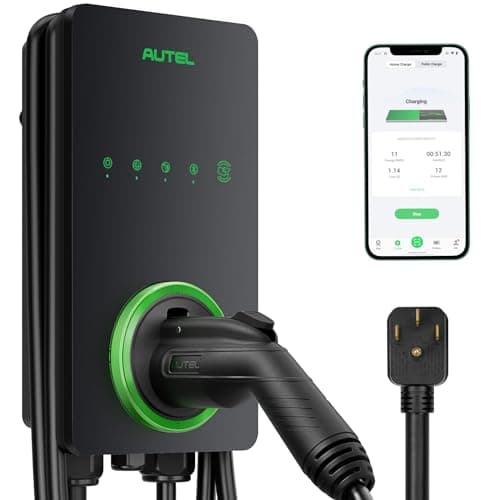
Autel MaxiCharger (40A)
The everything-in-the-box option: Wi-Fi and Bluetooth both, a weather-rated shell, and a holster included so the install is tidy from day one.
Budget buyers who still want smart features
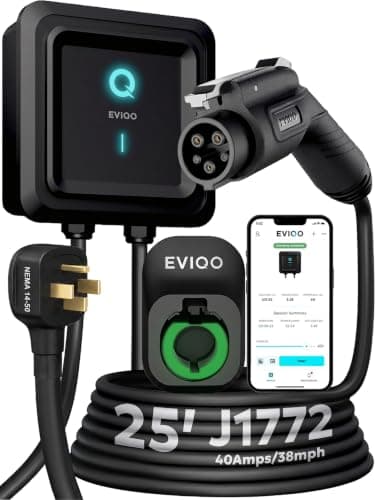
EVIQO Level 2 (40A)
A double-listed (UL and ETL), IP66-weatherproof smart charger that keeps landing at the bottom of the price band — a lot of certified hardware for the money.
A fleet, a shared lot or a genuinely commercial install
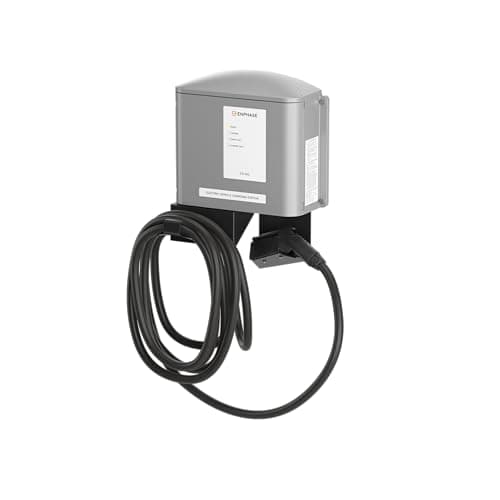
Enphase CS-100 (80A)
A commercial charging station sold to homeowners: field-serviceable cable, automatic fault reclosure and building-energy integration, at a commercial price.
#ad · As an Amazon Associate we earn from qualifying purchases.
Questions
Frequently asked
Are there EV chargers with real NEMA-rated enclosures for outdoor use?
Yes. Grizzl-E publishes a UL Type 4 indoor/outdoor rating on the Classic and a Type 4X / IP67 cast-aluminum enclosure on the Ultimate; Autel publishes NEMA 4 on the MaxiCharger AC Elite Home; Enphase publishes NEMA 4 on the HCS-80 and NEMA 3R on the CS-100; EVIQO publishes IP66 / NEMA 4. Look for the rating on the manufacturer's own datasheet, not on a retailer listing.
Is IP66 the same as NEMA 4X?
No, and this is the most common error in the category. The two systems are not directly equivalent and the published cross-reference runs one way only: a NEMA 4 or 4X enclosure meets IP66, but an IP66 rating does not demonstrate NEMA 4X. NEMA tests corrosion (the X), icing and construction details that the IP code does not cover at all.
What does IP65 vs IP66 vs IP67 mean on a charger?
All three are dust tight. The difference is water: IP65 is protection from low-pressure water jets from any direction, IP66 from high-pressure jets, and IP67 from immersion between 15 cm and 1 m deep. For a wall-mounted charger, IP65 already exceeds what the location does to it.
Do I need NEMA 4X for a charger near the coast?
That is the case where it genuinely matters. The X is the corrosion claim and nothing in the IP code substitutes for it. Within about a mile of salt air, or near a pool, buy a published 4X enclosure - in this registry that points at the Grizzl-E Ultimate.
Is an IP or NEMA rating the same as being UL listed?
No. An enclosure rating covers ingress - what gets into the case. A safety listing covers whether the device was tested to a safety standard, which for EVSE is UL 2594, by an OSHA-recognized laboratory such as UL Solutions or Intertek. You want both, and neither implies the other.
Does a higher NEMA number mean a tougher enclosure?
Not reliably. The Type numbers are descriptions, not a ranked ladder, and a higher number does not automatically include the tests behind a lower one. Type 4X and Type 6 are different claims rather than better and worse versions of one claim, so read what the Type covers.
Keep reading
Related
- Best outdoor EV chargersThe field ranked by the enclosure rating each maker publishes.
- Best UL-listed EV chargersThe other half of the question: the safety listing, and how to verify one.
- Weatherproofing an outdoor installHow a Type 4 box stops being a Type 4 installation.
- Best cold-weather chargersTemperature range is a separate spec from the ingress rating.
- Autel vs Grizzl-ETwo of the units in the table above, compared directly.
More in this section
More Charging Guides
Receipts
Sources
- General Digital - IP and NEMA ratings reference (the IP first digit runs 0-6 for solids, 5 dust protected and 6 dust tight, and the second 0-9K for water; IP65 protected from low-pressure water jets from any direction, IP66 from high-pressure jets, IP67 from immersion between 15 cm and 1 m; NEMA additionally covers functionality under icing conditions and knock-outs for cable connections, and the X suffix adds corrosion protection; the two standards are not directly equivalent and cannot be mapped directly, and the published cross-reference runs one way only, NEMA to IP)
- NEMA enclosure types overview (the Type numbering is not a hierarchy - a higher number does not automatically include the tests behind a lower one, which is why a Type 4X and a Type 6 are different claims rather than better and worse ones)
- Intertek - UL 2594 testing and certification for electric vehicle supply equipment (the SAFETY standard for AC Level 1 and Level 2 EVSE, which is a separate question from an enclosure ingress rating)
- Intertek - the ETL Listed Mark and OSHA Nationally Recognized Testing Laboratory (NRTL) status
- United Chargers - Grizzl-E Classic (marketed 40A 10 kW, adjustable 32A / 24A / 16A, Type 1 SAE J1772, 25 ft cable, NEMA 14-50 or NEMA 6-50 plug, aluminum enclosure, UL Type 4 indoor/outdoor rating, UL E510712, Energy Star, -22F to 122F, 22.05 lbs, 3- or 5-year warranty, no internet connection)
- United Chargers - Grizzl-E Ultimate (adjustable output to 48A, cast aluminum IP67 / Type 4X enclosure with built-in GFCI, UL certified, 25 ft cable, hardwire-only)
- Autel - MaxiCharger AC Elite Home spec sheet (9.6 kW at 240V / 40A, adjustable 6A-40A in the app, 25 ft / 7.5 m SAE J1772 cable, power cord options NEMA 6-50 / NEMA 14-50 / hardwired, NEMA 4 enclosure, 36-month warranty, certified to UL 2594, UL 2231-1, UL 2231-2, NEC Article 625 and CSA C22.2, plus Energy Star and OpenADR 2.0b)
- Enphase - HCS-80 EV charger (64 A / 15.4 kW output on an 80 A dedicated circuit, ETL to UL 2594, NEMA 4, formerly ClipperCreek)
- Enphase - CS-100 EV charger (80 A / 19.2 kW on a 100 A dedicated circuit, NEMA 3R, 25 ft cable, COSMOS load management)
- EVIQO - Level 2 EV chargers (40A and 48A, UL and ETL listed, Energy Star, IP66 / NEMA 4, 25 ft cable, adjustable output)
We do not run a testing lab, and we do not pretend to. Where a measured number came from someone else's lab, we name them and link them. Where we could not verify something, we say so on the page rather than quietly leaving it out. Read our full method.