Skip to content
The Charge Curve

HUB 01 · Home EV Chargers

The Best Home EV Chargers for an Audi

Audi's US charging numbers genuinely disagree with its European ones, which is why the easy advice - buy 48 amps - is wrong for most of the lineup. Here is what each car actually takes, and the five chargers that fit.

By Stephen V.Updated How we compare
#ad

We earn a commission when you buy through our Amazon links, at no extra cost to you. It never affects our rankings, and we say so when the cheaper product is the better buy. How this works.

Emporia Emporia Level 2 (48A)

Our top pick

Best for Audi e-tron

Emporia Level 2 (48A)

9.0/10
$449.00Check Price

In stock at Amazon as of November 5, 2026.

#ad · we may earn a commission

Best for: Most homes that want speed and smarts

The charger that refuses to charge you extra for being smart: full 48-amp speed and real energy monitoring at roughly the price of a plain plug-in box.

Read the full review ↓Compare all 5 picks ↓

The short answer

Quick picks

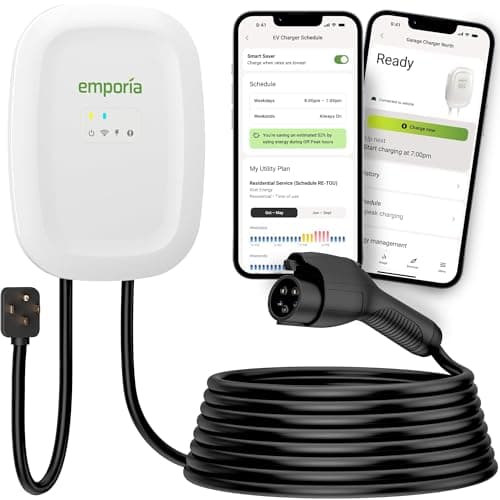
  • Emporia Emporia Level 2 (48A)
    01 Emporia Level 2 (48A)
    9.0

    The charger that refuses to charge you extra for being smart: full 48-amp speed and real energy monitoring at roughly the price of a plain plug-in box.

    Best for: Most homes that want speed and smarts

    $449.00Amazon
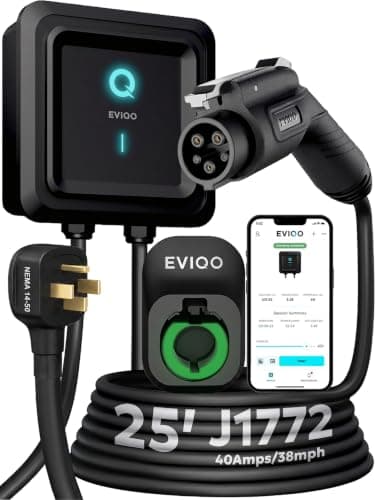
  • EVIQO EVIQO Level 2 (40A)
    02 EVIQO Level 2 (40A)
    8.6

    A double-listed (UL and ETL), IP66-weatherproof smart charger that keeps landing at the bottom of the price band — a lot of certified hardware for the money.

    Best for: Budget buyers who still want smart features

    $449.98Amazon
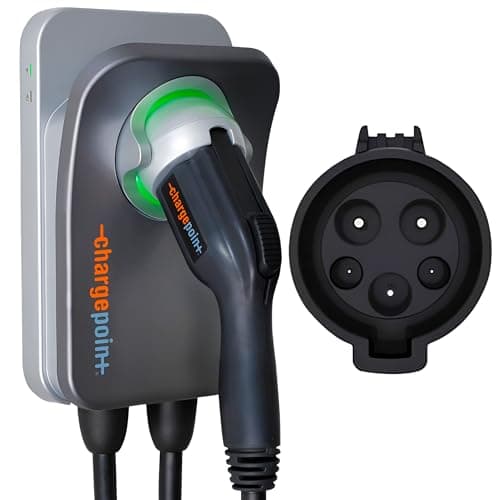
  • ChargePoint ChargePoint Home Flex
    03 ChargePoint Home Flex
    8.2

    The mature, well-supported pick — amperage you dial in up to 50A, wired into the biggest public-charging app in North America. You pay for the polish.

    Best for: Buyers who want the established brand + one app

    $599.00Amazon
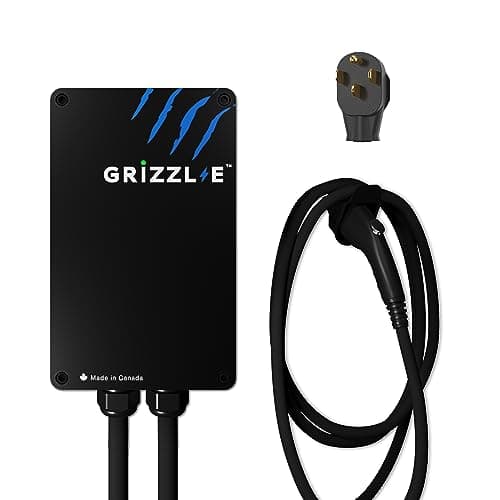
  • Grizzl-E Grizzl-E Classic (40A)
    04 Grizzl-E Classic (40A)
    8.0

    A UL-certified cast-aluminum box with no app to update and nothing in the cloud to fail — the durability default for people who want a charger, not a gadget.

    Best for: People who want a charger, not an app

    $299.99Amazon
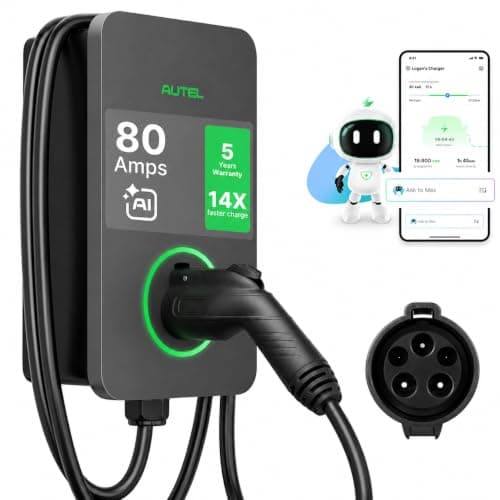
  • Autel Autel MaxiCharger 80A
    05 Autel MaxiCharger 80A
    9.0

    The only 80-amp charger here priced like a normal home unit rather than a commercial one - and the one to buy if your car can genuinely take 19.2 kW.

    Best for: A home 19.2 kW install on a normal budget

    $1,069.00Amazon

#ad · Live prices from the Amazon Product API, as of November 5, 2026. Where we have no verified live price, we show none — we would rather leave a gap than print a number that has gone stale.

For most US Audi EVs the right home charger is a 40-amp unit, not a 48-amp one. Audi of America's own pricing release for the Q6 e-tron says Level 2 AC charging "is supported at rates up to 9.6kW (240V/40A)", and lists a 19.2 kW (240V/80A) onboard charger only as an upgrade "anticipated to be available at a later date". If you want one charger that covers every Audi in the driveway today and whatever replaces it, the Emporia Level 2 is the pick: it runs 48 amps when hardwired, falls back to 40 on a plug, and its energy monitoring is the simplest way to see what your car is really drawing. If you know your car is one of the 9.6 kW ones and you are not planning to change it, the EVIQO Level 2 saves you the hardwire and the 60-amp circuit for the same money.

This page exists because Audi is the one premium brand whose home-charging figure cannot be looked up in a single place. We skipped writing it twice for exactly that reason. Audi's global site says the Q6 e-tron charges "with up to 11 kW as standard"; Audi of America's release for the same car says 9.6 kW. Both are correct - for different markets - and the gap between them is the difference between a 50-amp circuit and a 60-amp one, which is real money. We compile published specifications and do the electrical arithmetic ourselves; we have not bench-tested these chargers and we do not run a test lab, so treat this as documented research rather than measurement.

What each US Audi actually accepts

Your real charging speed is the lowest of three numbers: the circuit, the charger, and the car's onboard AC charger. On an Audi the car is almost always the limit, so start there.

ModelUS AC rateCharger that matches itSource
Q6 e-tron / SQ6 e-tron9.6 kW (240V/40A) standard40 amps, on a 50-amp circuitAudi of America release
Q6 e-tron with the optional onboard chargerUp to 19.2 kW (240V/80A), announced for later80 amps, on a 100-amp circuitAudi of America release
A6 e-tron / A6 Sportback e-tron9.6 kW in the US (11 kW in Europe)40 amps, on a 50-amp circuitModel reference
e-tron GT9.6 kW in the US (11 kW standard in Europe)40 amps, on a 50-amp circuitCharging reference
Q8 e-tron / SQ8 e-tron (through Feb 2025)9.6 kW with Audi's supplied cord; 11 kW with a 48A charger48 amps, on a 60-amp circuitModel reference
Q4 e-tronAbout 11 kW on the MEB platform48 amps, on a 60-amp circuitShared with the VW ID.4

Two things in that table are worth saying out loud, because they invert the usual advice.

The newer, more expensive Audis take less AC power than the older cheaper one. The Q4 e-tron sits on VW's MEB platform and takes roughly 11 kW, the same as its ID.4 cousin. The PPE cars that replaced the Q8 e-tron at the top of the range - the Q6 and the A6 e-tron - are published at 9.6 kW in the US. Spending more on the car does not buy a faster home charge here.

On a Q8 e-tron, the 9.6 kW figure is the cable's limit, not the car's. Audi supplied a 40-amp J1772 cord with the car; the onboard charger itself will take 11 kW if you give it a 48-amp charger. That is the single clearest case in the Audi lineup for buying 48 amps rather than 40, and it applies to a car that is now used-market only.

How we ranked these

Five criteria, applied in this order. They are the same criteria we use on every charger roundup here, weighted for a lineup that mostly tops out at 40 amps.

  1. Does the amperage match the car, not exceed it?A 48-amp charger on a 9.6 kW Q6 charges at exactly the same speed as a 40-amp one, and costs you a 60-amp circuit and a hardwire to do it. Amperage above the car's ceiling is not headroom; it is a receipt.
  2. Is the safety listing published and checkable?A "certified" bullet is not a listing. We look for a named standard, a named laboratory, and ideally a file number.
  3. Plug-in or hardwired, and does that suit the install? A plug-in unit on a NEMA 14-50 is capped at 40 amps by the receptacle, which is a non-issue on most of this lineup and a limitation on a Q4 or Q8.
  4. Does the cable reach?Audi puts the charge port on the front fender - driver's side on the Q6 and A6, with a second AC-only port on the opposite side of the e-tron GT. A 25-foot cable means you do not have to care which way you parked.
  5. Does the software earn its price? Scheduling and energy monitoring pay for themselves on a time-of-use rate and are dead weight on a flat one.

What we deliberately did not rank on: brand matching. There is no electrical advantage to an Audi-branded wallbox, and every unit below uses the same J1772 connector your car was built around.

The connector question, settled

Every Audi EV sold in the US has a J1772 AC port, so no adapter is needed at home. Any Level 2 charger on this page plugs straight in.

Where it gets confusing is the NACS adapter Audi began shipping in September 2025. That adapter opened the Tesla Supercharger network to the e-tron GT, Q6 e-tron and A6 e-tron - and Audi states plainly that the Q4 e-tron cannot use it. More important for this page: it is a DC adapter. Audi says it is compatible only with DC fast-charging stations and will not work with NACS-capable Level 1 or Level 2 AC chargers, which includes Tesla Destination Chargers and a Tesla Wall Connector in your garage. If the charger already on your wall has a Tesla plug on the end, the part you need is a NACS-to-J1772 AC adapter, which is a different product entirely. Our does my VW or Audi need an adapter guide walks through every combination.

The circuit, and why 40 amps is usually the answer

EV charging is a continuous load under NEC Article 625, so the branch circuit is sized at 125 percent of the load - which is the same as saying the charger may draw no more than 80 percent of the breaker. That gives the ladder every charger on this site is ranked against:

  • 50-amp circuit = 40 amps of charging = 9.6 kW. Can use a NEMA 14-50 receptacle, so the charger can be plug-in. This is the exact match for a Q6, SQ6, A6 e-tron or e-tron GT.
  • 60-amp circuit = 48 amps of charging = 11.5 kW. Must be hardwired. Worth it on a Q4 e-tron or a Q8 e-tron, and worth it on any Audi if the circuit is going in from scratch and you expect the next car to be different.
  • 100-amp circuit = 80 amps of charging = 19.2 kW. Relevant to exactly one Audi configuration: a Q6 e-tron with the optional onboard charger, if and when Audi ships it.

The practical consequence on a 9.6 kW car: upgrading from a 50-amp circuit to a 60-amp one buys you nothing at all. The car will not draw the extra amps. If an installer quotes you a panel upgrade to feed a 48-amp charger for a Q6 e-tron, that quote is solving a problem you do not have - and our installation quote checklist has the questions to ask before you sign it.

What a night actually looks like

The Q6 e-tron carries a 100 kWh gross pack, 94.4 kWh net. A realistic overnight is not 0 to 100 - it is a top-up. Going from 20 to 90 percent on that pack is about 66 kWh. At 9.6 kW that is roughly seven hours, which fits comfortably between dinner and the morning commute, and lands inside most off-peak windows. At a hypothetical 11.5 kW it would be about 5 hours 45 minutes. You are buying back roughly an hour of charging you were asleep for.

That arithmetic is why the amperage argument matters less than the install cost. The Department of Energy's figures for Level 2 put the whole category in the same bracket for overnight charging; the difference between 40 and 48 amps on an Audi is a rounding error against the difference between a plug-in install and a hardwired one on a new 60-amp circuit.

A note on where Audi's numbers come from

We would rather show our work than present a single confident number. For the Q6 e-tron:

  • Audi of America, pricing and specifications release:"Standard Level 2 AC charging, most commonly used with home chargers, is supported at rates up to 9.6kW (240V/40A)", plus an optional onboard charger anticipated later for "AC charging rates up to 19.2 kW (240V/80A)". First-party, US-market.
  • Audi global, battery and charging page: up to 11 kW as standard, with 22 kW as a later option. First-party, but written for a market with three-phase domestic power that North America does not have.
  • Third-party charging references: consistently 9.6 kW, about 40 amps at 240 volts, for every US Q6 trim.

Two first-party sources, two different numbers, one market difference that explains it. If you want to settle it for your specific car rather than trust any page including this one, charge once on a 48-amp-capable charger and read the kW in the car's charging menu or in the charger's app. That is the whole reason the Emporia is our top pick here rather than a cheaper box: it tells you.

The picks, in one line each

  • Emporia Level 2 - the one that covers every case. 48 amps hardwired, 40 on a plug, with energy monitoring that answers the question this page is about.
  • EVIQO Level 2 - the exact match for a 9.6 kW Audi, double-listed, plug-in, at the same price.
  • ChargePoint Home Flex - selectable from 16 to 50 amps, for a household that does not yet know which figure its car honors.
  • Grizzl-E Classic - the no-app metal box for an Audi owner who schedules in the car and wants nothing else.
  • Autel MaxiCharger 80A - only for a Q6 e-tron with the optional 19.2 kW onboard charger, and almost nobody has one.

In detail

The picks, in full

01
Emporia Emporia Level 2 (48A)

Most homes that want speed and smarts

Emporia Level 2 (48A)

Up to 48A / 11.5kWJ177225ft cableWi-Fi + app
9.0/10

The charger that refuses to charge you extra for being smart: full 48-amp speed and real energy monitoring at roughly the price of a plain plug-in box.

Charge speed
10
Build & weather
8
Smart features
9
Cable & connector
8
Value
10

Pros

  • 48-amp capable when hardwired — quicker than the 40-amp plug-in default most units top out at
  • Genuine energy tracking and scheduling in the app, priced below almost every other smart charger
  • The 25-foot cable reaches either side of a two-car garage

Cons

  • You only get 48 amps hardwired on a 60-amp circuit; the plug-in version is capped at 40A like everything else
  • The app and Wi-Fi are central to the experience, so first-time setup takes longer than a plug-and-go box

Don't buy this if…

…you never intend to open an app. A lot of what you are paying for is the software; if a sealed, silent box is what you actually want, the Grizzl-E Classic is the honest call.

$449.00View on Amazon

Price as of November 5, 2026. Prices change — Amazon's is the one that counts.

#ad · we may earn a commission from this link to Emporia Level 2 (48A)

02
EVIQO EVIQO Level 2 (40A)

Budget buyers who still want smart features

EVIQO Level 2 (40A)

40A / 9.6kWJ177225ft cableUL & ETL, IP66/NEMA 4
8.6/10

A double-listed (UL and ETL), IP66-weatherproof smart charger that keeps landing at the bottom of the price band — a lot of certified hardware for the money.

Charge speed
8
Build & weather
9
Smart features
8
Cable & connector
8
Value
10

Pros

  • Carries both UL and ETL listings plus an IP66 / NEMA 4 weatherproof rating — unusually well-certified for the price
  • Wi-Fi app with scheduling that undercuts the established brands
  • Long 25-foot cable and a simple plug-in NEMA 14-50 install

Cons

  • Newer brand with a shorter track record than ChargePoint or Wallbox
  • 40-amp ceiling, so not the fastest if your panel could do more

Don't buy this if…

…the reassurance of a long-established brand and support network matters most to you. The hardware is well-listed, but if brand maturity is what you are buying, the ChargePoint is the safer pick.

$449.98View on Amazon

$510.9912% off

Price as of November 5, 2026. Prices change — Amazon's is the one that counts.

#ad · we may earn a commission from this link to EVIQO Level 2 (40A)

03
ChargePoint ChargePoint Home Flex

Buyers who want the established brand + one app

ChargePoint Home Flex

Adjustable to 50AJ1772NEMA 14-50 plugEnergy Star
8.2/10

The mature, well-supported pick — amperage you dial in up to 50A, wired into the biggest public-charging app in North America. You pay for the polish.

Charge speed
9
Build & weather
8
Smart features
9
Cable & connector
8
Value
7

Pros

  • Output is adjustable in the app up to 50A, so it matches whatever breaker you can install today and more later
  • Reports into the same ChargePoint app that maps and pays for a huge public network — home and away in one place
  • Long track record and responsive support that newer budget brands cannot match

Cons

  • Costs more than equally capable chargers from newer brands
  • The experience leans hard on the ChargePoint account and app; skip it and you are paying for an integration you will not use

Don't buy this if…

…price is your first filter. The Emporia matches most of what this does for meaningfully less — here you are paying for brand maturity and the unified app, which are real but not free.

$599.00View on Amazon

$657.999% off

Price as of November 5, 2026. Prices change — Amazon's is the one that counts.

#ad · we may earn a commission from this link to ChargePoint Home Flex

04
Grizzl-E Grizzl-E Classic (40A)

People who want a charger, not an app

Grizzl-E Classic (40A)

40A / 9.6kWJ1772NEMA 14-50 plugUL certified
8.0/10

A UL-certified cast-aluminum box with no app to update and nothing in the cloud to fail — the durability default for people who want a charger, not a gadget.

Charge speed
8
Build & weather
10
Smart features
5
Cable & connector
8
Value
9

Pros

  • Cast-aluminum enclosure rated for indoor and outdoor use — genuinely built to outlast plastic-bodied rivals
  • UL certified, which plenty of budget chargers on Amazon cannot claim
  • No mandatory app or Wi-Fi: it charges the day it arrives and keeps working if a server goes dark

Cons

  • No scheduling or energy monitoring — if you want off-peak automation or load sharing, look elsewhere
  • The stock cable stiffens in the cold, a recurring owner note in northern climates

Don't buy this if…

…you want app scheduling, energy tracking, or load sharing between two cars. The Grizzl-E is deliberately dumb, and if smart features are the point for you, the Emporia is the better buy.

$299.99View on Amazon

$399.0025% off

Price as of November 5, 2026. Prices change — Amazon's is the one that counts.

#ad · we may earn a commission from this link to Grizzl-E Classic (40A)

05
Autel Autel MaxiCharger 80A

A home 19.2 kW install on a normal budget

Autel MaxiCharger 80A

Up to 80A / 19.2kWJ177225ft cableUL cert. by CSA
9.0/10

The only 80-amp charger here priced like a normal home unit rather than a commercial one - and the one to buy if your car can genuinely take 19.2 kW.

Charge speed
10
Build & weather
9
Smart features
9
Cable & connector
9
Value
8

Pros

  • Delivers the full 80A / 19.2 kW on a 100A circuit, and the manufacturer states the 100A requirement plainly rather than burying it
  • UL certified by CSA, with internal temperature monitoring and a flame-retardant enclosure, on a 5-year warranty
  • Dual-network Wi-Fi plus Wi-SUN, so the app keeps working when a single garage Wi-Fi link drops
  • Tamper-resistant screws and remote locking - the practical answer to a charger mounted where the public can reach it

Cons

  • Hardwired only, and a 100A dedicated circuit is a serious electrical job many 200A services cannot spare
  • Almost no EV can use all 80 amps, so most buyers are paying for headroom the car will never draw

Don't buy this if…

…your car's onboard AC charger tops out at 11.5 kW, which covers the large majority of EVs on sale. You would be paying for a 100-amp circuit to feed a 48-amp car. Check the vehicle's AC acceptance rate first - if it is 11.5 kW, a 48-amp charger is the correct purchase.

$1,069.00View on Amazon

$1,299.0018% off

Price as of November 5, 2026. Prices change — Amazon's is the one that counts.

#ad · we may earn a commission from this link to Autel MaxiCharger 80A

Buying for an Audi: the three decisions

1. Settle your car's AC rate before you size the circuit

This is the decision that costs money if you get it wrong, and it is the one Audi makes hardest. Use the table above as the starting point, then confirm against your own car: the owner's manual lists the onboard charger rating, and the charging menu shows the live kW while plugged in. Do not use a European review, a European configurator, or Audi's global site - all three describe an 11 kW car that is not the one in your driveway.

If you cannot confirm it, size the circuit at 60 amps and buy a 48-amp-capable charger. You will have spent more on the electrician than you needed to, but you will never be capped by the wall. The reverse error - a 50-amp circuit under a car that wanted 11 kW - means opening the wall again.

2. Plug-in or hardwired

A NEMA 14-50 receptacle caps the charger at 40 amps, full stop. On a Q6, SQ6, A6 e-tron or e-tron GT that cap is below the car's ceiling anyway, so plug-in costs you nothing and buys you the ability to unplug the unit and take it to the next house. On a Q4 e-tron or a Q8 e-tron the cap is real, and hardwiring is how you get the last 1.5 kW. Our plug-in roundup and hardwired roundup cover each path in depth, and the NEMA 14-50 guide covers the receptacle itself, which is the part budget installs get wrong.

3. Cable length and where the port is

Audi puts the AC charge port on a front fender rather than the rear corner, and the e-tron GT has two ports - an AC-only one on the driver's side and an AC/DC one on the passenger side. The practical effect is that a short cable forces you to park a particular way round every single night. Every charger below ships a 25-foot cable except where noted. If your charger is already mounted and the cable is the problem, an extension is the fix, and a holster is what stops 25 feet of cable living on the garage floor.

What we would not buy for an Audi

  • An 80-amp charger, unless you have the optional onboard charger. Audi announced the 19.2 kW upgrade as coming later and we have found no confirmation it shipped. A 100-amp circuit for a car that draws 40 amps is the most expensive mistake available here - our Enphase HCS-80 review is that mistake written out in full, on a unit that costs several times what an Audi owner needs to spend.
  • A 16- or 32-amp unit to save money. The saving is small and the speed penalty is permanent. Our 32-amp page explains when that tier is genuinely right - it is mostly about a panel that cannot spare the capacity, not about price.
  • A NACS-plug wall charger plus the Audi DC adapter. That adapter does not work on AC. See best NACS home chargers for what actually works if your wall unit has a Tesla plug.
How we picked

We do not run a testing lab

We compiled published specifications from manufacturer manuals and spec sheets, verified the safety listings (UL / ETL), computed the real running and installation costs, checked the wiring math against the NEC continuous-load rule, and read aggregated owner reviews — then scored each product against a published rubric. The scores are judgments from documented research — they are not bench measurements, because we do not have a test lab and we are not going to pretend we do. Every spec and cost figure is cited in Sources.

Questions

Frequently asked

What amperage charger does an Audi Q6 e-tron need?

Forty amps. Audi of America's own release states Level 2 AC charging is supported at rates up to 9.6 kW (240V/40A) as standard, which is a 40-amp charger on a 50-amp circuit. A 48-amp charger will not charge a standard Q6 e-tron any faster. The optional onboard charger Audi announced for up to 19.2 kW (240V/80A) was described as coming at a later date.

Why do some sources say an Audi charges at 11 kW?

Because they are describing the European car. Audi's global site lists up to 11 kW as standard for the Q6 e-tron; Audi of America lists 9.6 kW for the same model. Europe has three-phase domestic power, North America does not. The exception is the Q4 e-tron, which sits on the MEB platform and is rated near 11 kW in the US as well - and the Q8 e-tron, whose onboard charger reaches 11 kW if you replace the 40-amp cord Audi supplied with a 48-amp charger.

Does an Audi need an adapter for a home charger?

No. Every Audi EV sold in the US has a J1772 AC port and plugs directly into any Level 2 charger on this page. The Audi NACS adapter is a DC fast-charging part: Audi states it is compatible only with DC stations and will not work on NACS Level 1 or Level 2 AC chargers, including Tesla Destination Chargers and a Tesla Wall Connector at home. For that you need a NACS-to-J1772 AC adapter instead.

Can an Audi Q4 e-tron use Tesla Superchargers?

Not through Audi's program. When Audi opened Supercharger access in September 2025 it covered the e-tron GT, Q6 e-tron and A6 e-tron, and Audi stated that the Q4 e-tron cannot currently use the Audi NACS DC charging adapter or the Tesla NACS Partner Supercharger network. No timeline has been published. None of this affects home charging, where the Q4 is the fastest AC charger in the lineup.

Is a 48-amp charger a waste of money on an Audi?

On a Q6, SQ6, A6 e-tron or e-tron GT it buys no extra speed today. It is still a defensible purchase for two reasons: the charger outlives the car, and the price gap between a good 40-amp unit and a good 48-amp one is often nothing - the Emporia at 48 amps and the EVIQO at 40 sit within a few dollars of each other. What is genuinely wasted is paying an electrician for a 60-amp circuit you will not use. Buy the capable charger, size the circuit for the car.

How long does it take to charge an Audi Q6 e-tron at home?

A 20-to-90 percent top-up on its 94.4 kWh net pack is about 66 kWh, which is roughly seven hours at 9.6 kW. A full charge from near-empty is longer than a single off-peak window on most utility plans, which is the normal case for any 100 kWh car and the reason scheduling matters more than amperage.

Does the Audi Q8 e-tron charge faster than a Q6 at home?

It can, which is the oddest fact on this page. The Q8 e-tron's onboard charger reaches 11 kW with a third-party 48-amp J1772 charger - the 9.6 kW figure usually quoted for it is the limit of the 40-amp cord Audi supplied. The newer Q6 is published at 9.6 kW as standard. If you own a Q8 e-tron, a 48-amp charger on a 60-amp circuit is the upgrade that pays.

Keep reading

More in this section

More Home EV Chargers

All home ev chargers →

Receipts

Sources

We do not run a testing lab, and we do not pretend to. Where a measured number came from someone else's lab, we name them and link them. Where we could not verify something, we say so on the page rather than quietly leaving it out. Read our full method.