Skip to content
The Charge Curve

HUB 02 · Cables & Adapters

The Best GFCI Breakers for an EV Charger

If your charger plugs into an outlet, the breaker behind that outlet has to be a GFCI - and a breaker is listed for one brand of panel only. Here is the correct part for each of the five panel families, and the case where you should not buy one at all.

By Stephen V.Updated How we compare
#ad

We earn a commission when you buy through our Amazon links, at no extra cost to you. It never affects our rankings, and we say so when the cheaper product is the better buy. How this works.

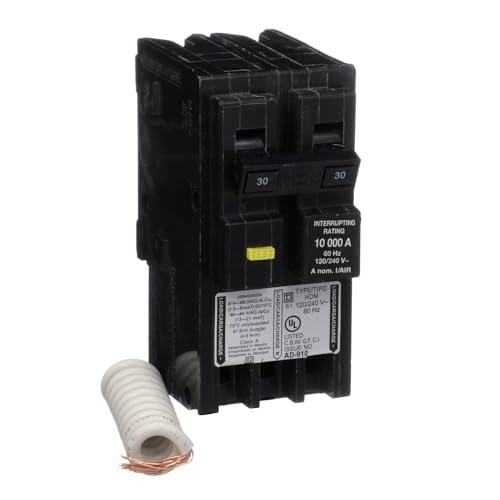
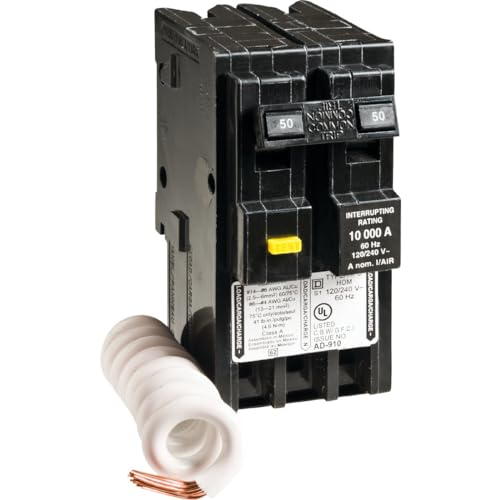
Square D Square D Homeline HOM250GFICP (50A GFCI)

Our top pick

Best GFCI Breaker

Square D Homeline HOM250GFICP (50A GFCI)

8.8/10
$127.67Check Price

In stock at Amazon as of November 19, 2026.

#ad · we may earn a commission

Best for: A 14-50 charger outlet in a Homeline panel

The 50-amp two-pole GFCI breaker for the panel most American homes built since the 1990s actually have - the part that makes a NEMA 14-50 charger outlet code-compliant.

Read the full review ↓Compare all 7 picks ↓

The short answer

Quick picks

#ad · Live prices from the Amazon Product API, as of November 19, 2026. Where we have no verified live price, we show none — we would rather leave a gap than print a number that has gone stale.

There is no single best GFCI breaker for an EV charger, because a breaker is listed for one manufacturer's panel and nothing else. Open your panel door, read the label, and buy the 50-amp two-pole GFCI for that bus: the Square D HOM250GFICP for a Homeline panel, the Siemens QF250A for a Siemens, Murray or ITE panel, the Eaton BRN250GFCS for an Eaton BR or Cutler-Hammer, the Square D QO250GFICP for a QO panel, and the ABB Q-Line THQL2150GFT2P - our budget pick, and the only self-testing part in the group - for a GE or ABB Q-Line panel. If your charger is hardwired rather than plugged in, the most useful thing on this page is the reason you probably need none of them.

This is the part of a home charger install that catches people out. You compare chargers for a week, pick one, and then the electrician mentions a breaker that costs more than a tank of gas and is not interchangeable with the one already in the panel. The requirement is real: Section 625.54 of the National Electrical Code says that all receptacles installed to connect EV supply equipment must be GFCI protected, and the trade press is clear that the section draws no distinction between dry and wet locations and names no voltage or amperage threshold. Put a charger on an outlet and the outlet needs ground-fault protection.

First, the question that decides whether you buy anything

Is your charger plug-in or hardwired? Everything on this page follows from that one answer, and it is worth getting right before you spend a dollar.

Install typeWhat code asks forWhat to buy
Plug-in charger on a NEMA 14-50 outletGFCI protection for the receptacle, per 625.54A 50-amp two-pole GFCI breaker for your panel
Plug-in charger on a 14-30 dryer-grade outletSame requirement, smaller circuitA 30-amp two-pole GFCI breaker
Plug-in charger on a 6-50 welder outletSame requirement, no neutral in the circuitA 50-amp two-pole GFCI - confirm it suits a two-wire-plus-ground load
Hardwired chargerGenerally no GFCI breaker required - the EVSE has its ownUsually a plain two-pole breaker. Ask your inspector first

The reason hardwired installs are treated differently is not a loophole. A charger listed to UL 2594 contains its own charging-circuit interrupting device, which is a ground-fault detector built into the EVSE. Stack a GFCI breaker in front of that and you have two ground-fault systems in series watching the same conductors, which is the single most common cause of a charger that works for a week and then trips every night. Our GFCI breakers and EV chargers guide is the full explanation, and why an EV charger trips a breaker is the troubleshooting version if it is already happening to you.

Second, the label inside your panel door

A circuit breaker is not a generic part. It is listed for a specific load center, and putting one brand's breaker on another brand's bus is a code violation even in the cases where it physically clips in. There are five families that cover the overwhelming majority of US homes, and they are easy to tell apart once you know to look:

Panel label saysBus / familyThe 50-amp GFCI part
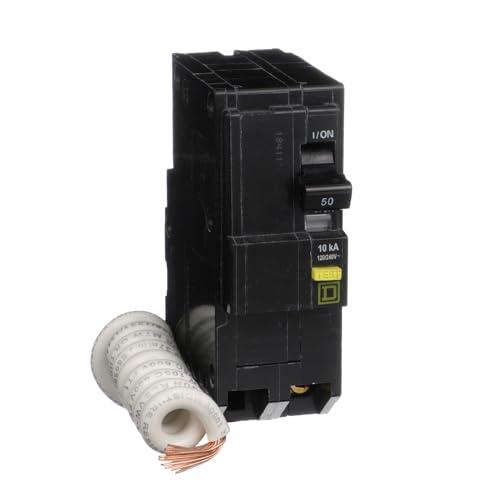
Square D, HomelineHomeline (HOM)HOM250GFICP
Square D, QOQO - not interchangeable with HomelineQO250GFICP
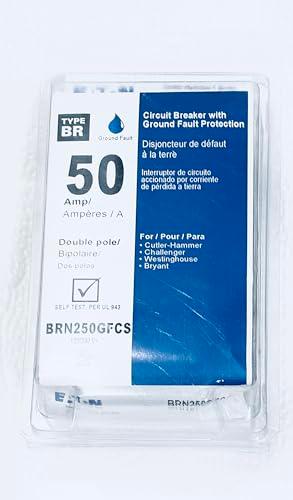
Eaton, Cutler-Hammer, BREaton BRBRN250GFCS
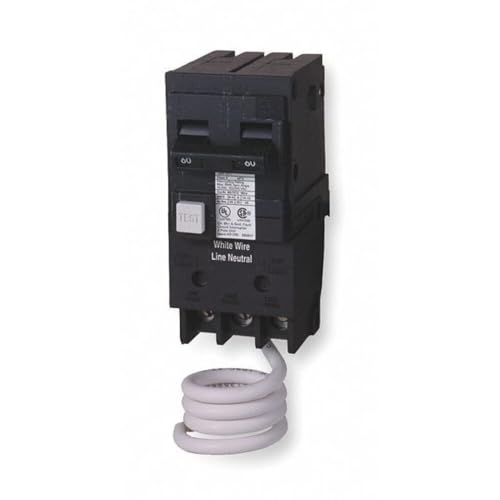
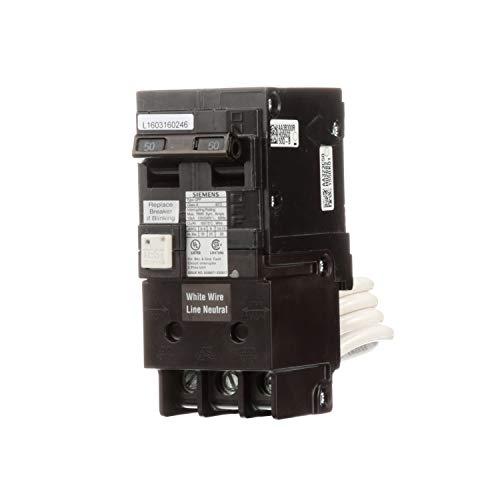
Siemens, Murray, ITESiemens QP-styleQF250A
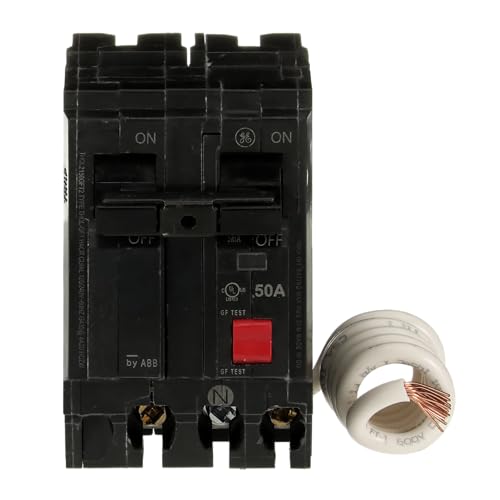
GE, ABB, Q-Line, THQLQ-LineTHQL2150GFT2P

Two traps worth naming. The first is Square D: Homeline and QO are the same manufacturer and completely different buses, and the HOM and QO parts are not substitutes for each other. The second is Eaton: a BR loadcenter and a CH loadcenter are different products under one brand, and a CH panel takes the CHFN series instead - the Eaton CHFN250GF is the equivalent part and it is in our registry, it is simply not one of the ranked picks here because the BR bus is far more common in homes.

Third, the amperage - which is set by the circuit, not by the charger

The NEC treats EV charging as a continuous load, which in plain English means the charger may draw no more than 80 percent of the breaker protecting it. A 40-amp charger therefore sits on a 50-amp circuit, which is exactly what a NEMA 14-50 receptacle is built for, and a 48-amp charger needs a 60-amp circuit. So:

  • 40-amp plug-in charger, 14-50 outlet: a 50-amp two-pole GFCI breaker. This is the overwhelmingly common case and five of the seven picks here are for it.
  • 24-amp charger, 14-30 dryer-grade outlet: a 30-amp two-pole GFCI breaker. See chargers for a 14-30 outlet for the hardware that belongs on that circuit.
  • 48-amp charger, 60-amp circuit: hardwired by code, so normally a plain 60-amp two-pole breaker - unless your inspector asks for ground-fault protection anyway, which is the only reason the 60-amp pick is on this page.

If you have not settled on a charger yet, decide the amperage first, because the breaker, the wire and the receptacle all follow from it: what amp charger do I need and wire and breaker size are the two pages that settle it.

How we picked these seven

  1. One part per panel family, not one winner.A ranking that ignored bus compatibility would be useless - four of five readers would buy the wrong thing. So the field is organized by what your panel is, and the order below reflects how common each panel family is in US homes rather than any claim that one brand's breaker outperforms another's.
  2. Brand and catalog number on the live listing.Every pick is a manufacturer-branded part whose Amazon title carries the catalog number, resolved live from Amazon's Product Advertising API. Breakers attract unbranded look-alikes and relabelled surplus; a listing that cannot name its own catalog number does not belong in a panel.
  3. Two-pole, 120/240V, residential interrupting rating. An EV circuit is a 240-volt two-pole circuit. Single-pole GFCI breakers, however cheap, are not candidates.
  4. Current production. We favored part numbers still in production over discontinued equivalents, because you may want a matched second one later and because a warranty on a dead part number is worth little.
  5. A live price. Every pick returned a live price from the API on the refresh behind this page. Nothing here is listed on a remembered number.

Which one is yours

Your situationPickWhy
Homeline panel, new 14-50 outlet for a 40-amp chargerSquare D HOM250GFICPThe most common panel in post-1990s US homes, and the matching 50-amp GFCI
Siemens, Murray or ITE panelSiemens QF250ACovers three labels on one bus, and usually the cheapest brand-name 50-amp GFCI
Eaton BR or Cutler-Hammer panelEaton BRN250GFCSCurrent-production BR part rather than a discontinued GFTCB listing
Square D QO panelSquare D QO250GFICPQO is a different bus from Homeline - this is the part that fits it
GE or ABB Q-Line panel, or the lowest priceABB THQL2150GFT2PBudget pick, and the only self-testing breaker in this field
Charger going on a 30-amp dryer-grade circuitSquare D HOM230GFICMatches a 30-amp circuit rather than oversizing to 50 amps
Inspector wants GFCI on a 60-amp hardwired circuitSiemens QF260AThe right size for a 48-amp charger's circuit, with self-test

What a GFCI breaker costs you beyond the price

Two things, and an honest page says both. The first is panel space: a GFCI breaker takes the same two slots as a plain two-pole breaker, but its pigtail neutral has to land on the neutral bar, and in a crowded panel that is the fiddly part of the job rather than the breaker itself. If your panel is already full, the conversation is about a subpanel or a panel upgrade, not about which breaker to buy.

The second is nuisance tripping. GFCI protection on an EV circuit interacts with the charger's own ground-fault detection, and on some charger-and-breaker combinations that shows up as a trip in the small hours with no fault present. It is not a reason to skip code - on a plug-in install the requirement is not optional - but it is a reason to prefer hardwiring where the charger supports it, and a reason to buy the charger from a manufacturer whose support will talk to you about it. Our EV charger brands page is where that side of the decision lives.

Every price shown above is live, read from Amazon's Product Advertising API and stamped with the date our price layer last checked it. Breaker prices move with copper and with supply, so a number typed into a sentence here would be wrong within weeks.

In detail

The picks, in full

01
Square D Square D Homeline HOM250GFICP (50A GFCI)

A 14-50 charger outlet in a Homeline panel

Square D Homeline HOM250GFICP (50A GFCI)

50A · 2-poleGFCI · 120/240VHomeline bus onlyProtects a 14-50 outlet
8.8/10

The 50-amp two-pole GFCI breaker for the panel most American homes built since the 1990s actually have - the part that makes a NEMA 14-50 charger outlet code-compliant.

Code fit
10
Build quality
9
Panel fit
8
Value
8

Pros

  • Sized exactly for the circuit a plug-in 40-amp charger wants: a 50-amp two-pole breaker feeding a NEMA 14-50 receptacle
  • From Square D by Schneider Electric rather than an unbranded equivalent, on the Homeline bus used in a large share of US homes built since the 1990s
  • One part satisfies the GFCI requirement for the outlet, so your electrician does not have to add a separate device or a second enclosure

Cons

  • Fits Homeline load centers only - it is not interchangeable with Square D's own QO bus, let alone another brand's
  • Costs several times what a plain 50-amp breaker costs, which is the price of the GFCI function rather than anything about this product

Don't buy this if…

…your charger is hardwired. A hardwired charger has its own ground-fault protection built in and code generally does not require a GFCI breaker ahead of it - stacking the two is the classic cause of nuisance tripping.

$127.67View on Amazon

Price as of November 19, 2026. Prices change — Amazon's is the one that counts.

#ad · we may earn a commission from this link to Square D Homeline HOM250GFICP (50A GFCI)

02
Siemens Siemens QF250A (50A GFCI)

A Siemens, Murray or ITE panel

Siemens QF250A (50A GFCI)

50A · 2-poleGFCI · 240V10,000 AICSiemens QP-style bus
9.3/10

Siemens' 50-amp two-pole GFCI, and usually the cheapest name-brand way to put a code-compliant 14-50 charger outlet on a Siemens, Murray or ITE panel.

Code fit
10
Build quality
9
Panel fit
8
Value
10

Pros

  • Covers the whole Siemens family and the Murray and ITE panels that share the same QP-style bus - a very large installed base in older US homes
  • Published 10,000 AIC interrupting rating, which is what most residential service entrances are specified to
  • Consistently one of the lowest-priced brand-name 50-amp GFCI breakers available, so the code requirement costs less here than on most panels

Cons

  • Will not fit a Square D, Eaton or GE/ABB panel - check the label inside your own panel door before ordering anything on this page
  • The older QF series does not advertise the self-test feature newer GFCI breakers carry, so the monthly test-button routine is on you

Don't buy this if…

…your panel is anything other than Siemens, Murray or ITE. Breaker compatibility is not a preference, it is a listing - the wrong brand physically fits some buses and is still not permitted.

$108.00View on Amazon

Price as of November 19, 2026. Prices change — Amazon's is the one that counts.

#ad · we may earn a commission from this link to Siemens QF250A (50A GFCI)

03
Eaton Eaton BR BRN250GFCS (50A GFCI)

An Eaton BR / Cutler-Hammer panel

Eaton BR BRN250GFCS (50A GFCI)

50A · 2-poleGFCI · 120/240VEaton BR bus2 inches wide
8.8/10

The 50-amp GFCI for an Eaton BR or Cutler-Hammer panel - the other large share of the US residential market Square D and Siemens do not cover.

Code fit
10
Build quality
9
Panel fit
8
Value
8

Pros

  • Fits the Eaton BR and legacy Cutler-Hammer load centers that account for a large share of US panels, where the Square D and Siemens parts simply do not go
  • Two inches wide, so it takes the same two slots a plain 50-amp two-pole breaker already occupies - no panel-space surprise
  • Current-production Eaton part number rather than a discontinued GFTCB listing, which matters when you need a warranty or a second one later

Cons

  • Priced above the Siemens equivalent for the same job - the panel you already own decides this, not the price
  • Like every GFCI breaker it has a pigtail neutral that must land on the neutral bar, so a full panel can make the install fiddlier than swapping a plain breaker

Don't buy this if…

…your Eaton panel is a CH loadcenter rather than a BR one. The two buses are different products despite the shared brand - CH panels take the CHFN series instead.

$109.94View on Amazon

Price as of November 19, 2026. Prices change — Amazon's is the one that counts.

#ad · we may earn a commission from this link to Eaton BR BRN250GFCS (50A GFCI)

04
Square D Square D QO QO250GFICP (50A GFCI)

A Square D QO panel

Square D QO QO250GFICP (50A GFCI)

50A · 2-poleGFCI · 120/240VQO bus onlyQwik-Gard GFI
8.8/10

The QO-bus version of the same job: Square D's premium residential line needs its own 50-amp GFCI, and this is it.

Code fit
10
Build quality
10
Panel fit
8
Value
7

Pros

  • The correct part for a QO load center, which is a different and non-interchangeable bus from the Homeline panels most people assume are the same thing
  • QO is Square D's spec-grade residential line, with the visible trip indicator electricians use to find a tripped breaker at a glance
  • Long-running catalog number, so replacements and matched breakers stay easy to source years into the install

Cons

  • QO parts carry a price premium over Homeline for identical ratings, and the GFCI version is where that is most visible
  • Nothing about it makes your charger faster - this is a compliance and safety part, and the money buys protection, not performance

Don't buy this if…

…the label inside your panel says Homeline. It is the same manufacturer and the same amperage, and it is still the wrong breaker - buy the HOM part instead.

$122.45View on Amazon

$129.996% off

Price as of November 19, 2026. Prices change — Amazon's is the one that counts.

#ad · we may earn a commission from this link to Square D QO QO250GFICP (50A GFCI)

05
ABB ABB Q-Line THQL2150GFT2P (50A GFCI, self-test)

A GE or ABB Q-Line panel, and the lowest price

ABB Q-Line THQL2150GFT2P (50A GFCI, self-test)

50A · 2-poleGFCI with self-test120/240 VACGE / ABB Q-Line bus
9.0/10

The cheapest brand-name 50-amp GFCI breaker in this field, for the GE-style Q-Line panels ABB now builds - and the one here that self-tests.

Code fit
10
Build quality
8
Panel fit
8
Value
10

Pros

  • Budget pick: the lowest live price of any 50-amp two-pole GFCI breaker we could verify from a named manufacturer
  • Self-test: the breaker checks its own ground-fault electronics periodically instead of relying on you to press the button every month
  • Q-Line is the former GE residential bus, so it covers the GE-labeled panels in millions of older homes as well as current ABB load centers

Cons

  • Q-Line panels only - and because GE sold this business to ABB, the label on your panel and the label on the box will not match, which is normal and still correct
  • The listing shows a struck-through list price, so the live number moves around more than the other breakers here

Don't buy this if…

…you want the reassurance of buying the same brand that is printed on your panel door. The part is right; the branding transition just looks wrong on the shelf.

$87.99View on Amazon

$95.007% off

Price as of November 19, 2026. Prices change — Amazon's is the one that counts.

#ad · we may earn a commission from this link to ABB Q-Line THQL2150GFT2P (50A GFCI, self-test)

06
Square D Square D Homeline HOM230GFIC (30A GFCI)

A 14-30 dryer-outlet charger install

Square D Homeline HOM230GFIC (30A GFCI)

30A · 2-poleGFCI · 120/240VHomeline busProtects a 14-30 outlet
9.0/10

The 30-amp version, for the install nobody plans and plenty of people end up with: a Level 2 charger on a dryer-grade 30-amp circuit.

Code fit
10
Build quality
9
Panel fit
8
Value
9

Pros

  • Matches the circuit a NEMA 14-30 receptacle actually runs on, so a 24-amp charger install gets its GFCI protection without oversizing the breaker
  • The right answer when an electrician adds a second 14-30 receptacle for charging rather than sharing the laundry one
  • Cheaper than the 50-amp GFCI breakers, because the amperage is lower - the only place on this page where a smaller circuit saves you money

Cons

  • A 30-amp circuit caps charging at 24 amps / 5.8 kW no matter which charger you hang on it, so this is the slow lane by design
  • Homeline bus only, and it does not help at all if your dryer circuit is an old three-wire NEMA 10-30 with no equipment ground

Don't buy this if…

…you are putting in a new circuit from scratch. If the panel and the wire run are being opened up anyway, a 50-amp circuit and a 40-amp charger cost little more and charge nearly twice as fast.

$87.99View on Amazon

$104.9916% off

Price as of November 19, 2026. Prices change — Amazon's is the one that counts.

#ad · we may earn a commission from this link to Square D Homeline HOM230GFIC (30A GFCI)

07
Siemens Siemens QF260A (60A GFCI, self-test)

A 60-amp circuit an inspector wants GFCI-protected

Siemens QF260A (60A GFCI, self-test)

60A · 2-poleGFCI with self-test120/240VSiemens QP-style bus
8.0/10

The 60-amp GFCI for the one case that genuinely calls for it: a 48-amp charger on a 60-amp circuit where the inspector wants ground-fault protection at the panel.

Code fit
8
Build quality
9
Panel fit
8
Value
7

Pros

  • The right size for the 60-amp circuit a 48-amp hardwired charger requires, which is the step up from everything else on this page
  • Self-test electronics, so the breaker verifies its own ground-fault circuitry rather than waiting for a monthly button press
  • Solves a real and awkward problem: some jurisdictions and some inspectors want GFCI protection on an outdoor or hardwired EVSE circuit even where the national code does not clearly require it

Cons

  • This is the pick most likely to nuisance-trip, because a hardwired charger already has its own ground-fault detection and two protections in series interact badly
  • Costs more than the 50-amp breakers and buys you nothing unless your circuit is genuinely 60 amps

Don't buy this if…

…nobody has asked you for it. If your charger is hardwired and your inspector has not required GFCI protection at the panel, the honest advice is to not add it.

$118.67View on Amazon

Price as of November 19, 2026. Prices change — Amazon's is the one that counts.

#ad · we may earn a commission from this link to Siemens QF260A (60A GFCI, self-test)

Four checks before you order a breaker

  1. Read the label, not the logo. The panel cover usually carries a chart of the breaker catalog numbers it accepts. That chart is the authority - not the brand name stamped on the door, which may predate a corporate sale (every GE residential panel is now an ABB part story).
  2. Confirm two-pole and the right amperage. 50 amps for a 14-50 or 6-50 outlet, 30 amps for a 14-30. Buying a bigger GFCI breaker than the circuit does not make the circuit bigger; it removes the protection the wire needs.
  3. Decide plug-in versus hardwired before you buy. If you hardwire, you probably do not need a GFCI breaker at all, and you avoid both the cost and the trip risk. Hardwired vs plug-in is the comparison.
  4. Ask the inspector, once. Local amendments exist, and some jurisdictions are stricter than the national code on outdoor or hardwired EVSE. One question at permit time is cheaper than a failed inspection - EV charger permit and inspection covers what to ask.

Who should install it

An electrician, in almost every case. Replacing a breaker means working in an energized panel: the bus bars stay live with the main off unless the service is pulled, and a GFCI breaker adds a neutral termination to get wrong. If the panel is being opened anyway for the charger circuit, adding the GFCI breaker and a whole-home surge protector in the same visit is the cheapest they will ever be, because the labor is already paid for. If you are weighing doing it yourself, read can I install an EV charger myself first and be honest about the answer.

What we have not done

We have not bench-tested a breaker and we do not have a lab. Every figure here - amperage, poles, voltage, interrupting rating, self-test, bus compatibility - is the manufacturer's own published specification from the live retail listing, and the code requirements are quoted from the trade sources listed below rather than paraphrased from memory. We make no claim about trip reliability or service life for any part here, because that would need test data we do not have. The scores are judgments from documented research against the published rubric on our methodology page.

Nothing on this page is electrical advice for your specific installation. Code adoption varies by state and city, and your inspector has the final word on your panel.
How we picked

We do not run a testing lab

We compiled published specifications from manufacturer manuals and spec sheets, verified the safety listings (UL / ETL), computed the real running and installation costs, checked the wiring math against the NEC continuous-load rule, and read aggregated owner reviews — then scored each product against a published rubric. The scores are judgments from documented research — they are not bench measurements, because we do not have a test lab and we are not going to pretend we do. Every spec and cost figure is cited in Sources.

Questions

Frequently asked

Does an EV charger need a GFCI breaker?

If it plugs into an outlet, yes. NEC Section 625.54 requires GFCI protection on all receptacles installed to connect EV supply equipment, with no exception for dry locations and no voltage or amperage threshold. A hardwired charger is the different case: it contains its own ground-fault protection as part of its UL 2594 listing, and code generally does not require a GFCI breaker ahead of it. Your local amendments and your inspector decide the edge cases.

What size GFCI breaker do I need for an EV charger?

The size of the circuit, not the charger. A 40-amp charger on a NEMA 14-50 outlet wants a 50-amp two-pole GFCI breaker, because EV charging is a continuous load and the charger may draw only 80 percent of the breaker. A 24-amp charger on a 14-30 dryer-grade outlet wants a 30-amp two-pole. A 48-amp charger needs a 60-amp circuit and is hardwired, which usually means no GFCI breaker at all.

Can I use any brand of GFCI breaker in my panel?

No. A breaker is listed for a specific load center, and using another brand's part is a code violation even where it physically fits. Square D Homeline and Square D QO are not interchangeable with each other, and neither is an Eaton BR with an Eaton CH. Read the chart on the inside of your panel cover and buy a catalog number it lists.

Why does my EV charger trip the GFCI breaker?

Usually because there are two ground-fault systems watching one circuit. The charger has its own detector built in, and a GFCI breaker ahead of it can see the same small leakage and open first. It is most common on hardwired installs where a GFCI breaker was added without needing to be. Our GFCI breakers and EV chargers guide walks through the diagnosis.

Is a GFCI breaker the same as a GFCI outlet?

Not for this job. A 50-amp 240-volt EV receptacle is not available as a self-protecting GFCI device the way a 15-amp bathroom outlet is, so the protection has to come from the breaker in the panel. That is why this page is about breakers and why a plug-in strip or a portable GFCI adapter is not an answer here.

How much does a GFCI breaker for an EV charger cost?

Expect a mid-range accessory price rather than a trivial one - a 50-amp two-pole GFCI breaker costs several times what a plain two-pole breaker costs, and the price differs meaningfully between panel families. The live price on each pick above is the current number; our budget pick is consistently the cheapest brand-name part in the group.

Keep reading

More in this section

More Cables & Adapters

All cables & adapters →

Receipts

Sources

We do not run a testing lab, and we do not pretend to. Where a measured number came from someone else's lab, we name them and link them. Where we could not verify something, we say so on the page rather than quietly leaving it out. Read our full method.