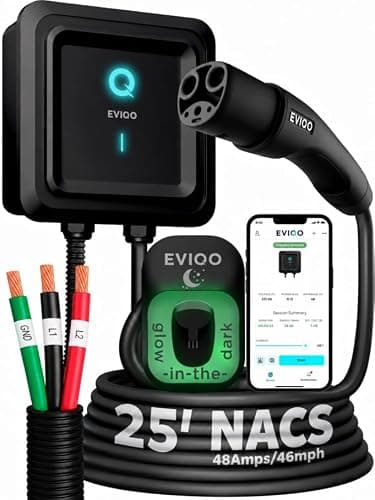
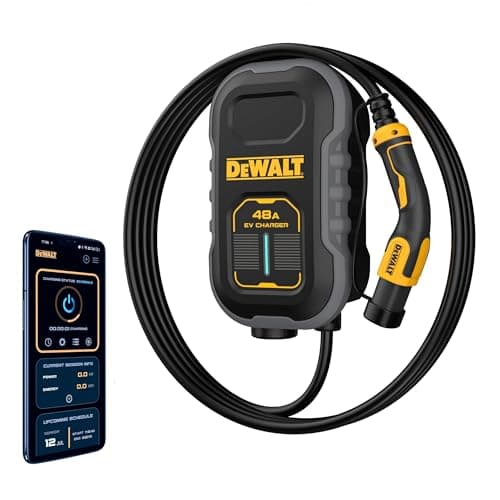
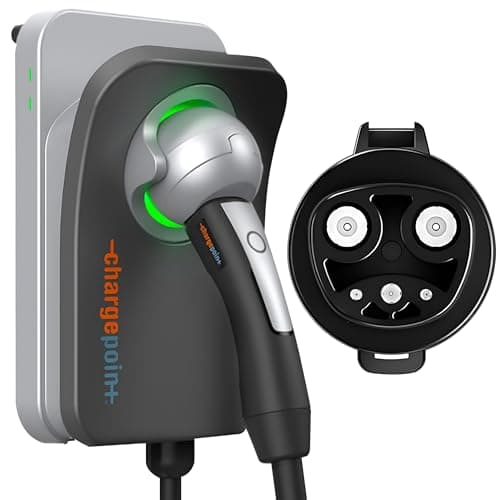
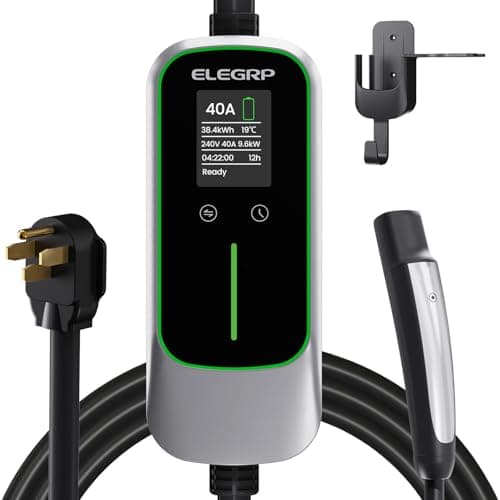
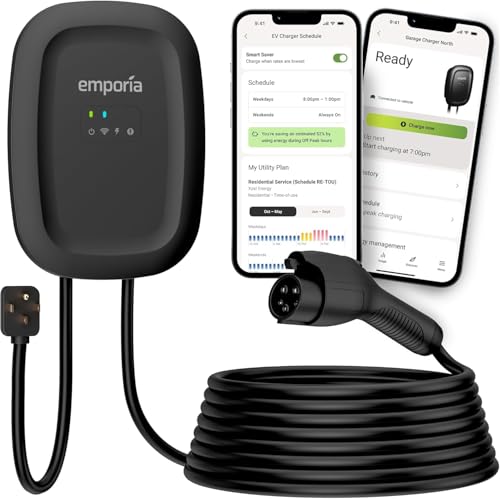
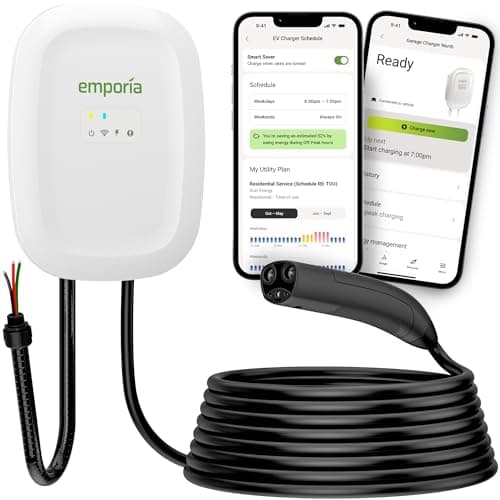
The best Tesla Wall Connector alternative for most Tesla owners is the Emporia NACS: a native NACS plug, up to 48 amps, a UL listing and ENERGY STAR certification, plus the consumption tracking the Tesla does not do. It is for an owner who wants the same plug and the same speed with real energy data attached. Our budget pick is the ELEGRP NACS 40A, which is plug-in rather than hardwired and costs about half as much as the 48-amp field. First, what you would be giving up - because the Wall Connector is a good product and we are not going to pretend otherwise.
What the Tesla Wall Connector is known for
Three things, and all three are real. It is adjustable up to 48 amps and 11.5 kW on a 60-amp circuit - which is exactly the ceiling Tesla publishes for its own cars' onboard chargers, so it matches the car perfectly and never oversells. It has a native NACS plug and deep Tesla app integration, so there is no adapter in the loop and no second account to set up. And Tesla's support documentation covers a Wi-Fi install, power sharing across multiple Wall Connectors on one circuit, and a four-year warranty for residential use against one year commercial - a longer residential term than most of this field.
It is also the unit we recommend in our own Grizzl-E vs Tesla Wall Connector and Emporia vs Tesla Wall Connector comparisons for a Tesla-only driveway. This page is for the people those comparisons send elsewhere.
Why people look for an alternative
- It is NACS-only.A J1772 car cannot plug into it without a NACS-to-J1772 adapter, so a mixed driveway is adding a part to every charge. Tesla's own answer is the Universal Wall Connector, which builds a J1772 adapter into the handle - we compare the two in Wall Connector vs Universal Wall Connector.
- It is hardwired only. There is no plug-in version, so there is no version you can unplug and take with you when you move, and there is no install without an electrician. If that is the sticking point, the plug-in picks below are the answer and hardwired vs plug-in is the argument.
- It does not meter your energy the way some rivals do. If what you want is a number for what charging actually cost you last month, that is the specific strength of two picks here, and of our energy-monitoring roundup.
Why third-party NACS chargers exist at all now
Because the connector is a published standard. NACS was issued as SAE J3400, which is what allows a manufacturer other than Tesla to ship a native NACS plug on a home charger - and in the last two years most of the mainstream brands have. That is a genuinely new situation: as recently as 2024 the practical options for a Tesla were the Wall Connector or a J1772 charger plus an adapter. Our NACS home chargers page tracks that whole field.
| What you want instead | Pick | What it matches on |
|---|
| Same plug, same speed, plus energy data | Emporia NACS | 48A / 11.5 kW, native NACS |
| Same plug and speed, less money | EVIQO NACS 48A | 48A, UL and ETL listed |
| Smallest box on the wall | DEWALT Compact NACS | 48A in a 4.6 in deep body |
| One app for home and public charging | ChargePoint Home Flex NACS | 16-50A selectable |
| No electrician, lowest price | ELEGRP NACS 40A | Plug-in 40A, ETL listed |
| A J1772 car joining the household | Emporia Level 2 | 48A J1772, adapt the Tesla |
That last row is the one people underestimate. If a non-Tesla EV is coming to the driveway, buying a J1772 charger and adapting the Tesla is usually cheaper and tidier than the reverse - our mixed-connector households page works through it, and NACS-to-J1772 adapters is the part you would need.
How we ranked these
- Does it match 48 amps and 11.5 kW?Four of these do, which is the Tesla's own figure and the ceiling of what a Tesla can accept.
- Native NACS, or a deliberate J1772 choice. No pick here is NACS by accident, and the one J1772 unit is included for a stated reason.
- A real safety listing. UL or ETL to UL 2594 from an OSHA-recognized lab, named per pick.
- What it adds that the original does not. Energy metering, a plug instead of a hardwire, a smaller body, a public-charging app. A pure like-for-like clone would not earn a place.
- Price, against a unit sold direct. Three of these undercut the 48-amp field materially, and we say which.
We do not quote a price for the Tesla Wall Connector anywhere on this page. It is not sold through the retail channel our price layer reads, so we have no live figure for it and we will not print one from memory - check Tesla's own shop for the current number. Every price shown below is live, from the Amazon Product Advertising API, stamped with the date the price layer checked it.
Before you switch: three checks
- Is your car actually a 48-amp car? Tesla publishes 11.5 kW / 48 amps for most trims and 7.7 kW / 32 amps for RWD ones. On a 32-amp car, every 48-amp charger here charges at 32 amps - so buy on features, not amperage.
- Will there ever be a J1772 car in this driveway? If yes, the connector decision changes completely, and a J1772 charger plus one adapter is usually the cheaper household.
- Do you want the charger to come with you? Only the plug-in picks do. A hardwired unit is a fixture that stays with the house - can I move my charger is the page for that.
What we will not tell you
We have not bench-tested a Wall Connector or any alternative here, and we do not have a lab. Every claim about the Tesla unit on this page is from Tesla's own support documentation, linked in the sources - the 48-amp ceiling, the hardwired install, the Wi-Fi and power sharing, the four-year residential warranty. Everything about the alternatives is the manufacturer's published specification plus the safety listing checked against the testing laboratory's description of the standard. We have made no claim about reliability, failure rates or support quality for any of them, because we have no data that would support one.