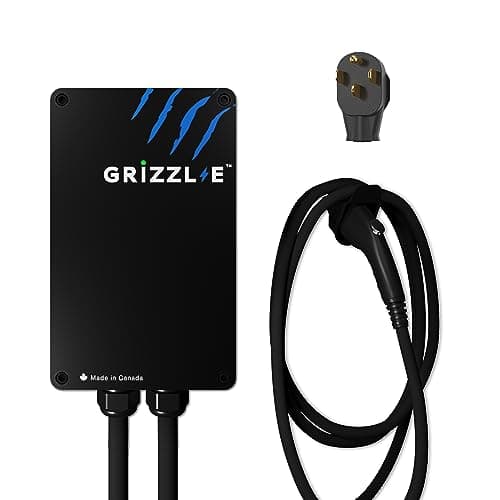
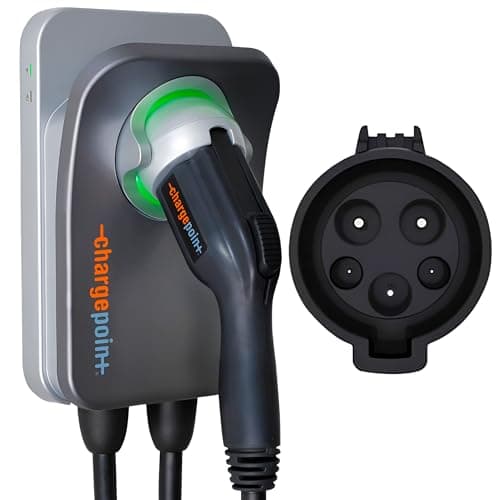
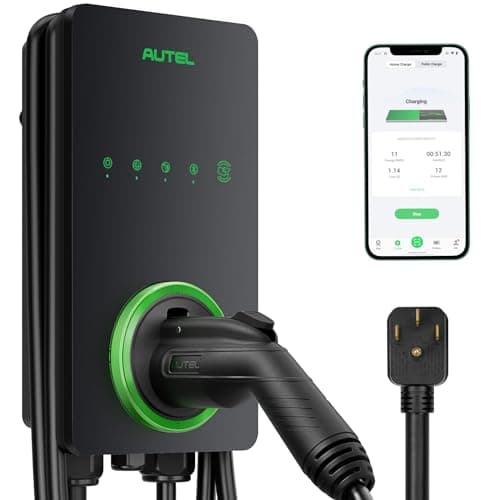
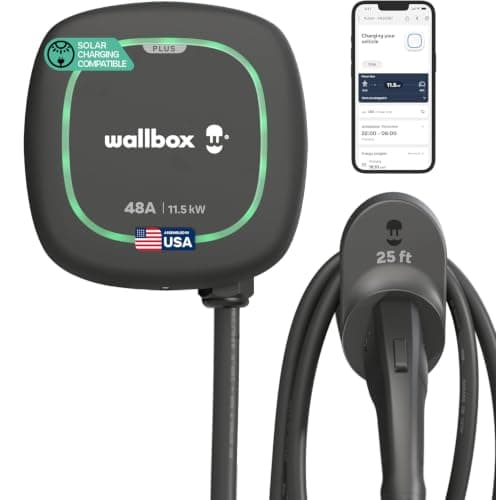
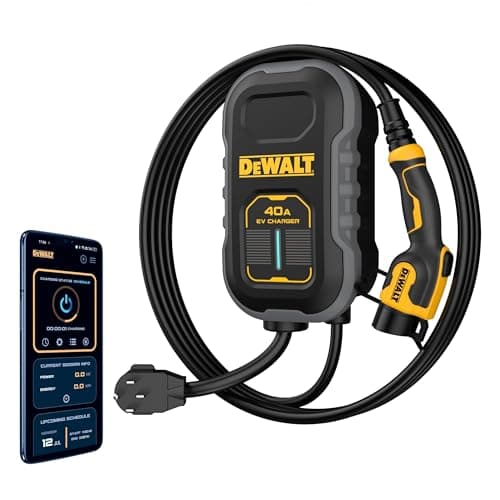
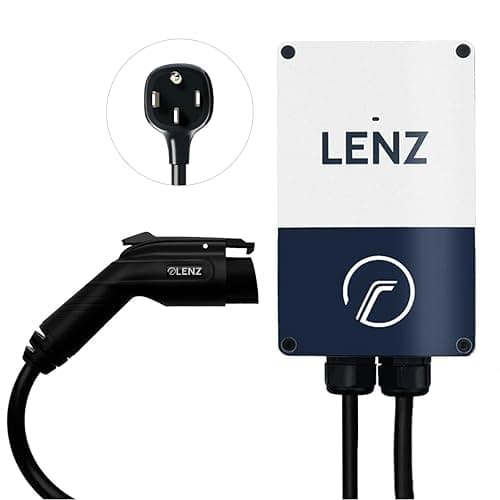
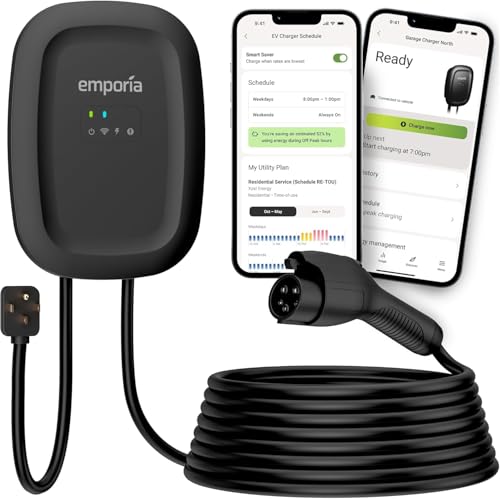
For most buyers the best EV charger brand is Emporia: a three-year hardware warranty, full 48-amp capability and genuine energy monitoring at a price the premium brands do not match. If you want the brand least able to let you down through software, buy Grizzl-E - United Chargers builds a sealed metal box with a UL file and a three- or five-year replacement warranty, and it works with no account at all. ChargePoint is the pick when support matters most, with a three-year parts warranty and 24/7 driver support behind it. Autel and Wallbox are the feature and design brands, DEWALT is the one you can buy where you buy tools, and our budget brand pick is LENZ. The brand we will not rank, and the reason this page exists, is JuiceBox.
In October 2024, Enel X Way shut down its North American business. The chargers kept charging - the hardware was fine - but the app went away, and with it the scheduling, the energy reporting and the remote control that people had paid extra for. Canary Media put the number of affected residential units at roughly 100,000. The company's stated reason was that it wanted to focus on markets where it also sells electricity, which it does not do in the US or Canada. Nothing was defective. The brand simply left, and a hundred thousand smart chargers became dumb ones overnight.
That is the risk no spec sheet shows, and it is why "which brand" is a better question than most buyers realize. A home charger is a ten-year purchase bolted to your wall. Over that decade the thing most likely to degrade is not the contactor - it is the company.
The four things we rank a brand on
- Published warranty term, in the manufacturer's own words.Not a retailer's claim, not a review-site summary. Every term below is quoted from the brand's own page and linked in the sources. A brand that publishes its term clearly is telling you something about itself before you ever file a claim.
- Safety listing, and whose. UL, cUL or ETL against UL 2594 from an OSHA-recognized lab. This is the one place where brand reputation and documented fact overlap cleanly: either the file exists or it does not.
- Software dependence.How much of what you paid for stops working if the company's servers do. A charger that needs an account to change its amperage is a different risk profile from one with a dial inside the case.
- Line breadth and continuity. Whether the brand sells the second unit you might need - NACS as well as J1772, 48-amp as well as 40, dual-port, a portable - and whether its part numbers survive from year to year.
What we deliberately do not rank: perceived reliability, repair turnaround and customer-service quality. Those are the three things buyers ask about most and the three we have no data on. Anyone ranking brands on failure rate without a dataset is guessing, and we would rather say so than invent a number.
The brands, and what each is actually good at
| Brand | Published warranty | Known for | Software risk |
|---|
| Emporia | 3 years, hardware, from delivery | 48 amps and real energy monitoring at a mid-market price | Moderate - the app is much of the value |
| Grizzl-E (United Chargers) | 3 or 5 years, replacement, no registration | Cast-aluminum enclosures, UL file, no account needed | Low - the base units have no app at all |
| ChargePoint | 3 years parts, with 24/7 driver support | The most mature home app, and a public network account | Moderate to high - the app is the product |
| Autel Energy | 36 months | Feature depth, load balancing, a wide hardware line | Moderate |
| Wallbox | 3 years from purchase | The smallest 48-amp unit, Energy Star, power sharing | Moderate |
| DEWALT | 3 years limited, 24/7 technical support | A tool brand's retail footprint and returns | Low to moderate - app optional |
| LENZ | 3 years | The cheapest ETL-listed metal-bodied 40-amp wall unit | Low - no app to lose |
Three brands are in this conversation but not in the ranking, and the reasons are worth stating plainly. Tesla publishes a four-year residential warranty on the Wall Connector - the longest term of any mainstream home unit - and makes excellent hardware, but it sells direct rather than through the retail channel our price layer reads, so we have no live price to show you. Its hardware is covered on our Tesla charger page and Tesla Wall Connector alternatives. Enphase publishes a five-year limited warranty, the longest flat term we track, and is the obvious brand if your charger is part of a solar and battery system - it is not ranked here because its home units sit far above this field on price. And EVIQO, which has been a top pick on several of our pages, dropped out of Amazon's product API entirely on our 2026-11-10 price refresh: no price, no image. Until that resolves we cannot verify its availability, so we are not putting it on a page about which brands to trust.
Software dependence is the axis nobody shops on
The JuiceBox episode was not a reliability failure, and that is exactly what made it instructive. Hardware that depends on a company's servers has two failure modes - the hardware one, which a warranty covers, and the corporate one, which nothing covers. So it is worth asking what your charger loses if the brand disappears:
- Nothing at all. A Grizzl-E Classic or a LENZ sets its current with a physical dial or switch and charges on a J1772 handshake with the car. There is no server in the loop on any day, ever.
- The extras. Most smart chargers keep charging and lose scheduling, monitoring and remote start. If your utility rate is flat and you plug in overnight anyway, this is survivable. If you are on a time-of-use plan, it is not - chargers with scheduling is the page to read before you decide how much that matters.
- The adjustment you need at install time. This is the one that catches people. A charger whose amperage is set only through an app needs that app to work on the day the electrician commissions it, and again if you ever move it to a different circuit.
The honest conclusion is not "avoid smart chargers". It is that the app should be a bonus layered on a charger that is complete without it. Where a brand sells both kinds, we say which is which in the pick, and chargers without Wi-Fi is the field for buyers who want the question closed permanently.
Which brand is yours
| Your situation | Brand | Why |
|---|
| One car, flat rate, want the most charger for the money | Emporia | 48 amps, energy monitoring, three-year hardware warranty, mid-market price |
| Outdoor wall, cold winters, no interest in an app | Grizzl-E | Cast-aluminum enclosure, UL file, three- or five-year replacement warranty |
| You want a number to call and a mature app | ChargePoint | Three-year parts warranty with 24/7 driver support published alongside it |
| Two EVs, or you want load balancing and deep features | Autel Energy | 36-month warranty and the broadest feature set in this field |
| Tight garage wall, want the smallest 48-amp unit | Wallbox | Compact body, Energy Star, power sharing, three-year warranty |
| You would rather buy it where you buy tools | DEWALT | Familiar retail and returns, CSA certification, 24/7 technical support |
| Lowest price from a brand that publishes a warranty | LENZ | Budget brand pick: ETL-listed metal-bodied 40-amp unit, three-year term |
What a brand cannot save you from
Two things, and they both cost more than the charger. The first is the circuit: a brand-new charger from the best brand in the world still needs a 50- or 60-amp circuit, and that quote dwarfs the price difference between everything on this page. Installation cost and what to ask on a quote are the pages that matter more than this one if you have not had an electrician out yet.
The second is the panel-side hardware nobody budgets for. A plug-in charger needs GFCI protection on its receptacle, which means a breaker specific to your panel brand - best GFCI breakers for an EV charger is that list - and if the panel is already open it is the cheapest moment to add surge protection. Neither is a brand decision, and both arrive as a surprise on the invoice.
Every price above is live, read from Amazon's Product Advertising API and stamped with the date our price layer last checked it. Brand pricing in this category moves constantly, which is why we never type a number into a sentence - in a page about which brand to trust, a stale price would be the least trustworthy thing on it.
Five questions to ask about any charger brand
- Where is the warranty term published?If you cannot find it on the manufacturer's own site in under a minute, that is the finding. Every brand ranked here publishes one, and the links are in our sources.
- Is there a safety listing, with a file? UL, cUL or ETL against UL 2594. United Chargers publishes a UL file number; some budget brands assert a certification in the listing copy without one. A claim is not a file.
- What does the charger do with no internet?Ask it as a shopping question, not a troubleshooting one. The answer tells you how much of your purchase is hostage to the company's continued interest in this market.
- Can you set the amperage without an app? A dial, a DIP switch or an on-unit menu means the electrician can commission it on the day regardless of the network.
- Does the brand sell the connector your next car will use? NACS is now an SAE standard and most brands here ship both connectors. A brand with only one is a brand you may replace rather than extend - NACS home chargers is the field.
Brand reputation versus brand risk
These are different things and the EV charging market keeps proving it. A brand can make genuinely good hardware and still be a risk - Enel X Way's JuiceBox was one of the most recommended home chargers in North America right up to the week it was abandoned. Equally, a brand can be unglamorous and low-risk: a sealed metal box with a mechanical current setting cannot be remotely downgraded by anyone's business decision.
So weigh the two separately. Pay for software only where you will genuinely use it, prefer hardware that is complete without it, and when two brands are close, let the published warranty term break the tie - EV chargers ranked by warranty is that comparison in full.
What we have not done
We have not bench-tested any charger and we do not have a lab. Every warranty term, certification and feature above is the manufacturer's own published statement from the pages listed in our sources, and the JuiceBox account is sourced to contemporaneous trade and industry reporting rather than recollection. We make no claim about any brand's failure rate, repair speed or service quality, because we have no dataset that would support one - and a brand ranking built on vibes is worse than no ranking. The scores on each pick are judgments from documented research against the published rubric on our methodology page.
We also hold no brand relationship that affects this order. Where we earn a commission, we earn it identically across every brand here, which is why the budget pick is named as such rather than buried.