Skip to content
The Charge Curve

HUB 01 · Home EV Chargers

The Best EV Chargers Under $1,000

This is the band where the limits stop being the charger and start being your panel and your car. Most people should spend a third of it - but if you need 19.2 kW or a second cable, here is where they live.

By Stephen V.Updated How we compare
#ad

We earn a commission when you buy through our Amazon links, at no extra cost to you. It never affects our rankings, and we say so when the cheaper product is the better buy. How this works.

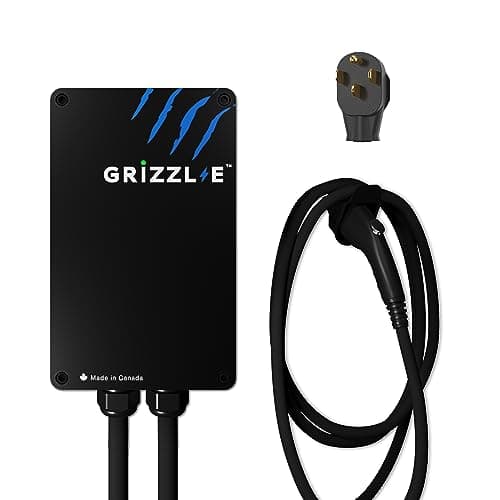
Grizzl-E Grizzl-E Ultimate 80A (NACS)

Our top pick

Best Under $1,000

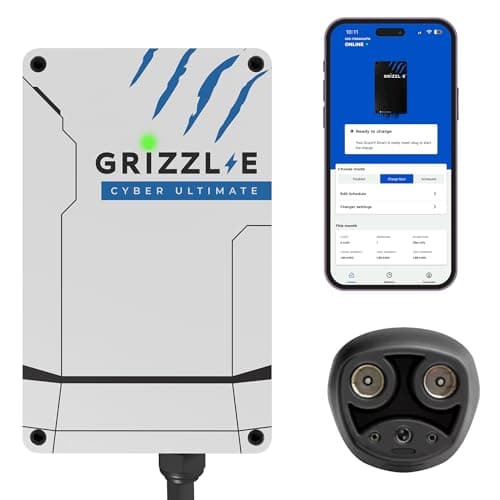
Grizzl-E Ultimate 80A (NACS)

9.0/10
$599.99Check Price

$899.0033% off

In stock at Amazon as of November 19, 2026.

#ad · we may earn a commission

Best for: One charger that fits whatever circuit you end up with

An 80-amp unit that is genuinely useful at every amperage below 80 too - adjustable in six documented steps down to 16 amps, in a UL Type 4 metal case.

Read the full review ↓Compare all 6 picks ↓

The short answer

Quick picks

  • Grizzl-E Grizzl-E Ultimate 80A (NACS)
    01 Grizzl-E Ultimate 80A (NACS)
    9.0

    An 80-amp unit that is genuinely useful at every amperage below 80 too - adjustable in six documented steps down to 16 amps, in a UL Type 4 metal case.

    Best for: One charger that fits whatever circuit you end up with

    $599.99Amazon
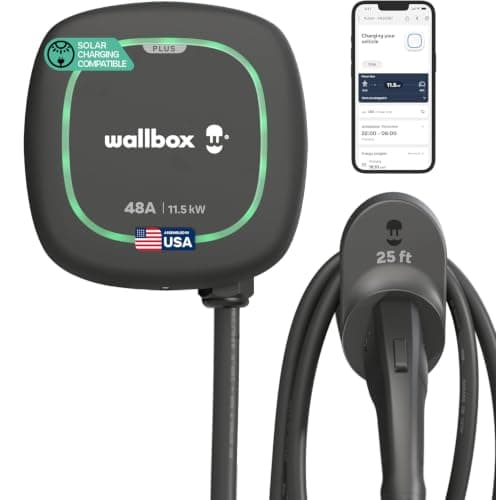
  • Wallbox Wallbox Pulsar Plus (48A)
    02 Wallbox Pulsar Plus (48A)
    8.4

    One of the smallest 48-amp chargers you can hang on a wall — full-speed hardwired charging in a box that barely announces itself.

    Best for: A compact, fast, hardwired install

    $594.99Amazon
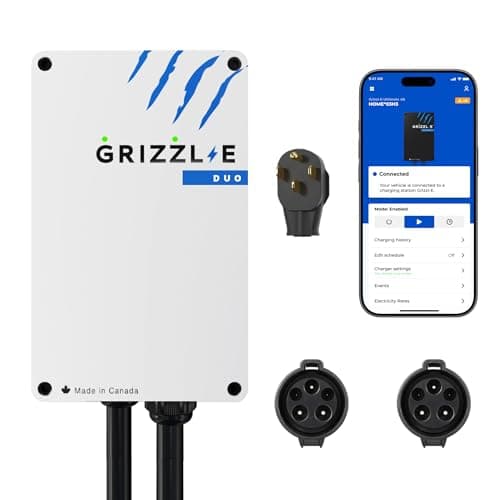
  • Grizzl-E Grizzl-E Duo (dual 40A)
    03 Grizzl-E Duo (dual 40A)
    8.4

    Two 25-foot cables splitting one circuit — the honest answer for a two-EV household that isn't going to run a second line.

    Best for: Two EVs sharing one circuit

    $599.99Amazon
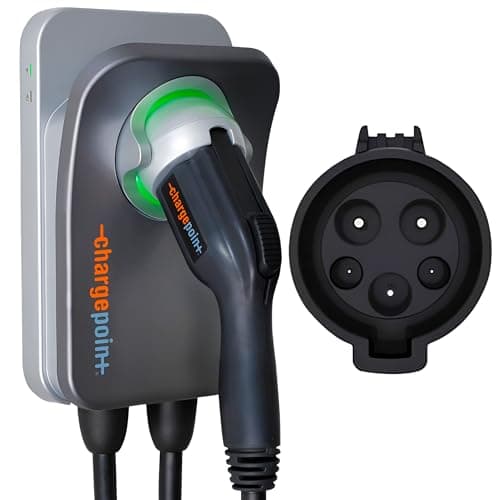
  • ChargePoint ChargePoint Home Flex
    04 ChargePoint Home Flex
    8.2

    The mature, well-supported pick — amperage you dial in up to 50A, wired into the biggest public-charging app in North America. You pay for the polish.

    Best for: Buyers who want the established brand + one app

    $508.99Amazon
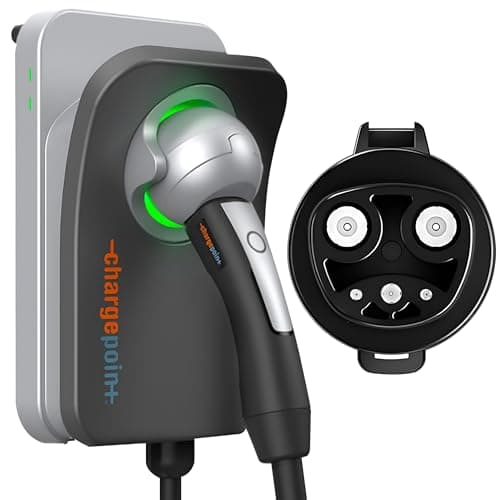
  • ChargePoint ChargePoint Home Flex NACS
    05 ChargePoint Home Flex NACS
    8.4

    The established-brand NACS box: amperage you dial in from 16 to 50 amps, tied to the biggest public-charging app in North America. You pay for the polish.

    Best for: One app for home and the road

    $466.59Amazon
  • Grizzl-E Grizzl-E Classic (40A)
    06 Grizzl-E Classic (40A)
    8.0

    A UL-certified cast-aluminum box with no app to update and nothing in the cloud to fail — the durability default for people who want a charger, not a gadget.

    Best for: People who want a charger, not an app

    $299.99Amazon

#ad · Live prices from the Amazon Product API, as of November 19, 2026. Where we have no verified live price, we show none — we would rather leave a gap than print a number that has gone stale.

The most charging hardware you can buy under $1,000 is the Grizzl-E Ultimate 80A: 19.2 kW through a native NACS connector, adjustable in documented steps down to 16 amps, in a UL Type 4 metal case. It is for one specific buyer - a car that genuinely accepts more than 11.5 kW and a panel with room for a 100-amp circuit. Our budget pick is the Grizzl-E Classic at under a third of the cap, and for most households reading this, it or the 48-amp Wallbox is the right answer rather than the top of the band. We will make that argument properly, because a page called "under $1,000" that just ranks the six most expensive things we sell would be useless.

Three things this band buys that cheaper chargers cannot

  1. 19.2 kW. Eighty amps on a 100-amp dedicated circuit. Only a handful of cars can use it - the Lucid Air, a Cadillac ordered with the available 19.2 kW charger, some Ford and Tesla configurations - and for those it is the difference between a full charge in four hours and eight. Our 80-amp page is the field.
  2. Two cables on one circuit. A dual-connector unit shares one 40-amp supply between two cars, which is cheaper and far less disruptive than running a second circuit. See best dual-port chargers.
  3. A selectable output that spans everything.ChargePoint's datasheet lists 16 to 50 amps on the Home Flex, so one box fits whatever circuit the electrician finds room for. That flexibility is what the money buys, not raw speed.

The case for spending a third of this

Tesla publishes an 11.5 kW ceiling on its own onboard charger, and most of the mainstream field sits at or below it. That means a 48-amp charger on a 60-amp circuit is the top of the useful range for the large majority of cars on the road - and 48-amp units start well under $500. Everything above that number is buying headroom for a car you may not own, or features, or a metal case.

If your car acceptsBuyCircuitSpending more gets you
7.7 kW (32A)40-amp plug-in50A existingNothing the car can use
11.5 kW (48A)48-amp hardwired60A dedicatedBuild quality, app, warranty
19.2 kW (80A)80-amp hardwired100A dedicatedHalf the charging time
Two cars, one circuitDual-connector50A existingA second cable, not more speed

Row one is the trap in this band. A charger never pushes current; the car pulls it, and the J1772 control pilot simply advertises what is available. If you are not sure which row you are in, our what amp charger do I need guide sorts it in two minutes, and the load calculation tells you what your panel can actually carry before you commit to a 100-amp circuit.

How we ranked these

  1. Does it do something a sub-$500 charger cannot? The entry condition for this page. Every pick here brings 19.2 kW, a second cable, a 50-amp setting or a materially better enclosure - except the budget pick, which is here to anchor the comparison.
  2. Adjustability. At this price a unit that only runs at its maximum is a liability. Four of these dial down.
  3. A real safety listing. UL or ETL to UL 2594, from an OSHA-recognized lab.
  4. Enclosure and cable, for an outdoor life. Metal cases and Type 4 ratings are most of what separates these from the cheaper field.
  5. Connector, honestly. Two of these are native NACS and three are J1772. Buy the one that matches your port - or the one that handles both.

The short version

  • A car that accepts 19.2 kW, NACS port: Grizzl-E Ultimate 80A.
  • One car, 11.5 kW, and you want the small tidy box: Wallbox Pulsar Plus 48A.
  • Two EVs and one circuit: Grizzl-E Duo.
  • You want one app for home and public charging: ChargePoint Home Flex, in J1772 or native NACS.
  • You just want a charger that works: Grizzl-E Classic, our budget pick, at under a third of the cap. Put the difference into the circuit instead.

Prices here are live from the Amazon Product Advertising API and the table above carries the date the price layer last checked them. Nothing is hardcoded, so a unit that has drifted across the cap since that date shows you its current price rather than ours.

In detail

The picks, in full

01
Grizzl-E Grizzl-E Ultimate 80A (NACS)

One charger that fits whatever circuit you end up with

Grizzl-E Ultimate 80A (NACS)

16-80A / to 19.2kWNACS25ft cableUL Type 4 metal case
9.0/10

An 80-amp unit that is genuinely useful at every amperage below 80 too - adjustable in six documented steps down to 16 amps, in a UL Type 4 metal case.

Charge speed
10
Build & weather
10
Smart features
8
Cable & connector
8
Value
9

Pros

  • Amperage steps are published per breaker size - 80A on a 100A circuit, 48A on 60A, 40A on 50A, 32A on 40A, 24A on 30A, 16A on 20A - so one unit survives a future panel change
  • UL tested and certified, with over-current, over-voltage, under-voltage, missing-diode, ground-fault and over-temperature protection plus built-in GFCI
  • Heavy-duty UL Type 4 indoor/outdoor metal enclosure and an external Wi-Fi antenna, which matters in a detached garage
  • Ultimate Load Balancing shares power across multiple Grizzl-E chargers, with equal-share or priority modes

Cons

  • The buyable SKU is the NACS connector - a J1772 car needs a J1772-to-NACS adapter to use it
  • Hardwire-only, and Grizzl-E's heavy cable stiffens noticeably in deep cold

Don't buy this if…

…your driveway is all J1772 and you would rather not own an adapter. The 48-amp Grizzl-E Ultimate is sold in J1772 and gives most cars identical real-world speed.

$599.99View on Amazon

$899.0033% off

Price as of November 19, 2026. Prices change — Amazon's is the one that counts.

#ad · we may earn a commission from this link to Grizzl-E Ultimate 80A (NACS)

02
Wallbox Wallbox Pulsar Plus (48A)

A compact, fast, hardwired install

Wallbox Pulsar Plus (48A)

Hardwired 48A / 11.5kWJ177225ft cableEnergy Star + UL
8.4/10

One of the smallest 48-amp chargers you can hang on a wall — full-speed hardwired charging in a box that barely announces itself.

Charge speed
10
Build & weather
8
Smart features
8
Cable & connector
8
Value
8

Pros

  • Physically tiny for a 48-amp unit — the least obtrusive charger in our home roundup
  • Full 48-amp hardwired speed, matching the fastest home chargers
  • Energy Star and UL certified

Cons

  • Hardwired only at 48A — no plug-in convenience if you might move it
  • The app has historically drawn more owner complaints than the hardware itself

Don't buy this if…

…you rent or might take the charger with you. This is a permanent fixture — a plug-in unit or a portable EVSE is the right call for anyone who could move.

$594.99View on Amazon

$799.9926% off

Price as of November 19, 2026. Prices change — Amazon's is the one that counts.

#ad · we may earn a commission from this link to Wallbox Pulsar Plus (48A)

03
Grizzl-E Grizzl-E Duo (dual 40A)

Two EVs sharing one circuit

Grizzl-E Duo (dual 40A)

Dual J1772Up to 40A sharedTwo 25ft cablesNEMA 14-50 plug
8.4/10

Two 25-foot cables splitting one circuit — the honest answer for a two-EV household that isn't going to run a second line.

Charge speed
7
Build & weather
10
Smart features
8
Cable & connector
9
Value
8

Pros

  • Charges two vehicles from a single circuit by dividing the available current between them
  • Two long 25-foot cables reach both bays of most garages
  • The same rugged cast-aluminum Grizzl-E enclosure as the Classic
  • Wi-Fi connected: the Grizzl-E Connect app adds charge scheduling, real-time monitoring and energy statistics, and charging still works with the connection down

Cons

  • The two cars share the circuit's amperage — plug in the second and the rate to the first drops
  • Overkill and more expensive if you only ever charge one vehicle
  • The advanced OCPP integration is a paid unlock — Grizzl-E charges a one-time activation fee on top of the hardware

Don't buy this if…

…you only charge one car. You are paying for a second cable you will never use — buy the single-cable Classic and keep the difference.

$599.99View on Amazon

$899.9933% off

Price as of November 19, 2026. Prices change — Amazon's is the one that counts.

#ad · we may earn a commission from this link to Grizzl-E Duo (dual 40A)

04
ChargePoint ChargePoint Home Flex

Buyers who want the established brand + one app

ChargePoint Home Flex

Adjustable to 50AJ1772NEMA 14-50 plugEnergy Star
8.2/10

The mature, well-supported pick — amperage you dial in up to 50A, wired into the biggest public-charging app in North America. You pay for the polish.

Charge speed
9
Build & weather
8
Smart features
9
Cable & connector
8
Value
7

Pros

  • Output is adjustable in the app up to 50A, so it matches whatever breaker you can install today and more later
  • Reports into the same ChargePoint app that maps and pays for a huge public network — home and away in one place
  • Long track record and responsive support that newer budget brands cannot match

Cons

  • Costs more than equally capable chargers from newer brands
  • The experience leans hard on the ChargePoint account and app; skip it and you are paying for an integration you will not use

Don't buy this if…

…price is your first filter. The Emporia matches most of what this does for meaningfully less — here you are paying for brand maturity and the unified app, which are real but not free.

$508.99View on Amazon

$657.9923% off

Price as of November 19, 2026. Prices change — Amazon's is the one that counts.

#ad · we may earn a commission from this link to ChargePoint Home Flex

05
ChargePoint ChargePoint Home Flex NACS

One app for home and the road

ChargePoint Home Flex NACS

Adjustable 16-50ANative NACS (J3400)23ft cable, hardwiredUL listed, ChargePoint app
8.4/10

The established-brand NACS box: amperage you dial in from 16 to 50 amps, tied to the biggest public-charging app in North America. You pay for the polish.

Charge speed
10
Build & weather
8
Smart features
9
Cable & connector
8
Value
7

Pros

  • Output is selectable from 16 up to 50 amps, so the same unit suits a modest circuit now and a bigger one after a panel upgrade
  • Reports into the same ChargePoint app that maps and pays for a huge public network, so home and away sit in one place
  • UL and cUL listed to UL 2594 and UL 2231 per ChargePoint's datasheet, with a cold-resistant cable

Cons

  • The most expensive pick here, and much of the premium is the brand and the app rather than charging hardware
  • Hardwired, and its top 50-amp setting asks for more circuit than the 60-amp breaker a 48-amp charger runs on

Don't buy this if…

…the ChargePoint network and app mean nothing to you. The EVIQO gives you the same native NACS plug and 48 amps for meaningfully less money.

$466.59View on Amazon

$549.0015% off

Price as of November 19, 2026. Prices change — Amazon's is the one that counts.

#ad · we may earn a commission from this link to ChargePoint Home Flex NACS

06
Grizzl-E Grizzl-E Classic (40A)

People who want a charger, not an app

Grizzl-E Classic (40A)

40A / 9.6kWJ1772NEMA 14-50 plugUL certified
8.0/10

A UL-certified cast-aluminum box with no app to update and nothing in the cloud to fail — the durability default for people who want a charger, not a gadget.

Charge speed
8
Build & weather
10
Smart features
5
Cable & connector
8
Value
9

Pros

  • Cast-aluminum enclosure rated for indoor and outdoor use — genuinely built to outlast plastic-bodied rivals
  • UL certified, which plenty of budget chargers on Amazon cannot claim
  • No mandatory app or Wi-Fi: it charges the day it arrives and keeps working if a server goes dark

Cons

  • No scheduling or energy monitoring — if you want off-peak automation or load sharing, look elsewhere
  • The stock cable stiffens in the cold, a recurring owner note in northern climates

Don't buy this if…

…you want app scheduling, energy tracking, or load sharing between two cars. The Grizzl-E is deliberately dumb, and if smart features are the point for you, the Emporia is the better buy.

$299.99View on Amazon

$399.0025% off

Price as of November 19, 2026. Prices change — Amazon's is the one that counts.

#ad · we may earn a commission from this link to Grizzl-E Classic (40A)

Before you buy: three checks

  1. Confirm the car's AC ceiling first. It is on the window sticker or in the manual. It is the single number that decides whether this band is worth anything to you.
  2. Get the circuit quoted before the charger. A 100-amp dedicated circuit can cost more than the 80-amp charger on it, and some panels cannot host one at all. See installation cost and panel upgrades.
  3. Decide hardwired or plug-in before you shop. Everything above 40 amps is hardwired by code, which means an electrician and a fixture you cannot take with you - hardwired vs plug-in.

What we will not tell you

We have not bench-tested any of these units. Output, enclosure rating, cable length and certifications are each manufacturer's published specifications; the 11.5 kW car-side ceiling is Tesla's own published figure; the circuit sizes are NEC continuous-load arithmetic. We have not verified install costs in your area and we do not quote a number for them. Prices are live and carry the date they were checked.

How we picked

We do not run a testing lab

We compiled published specifications from manufacturer manuals and spec sheets, verified the safety listings (UL / ETL), computed the real running and installation costs, checked the wiring math against the NEC continuous-load rule, and read aggregated owner reviews — then scored each product against a published rubric. The scores are judgments from documented research — they are not bench measurements, because we do not have a test lab and we are not going to pretend we do. Every spec and cost figure is cited in Sources.

Questions

Frequently asked

Is a $1,000 EV charger worth it?

Only if your car or your household needs something a $450 charger cannot do: 19.2 kW, a second cable, or a selectable output that spans every circuit size. For a single car that accepts 11.5 kW, a 48-amp charger at half the price delivers identical real-world speed.

What is the fastest home EV charger under $1,000?

An 80-amp unit delivering 19.2 kW, which is the top of the residential range and needs a 100-amp dedicated circuit. It is only faster than a 48-amp charger if your car accepts more than 11.5 kW - otherwise both charge at the car's limit. See fastest home chargers.

Can I charge two EVs with one charger under $1,000?

Yes - a dual-connector unit shares one 40-amp circuit between two cables, which is the cheapest honest way to charge two cars without a second circuit. Both cars charge slower when they overlap. Our dual-port page covers the trade-off.

Do I need a 100-amp circuit for an 80-amp charger?

Yes. The NEC sizes an EV circuit at 125 percent of the continuous load, so 80 amps of charging requires a 100-amp dedicated circuit. That is a significant electrical project and many existing panels cannot host it without an upgrade.

Is a metal-case charger worth paying for?

Outdoors, often yes. A sealed metal enclosure with a Type 4 or IP67 rating is the most durable thing you can hang on an exterior wall, and it is most of what separates this band from the cheaper field. Indoors in a dry garage it matters much less - see best outdoor EV chargers.

Should I buy an 80-amp charger to future-proof?

Rarely. The expensive half of 19.2 kW is the 100-amp circuit, not the box, and an adjustable 48-amp unit on a 60-amp circuit covers every mainstream car sold today. If the wiring is going in anyway, oversizing the conduit costs far less than oversizing the charger - rough-in for new construction is the page for that.

Keep reading

More in this section

More Home EV Chargers

All home ev chargers →

Receipts

Sources

We do not run a testing lab, and we do not pretend to. Where a measured number came from someone else's lab, we name them and link them. Where we could not verify something, we say so on the page rather than quietly leaving it out. Read our full method.