Skip to content
The Charge Curve

HUB 01 · Home EV Chargers

The Best Home EV Chargers for a Lexus

The 2026 RZ accepts 11 kW through a NACS port. The RZ before it accepted about half that through a J1772 one. Buying the wrong charger for the wrong car is the easiest mistake in this driveway.

By Stephen V.Updated How we compare
#ad

We earn a commission when you buy through our Amazon links, at no extra cost to you. It never affects our rankings, and we say so when the cheaper product is the better buy. How this works.

Emporia Emporia NACS (48A)

Our top pick

Best for a Lexus RZ

Emporia NACS (48A)

8.8/10
$479.00Check Price

In stock at Amazon as of November 19, 2026.

#ad · we may earn a commission

Best for: Tracking what charging actually costs

The energy-monitoring charger with a Tesla-style plug: the same detailed consumption data Emporia is known for, now without an adapter hanging off the handle.

Read the full review ↓Compare all 6 picks ↓

The short answer

Quick picks

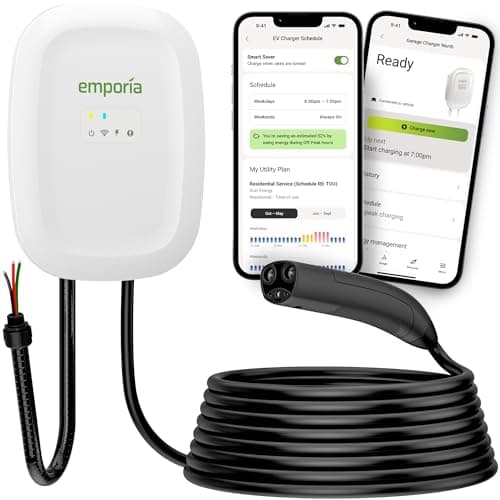
  • Emporia Emporia NACS (48A)
    01 Emporia NACS (48A)
    8.8

    The energy-monitoring charger with a Tesla-style plug: the same detailed consumption data Emporia is known for, now without an adapter hanging off the handle.

    Best for: Tracking what charging actually costs

    $479.00Amazon
  • Autel Autel MaxiCharger (40A)
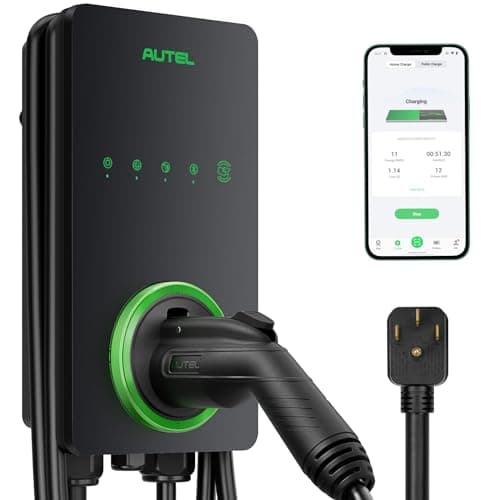
    02 Autel MaxiCharger (40A)
    8.6

    The everything-in-the-box option: Wi-Fi and Bluetooth both, a weather-rated shell, and a holster included so the install is tidy from day one.

    Best for: Feature-maximalists who want a clean install

    $357.19Amazon
  • EVIQO EVIQO NACS 40A (14-50)
    03 EVIQO NACS 40A (14-50)
    8.6

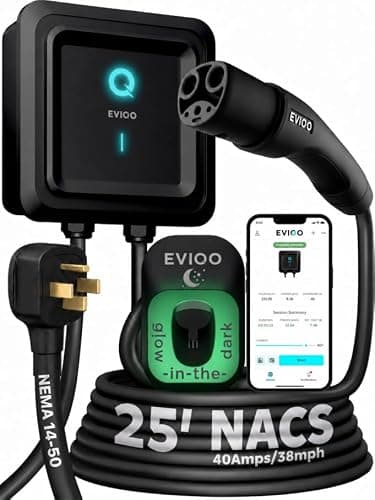
    The same certified EVIQO hardware on a NEMA 14-50 plug - no electrician, no hardwire, and it comes off the wall with you when you move.

    Best for: A NACS charger you can unplug

    $433.50Amazon
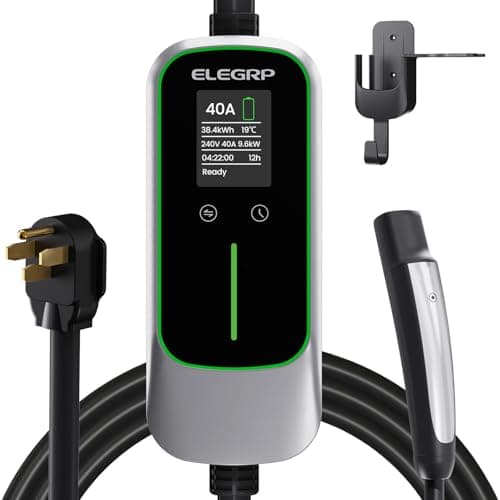
  • ELEGRP ELEGRP NACS 40A (14-50)
    04 ELEGRP NACS 40A (14-50)
    7.8

    The budget way into a native NACS plug: 40 amps, a listed safety certification and a 25-foot cable, with the app left out to hit the price.

    Best for: The cheapest certified NACS wall unit

    $249.99Amazon
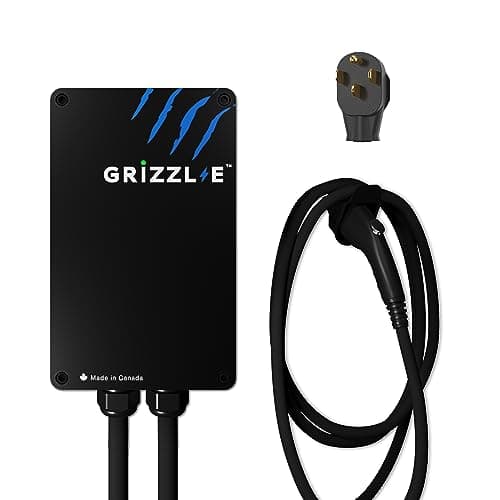
  • Grizzl-E Grizzl-E Classic (40A)
    05 Grizzl-E Classic (40A)
    8.0

    A UL-certified cast-aluminum box with no app to update and nothing in the cloud to fail — the durability default for people who want a charger, not a gadget.

    Best for: People who want a charger, not an app

    $299.99Amazon
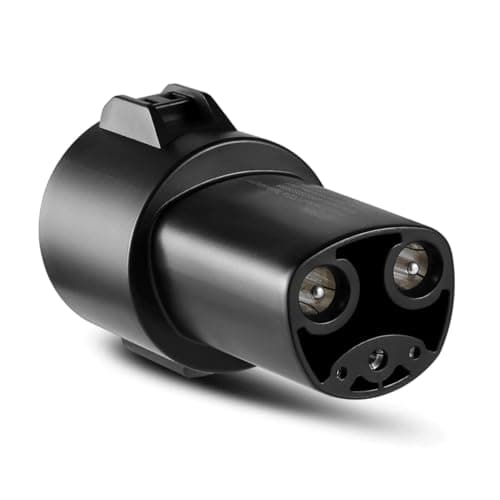
  • Lectron Lectron J1772 to NACS (80A)
    06 Lectron J1772 to NACS (80A)
    8.8

    Lectron's UL 2252 certified 80-amp adapter, with a built-in temperature sensor and auto-shutoff — the brand-name safe pick for a Tesla on J1772 chargers.

    Best for: A Tesla's everyday adapter

    $42.49Amazon

#ad · Live prices from the Amazon Product API, as of November 19, 2026. Where we have no verified live price, we show none — we would rather leave a gap than print a number that has gone stale.

If you have a 2026 Lexus RZ, buy a 48-amp native-NACS charger - the Emporia NACS is our top pick, because the 2026 car accepts 11 kW and has a NACS port, so this is the shortest path to full speed with no adapter. If your RZ is a 2023 to 2025 car, a 40-amp J1772 unit is already more than it can use, and the Autel MaxiCharger is the one we would buy. Our budget pick is the ELEGRP NACS 40A, the cheapest ETL-listed native-NACS unit in our registry. Lexus changed two things at once in the 2026 model year, and both of them change the charger.

What Lexus changed, in its own words

The Lexus pressroom release for the 2026 RZ says the car gets "a higher capacity 11-kW on-board AC charger (up from 7-kW capacity on the prior model year)" and that "the 2026 RZ adopts the North American Charging System (NACS) charging port (SAE J3400) on the passenger's side of the vehicle." Both sentences matter. The first roughly doubles the useful ceiling of a home charger. The second changes the plug on the end of the cable.

For the earlier car the figures are less tidy and we will not pretend otherwise: the independent EV Database listing for the 2023-2025 RZ 450e shows a 6.6 kW standard onboard charger with an 11 kW unit offered as an option, while Lexus's own 2026 release describes the prior year simply as 7 kW. Call it 6.6 to 7 kW unless your own window sticker says otherwise - either way it is a 32-amp car, not a 48-amp one.

Your RZAC ceilingPortCharger that matches
2026 RZ 350e / 450e / 550e11 kWNACS (J3400)48A native NACS, hardwired
2023-2025 RZ 450eAbout 6.6-7 kWJ177232A or 40A J1772, plug-in
2026 car, existing 14-50 outlet9.6 kW deliveredNACS (J3400)40A native NACS, plug-in

Read the third row twice if you already have a 14-50 outlet. A plug-in charger on a 50-amp circuit is capped at 40 amps by the NEC, which is 9.6 kW - so you would be giving up about 1.4 kW of the 2026 car's 11 kW ceiling in exchange for not hiring an electrician. For most people that trade is worth making; hardwired vs plug-in is the argument in full.

Do not overbuy for the older RZ

This is the part of the page worth money. A 2023-2025 RZ with the standard onboard charger cannot use more than about 32 amps, and the J1772 control pilot means the car simply draws what it draws regardless of what the charger offers. A 48-amp unit, a 60-amp circuit and the electrician's invoice buy you nothing on that car. A 40-amp charger on an existing 14-50 already has headroom to spare, and our 32-amp page covers the tier that genuinely matches it. The one argument for buying bigger is the next car - should I upgrade to 48 amps is where we make that case honestly.

The connector decision, and the cheap way out of it

A 2026 RZ with a NACS port and a J1772 charger on the wall is not a problem - it is a fifty-dollar adapter. The Lectron J1772-to-NACS adapter on this page is published at 80 amps and UL 2252 certified, which is far more than the car will ever ask for, and it means a household with one NACS car and one J1772 car can run a single J1772 charger. Our J1772-to-NACS adapter roundup ranks that class, and the Toyota and Subaru adapter page covers the rest of the group's transition. If the RZ is the only EV you own, skip the adapter and buy native NACS.

How we ranked these

  1. Does it match the car's real ceiling? 11 kW for the 2026 car, about 7 kW for the one before it. Overbuying is the default mistake here, so we call it out per pick.
  2. Native NACS where it helps. Four of these six are native NACS or an adapter, because the 2026 car is the one most people shopping now are driving.
  3. A real safety listing. UL or ETL to UL 2594 from an OSHA-recognized lab.
  4. Plug-in versus hardwired. The RZ is a car people lease. A charger you can unplug and take with you is worth something on a three-year horizon.
  5. Cable length.The 2026 RZ's port is on the passenger side, which changes where the cable has to reach from. Every unit here carries 24 feet or more.

In detail

The picks, in full

01
Emporia Emporia NACS (48A)

Tracking what charging actually costs

Emporia NACS (48A)

Up to 48A / 11.5kWNative NACS (J3400)24ft cable, hardwiredUL listed + Energy Star
8.8/10

The energy-monitoring charger with a Tesla-style plug: the same detailed consumption data Emporia is known for, now without an adapter hanging off the handle.

Charge speed
10
Build & weather
8
Smart features
9
Cable & connector
8
Value
9

Pros

  • Native NACS with the charge-port-door button, and Emporia's app gives the most detailed real-time energy and cost data of any pick here
  • UL listed and Energy Star certified, with the listing naming UL 2594, UL 2231, UL 2251, UL 817 and UL 991 alongside NEC 625 - a full set of listings, not a single mark
  • Ships preconfigured for a hardwired install with the whip attached, on a 24-foot cable

Cons

  • This SKU is hardwired only, so an electrician and a 60-amp circuit are part of the cost
  • The Wi-Fi app is the reason to buy it; on a flat electricity rate you are paying for monitoring you may rarely open

Don't buy this if…

…you want to unplug the charger and take it with you when you move. This is a wired-in fixture - the plug-in EVIQO 40A NACS travels, this does not.

$479.00View on Amazon

Price as of November 19, 2026. Prices change — Amazon's is the one that counts.

#ad · we may earn a commission from this link to Emporia NACS (48A)

02
Autel Autel MaxiCharger (40A)

Feature-maximalists who want a clean install

Autel MaxiCharger (40A)

40A / 9.6kWJ177225ft cable + holsterWi-Fi + Bluetooth
8.6/10

The everything-in-the-box option: Wi-Fi and Bluetooth both, a weather-rated shell, and a holster included so the install is tidy from day one.

Charge speed
8
Build & weather
9
Smart features
9
Cable & connector
9
Value
8

Pros

  • Comes with an in-body holster, so you get proper cable management out of the box instead of buying it later
  • Both Wi-Fi and Bluetooth — app control still works when garage Wi-Fi is weak, which it usually is
  • Weather-rated enclosure for indoor or outdoor mounting

Cons

  • 40-amp ceiling, so it is not the fastest choice if your panel could support a 48A circuit
  • The feature set is more than a set-and-forget overnight charger buyer actually needs

Don't buy this if…

…your panel can support a 48-amp circuit and raw speed is the goal. The 48A Emporia or Wallbox adds range faster; the Autel's edge is breadth and the in-box holster, not top speed.

$357.19View on Amazon

$446.5020% off

Price as of November 19, 2026. Prices change — Amazon's is the one that counts.

#ad · we may earn a commission from this link to Autel MaxiCharger (40A)

03
EVIQO EVIQO NACS 40A (14-50)

A NACS charger you can unplug

EVIQO NACS 40A (14-50)

40A / 9.6kWNative NACS (J3400)NEMA 14-50 plug, 25ftUL & ETL, IP66 / NEMA-4
8.6/10

The same certified EVIQO hardware on a NEMA 14-50 plug - no electrician, no hardwire, and it comes off the wall with you when you move.

Charge speed
8
Build & weather
9
Smart features
8
Cable & connector
9
Value
9

Pros

  • Plugs into an existing NEMA 14-50 outlet on a 50-amp circuit, so there is no hardwiring and no permanent fixture
  • Carries the same UL/ETL certification and IP66 / NEMA-4 shell as the 48-amp EVIQO, with app scheduling and 6-40A current control
  • 25-foot cable, a side reset button for clearing faults, and a 3-year warranty with US-based support

Cons

  • 40 amps is the plug-in ceiling - if your car and panel can both take 48, this leaves speed on the table
  • Needs a proper EV-rated 4-prong NEMA 14-50 receptacle; a dryer outlet is a different plug on a different circuit

Don't buy this if…

…your car accepts the full 48 amps and your panel can carry a 60-amp circuit. You would be capping a fast car at 9.6 kW to avoid an electrician.

$433.50View on Amazon

$510.9915% off

Price as of November 19, 2026. Prices change — Amazon's is the one that counts.

#ad · we may earn a commission from this link to EVIQO NACS 40A (14-50)

04
ELEGRP ELEGRP NACS 40A (14-50)

The cheapest certified NACS wall unit

ELEGRP NACS 40A (14-50)

40A / 9.6kWNative NACS (J3400)NEMA 14-50 plug, 25ftETL listed, IP67
7.8/10

The budget way into a native NACS plug: 40 amps, a listed safety certification and a 25-foot cable, with the app left out to hit the price.

Charge speed
8
Build & weather
8
Smart features
4
Cable & connector
9
Value
10

Pros

  • By far the cheapest native-NACS wall charger here, and its listing still claims ETL and UL certification that the no-name Tesla-plug boxes do not
  • Five selectable current settings and a delay timer put off-peak charging on the box itself, with no app or Wi-Fi to set up
  • 25-foot cable, an IP67 rating, and temperature, surge and leakage protection per the listing

Cons

  • No app, no Wi-Fi and no energy monitoring - scheduling means pressing buttons on the control box
  • A newer brand with a thin track record next to ChargePoint or Emporia, and the certification claim is the listing's own

Don't buy this if…

…you want energy tracking, remote start/stop or utility-rate automation. This is a manual charger; the Emporia or the EVIQO buy you the software.

$249.99View on Amazon

Price as of November 19, 2026. Prices change — Amazon's is the one that counts.

#ad · we may earn a commission from this link to ELEGRP NACS 40A (14-50)

05
Grizzl-E Grizzl-E Classic (40A)

People who want a charger, not an app

Grizzl-E Classic (40A)

40A / 9.6kWJ1772NEMA 14-50 plugUL certified
8.0/10

A UL-certified cast-aluminum box with no app to update and nothing in the cloud to fail — the durability default for people who want a charger, not a gadget.

Charge speed
8
Build & weather
10
Smart features
5
Cable & connector
8
Value
9

Pros

  • Cast-aluminum enclosure rated for indoor and outdoor use — genuinely built to outlast plastic-bodied rivals
  • UL certified, which plenty of budget chargers on Amazon cannot claim
  • No mandatory app or Wi-Fi: it charges the day it arrives and keeps working if a server goes dark

Cons

  • No scheduling or energy monitoring — if you want off-peak automation or load sharing, look elsewhere
  • The stock cable stiffens in the cold, a recurring owner note in northern climates

Don't buy this if…

…you want app scheduling, energy tracking, or load sharing between two cars. The Grizzl-E is deliberately dumb, and if smart features are the point for you, the Emporia is the better buy.

$299.99View on Amazon

$399.0025% off

Price as of November 19, 2026. Prices change — Amazon's is the one that counts.

#ad · we may earn a commission from this link to Grizzl-E Classic (40A)

06
Lectron Lectron J1772 to NACS (80A)

A Tesla's everyday adapter

Lectron J1772 to NACS (80A)

80A / 19.2kWJ1772 to NACSUL 2252 certifiedIP67 / IP44
8.8/10

Lectron's UL 2252 certified 80-amp adapter, with a built-in temperature sensor and auto-shutoff — the brand-name safe pick for a Tesla on J1772 chargers.

Safety listing
10
Build & weather
9
Compatibility
9
Value
7

Pros

  • UL 2252 certified as part of Lectron's whole adapter lineup, not a one-off claim on a single listing
  • Built-in temperature sensor with auto-shutoff — the failure mode that matters on an adapter is heat, and this one watches for it
  • Manufacturer states IP67 / IP44 weather protection and a -22F to 122F operating range

Cons

  • Costs noticeably more than the commodity J1772-to-NACS adapters that do the same job at the same current
  • AC only, like every passive adapter

Don't buy this if…

…you just want a cheap spare to live in the frunk. The LENZ and FOCSPROD are listed, adequate and half the price.

$42.49View on Amazon

$49.9915% off

Price as of November 19, 2026. Prices change — Amazon's is the one that counts.

#ad · we may earn a commission from this link to Lectron J1772 to NACS (80A)

Before you buy: three checks

  1. Model year first, then the port. 2026 means 11 kW and NACS. Earlier means about 7 kW and J1772. Everything on this page follows from that one line on the window sticker.
  2. Which side the car parks on. Lexus moved the 2026 port to the passenger side. Measure the cable run on the route it will actually take - the cable length guide exists because this is the most common post-purchase regret in the category.
  3. Whether you are leasing. If the car goes back in three years, a plug-in charger that comes with you is worth more than 1.4 kW you will rarely notice.

What we will not tell you

We have not driven or metered an RZ. The 11 kW figure, the 7 kW prior-year figure and the NACS port are quoted from the Lexus pressroom release for the 2026 car; the 6.6 kW standard and 11 kW optional figures for the 2023-2025 car come from an independent specification database and are labeled as such, because we could not find a Lexus-published US spec table that states the earlier onboard charger directly. Where the two disagree we give you both numbers rather than picking one. Prices are live and carry the date they were checked.
How we picked

We do not run a testing lab

We compiled published specifications from manufacturer manuals and spec sheets, verified the safety listings (UL / ETL), computed the real running and installation costs, checked the wiring math against the NEC continuous-load rule, and read aggregated owner reviews — then scored each product against a published rubric. The scores are judgments from documented research — they are not bench measurements, because we do not have a test lab and we are not going to pretend we do. Every spec and cost figure is cited in Sources.

Questions

Frequently asked

What charger does a Lexus RZ need?

A 2026 RZ accepts 11 kW through a NACS port, so a 48-amp native-NACS charger on a 60-amp circuit is the match. A 2023-2025 RZ accepts around 6.6 to 7 kW through a J1772 port, where a 32-amp or 40-amp J1772 charger is already more than enough.

Does the Lexus RZ have a NACS port?

The 2026 RZ does - Lexus states it "adopts the North American Charging System (NACS) charging port (SAE J3400) on the passenger's side of the vehicle." Earlier RZ model years use J1772 for AC charging, which every standard home charger fits.

Can I use a J1772 charger on a 2026 Lexus RZ?

Yes, with a J1772-to-NACS adapter - the cheapest pick on this page. The adapter is a listed part rated well above anything the car asks for, and it is the right answer if there is also a J1772 car in the household.

Is a 48-amp charger overkill for a Lexus RZ?

For a 2023-2025 car, yes - it cannot draw more than about 32 amps, so the extra amperage and the 60-amp circuit buy nothing. For the 2026 car at 11 kW, a 48-amp charger is the correct size rather than overkill.

How long does it take to charge a Lexus RZ at home?

With a 74.69 kWh battery and an 11 kW onboard charger, the 2026 car takes most of a night from low to full on a 48-amp circuit, and comfortably more than a night at Level 1. Lexus publishes a DC figure of 10 to 80 percent in around 30 minutes under ideal conditions, but that is fast charging, not home charging. Our home charging time guide does the arithmetic.

Do I need a Lexus-branded home charger?

No. An RZ charges from any J1772 or NACS charger that carries a real safety listing, and nothing about a branded unit charges faster. What matters is the amperage, the connector and the listing - see how to choose an EV charger.

Keep reading

More in this section

More Home EV Chargers

All home ev chargers →

Receipts

Sources

We do not run a testing lab, and we do not pretend to. Where a measured number came from someone else's lab, we name them and link them. Where we could not verify something, we say so on the page rather than quietly leaving it out. Read our full method.