Skip to content
The Charge Curve

HUB 01 · Home EV Chargers

The Best EV Chargers Under $300

This is the band where a listed, weatherproof 40-amp charger becomes possible and an app mostly does not. Here are six that spend the money on the parts that matter.

By Stephen V.Updated How we compare
#ad

We earn a commission when you buy through our Amazon links, at no extra cost to you. It never affects our rankings, and we say so when the cheaper product is the better buy. How this works.

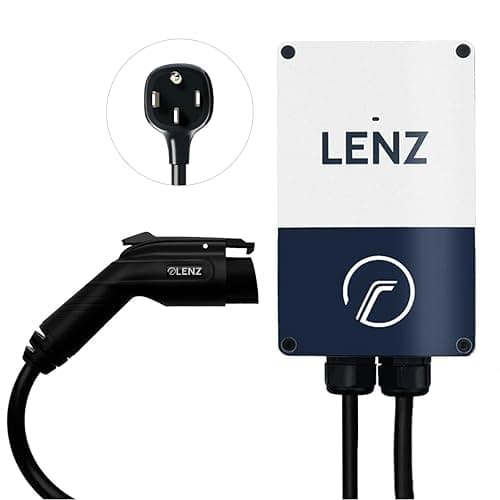
LENZ LENZ Level 2 (40A)

Our top pick

Best Under $300

LENZ Level 2 (40A)

7.4/10
$298.99Check Price

In stock at Amazon as of November 19, 2026.

#ad · we may earn a commission

Best for: A simple, inexpensive plug-in wall charger

A no-frills, ETL-listed plug-in wall charger in a weatherproof NEMA 4X shell, at about the lowest price of any listed 40-amp unit — the simple pick when you don't want to pay for software you'll never open.

Read the full review ↓Compare all 6 picks ↓

The short answer

Quick picks

  • LENZ LENZ Level 2 (40A)
    01 LENZ Level 2 (40A)
    7.4

    A no-frills, ETL-listed plug-in wall charger in a weatherproof NEMA 4X shell, at about the lowest price of any listed 40-amp unit — the simple pick when you don't want to pay for software you'll never open.

    Best for: A simple, inexpensive plug-in wall charger

    $298.99Amazon
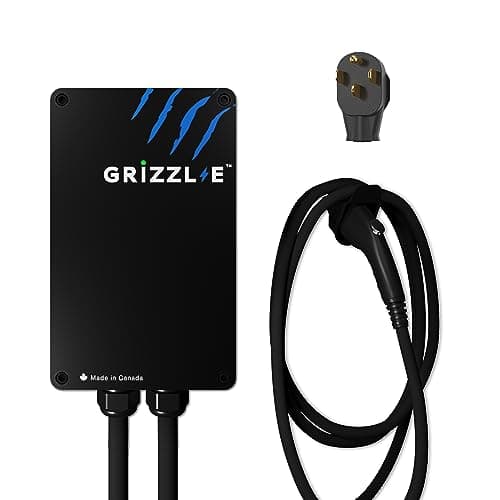
  • Grizzl-E Grizzl-E Classic (40A)
    02 Grizzl-E Classic (40A)
    8.0

    A UL-certified cast-aluminum box with no app to update and nothing in the cloud to fail — the durability default for people who want a charger, not a gadget.

    Best for: People who want a charger, not an app

    $299.99Amazon
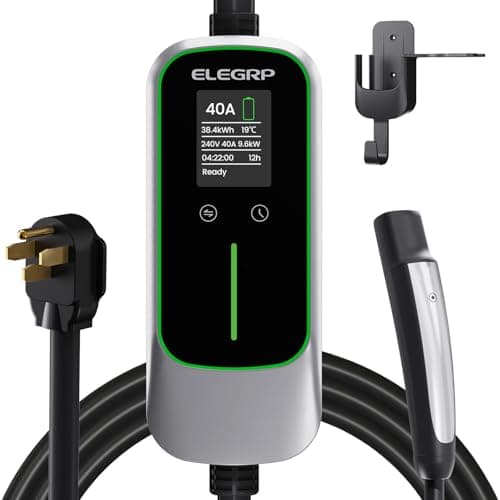
  • ELEGRP ELEGRP NACS 40A (14-50)
    03 ELEGRP NACS 40A (14-50)
    7.8

    The budget way into a native NACS plug: 40 amps, a listed safety certification and a 25-foot cable, with the app left out to hit the price.

    Best for: The cheapest certified NACS wall unit

    $249.99Amazon
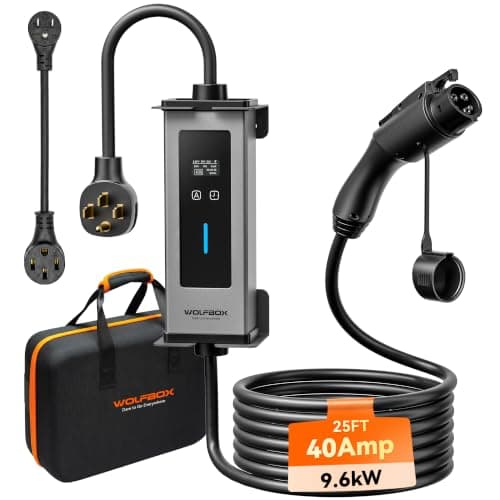
  • WOLFBOX WOLFBOX 40A Portable (Level 1/2)
    04 WOLFBOX 40A Portable (Level 1/2)
    8.6

    A dual-level portable that doubles as a wall box — 40 amps on a NEMA 14-50, or Level 1 on a standard outlet with the included adapters. One weatherproof charger for the garage and the road.

    Best for: One charger for home and travel

    $254.99Amazon
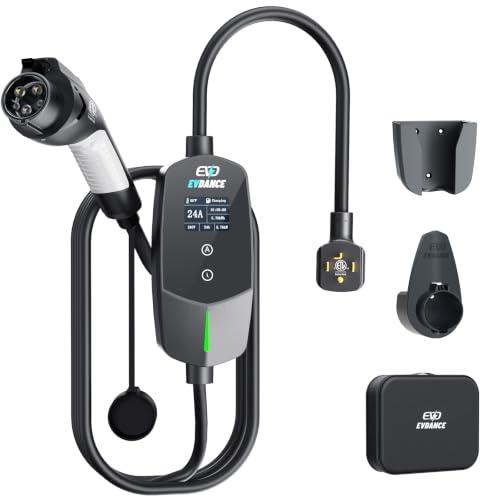
  • EVDANCE EVDANCE 24A NEMA 14-30 (J1772)
    05 EVDANCE 24A NEMA 14-30 (J1772)
    7.6

    Built for the dryer outlet rather than adapted to it: a 14-30 plug on the cord and a 24-amp ceiling, so even its highest setting stays inside what a 30-amp circuit may carry continuously.

    Best for: Most J1772 cars on a dryer outlet

    $215.99Amazon
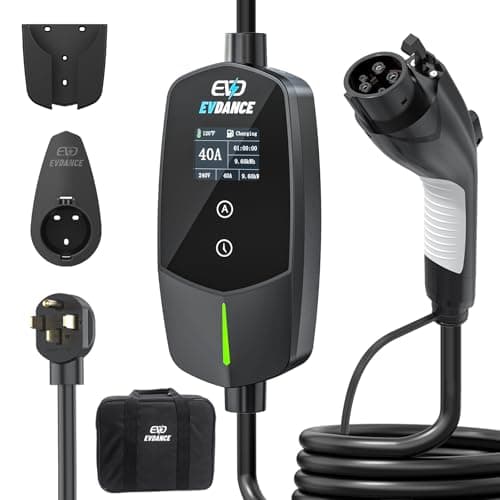
  • EVDANCE EVDANCE 40A Portable
    06 EVDANCE 40A Portable
    8.2

    A 40-amp portable with adjustable current and a built-in delay timer on a long 25-foot cable — off-peak charging without needing an app.

    Best for: Off-peak charging without an app

    $199.98Amazon

#ad · Live prices from the Amazon Product API, as of November 19, 2026. Where we have no verified live price, we show none — we would rather leave a gap than print a number that has gone stale.

The best EV charger under $300 for most people is the LENZ Level 2: a full 40 amps, an ETL listing against UL 2594, a metal NEMA 4X enclosure and a 24-foot cable, on a plug-in NEMA 14-50 install that does not need an electrician if a rated outlet already exists. If your charger lives on an exposed wall, the Grizzl-E Classic spends the same money on a cast-aluminum Type 4 box instead. If you drive a Tesla or another NACS-port car, the ELEGRP NACS 40A is the cheapest certified way to get the right plug. And our budget pick is the EVDANCE 40A Portable, the least you can spend and still be charging at 240 volts.

Three hundred dollars is a more interesting ceiling than it looks, because it is the line where home charging changes character. Below it, almost everything is a 120-volt Level 1 cord - useful, genuinely enough for a lot of drivers, and the subject of our chargers under $200 page. At $300 you can have the real thing: a 240-volt, 40-amp, third-party-listed Level 2 charger in a weather-rated enclosure. What you cannot have at this price is 48 amps, and what you almost certainly will not have is an app. This page is about spending the $300 on the parts that change your charging rather than the parts that change the marketing.

What $300 buys, and what it does not

The US Department of Energy's own guidance puts the difference plainly: Level 1, on an ordinary 120-volt outlet, adds roughly 3 to 5 miles of range per hour, while Level 2 on a 240-volt circuit adds roughly 20 to 25. That is the step this band buys, and it is a bigger jump than anything you get by spending the next $300. Here is the honest ledger for the money:

Under $300 you can haveYou will not have
40 amps / 9.6 kW, the usable ceiling on a 50-amp circuit48 amps / 11.5 kW - that needs a 60-amp circuit and more money
A genuine ETL, UL or cUL listing against UL 2594Load balancing between two chargers on one circuit
A metal or IP67-rated enclosure for outdoor mountingEnergy monitoring and cost reporting (one pick has a timer instead)
24 to 25 feet of cable, enough to reach the far side of a carWi-Fi, an account, utility-rate automation or OTA firmware
A native NACS plug, if that is what your car hasA dual-connector unit for two cars

If any item in the right-hand column is a requirement rather than a nice-to-have, stop here and read best chargers under $500 instead - that is where the 48-amp, app-driven field starts, and it is a genuinely different shopping list. If none of them is a requirement, you are about to save a few hundred dollars for no loss of charging speed at all.

Why 40 amps is the ceiling here, and why that is usually fine

Under NEC Article 625 a charger counts as a continuous load, so the circuit is sized at 125 percent of the charger - the plain-English version being that the charger may draw no more than 80 percent of the breaker. A 40-amp charger therefore needs a 50-amp circuit, which is exactly what a NEMA 14-50 outlet is, and delivers 9.6 kW. Anything above 40 amps is hardwired by code and wants a 60-amp circuit, and that step - the circuit, not the box - is the real cost of 48-amp charging.

The part that makes this band a bargain rather than a compromise is what cars actually accept. Tesla publishes 11.5 kW / 48 amps for most of its trims and 7.7 kW / 32 amps for its rear-wheel-drive ones; plenty of mainstream EVs sit at 7.2 or 9.6 kW. On any car whose onboard charger tops out at 32 or 40 amps, every charger on this page charges it at precisely the same speed as a unit costing three times as much, because the car draws what it can use and no more. Look up your own number first - what amp charger do I need is the five-minute version, and 40 amp vs 48 amp is the argument in full.

One more piece of arithmetic worth having before you buy. At 9.6 kW a charger returns roughly 30 to 35 miles of range per hour on a typical efficiency, so an overnight eight-hour window is well over 200 miles. The average US driver does nowhere near that in a day. Speed above 40 amps buys you a shorter plug-in window, not more miles, and almost nobody is standing in the garage waiting.

How we picked these six

  1. A live price under the cap. Every pick returned a live price below $300 from the Amazon Product Advertising API on the refresh behind this page. No pick is here on a remembered number or a list price.
  2. 240 volts, and a real safety listing. ETL, UL or cUL against UL 2594, named per pick. At this price the listing is the main thing separating a charger from a box of unknown provenance, and it is non-negotiable.
  3. A published enclosure rating. NEMA 4X, Type 4 or IP66/IP67 from the manufacturer. A charger lives outdoors or in an unheated garage for a decade.
  4. One pick per job. Cheapest listed wall unit, toughest enclosure, native NACS, home-and-travel portable, dryer outlet, and absolute cheapest route into 240 volts. We left three further qualifying units off rather than rank two products for one job.
  5. Cable length. Every wall pick here ships at least 24 feet. Cable regret is the most common thing owners tell us they would change.

Which one is yours

Your situationPickWhy
You have, or can get, a NEMA 14-50 outletLENZ Level 2Listed 40A plug-in, metal shell, lowest price of the listed wall units
Exposed outdoor wall or unheated detached garageGrizzl-E ClassicCast-aluminum UL Type 4 enclosure, UL and cUL certified
Tesla, or any other native-NACS carELEGRP NACS 40AThe cheapest certified native-NACS wall unit, no adapter needed
One charger for the garage and the trunkWOLFBOX 40A PortableLevel 2 on a 14-50, Level 1 on a household outlet, wall-mountable
The only 240V outlet in the house is the dryer'sEVDANCE 24A NEMA 14-30Built for a 30-amp circuit, so its top setting is already legal
You want the least you can spend on Level 2EVDANCE 40A PortableBudget pick: 40A with a delay timer, no app to pay for

The dryer-outlet row deserves a note, because it is the cheapest honest upgrade in home charging and the one most people do not know about. If your laundry room has a NEMA 14-30, you already have a 240-volt circuit - and a charger built for it, capped at 24 amps, stays inside what a 30-amp circuit may carry continuously without you having to remember a setting. Our chargers for a NEMA 14-30 dryer outlet page is the full field, and sharing a dryer circuit covers doing it safely.

The install cost nobody prices in

A $300 charger on a $1,500 circuit is a $1,800 project, and that is the number that actually matters. Four of these six plug into a NEMA 14-50 - a 50-amp receptacle of the kind Leviton sells specifically rated for EV charging duty - which means that if you already have one, installation is a five-minute job you can do yourself in most jurisdictions. If you do not, get the quote before you choose the charger, because the circuit will cost more than anything on this page. The dryer-outlet pick exists precisely to avoid that quote, and the two portables can run at Level 1 from an ordinary outlet on the days a 240-volt circuit is not ready yet.

Every price shown above is live, read from Amazon's Product Advertising API and stamped with the date our price layer last checked it. Nothing on this page is a price typed into prose, because a number typed into a sentence is wrong by the following week - and in a price-band roundup, a stale number is not a small error, it is the whole page being wrong.

In detail

The picks, in full

01
LENZ LENZ Level 2 (40A)

A simple, inexpensive plug-in wall charger

LENZ Level 2 (40A)

40A / 9.6kWJ1772NEMA 14-50 plugETL, NEMA 4X
7.4/10

A no-frills, ETL-listed plug-in wall charger in a weatherproof NEMA 4X shell, at about the lowest price of any listed 40-amp unit — the simple pick when you don't want to pay for software you'll never open.

Charge speed
8
Build & weather
9
Smart features
4
Cable & connector
8
Value
8

Pros

  • ETL listed to UL 2594 — a genuine third-party safety listing that plenty of bargain boxes skip
  • Plug-in NEMA 14-50 install with a 24-foot cable and an included wall holster — no electrician needed if a rated outlet exists
  • A weatherproof NEMA 4X / IP67 metal enclosure and no app or cloud to fail: plug-and-charge at about the lowest price of any listed 40-amp wall unit

Cons

  • No app, scheduling, or energy monitoring — if you want off-peak automation, look elsewhere
  • 40-amp ceiling

Don't buy this if…

…you want energy monitoring or off-peak scheduling. For a little more the Emporia or EVIQO adds real smart features — the LENZ's whole appeal is a listed, weatherproof box at the lowest price.

$298.99View on Amazon

Price as of November 19, 2026. Prices change — Amazon's is the one that counts.

#ad · we may earn a commission from this link to LENZ Level 2 (40A)

02
Grizzl-E Grizzl-E Classic (40A)

People who want a charger, not an app

Grizzl-E Classic (40A)

40A / 9.6kWJ1772NEMA 14-50 plugUL certified
8.0/10

A UL-certified cast-aluminum box with no app to update and nothing in the cloud to fail — the durability default for people who want a charger, not a gadget.

Charge speed
8
Build & weather
10
Smart features
5
Cable & connector
8
Value
9

Pros

  • Cast-aluminum enclosure rated for indoor and outdoor use — genuinely built to outlast plastic-bodied rivals
  • UL certified, which plenty of budget chargers on Amazon cannot claim
  • No mandatory app or Wi-Fi: it charges the day it arrives and keeps working if a server goes dark

Cons

  • No scheduling or energy monitoring — if you want off-peak automation or load sharing, look elsewhere
  • The stock cable stiffens in the cold, a recurring owner note in northern climates

Don't buy this if…

…you want app scheduling, energy tracking, or load sharing between two cars. The Grizzl-E is deliberately dumb, and if smart features are the point for you, the Emporia is the better buy.

$299.99View on Amazon

$399.0025% off

Price as of November 19, 2026. Prices change — Amazon's is the one that counts.

#ad · we may earn a commission from this link to Grizzl-E Classic (40A)

03
ELEGRP ELEGRP NACS 40A (14-50)

The cheapest certified NACS wall unit

ELEGRP NACS 40A (14-50)

40A / 9.6kWNative NACS (J3400)NEMA 14-50 plug, 25ftETL listed, IP67
7.8/10

The budget way into a native NACS plug: 40 amps, a listed safety certification and a 25-foot cable, with the app left out to hit the price.

Charge speed
8
Build & weather
8
Smart features
4
Cable & connector
9
Value
10

Pros

  • By far the cheapest native-NACS wall charger here, and its listing still claims ETL and UL certification that the no-name Tesla-plug boxes do not
  • Five selectable current settings and a delay timer put off-peak charging on the box itself, with no app or Wi-Fi to set up
  • 25-foot cable, an IP67 rating, and temperature, surge and leakage protection per the listing

Cons

  • No app, no Wi-Fi and no energy monitoring - scheduling means pressing buttons on the control box
  • A newer brand with a thin track record next to ChargePoint or Emporia, and the certification claim is the listing's own

Don't buy this if…

…you want energy tracking, remote start/stop or utility-rate automation. This is a manual charger; the Emporia or the EVIQO buy you the software.

$249.99View on Amazon

Price as of November 19, 2026. Prices change — Amazon's is the one that counts.

#ad · we may earn a commission from this link to ELEGRP NACS 40A (14-50)

04
WOLFBOX WOLFBOX 40A Portable (Level 1/2)

One charger for home and travel

WOLFBOX 40A Portable (Level 1/2)

6A-40AJ1772NEMA 14-50 + 5-15Level 1/2
8.6/10

A dual-level portable that doubles as a wall box — 40 amps on a NEMA 14-50, or Level 1 on a standard outlet with the included adapters. One weatherproof charger for the garage and the road.

Charge speed
8
Portability
9
Build & weather
9
Cable & connector
8
Value
9

Pros

  • Charges Level 2 at up to 40 amps on a NEMA 14-50 and drops to Level 1 on a standard 120-volt outlet with the included 5-15 and 6-20 adapters — one charger for home and the road
  • Adjustable from 6 to 40 amps with a 1-12 hour delay timer for off-peak charging, no app required
  • Mounts on a wall as a 2-in-1 station or packs into a trunk, in a rugged ETL-listed, IP66 aluminum body with a 25-foot cable

Cons

  • A portable lives on a hook, a wall bracket, or the floor rather than being permanently wired in
  • A 40-amp draw needs a properly rated 14-50 outlet — don't run it flat-out on a worn receptacle

Don't buy this if…

…you want a permanent, tidy hardwired install and never move the charger. A hardwired unit like the Wallbox looks cleaner and stays put.

$254.99View on Amazon

$299.9915% off

Price as of November 19, 2026. Prices change — Amazon's is the one that counts.

#ad · we may earn a commission from this link to WOLFBOX 40A Portable (Level 1/2)

05
EVDANCE EVDANCE 24A NEMA 14-30 (J1772)

Most J1772 cars on a dryer outlet

EVDANCE 24A NEMA 14-30 (J1772)

24A max / 5.76kWJ1772NEMA 14-30 plug25ft, delay timer
7.6/10

Built for the dryer outlet rather than adapted to it: a 14-30 plug on the cord and a 24-amp ceiling, so even its highest setting stays inside what a 30-amp circuit may carry continuously.

Charge speed
6
Build & weather
8
Smart features
6
Cable & connector
9
Value
9

Pros

  • Tops out at 24 amps - the continuous limit of a 30-amp circuit - so there is no higher setting to get wrong
  • Adjustable from 10 to 24 amps for older or doubtful wiring, and a 1-12 hour delay start shifts charging to off-peak hours without an app
  • EVDANCE's product page lists it as ETL Listed to UL 2594 / UL 2251, with an IP66 control box rated from -22 to 122 degrees F
  • 25 feet of total cable reaches from a laundry-room outlet to a parking spot

Cons

  • 24 amps is its ceiling for good - if you later add a 50-amp circuit, this charger cannot use the extra capacity
  • No Wi-Fi app or charging history - the on-screen readout is the whole of the monitoring
  • 1-year warranty, and the plug end is not waterproof; the listing says to keep the connector capped when idle

Don't buy this if…

…you drive a Tesla or another NACS-port car (the NACS version is the one to buy), or you expect to add a 50-amp circuit soon - then a 40-amp charger you can dial down today, like the Grizzl-E Mini, is the better long-term buy.

$215.99View on Amazon

$269.9920% off

Price as of November 19, 2026. Prices change — Amazon's is the one that counts.

#ad · we may earn a commission from this link to EVDANCE 24A NEMA 14-30 (J1772)

06
EVDANCE EVDANCE 40A Portable

Off-peak charging without an app

EVDANCE 40A Portable

40A / 9.6kWJ1772NEMA 14-50 plug25ft, timer
8.2/10

A 40-amp portable with adjustable current and a built-in delay timer on a long 25-foot cable — off-peak charging without needing an app.

Charge speed
8
Portability
9
Build & weather
7
Cable & connector
8
Value
9

Pros

  • A delay timer lets you start on cheaper overnight rates with no app or smart wiring
  • Adjustable current adapts it to different circuits
  • Long 25-foot cable

Cons

  • No smart-app monitoring — the timer is the whole of the scheduling
  • Value brand with a shorter track record

Don't buy this if…

…you want full energy monitoring and remote control. This is a capable manual charger; for app-based tracking a wall unit like the Emporia is the one to buy.

$199.98View on Amazon

Price as of November 19, 2026. Prices change — Amazon's is the one that counts.

#ad · we may earn a commission from this link to EVDANCE 40A Portable

Four checks before you buy at this price

  1. Is there a listing, and whose? Look for ETL, UL or cUL against UL 2594 from an OSHA-recognized laboratory. Some budget listings claim a certification in the product copy rather than publishing a file number; we say which per pick, and we treat a listing claim as a claim.
  2. What is on the end of the cable? A J1772 plug fits most non-Tesla cars directly and a NACS car with a small adapter; a native NACS plug is the reverse. Get this wrong and the charger works, but with a dongle in the loop every night. See do I need an adapter.
  3. What outlet do you actually have? A 14-50 is 50 amps and supports 40-amp charging. A 14-30 dryer outlet is 30 amps and supports 24. A 6-50 welder outlet is 50 amps with no neutral. Matching the plug to the outlet is cheaper than any adapter - 14-50 chargers and 6-50 chargers cover the other two cases.
  4. How far is the car from the wall? Measure to the charge port on the side of the car it is actually on, around the vehicle rather than through it. Everything here ships 24 feet or more, which is why we did not rank the shorter-cable units that also qualified on price.

Where a charger at this price is the wrong choice

Three cases, and we would say so plainly. If your car accepts 11.5 kW and you charge on a tight schedule - a long commute, or two cars sharing one window - the 48-amp field is worth the money, and best 48-amp chargers is the page. If you are on a time-of-use electricity rate and want charging shifted automatically rather than by a timer you set by hand, buy a scheduling charger instead - chargers with scheduling. And if two EVs share one circuit, a dual-port or load-balancing unit saves you the cost of a second circuit, which dwarfs the price difference.

What we have not done

We have not bench-tested any charger on this page and we do not have a lab. Every specification here is the manufacturer's own published figure from the live retail listing or product page - amperage, kW, connector, cable length, enclosure rating and certification - and the electrical arithmetic is the NEC's, sourced below. The scores on each pick are judgments from that documented research against the published rubric on our methodology page, not measurements. We make no claim about failure rates or long-term reliability for any product here, because at this end of the market we have no data that would support one.
How we picked

We do not run a testing lab

We compiled published specifications from manufacturer manuals and spec sheets, verified the safety listings (UL / ETL), computed the real running and installation costs, checked the wiring math against the NEC continuous-load rule, and read aggregated owner reviews — then scored each product against a published rubric. The scores are judgments from documented research — they are not bench measurements, because we do not have a test lab and we are not going to pretend we do. Every spec and cost figure is cited in Sources.

Questions

Frequently asked

Can you get a good Level 2 EV charger for under $300?

Yes. Under $300 you can have a 40-amp, 240-volt charger with a third-party safety listing against UL 2594, a weather-rated enclosure and a 24-foot cable. What you give up is 48-amp capability, energy monitoring and Wi-Fi - none of which makes your car charge faster if it accepts 40 amps or less.

What is the cheapest way to charge an EV at 240 volts?

A portable Level 2 unit plugged into an existing NEMA 14-50 or dryer outlet. The budget pick above is the least you can spend and still be charging at 240 volts, and because it is portable it travels with you. If no 240-volt outlet exists yet, the circuit will cost more than the charger.

Is a $300 charger as fast as a $600 one?

On most cars, yes. A $300 charger delivers 40 amps / 9.6 kW; a $600 one usually delivers 48 amps / 11.5 kW. The faster unit is only faster on a car whose onboard charger accepts more than 40 amps, and it also requires a 60-amp circuit and a hardwired install. Check your car's onboard AC rating before paying for the difference.

Do cheap EV chargers have safety certifications?

Some do and some do not, which is exactly why it is the first filter on this page. Every pick here publishes an ETL, UL or cUL listing against UL 2594. Where the certification is the retail listing's own claim rather than a published file number, we say so in that pick's entry.

Can I get a native NACS charger for under $300?

Yes - one. Since NACS was published as SAE J3400, manufacturers other than Tesla can ship the plug, and the cheapest certified example in our registry sits comfortably under the cap. It is a plug-in 40-amp unit with no app, which is how it hits the price.

Will a charger this cheap work with my dryer outlet?

Only if it has a 14-30 plug and a 24-amp ceiling, like the dryer-outlet pick above. Do not put a 40-amp charger on a 30-amp circuit with a plug adapter and trust yourself to remember the current setting - buy the charger built for the circuit instead.

Keep reading

More in this section

More Home EV Chargers

All home ev chargers →

Receipts

Sources

We do not run a testing lab, and we do not pretend to. Where a measured number came from someone else's lab, we name them and link them. Where we could not verify something, we say so on the page rather than quietly leaving it out. Read our full method.