Skip to content
The Charge Curve

HUB 01 · Home EV Chargers

The Best ENERGY STAR Certified EV Chargers

A charger spends most of its life doing nothing. The ENERGY STAR mark is about that idle time - and it is also the box a surprising number of utility rebate forms want ticked.

By Stephen V.Updated How we compare
#ad

We earn a commission when you buy through our Amazon links, at no extra cost to you. It never affects our rankings, and we say so when the cheaper product is the better buy. How this works.

ChargePoint ChargePoint Home Flex

Our top pick

Best ENERGY STAR Certified

ChargePoint Home Flex

8.2/10
$508.99Check Price

$657.9923% off

In stock at Amazon as of November 19, 2026.

#ad · we may earn a commission

Best for: Buyers who want the established brand + one app

The mature, well-supported pick — amperage you dial in up to 50A, wired into the biggest public-charging app in North America. You pay for the polish.

Read the full review ↓Compare all 6 picks ↓

The short answer

Quick picks

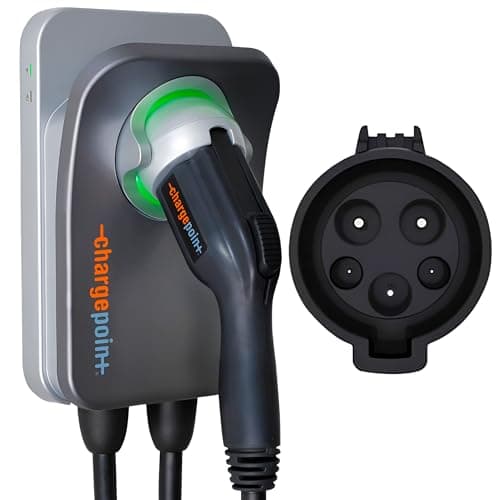
  • ChargePoint ChargePoint Home Flex
    01 ChargePoint Home Flex
    8.2

    The mature, well-supported pick — amperage you dial in up to 50A, wired into the biggest public-charging app in North America. You pay for the polish.

    Best for: Buyers who want the established brand + one app

    $508.99Amazon
  • Emporia Emporia NACS (48A)
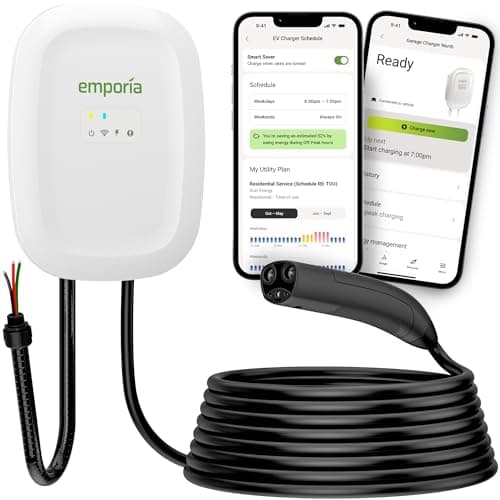
    02 Emporia NACS (48A)
    8.8

    The energy-monitoring charger with a Tesla-style plug: the same detailed consumption data Emporia is known for, now without an adapter hanging off the handle.

    Best for: Tracking what charging actually costs

    $479.00Amazon
  • Wallbox Wallbox Pulsar Plus (48A)
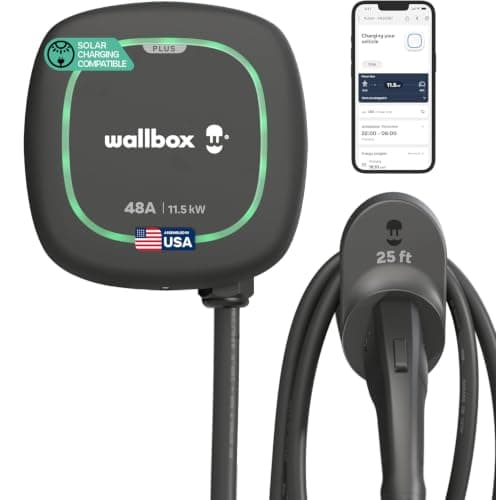
    03 Wallbox Pulsar Plus (48A)
    8.4

    One of the smallest 48-amp chargers you can hang on a wall — full-speed hardwired charging in a box that barely announces itself.

    Best for: A compact, fast, hardwired install

    $594.99Amazon
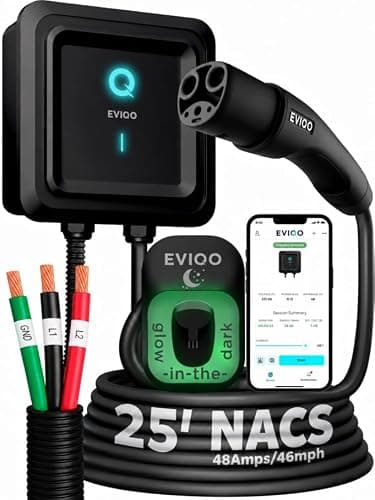
  • EVIQO EVIQO NACS (48A)
    04 EVIQO NACS (48A)
    8.6

    Full 48-amp speed behind a native NACS plug, with the UL/ETL listing and the weatherproof shell the cheap Tesla-plug boxes cannot claim - and it undercuts the established brands.

    Best for: A permanent, full-speed NACS install

    $434.34Amazon
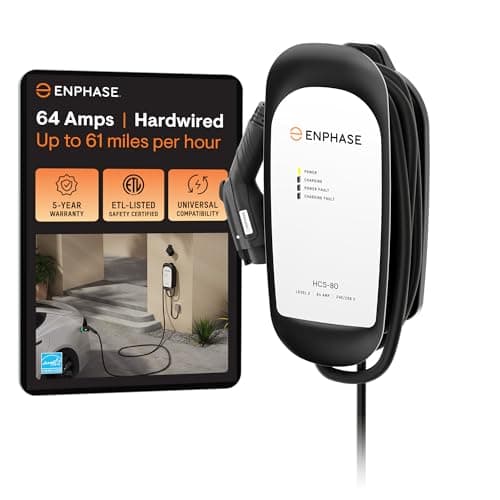
  • Enphase Energy Enphase HCS-80 (64A)
    05 Enphase HCS-80 (64A)
    7.4

    The unit that explains the category's naming trap: HCS-80 is the 80-amp CIRCUIT, not the output. It delivers 64 amps - and for the cars that can use it, that is the point.

    Best for: Cars that accept 15.4 kW, on an 80A circuit

    $1,600.00Amazon
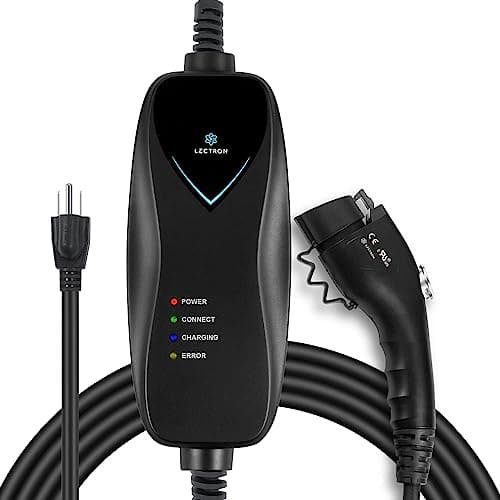
  • Lectron Lectron Level 1 (15A)
    06 Lectron Level 1 (15A)
    7.0

    The Level 1 cord to buy if you buy only one: ETL certified to UL 2594 and Energy Star listed, which most of the 120-volt field on Amazon cannot claim.

    Best for: The certified 120V cord

    $159.99Amazon

#ad · Live prices from the Amazon Product API, as of November 19, 2026. Where we have no verified live price, we show none — we would rather leave a gap than print a number that has gone stale.

The best ENERGY STAR certified EV charger for most homes is the ChargePoint Home Flex: a J1772 unit with a selectable 16-to-50-amp output, a UL listing and the ENERGY STAR mark its own spec sheet publishes. If your car has a factory NACS port, the Emporia NACS is the certified equivalent. Our budget pick is the Lectron Level 1 cord, which is the cheapest ENERGY STAR listed way to charge at all - as long as you accept that it is Level 1. Those three cover the three honest situations. What follows is what the mark means, because it is not a speed rating and it is not a safety listing.

What ENERGY STAR actually certifies on a charger

Not charging efficiency in the way most people assume. EPA's own page makes the point plainly: a home charger is "typically in standby mode" about 85 percent of the time, and a certified unit "use[s] 40% less energy in standby mode" than a non-certified one while keeping the same functionality. That is the whole mechanism. A charger with a Wi-Fi radio, a display and a contactor coil sitting idle for twenty hours a day is a small, permanent load on your house, and the certification caps it.

Two more things come with the mark, and both matter more than the kilowatt-hours. First, EPA states that every certified charger is "tested for safety by a nationally recognized testing laboratory" - so the mark implies a real safety listing, which is a meaningful filter in a category full of unlisted imports. Our UL-listed chargers page covers that filter on its own terms. Second, some certified models carry demand-response capability over open protocols, which is the hook utilities use for off-peak programs.

The rebate reason, which is usually the bigger number

The standby saving on one charger is real but small. The reason to care about the mark is that rebate and utility-program paperwork frequently asks for it: a certified model number is an easy, auditable line for a program administrator to require. We do not list program-by-program requirements here because they change by territory and by year - but if you are claiming anything, check the form before you buy, and check your exact model number against the ENERGY STAR Product Finder rather than a marketing page. Our 2026 rebates roundup is the starting point for what exists.

One honest caveat on this page: certification is granted per model number, not per brand or per family. A brand can have a certified 48-amp unit and an uncertified 40-amp one in the same body. Every pick below is here because the manufacturer publishes the ENERGY STAR claim for that unit in its own specifications - and the Product Finder, linked in our sources, is the only place to confirm a specific SKU. We have not audited the Finder model-by-model and we will not pretend otherwise.

How we ranked these

  1. A published ENERGY STAR claim from the manufacturer. The entry condition. No pick is here on inference.
  2. The safety listing named explicitly. UL or ETL to UL 2594, stated rather than implied - the Enphase and the EVIQO are the two that name their standards in full.
  3. Usable amperage for a real circuit. 48 amps on a 60-amp circuit is the practical top of the mainstream field.
  4. Connector match. Certified units exist in both J1772 and native NACS, so nobody needs to own an adapter to buy certified.
  5. What the standby saving is actually worth. Honestly: a few dollars a year. If a certified unit costs much more than an uncertified equal, the mark is not what justifies it - the rebate or the safety listing is.

The short version

  • J1772 car, one charger, no fuss: ChargePoint Home Flex.
  • Factory NACS car: Emporia NACS for the energy data, EVIQO NACS 48A to spend less for the same 48 amps and the same certification stack.
  • Smallest certified box: Wallbox Pulsar Plus, which publishes UL and ENERGY STAR and is assembled in the US.
  • A car that accepts more than 11.5 kW: the Enphase HCS-80, the only certified unit here above the 48-amp tier.
  • Cheapest certified option at all: the Lectron Level 1 cord. It is 120 volts and it is slow - Level 1 vs Level 2 is the decision.

In detail

The picks, in full

01
ChargePoint ChargePoint Home Flex

Buyers who want the established brand + one app

ChargePoint Home Flex

Adjustable to 50AJ1772NEMA 14-50 plugEnergy Star
8.2/10

The mature, well-supported pick — amperage you dial in up to 50A, wired into the biggest public-charging app in North America. You pay for the polish.

Charge speed
9
Build & weather
8
Smart features
9
Cable & connector
8
Value
7

Pros

  • Output is adjustable in the app up to 50A, so it matches whatever breaker you can install today and more later
  • Reports into the same ChargePoint app that maps and pays for a huge public network — home and away in one place
  • Long track record and responsive support that newer budget brands cannot match

Cons

  • Costs more than equally capable chargers from newer brands
  • The experience leans hard on the ChargePoint account and app; skip it and you are paying for an integration you will not use

Don't buy this if…

…price is your first filter. The Emporia matches most of what this does for meaningfully less — here you are paying for brand maturity and the unified app, which are real but not free.

$508.99View on Amazon

$657.9923% off

Price as of November 19, 2026. Prices change — Amazon's is the one that counts.

#ad · we may earn a commission from this link to ChargePoint Home Flex

02
Emporia Emporia NACS (48A)

Tracking what charging actually costs

Emporia NACS (48A)

Up to 48A / 11.5kWNative NACS (J3400)24ft cable, hardwiredUL listed + Energy Star
8.8/10

The energy-monitoring charger with a Tesla-style plug: the same detailed consumption data Emporia is known for, now without an adapter hanging off the handle.

Charge speed
10
Build & weather
8
Smart features
9
Cable & connector
8
Value
9

Pros

  • Native NACS with the charge-port-door button, and Emporia's app gives the most detailed real-time energy and cost data of any pick here
  • UL listed and Energy Star certified, with the listing naming UL 2594, UL 2231, UL 2251, UL 817 and UL 991 alongside NEC 625 - a full set of listings, not a single mark
  • Ships preconfigured for a hardwired install with the whip attached, on a 24-foot cable

Cons

  • This SKU is hardwired only, so an electrician and a 60-amp circuit are part of the cost
  • The Wi-Fi app is the reason to buy it; on a flat electricity rate you are paying for monitoring you may rarely open

Don't buy this if…

…you want to unplug the charger and take it with you when you move. This is a wired-in fixture - the plug-in EVIQO 40A NACS travels, this does not.

$479.00View on Amazon

Price as of November 19, 2026. Prices change — Amazon's is the one that counts.

#ad · we may earn a commission from this link to Emporia NACS (48A)

03
Wallbox Wallbox Pulsar Plus (48A)

A compact, fast, hardwired install

Wallbox Pulsar Plus (48A)

Hardwired 48A / 11.5kWJ177225ft cableEnergy Star + UL
8.4/10

One of the smallest 48-amp chargers you can hang on a wall — full-speed hardwired charging in a box that barely announces itself.

Charge speed
10
Build & weather
8
Smart features
8
Cable & connector
8
Value
8

Pros

  • Physically tiny for a 48-amp unit — the least obtrusive charger in our home roundup
  • Full 48-amp hardwired speed, matching the fastest home chargers
  • Energy Star and UL certified

Cons

  • Hardwired only at 48A — no plug-in convenience if you might move it
  • The app has historically drawn more owner complaints than the hardware itself

Don't buy this if…

…you rent or might take the charger with you. This is a permanent fixture — a plug-in unit or a portable EVSE is the right call for anyone who could move.

$594.99View on Amazon

$799.9926% off

Price as of November 19, 2026. Prices change — Amazon's is the one that counts.

#ad · we may earn a commission from this link to Wallbox Pulsar Plus (48A)

04
EVIQO EVIQO NACS (48A)

A permanent, full-speed NACS install

EVIQO NACS (48A)

Up to 48A / 11.5kWNative NACS (J3400)Hardwired, 60A circuitUL/ETL, IP66 / NEMA-4
8.6/10

Full 48-amp speed behind a native NACS plug, with the UL/ETL listing and the weatherproof shell the cheap Tesla-plug boxes cannot claim - and it undercuts the established brands.

Charge speed
10
Build & weather
9
Smart features
8
Cable & connector
7
Value
9

Pros

  • Native NACS connector, so a Tesla or any factory-NACS EV plugs in with no adapter - and the button on the handle opens a Tesla charge port door
  • 48 amps on a dedicated 60-amp circuit, with a DIP-switch 50-amp mode for a 70-amp circuit if your panel has the room
  • UL, ETL, FCC and Energy Star certified in an IP66 / NEMA-4 enclosure, with Wi-Fi scheduling and consumption tracking in the app

Cons

  • Hardwired only - a licensed electrician and a 60-amp circuit are part of the price, and it is a fixture you cannot unplug and take with you
  • The NACS plug points the wrong way for a J1772 second car: that needs a NACS-to-J1772 adapter, which is not in the box

Don't buy this if…

…every car in your driveway uses a J1772 port. A native NACS charger then only adds an adapter to your daily routine - buy the J1772 version of this same charger instead.

$434.34View on Amazon

$510.9915% off

Price as of November 19, 2026. Prices change — Amazon's is the one that counts.

#ad · we may earn a commission from this link to EVIQO NACS (48A)

05
Enphase Energy Enphase HCS-80 (64A)

Cars that accept 15.4 kW, on an 80A circuit

Enphase HCS-80 (64A)

64A / 15.4kWJ177225ft cableETL to UL 2594 · NEMA 4
7.4/10

The unit that explains the category's naming trap: HCS-80 is the 80-amp CIRCUIT, not the output. It delivers 64 amps - and for the cars that can use it, that is the point.

Charge speed
9
Build & weather
10
Smart features
3
Cable & connector
9
Value
6

Pros

  • ETL listed to UL 2594 by an OSHA-recognized NRTL and ENERGY STAR certified - the certification is spelled out, not implied
  • The ClipperCreek lineage: no app, no cloud account, no Wi-Fi to drop, in a fully sealed NEMA 4 enclosure with a 5-year warranty
  • The manufacturer names the cars it suits - Cadillac Lyriq, F-150 Lightning Extended Range, Lucid Air Dream, Tesla Model S 90D/100 - instead of implying every EV benefits
  • Integrated cable wrap and wall-mounted holster included, so 25 feet of heavy cable has somewhere to live

Cons

  • The name says 80 and the output is 64 - it still needs a full 80-amp dedicated circuit for its 15.4 kW
  • No app, scheduling or energy monitoring at a price where every rival has all three

Don't buy this if…

…you want off-peak scheduling or energy data. This is deliberately a dumb, extremely durable appliance; if the app matters, the Autel 80A does more for less.

$1,600.00View on Amazon

Price as of November 19, 2026. Prices change — Amazon's is the one that counts.

#ad · we may earn a commission from this link to Enphase HCS-80 (64A)

06
Lectron Lectron Level 1 (15A)

The certified 120V cord

Lectron Level 1 (15A)

Level 1 · 110V15A / 1.65kWNEMA 5-15 plugETL (UL 2594), IP65
7.0/10

The Level 1 cord to buy if you buy only one: ETL certified to UL 2594 and Energy Star listed, which most of the 120-volt field on Amazon cannot claim.

Charge speed
3
Portability
9
Build & weather
8
Cable & connector
7
Value
8

Pros

  • ETL certified to the UL 2594 standard and Energy Star listed - a real third-party safety listing on a cord you leave plugged in unattended overnight
  • IP65 rated with over-voltage, over-current and short-circuit protection
  • 16-foot cable and a plain NEMA 5-15 plug, so it works at any grounded household outlet

Cons

  • Costs more than the no-name 120-volt cords it sits beside - the certification is what you are paying for
  • A 15-amp draw is above the 12-amp continuous limit of a standard 15-amp household circuit, so it wants a 20-amp circuit to run flat out

Don't buy this if…

…you drive enough to need a real overnight refill. Level 1 adds roughly 3-5 miles of range per hour no matter whose cord it is - if that will not keep up, buy a Level 2 charger and a 240V outlet.

$159.99View on Amazon

$179.9911% off

Price as of November 19, 2026. Prices change — Amazon's is the one that counts.

#ad · we may earn a commission from this link to Lectron Level 1 (15A)

Before you buy

  1. Match the model number, not the brand. Search the exact SKU in the ENERGY STAR Product Finder. A certified sibling does not certify the unit in your cart.
  2. Read the rebate form first. Several programs want the certification, the safety listing and a licensed install. Buying first and reading second is how people lose a rebate they qualified for. See permits and inspection.
  3. Do not pay a large premium for standby alone. Forty percent off a few watts is a few dollars a year. The mark is a tiebreaker between two chargers you would otherwise buy either way - and a requirement when a rebate says so.

What we will not tell you

We have not measured standby draw on any of these units, and we have not reproduced EPA's test. The 40 percent figure and the 85-percent-standby figure are EPA's own published numbers, quoted and linked. The certification claims are each manufacturer's published claims for that model. Where we could not verify something - which specific SKUs appear in the Product Finder today - we say so instead of guessing. Prices are live from the price layer and carry the date they were checked.
How we picked

We do not run a testing lab

We compiled published specifications from manufacturer manuals and spec sheets, verified the safety listings (UL / ETL), computed the real running and installation costs, checked the wiring math against the NEC continuous-load rule, and read aggregated owner reviews — then scored each product against a published rubric. The scores are judgments from documented research — they are not bench measurements, because we do not have a test lab and we are not going to pretend we do. Every spec and cost figure is cited in Sources.

Questions

Frequently asked

What does ENERGY STAR certification mean on an EV charger?

Mostly standby power. EPA says a certified charger uses 40 percent less energy in standby mode than a non-certified one, which matters because a home charger sits idle around 85 percent of the time. EPA also states that all certified chargers are tested for safety by a nationally recognized testing laboratory.

Does an ENERGY STAR EV charger charge faster?

No. The mark says nothing about output. A certified 40-amp charger and an uncertified 40-amp charger deliver the same 9.6 kW. Speed comes from the amperage you can feed it and what your car accepts - see what amp charger do I need.

Do I need an ENERGY STAR charger for a rebate?

Sometimes - it depends entirely on the program. The certification is a clean, auditable requirement, so it appears on a lot of forms. Read the specific program's rules before you buy, and confirm your exact model number in the ENERGY STAR Product Finder.

How much money does an ENERGY STAR charger actually save?

A few dollars a year on standby, not a meaningful fraction of your charging bill. The charging energy itself is unaffected. If you want to cut the bill, the lever is when you charge - off-peak charging moves far more money than standby ever will.

Is ENERGY STAR the same as UL listed?

No, but they overlap. UL or ETL listing is a safety certification against a standard such as UL 2594. ENERGY STAR is an EPA energy-performance certification - and EPA requires that certified chargers be safety-tested by a nationally recognized laboratory, so in practice a certified unit carries both.

Are there ENERGY STAR certified NACS chargers?

Yes. Both of the native-NACS units on this page publish the certification alongside their UL or ETL listing, so a Tesla or any factory-NACS car can be charged by a certified unit without an adapter. Our NACS home chargers page ranks that field in full.

Keep reading

More in this section

More Home EV Chargers

All home ev chargers →

Receipts

Sources

We do not run a testing lab, and we do not pretend to. Where a measured number came from someone else's lab, we name them and link them. Where we could not verify something, we say so on the page rather than quietly leaving it out. Read our full method.