Skip to content
The Charge Curve

HUB 02 · Cables & Adapters

The Best Surge Protectors for an EV Charger

A home charger is the most expensive thing most houses will ever hang on a 240-volt circuit, and the only surge protection that reaches it is a device at the panel. Here are six, ranked on what their manufacturers actually publish.

By Stephen V.Updated How we compare
#ad

We earn a commission when you buy through our Amazon links, at no extra cost to you. It never affects our rankings, and we say so when the cheaper product is the better buy. How this works.

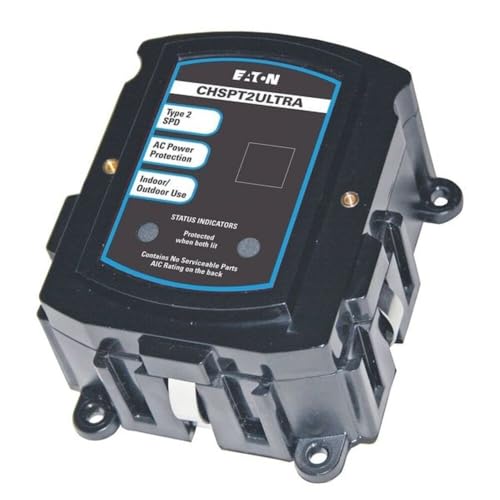
Eaton Eaton CHSPT2ULTRA Whole-Home SPD

Our top pick

Best Surge Protection

Eaton CHSPT2ULTRA Whole-Home SPD

9.0/10
$123.99Check Price

In stock at Amazon as of November 19, 2026.

#ad · we may earn a commission

Best for: Most homes adding an EV circuit

The whole-home surge device electricians reach for by default: a Type 2 SPD with protection on all four modes and a published 108 kA surge rating, for about the price of a charging cable.

Read the full review ↓Compare all 6 picks ↓

The short answer

Quick picks

  • Eaton Eaton CHSPT2ULTRA Whole-Home SPD
    01 Eaton CHSPT2ULTRA Whole-Home SPD
    9.0

    The whole-home surge device electricians reach for by default: a Type 2 SPD with protection on all four modes and a published 108 kA surge rating, for about the price of a charging cable.

    Best for: Most homes adding an EV circuit

    $123.99Amazon
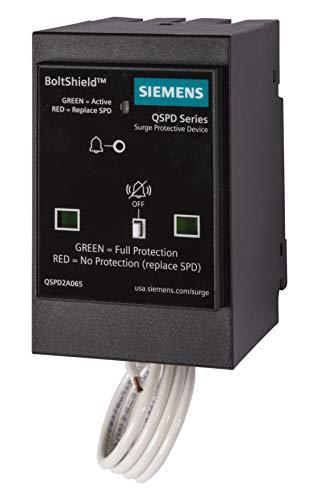
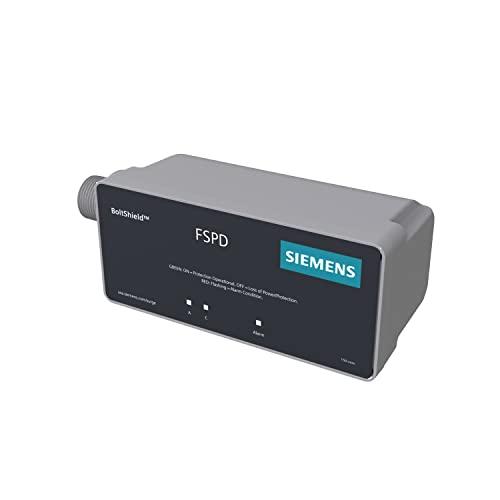
  • Siemens Siemens Boltshield FSPD140 (140 kA)
    02 Siemens Boltshield FSPD140 (140 kA)
    8.5

    The highest published surge rating in this field - 140,000 amps - for a house where the service takes a beating and the charger is one of several big loads worth protecting.

    Best for: Storm-prone services and big-load homes

    $246.22Amazon
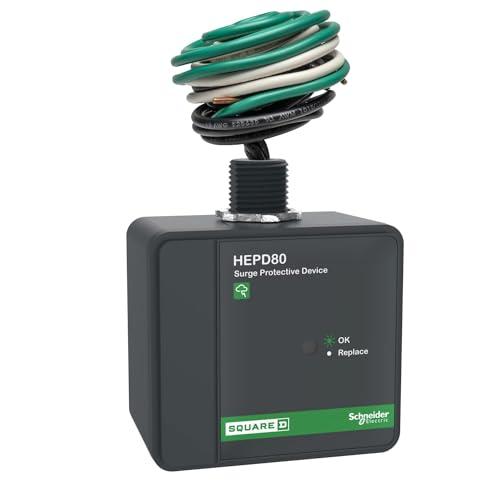
  • Square D Square D HEPD80 Whole-Home SPD (80 kA)
    03 Square D HEPD80 Whole-Home SPD (80 kA)
    9.0

    Square D's universal 80 kA device - universal because it mounts alongside any brand of panel, which makes it the easy answer when the panel is not an Eaton or a Siemens.

    Best for: Any panel brand, including mixed and older ones

    $113.59Amazon
  • Siemens Siemens Boltshield Plug-In SPD (65 kA)
    04 Siemens Boltshield Plug-In SPD (65 kA)
    8.5

    A surge device that plugs into two breaker slots instead of hanging on the wall - the cleanest install there is when the panel has space and the wall does not.

    Best for: A tidy in-panel install

    $115.43Amazon
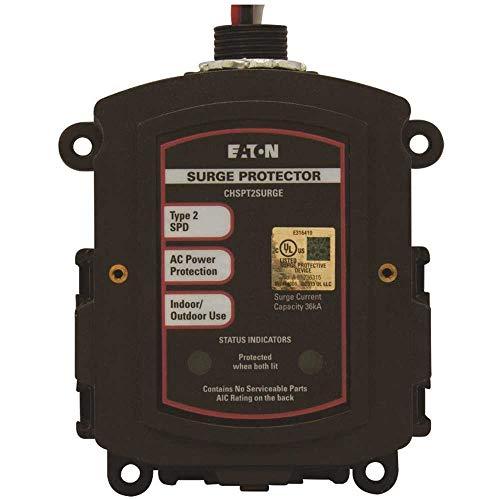
  • Eaton Eaton CHSPT2SURGE (NEMA 4, Type 2)
    05 Eaton CHSPT2SURGE (NEMA 4, Type 2)
    8.5

    The outdoor-rated one: a NEMA 4 Type 2 device for the very common EV install where the panel or the disconnect lives on an exterior wall.

    Best for: An outdoor panel or exterior-wall install

    $61.65Amazon
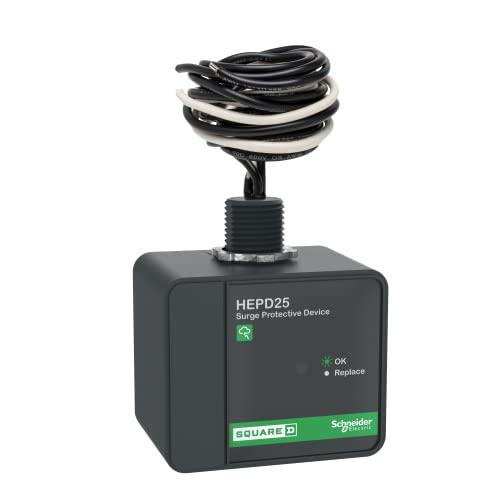
  • Square D Square D HEPD25 Whole-Home SPD (25 kA)
    06 Square D HEPD25 Whole-Home SPD (25 kA)
    8.5

    The least you can spend and still have real panel-level surge protection on an EV circuit - the same universal mounting as its bigger sibling, at a quarter of the rating.

    Best for: The cheapest honest whole-home SPD

    $48.95Amazon

#ad · Live prices from the Amazon Product API, as of November 19, 2026. Where we have no verified live price, we show none — we would rather leave a gap than print a number that has gone stale.

The best surge protector for an EV charger is a whole-home device at the panel, and for most houses that is the Eaton CHSPT2ULTRA: a Type 2 SPD with a published 108 kA surge current rating, a 20 kA nominal discharge current and protection on all four modes, for roughly what a charging cable costs. If your service takes a beating, the Siemens Boltshield FSPD140 publishes the biggest number here at 140,000 amps. If your panel is not an Eaton or a Siemens, the Square D HEPD80 mounts to anything. If your panel is outdoors, the Eaton CHSPT2SURGE is the NEMA 4 version. And our budget pick, the Square D HEPD25, is the least you can spend and still have real panel-level protection rather than a strip.

Start with the thing that surprises people: there is no plug-in option here. A surge strip is a 120-volt device with a 15-amp cord cap, and a Level 2 charger is on a dedicated 240-volt circuit - either hardwired or on a NEMA 14-50 receptacle. Nothing you can buy at a big-box store plugs between the two. If you want the charger protected from transients, the device goes in or beside the service panel, which is why this page is a list of SPDs and not a list of power strips.

What the charger already protects, and what it does not

A charger listed to UL 2594 is a well-protected piece of equipment in one specific sense: it contains its own ground-fault detection, it monitors the pilot signal, and it will refuse to energize the cable when something is wrong at the car end. None of that is surge protection. A transient arriving down the service conductors - a utility switching event, a nearby lightning strike coupling into the line, a large motor dropping off - hits the charger's power electronics from the supply side, where its own protective features are not looking.

Manufacturers know this, which is why several of them discuss surge protection in their warranty language and why installers increasingly add an SPD while the panel is open. The honest framing, which our do I need a surge protector for my EV charger guide sets out in full, is this: an SPD is not required by code and your charger will probably survive without one. It is a low-cost insurance line on an expensive appliance, most worth buying when the panel is already open for the charger circuit and the labor is effectively free.

Type 1 or Type 2, and why almost everyone here wants Type 2

UL 1449 is the standard every device on this page is listed to, and it sorts SPDs by where they may be installed:

TypeWhere it goesWhat that means for you
Type 1Line side of the service disconnect, including at the meterUsually a utility or meter-socket job; may also be used on the load side
Type 2Load side of the service disconnect - i.e. in or beside your panelThe normal residential retrofit, and what five of the six picks here are
Type 3Point of use, at least 30 feet of conductor from the serviceThe power-strip category - not usable on a charger circuit

That third row is the one worth internalizing. Point-of-use protection is a layer, not a substitute: NIST's own homeowner guidance frames residential surge protection as layered, with a service-entrance device handling the large events and local devices trimming what gets past. For an EV charger there is no local layer available, so the service-entrance device is the whole of your protection.

How to read a surge rating without being sold to

SPD marketing leans hard on one big number, and it is the least comparable number on the spec sheet. Three figures actually matter, and only one of them is usually on the box:

  • Surge current rating (kA). The one-time peak the device can shunt, often quoted per phase or summed across modes - which is why a 140,000-amp claim and a 108 kA claim are not a straight 30 percent difference. Treat it as a headroom and service-life indicator, not a score.
  • Nominal discharge current (In). The surge the device can take repeatedly without degrading - a far better proxy for how long it will last. Eaton publishes 20 kA for the Ultimate; most consumer devices do not advertise this at all.
  • Modes of protection. Line-to-neutral, line-to-line, neutral-to-ground and line-to-ground. A 240-volt charger circuit uses both legs, so line-to-line protection is not optional padding here - it is the mode your charger sits on.

We ranked on those three in that order of usefulness, then on mounting style, because on a real install the mounting decides as much as the rating does.

How we picked these six

  1. Panel-mounted only. Type 1 or Type 2 devices that an electrician wires in or plugs onto the bus. No Type 3 strips, no inline adapters, no 120-volt products repackaged as EV accessories.
  2. A published rating from a named manufacturer. Eaton, Siemens and Square D all publish their numbers. We excluded an otherwise-qualifying breaker-style SPD whose retail listing does not name its own brand, because a protective device you cannot trace to a manufacturer is not something to put in a panel.
  3. One device per job. Best all-round, highest published rating, any-panel universal, in-panel plug-in, outdoor NEMA 4, and cheapest honest option. Where two devices did the same job we ranked the better-documented one and named the other here in the notes.
  4. Four-mode protection where the manufacturer states it. The charger is a two-leg load, so line-to-line coverage matters more here than it would on a page about protecting a television.
  5. A live price.Every pick returned a live price from Amazon's Product Advertising API on the refresh behind this page.

Which one is yours

Your situationPickWhy
Indoor panel, adding a charger circuit, want it done properly onceEaton CHSPT2ULTRAFour modes, 108 kA / 20 kA published, mainstream price
Frequent storms or visible utility switchingSiemens Boltshield FSPD140Largest published rating here, 140,000 amps
Panel is a brand nothing else here fitsSquare D HEPD80Universal external mounting, 80 kA published
Siemens panel with spare slots and no wall spaceSiemens Boltshield plug-in 65 kALives inside the panel - shortest leads, tidiest result
Panel or disconnect is on an exterior wallEaton CHSPT2SURGEPublished NEMA 4 enclosure, Type 2, UL 1449 3rd Edition
You want the cheapest real protectionSquare D HEPD25Budget pick: universal mounting, a quarter of the HEPD80's rating

One note on the in-panel plug-in device, because it is the pick people get wrong in both directions. It is genuinely the neatest install and the shortest lead length, which helps a device clamp a fast transient. It also eats two breaker positions - the same two your new charger circuit wants. In a panel with one spare space left, the external devices are the right answer, and if you are already out of spaces then the real subject is a panel upgrade, not surge protection.

Where an SPD fits in the install budget

A charger circuit is mostly labor: the breaker, the wire run, the receptacle or the hardwire termination, the permit. Every device on this page costs a fraction of that quote, and all of it is labor you are already paying for if you add the SPD in the same visit. That is the whole financial argument, and it is why we would rather see an SPD bought with the charger than bolted on after a scare.

While the panel is open there is one other part worth settling in the same conversation. A plug-in charger needs GFCI protection on its receptacle under NEC 625.54, which means a specific breaker for your specific panel - best GFCI breakers for an EV charger is that list. Between the two pages you have the complete panel-side shopping list for a charger install: what the install costs covers the rest.

Finally, the thing nobody tells you about SPDs: they are consumables. Every device here absorbs energy and degrades, and all of them have some form of status indication for exactly that reason. A ten-year-old SPD with a dark indicator is not protecting anything. Check it when you check the smoke alarms, and treat a replacement as a cheap renewal rather than a failure.

Every price above is live, read from Amazon's Product Advertising API and stamped with the date our price layer last checked it. We do not type prices into prose.

In detail

The picks, in full

01
Eaton Eaton CHSPT2ULTRA Whole-Home SPD

Most homes adding an EV circuit

Eaton CHSPT2ULTRA Whole-Home SPD

Type 2 SPD108 kA surge current20 kA nominal dischargeUL 1449 3rd Edition
9.0/10

The whole-home surge device electricians reach for by default: a Type 2 SPD with protection on all four modes and a published 108 kA surge rating, for about the price of a charging cable.

Protection rating
9
Build quality
9
Install fit
8
Value
10

Pros

  • Protects on all four modes - line-to-neutral, line-to-line, neutral-to-ground and line-to-ground - which is what covers a 240-volt charger circuit rather than only the 120-volt branch circuits
  • Eaton publishes a 108 kA surge current rating and a 20 kA nominal discharge current, the two figures that actually describe an SPD's capacity
  • Mounts at the panel, so it protects the charger, the HVAC and everything else on the service at once - not just whatever is plugged into a strip

Cons

  • Needs a free two-pole breaker position and a short wire run, so it is an electrician visit unless the panel is already open for the charger circuit
  • An SPD is a consumable: it absorbs energy and eventually wears out, and the status indicator has to be checked occasionally for it to be worth anything

Don't buy this if…

…you are looking for something to plug in. There is no plug-in answer for a 240-volt charger circuit, and a household power strip is not rated for anything in this install.

$123.99View on Amazon

Price as of November 19, 2026. Prices change — Amazon's is the one that counts.

#ad · we may earn a commission from this link to Eaton CHSPT2ULTRA Whole-Home SPD

02
Siemens Siemens Boltshield FSPD140 (140 kA)

Storm-prone services and big-load homes

Siemens Boltshield FSPD140 (140 kA)

140,000 A rated120/240VBoltshield Level 2Panel-mounted SPD
8.5/10

The highest published surge rating in this field - 140,000 amps - for a house where the service takes a beating and the charger is one of several big loads worth protecting.

Protection rating
10
Build quality
9
Install fit
8
Value
7

Pros

  • Siemens publishes a 140,000-amp rating, the largest of any device here, which is the headroom argument for a home that sees frequent utility switching or lightning activity
  • Part of the Boltshield line Siemens designed around its own load centers, so it is the tidiest install in a Siemens panel
  • Protects the entire service rather than a single circuit, so one device covers the charger, the heat pump and the home electronics

Cons

  • Costs roughly double the mainstream devices here, and surge ratings are not directly comparable between manufacturers - a bigger number is not automatically proportional protection
  • Like every panel SPD it needs a two-pole breaker position and a professional install

Don't buy this if…

…your only goal is protecting one charger and the budget is tight. The cheaper devices on this page cover the same circuit; this one buys headroom and a brand-matched install, not a different kind of protection.

$246.22View on Amazon

Price as of November 19, 2026. Prices change — Amazon's is the one that counts.

#ad · we may earn a commission from this link to Siemens Boltshield FSPD140 (140 kA)

03
Square D Square D HEPD80 Whole-Home SPD (80 kA)

Any panel brand, including mixed and older ones

Square D HEPD80 Whole-Home SPD (80 kA)

80 kA rated1-phase, 3-wire120/240VUniversal mounting
9.0/10

Square D's universal 80 kA device - universal because it mounts alongside any brand of panel, which makes it the easy answer when the panel is not an Eaton or a Siemens.

Protection rating
8
Build quality
9
Install fit
10
Value
9

Pros

  • Explicitly universal: it is wired in rather than bus-mounted, so panel brand stops being the deciding factor
  • Published 80 kA rating on a 120/240-volt single-phase, three-wire service - the configuration essentially every US home with an EV charger has
  • A long-established Square D part number, which means an electrician has almost certainly installed one before

Cons

  • Rated below the Eaton and Siemens flagships here, so it is the middle of the field on headroom rather than the top
  • External mounting means a box on the wall beside the panel and a visible conduit nipple - no issue in a garage, worth a thought in a finished space

Don't buy this if…

…your panel has a spare two-pole slot and matches one of the bus-mounted devices here. Those installs are neater; this one's advantage is that it works regardless.

$113.59View on Amazon

Price as of November 19, 2026. Prices change — Amazon's is the one that counts.

#ad · we may earn a commission from this link to Square D HEPD80 Whole-Home SPD (80 kA)

04
Siemens Siemens Boltshield Plug-In SPD (65 kA)

A tidy in-panel install

Siemens Boltshield Plug-In SPD (65 kA)

65 kA rated2-pole plug-in120/240V · 1-phaseSiemens bus
8.5/10

A surge device that plugs into two breaker slots instead of hanging on the wall - the cleanest install there is when the panel has space and the wall does not.

Protection rating
8
Build quality
9
Install fit
9
Value
8

Pros

  • Goes into the panel like a breaker, so there is no external enclosure, no nipple and no wall space used - the difference is obvious in a finished garage
  • Published 65 kA rating, which is real whole-panel protection rather than a token device
  • Shortest possible lead length, and lead length genuinely matters to how well an SPD clamps a fast transient

Cons

  • Consumes two breaker positions, which is exactly what the new charger circuit also wants - in a full panel you may have to choose
  • Siemens bus only, so it is not an option in a Square D, Eaton or Q-Line panel

Don't buy this if…

…your panel is already full. The externally mounted devices on this page do the same job without taking a slot, and a panel that cannot fit the charger breaker is a bigger conversation.

$115.43View on Amazon

$129.2511% off

Price as of November 19, 2026. Prices change — Amazon's is the one that counts.

#ad · we may earn a commission from this link to Siemens Boltshield Plug-In SPD (65 kA)

05
Eaton Eaton CHSPT2SURGE (NEMA 4, Type 2)

An outdoor panel or exterior-wall install

Eaton CHSPT2SURGE (NEMA 4, Type 2)

Type 2 SPDNEMA 4 enclosure120/240V · 1-phaseUL 1449 3rd Edition
8.5/10

The outdoor-rated one: a NEMA 4 Type 2 device for the very common EV install where the panel or the disconnect lives on an exterior wall.

Protection rating
7
Build quality
9
Install fit
9
Value
9

Pros

  • A published NEMA 4 enclosure rating, so it belongs outdoors next to a meter-main or an outdoor subpanel rather than only in a dry garage
  • UL 1449 3rd Edition listed as a Type 2 device, which is the category permitted on the load side of the service disconnect
  • Substantially cheaper than the flagship devices while still being a proper panel-mounted SPD

Cons

  • Lower surge rating than the Ultimate version of the same family - Eaton sells both precisely because they are different tiers
  • The enclosure rating is wasted money if your panel is in a basement or an attached garage

Don't buy this if…

…your panel is indoors. The indoor devices on this page cost the same or less and give you more protection per dollar once weather stops being a factor.

$61.65View on Amazon

Price as of November 19, 2026. Prices change — Amazon's is the one that counts.

#ad · we may earn a commission from this link to Eaton CHSPT2SURGE (NEMA 4, Type 2)

06
Square D Square D HEPD25 Whole-Home SPD (25 kA)

The cheapest honest whole-home SPD

Square D HEPD25 Whole-Home SPD (25 kA)

25 kA rated1-phase, 3-wire120/240VUniversal mounting
8.5/10

The least you can spend and still have real panel-level surge protection on an EV circuit - the same universal mounting as its bigger sibling, at a quarter of the rating.

Protection rating
6
Build quality
8
Install fit
10
Value
10

Pros

  • Budget pick: the lowest-priced device here that is still a panel-mounted, whole-service SPD rather than a plug-in strip
  • Universal mounting like the HEPD80, so panel brand does not rule it out
  • A sensible add-on when the electrician is already in the panel for the charger circuit, where the labor is effectively free

Cons

  • 25 kA is a quarter of the HEPD80's rating and well under the flagships here - it will wear out sooner in an area with frequent surge activity
  • No meaningful protection advantage over the mid-field devices, which cost roughly twice as much and are rated three times higher

Don't buy this if…

…you live somewhere with frequent lightning or utility switching. The difference between this and the 80 kA version is a modest amount of money set against the charger it is protecting.

$48.95View on Amazon

$52.497% off

Price as of November 19, 2026. Prices change — Amazon's is the one that counts.

#ad · we may earn a commission from this link to Square D HEPD25 Whole-Home SPD (25 kA)

Four checks before you buy an SPD

  1. Where is your panel? Indoors, and the enclosure rating is irrelevant. Outdoors on an exterior wall - which is extremely common on EV retrofits where the charger is near the meter - and you want a published NEMA rating rather than a device rated for a basement.
  2. How many breaker spaces are left? An in-panel device takes two. An external device takes none but needs wall space and a nipple into the panel. Count the spaces before you choose, and remember the charger circuit needs two of its own.
  3. Does the manufacturer publish a nominal discharge current? If it does, you can reason about service life. If the only number on the listing is one big kA figure, you are being sold a headline.
  4. Who is installing it?This is panel work on an energized service. It is an electrician's job in all but the most unusual circumstances, and it is cheapest bundled into the charger install. What to ask on an install quote includes the line to add.

When to skip surge protection entirely

We would rather say this than sell you something. Skip it if your charger is portable and travels with you - a device you unplug is not sitting on the circuit when the storm arrives, and portable chargersare cheap enough to treat as replaceable. Skip it if your panel has no spare capacity and the money is better spent on the panel itself. And be skeptical of any product sold as an "EV charger surge protector" that is really a 120-volt strip with EV branding - the circuit it would need to protect does not accept it.

One more case: if you are shopping for the charger as well, a unit with a tough enclosure and a manufacturer who answers the phone is worth more than a surge device bolted onto a cheap one. Our EV charger brands page ranks that side of it, and chargers by warranty covers who actually stands behind the hardware.

What we have not done

We have not surge-tested anything and we do not have a lab. Every figure here - surge current rating, nominal discharge current, modes of protection, enclosure rating, UL 1449 type - is the manufacturer's own published specification from the live retail listing or the published spec sheet, and the sources are listed below. We make no claim about how any of these devices performs in a real strike, because nobody can honestly make that claim about a specific house. The scores are judgments from documented research against the rubric on our methodology page, not measurements.

Nothing here is electrical advice for your installation, and no surge device makes a home lightning-proof. A direct strike is a different event from the transients these are designed for.
How we picked

We do not run a testing lab

We compiled published specifications from manufacturer manuals and spec sheets, verified the safety listings (UL / ETL), computed the real running and installation costs, checked the wiring math against the NEC continuous-load rule, and read aggregated owner reviews — then scored each product against a published rubric. The scores are judgments from documented research — they are not bench measurements, because we do not have a test lab and we are not going to pretend we do. Every spec and cost figure is cited in Sources.

Questions

Frequently asked

Do I need a surge protector for my EV charger?

No code requires one, and your charger will most likely be fine without it. It is an optional, low-cost add-on that makes most sense when the panel is already open for the charger circuit, because then you are only paying for the device. The reason it comes up so often with EV chargers specifically is that a charger is an expensive appliance on a 240-volt circuit with no point-of-use protection available.

Can I plug my EV charger into a surge protector?

No. A Level 2 charger is either hardwired or on a 240-volt NEMA 14-50 receptacle, and household surge strips are 120-volt, 15-amp devices. There is no strip, adapter or inline box that belongs between a charger and its circuit. Surge protection for a charger happens at the panel.

What kind of surge protector does an EV charger need?

A panel-mounted Type 2 SPD in almost every case - a device installed on the load side of the service disconnect, protecting the whole service including the charger circuit. Type 1 devices go ahead of the disconnect and are usually a meter-socket job; Type 3 point-of-use devices cannot be used here at all.

Is a higher kA rating always better for an SPD?

Not in a straightforward way. Surge current ratings are quoted differently between manufacturers - per phase, per mode, or summed - so the headline numbers are not directly comparable. A higher rating generally means more headroom and a longer service life, but the nominal discharge current and the modes of protection tell you more about what the device will actually do.

Does a whole-home surge protector protect a hardwired EV charger?

Yes, and that is its main advantage here. A panel-mounted device protects everything on the service, so it covers a hardwired charger exactly as well as a plug-in one - which is something no point-of-use product can do.

How long does a surge protective device last?

It depends entirely on how much surge energy it absorbs, which is why every device here has status indication. An SPD in an area with frequent utility switching or lightning will degrade faster than one on a quiet suburban feeder. Check the indicator periodically and replace the device when it stops showing protected - a dark indicator means you are unprotected, not that nothing happened.

Keep reading

More in this section

More Cables & Adapters

All cables & adapters →

Receipts

Sources

We do not run a testing lab, and we do not pretend to. Where a measured number came from someone else's lab, we name them and link them. Where we could not verify something, we say so on the page rather than quietly leaving it out. Read our full method.