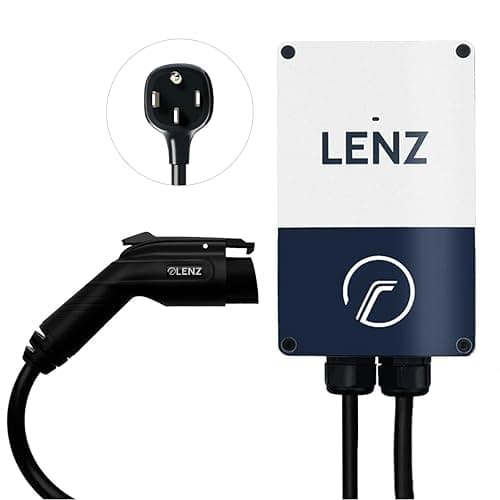
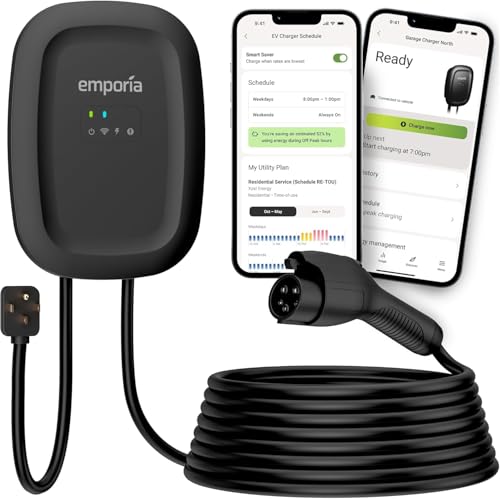
The best Grizzl-E alternative for most households is the Emporia Level 2. It goes to 48 amps instead of 40 when hardwired, it is UL listed and ENERGY STAR certified, and it adds the two things the Grizzl-E deliberately leaves out: scheduling and real energy monitoring. Our budget pick is the LENZ Level 2, an ETL-listed 40-amp plug-in unit in a metal NEMA 4X shell that lands a shade below the Grizzl-E Classic - the closest like-for-like swap on this page. First, what you would be giving up, because United Chargers makes a good charger and we are not going to pretend otherwise.
What the Grizzl-E is known for
Three things, and all three are real and documented. The enclosure is the headline: United Chargers describes a "fully air-tight UL Type 4 aluminum cast enclosure", which is a different class of object from the molded plastic body most of this field ships. Second, the certification is not a marketing claim - the company publishes its UL file number, E510712, and names the harmonized standard its units are certified to, UL 2594 / CSA C22.2 No. 280:22, which is the EVSE safety standard an OSHA-recognized laboratory actually tests against. Third, the base Classic has no app, no Wi-Fi and no account. It charges the day it arrives and it keeps charging if a server goes dark - which, for a device bolted to a wall for ten years, is a genuine feature rather than a shortcoming.
United Chargers also publishes a warranty term most of this field does not match: Grizzl-E chargers are "covered by either a 3-year or 5-year replacement warranty" depending on the model. We rank it accordingly in our own Grizzl-E review, our warranty comparison and our best outdoor chargers page. This page is for the readers those pages send elsewhere.
Why people look for an alternative
- The 40-amp ceiling on every model but the Ultimate.United Chargers' own FAQ is explicit: the Classic, Smart, Duo and Mini reach a maximum of 40 amps, and only the Ultimate goes to 48 or 80. Forty amps is 9.6 kW. A great many cars on sale now accept 11.5 kW - Tesla publishes exactly that figure, 48 amps, for most of its trims - so on those cars a Grizzl-E leaves roughly a sixth of the available speed on the table. Our 40 amp vs 48 amp page works through when that gap matters and when it does not.
- No scheduling or energy data on the base unit. If your utility charges a different rate overnight, the charger is where off-peak charging is easiest to automate, and if you want a number for what charging cost you last month, you need a unit that measures it. The Classic does neither. Three picks here do both - energy-monitoring chargers and chargers with scheduling rank that field on its own terms.
- Adjustment means opening the box. The adjustable current settings are there - 32, 24 and 16 amps, with 40 amps as the factory default - but they are set on the hardware rather than in software. That is fine once. It is less fine if you expect to move the charger between a 50-amp circuit and a 30-amp one, or if you want a different limit on a cold morning. Every pick on this page except the LENZ changes its current limit from a screen or an app.
The 40-amp ceiling, in numbers
This is the single arithmetic that decides whether you need an alternative at all, so it is worth being concrete. Under NEC Article 625 a charger is a continuous load, so the branch circuit is sized at 125 percent of the charger - the familiar version of the same rule is that the charger is capped at 80 percent of the breaker. A 40-amp charger therefore wants a 50-amp circuit and delivers 9.6 kW. A 48-amp charger wants a 60-amp circuit and delivers 11.5 kW. The difference between them is about 1.9 kW, which is roughly 20 percent more energy per hour plugged in.
Whether you can use it is entirely a question about your car, not about the charger. Under SAE J1772 the charger advertises the current available and the car draws what it wants up to that number, never more. If your car's onboard charger tops out at 32 amps - and plenty do, including Tesla's rear-wheel-drive trims at 7.7 kW - then a 48-amp charger, a 40-amp Grizzl-E and a 32-amp unit all charge at exactly the same speed, and you should buy on enclosure, cable and software instead. Check your car's figure first; our what amp charger do I need page is the five-minute version.
Which alternative matches which reason for leaving
| What you want instead | Pick | What it matches or beats |
|---|
| 48 amps, plus energy data and scheduling | Emporia Level 2 | 48A / 11.5 kW hardwired, UL + ENERGY STAR |
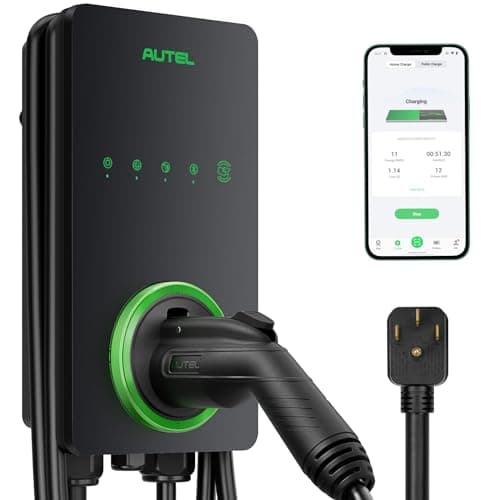
| Same 40 amps, with an app and a holster in the box | Autel MaxiCharger | 40A, Wi-Fi and Bluetooth, weather-rated shell |
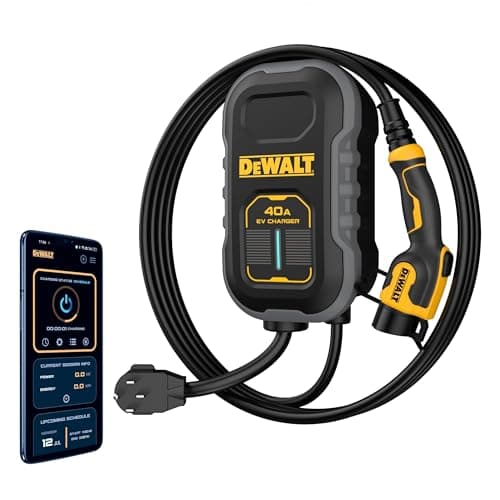
| A smaller box on a crowded wall | DEWALT Level 2 Compact | 12-40A in a published 4.6 in depth |
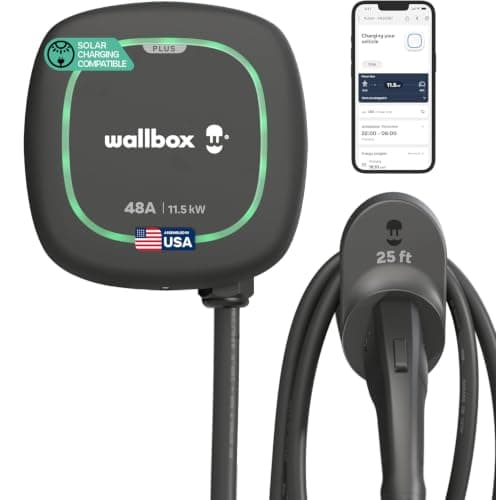
| 48 amps in the tidiest hardwired install | Wallbox Pulsar Plus | 48A / 11.5 kW, UL and ENERGY STAR |
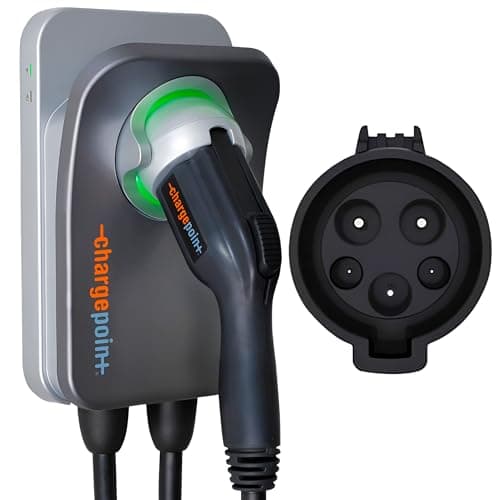
| One output that fits any circuit the electrician finds | ChargePoint Home Flex | 16-50A selectable per ChargePoint's datasheet |
| The same no-app metal box for slightly less | LENZ Level 2 | 40A, ETL to UL 2594, NEMA 4X enclosure |
That last row is the honest like-for-like. The LENZ is the only pick here that answers a Grizzl-E shopper on the Grizzl-E's own terms - a listed, weatherproof metal box with nothing in the cloud - and it currently sits a little under the Classic. It is also the one pick with no app at all, so if the no-software part is what drew you to the Grizzl-E in the first place, start there and read our LENZ Level 2 review.
How we ranked these
- Does it fix a stated reason for leaving? Every pick answers one of the three above. A like-for-like clone with no advantage would not earn a place on an alternatives page.
- A real third-party safety listing.UL, cUL, ETL or CSA against UL 2594, named per pick. This is the Grizzl-E's strongest card and we do not hand it to anything that cannot show the same kind of mark.
- Usable amperage, not advertised amperage. We rank the 48-amp units above the 40-amp ones only for readers whose cars and panels can use 48 amps, and we say so in each entry.
- Enclosure and cable. A weather rating from the manufacturer and a cable long enough to reach the port on the far side of the car. The Grizzl-E Classic ships 24 feet; short cables are a real regret.
- Price against the thing it replaces. One pick undercuts the Grizzl-E Classic, two sit near it, and three cost more for a stated reason. We never claim a pick is cheaper without the live price next to it.
Every price on this page is live, read from the Amazon Product Advertising API and stamped with the date our price layer checked it. We do not type prices into prose, because a number typed into a sentence is wrong by the following week.
Before you switch: four checks
- What does your car actually accept? If the answer is 32 amps, none of the 48-amp picks will charge it any faster than a 40-amp Grizzl-E, and the decision collapses to enclosure, cable and software.
- What circuit do you have, or can you get? Forty-eight amps needs a 60-amp dedicated circuit and is hardwired by code. If the panel has room for a 50-amp circuit and nothing more, the 40-amp picks are the whole field - chargers for a 100-amp panel is the page for a tight service.
- Plug-in or hardwired? A plug-in unit on an existing 14-50 outlet can be installed by the owner in most jurisdictions and can move house with you. A hardwired unit is a fixture. The argument is in hardwired vs plug-in.
- Do you have a Tesla or another NACS-port car? Every pick on this page is J1772, which a NACS car uses with a small J1772-to-NACS adapter - or skip the adapter and read best NACS home chargers instead.
Where the Grizzl-E is still the right answer
Three situations, and we would say so to a friend. An unheated detached garage or an exposed outdoor wall, where a cast-aluminum Type 4 enclosure is doing real work. A household that genuinely does not want an account, an app or a firmware update, and whose car is a 32-amp or 40-amp car anyway. And a two-car driveway on one circuit, where the Duo's two cables sharing a single 40-amp supply is cheaper than a second circuit - we cover that case in our Grizzl-E Duo review and in best dual-port chargers.
What we will not tell you
We have not bench-tested a Grizzl-E or any alternative here, and we do not have a lab. Every claim about the Grizzl-E on this page comes from United Chargers' own published FAQ, linked in the sources - the Type 4 aluminum cast enclosure, the UL file number, the harmonized UL 2594 / CSA standard, the 40-amp ceiling with 32, 24 and 16-amp adjustment, and the 3-year or 5-year replacement warranty. Everything about the alternatives is the manufacturer's published specification plus the safety listing, checked against the testing laboratory's own description of the standard. We make no claim about reliability, failure rates or support quality for any product on this page, because we have no data that would support one.