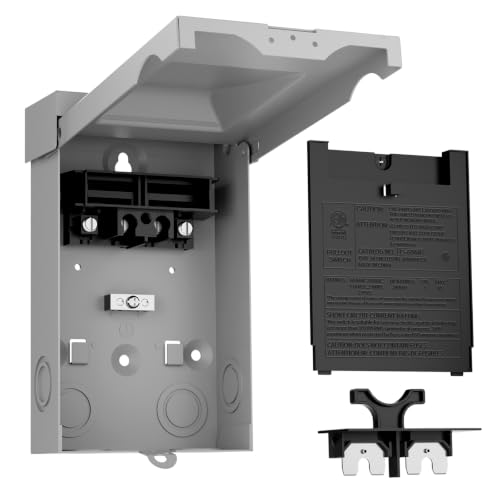
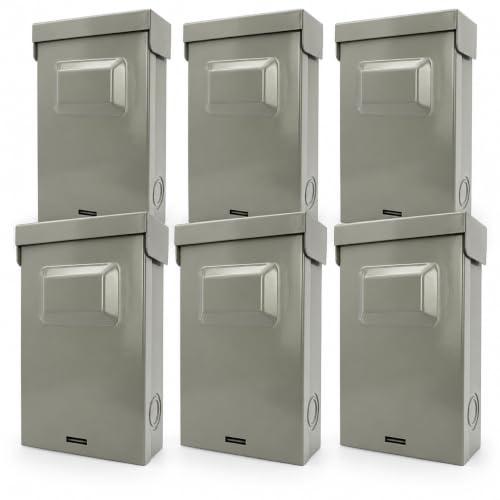
If an inspector is going to look at your charger install, buy the UL-listed 60-amp non-fused disconnect in a NEMA 3R metal enclosure: it publishes the listing, the 2-pole 3-wire configuration and the 120/240-volt rating, which is the combination that ends the conversation. If the charger is outside and there is no weatherproof outlet nearby, the version with a GFCI receptacle built into the same box is worth the difference. And our budget pick is the plain 60-amp 240-volt pull-out box, which is correctly rated for a 48-amp charger circuit and costs a fraction of the rest.
A disconnecting means is the switch that lets someone kill power to the charger without going to the panel. For a plug-in charger, the plug already is one - that is most of why plug-in installs are simpler. For a hardwired charger it is a separate component, and whether you need one depends on the equipment rating and on your inspector. NEC Article 625 requires a disconnecting means for EV supply equipment above a threshold rating, and plenty of jurisdictions and charger manuals ask for one below it too, particularly when the charger is not within sight of the panel.
We are not going to tell you whether your specific install needs one - that is your inspector's call and your charger manual's, and it varies by code cycle and jurisdiction. Does an EV charger need a disconnect switch walks through the question properly. This page is about what to buy once the answer is yes.
Why 60 amps, and why non-fused
Sixty amps is the rating to buy because of what sits behind it. Under NEC Article 625 a charger is a continuous load, so a 48-amp charger - the fastest thing a normal home installs - requires a 60-amp circuit. A disconnect has to be rated for the circuit, not for the charger, so 60 amps is the number. Buying a 30-amp disconnect for a 24-amp charger saves very little and locks the install at its current speed.
Non-fused is the right type because the overcurrent protection is already in the panel. A fused disconnect adds a second set of fuses to buy, stock and eventually replace, protecting a circuit that a breaker already protects. What you want from this part is visible, lockable-off isolation - nothing more.
| Your situation | Pick | Why |
|---|
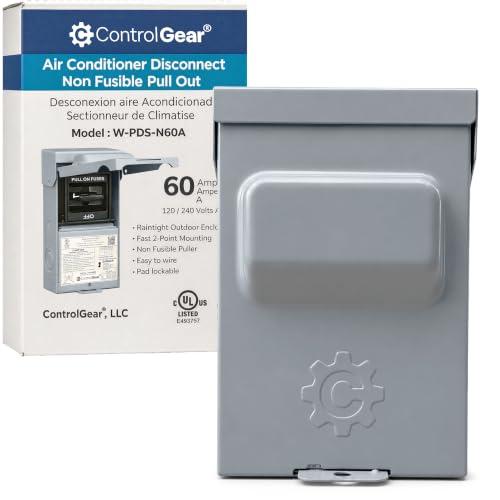
| Permitted, inspected 48-amp hardwired install | 60A UL-listed NEMA 3R | Publishes the UL listing and the 2-pole 3-wire rating |
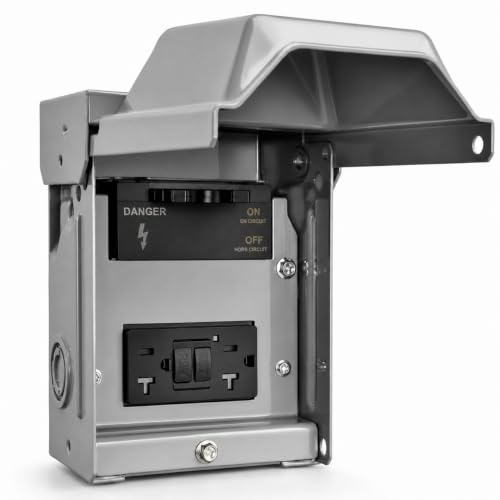
| Outdoor charger, no weatherproof outlet nearby | 60A disconnect with GFCI receptacle | One box gives you isolation and a 120V outlet |
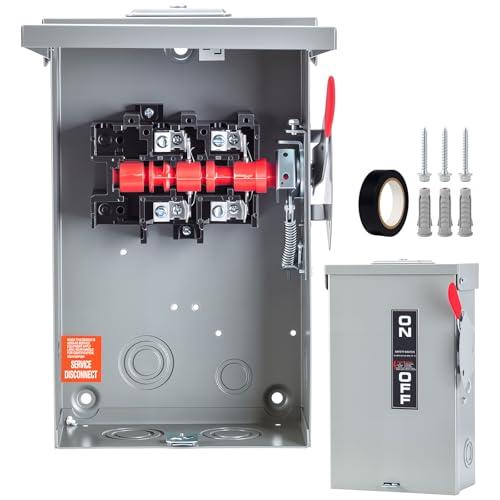
| A disconnect you will operate, not just install | 60A 2-pole safety switch | Lever-operated and rated indoor or outdoor |
| You want the ratings documented, cheaply | ICOOL 60A NEMA 3R | Publishes 2-pole, 3-wire, 1-phase, 240 VAC in a metal box |
| You want UL wording at the bottom of the market | 60A UL-certified pullout | Claims UL certification in a raintight rust-resistant box |
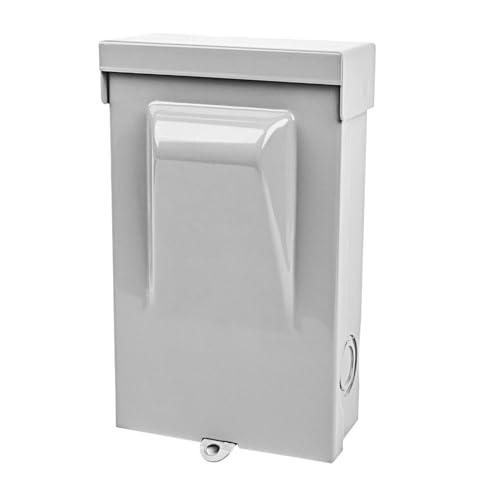
| You just need the right rating for the least money | 60A 240V pull-out box | Budget pick: correct rating, metal enclosure, minimal paperwork |
How we picked these six
- 60 amps, two poles, 240 volts. Anything that does not publish all three is not a candidate, because all three have to be right for a 240-volt charger circuit.
- A weather-rated metal enclosure. Every pick is NEMA 3R or described as rainproof or waterproof metal. A disconnect lives outdoors more often than not.
- Documentation, ranked honestly. We separated picks that publish a UL listing from picks that claim one in the product copy, and we say which is which on every card. On a component an inspector signs off, that distinction is the product.
- Non-fused only. The breaker is the overcurrent device. We did not rank fused disconnects.
- A live price on the refresh behind this page.Every pick returned a live price from Amazon's Product Advertising API.
The cheapest way to avoid this part entirely
Buy a plug-in charger. A cord-and-plug connection is itself a disconnecting means, which is one of several reasons a plug-in install on a NEMA 14-50 is the simpler project - the receptacle, the plug and the disconnect are one decision instead of three. Hardwired vs plug-in is the full trade-off, and plug-in chargers is the field. The catch is that 48-amp charging is hardwired by code, so if you want 11.5 kW you are back here.
If you are hardwiring, the disconnect is one line on a materials list that also includes the wire, the conduit, a GFCI breaker where the install needs one, and a panel-mounted surge protector if you are already in the panel. The panel parts under $200 page collects the lot.
Every price above is live, read from Amazon's Product Advertising API and stamped with the date our price layer last checked it.
Three checks before you buy one
- Ask the inspector, not the internet. Whether your install needs a disconnect, and whether a particular box satisfies them, is a local question. Ask it at permit time - permits and inspection covers how.
- Check what the charger manual says. Several manufacturers specify a disconnect in their own installation instructions regardless of code, and an install that ignores the manual is an install outside its listing.
- Decide whether it needs a neutral. The pick with the GFCI receptacle needs one at the box. A charger run of two hots and a ground cannot feed it, so that decision has to be made before the conductors are pulled, not after.
Where a disconnect is the wrong purchase
If your charger is plug-in, skip it - the plug is the disconnect and a box on the wall is another joint to fail. If the charger is within sight of the panel and your jurisdiction does not ask for one, skip it. And if you were buying one hoping for extra protection, buy a surge protector instead: a non-fused disconnect protects nothing, it only isolates.
What we have not done
We have not tested any of these and we have no lab. Amperage, pole count, voltage, enclosure class and certification wording are each listing's own published claims, and where a listing asserts a certification without a published file number we describe it as a claim rather than repeating it as fact. The scores are judgments from documented research against the rubric on our methodology page. We make no claim about long-term reliability for any product here.