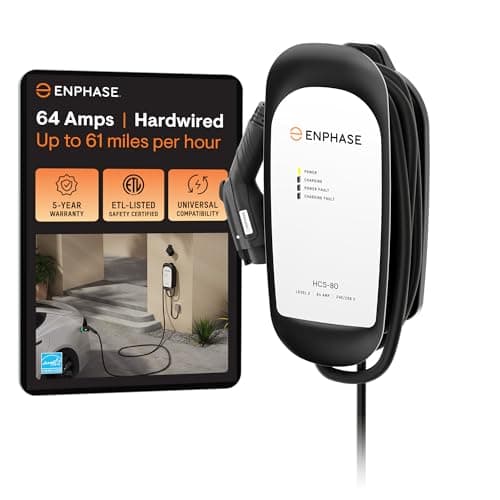
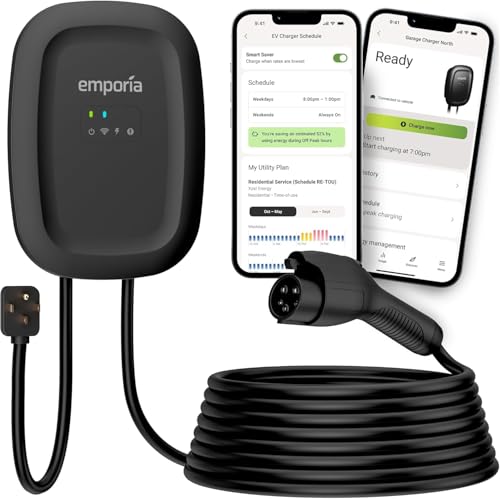
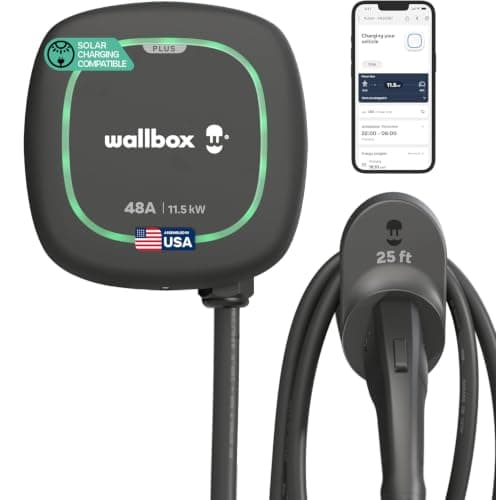
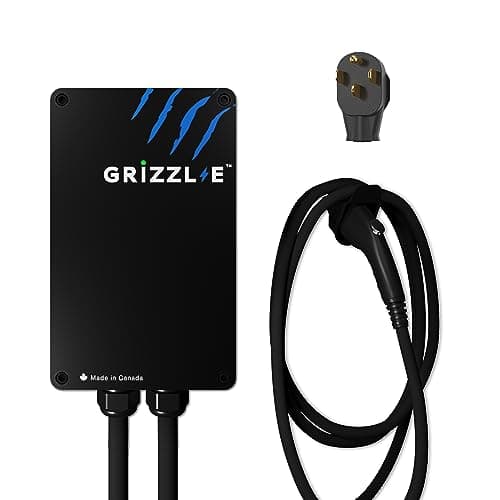
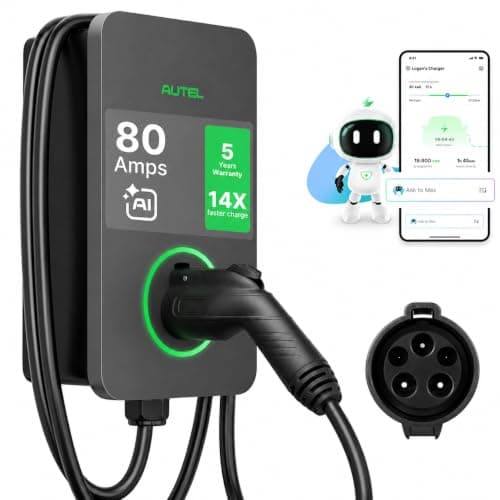
If your panel can carry it, the charger to buy for a GMC Hummer EV or Sierra EV is the Autel MaxiCharger 80A: 80 amps and 19.2 kW, which is the rate GM publishes for these trucks' onboard chargers, from a unit that is UL certified by CSA and costs well under GM's own 19.2 kW home charger. If 80 amps is out of reach but you can get a 100-amp subpanel's worth of headroom, the Enphase HCS-80 is the 64-amp middle tier. For the great majority of real driveways, where a 60-amp circuit is the honest ceiling, the Emporia Level 2 at 48 amps is the right purchase and the one we would make. And our budget pick is the Grizzl-E Classic, a sealed 40-amp plug-in unit that will still refill a Hummer-sized pack overnight.
GMC is the brand where this site's usual advice stops applying. Everywhere else we tell you that 48 amps is more than almost any car can use and that paying for 80 is paying for nothing - because on a car whose onboard charger tops out at 11.5 kW, an 80-amp charger charges at exactly 11.5 kW. GM's Ultium trucks are the exception. InsideEVs reports that the 2024 model year moved the Hummer EV from an 11.5 kW onboard charger to a 19.2 kW Level 2 AC onboard charger, standard on the SUV Edition 1, 3X and 2X and the pickup 3X and 2X, and lists the Sierra EV at 19.2 kW as well. GM's own charging pages name 7.7, 11.5 and 19.2 kW as the Level 2 rates it supports, and its PowerShift home unit is the 19.2 kW / 80-amp product.
Put that next to the packs. The Hummer EV Edition 1 is described as 212 kWh usable. That is roughly two and a half times a Model Y. On a 40-amp charger a pack that size is a two-night refill from low; at 19.2 kW it is an overnight one. This is the one brand where the circuit is genuinely the constraint rather than the car.
What each circuit actually gives a GMC truck
| Circuit | Charger | Rate | Who this is for |
|---|
| 100 A | 80 A | 19.2 kW | High daily mileage, or a Hummer-sized pack you run down |
| 80 A | 64 A | 15.4 kW | Most of the benefit, on a circuit more panels can take |
| 60 A | 48 A | 11.5 kW | The realistic sweet spot for the large majority of homes |
| 50 A | 40 A | 9.6 kW | A 14-50 you already have, and overnight charging is enough |
Those ratios are NEC Article 625 arithmetic: a charger is a continuous load, so the circuit is sized at 125 percent of it, which is the same as the charger drawing no more than 80 percent of the breaker. So 19.2 kW means a 100-amp circuit, and a 100-amp circuit means a serious conversation about your service. GMC's own charging pages publish per-trim Level 2 miles-per-hour estimates - up to roughly 30 miles per hour for the Hummer EV Edition 1 and 3X, and up to 36 to 38 for Sierra EV trims depending on battery - and those figures assume the high-output charger, which is exactly the point.
Be honest about the panel before you buy the charger
A 100-amp circuit for a charger is not a normal residential ask. Plenty of US houses have a 100 or 150-amp service in total. Before you spend on an 80-amp unit, get the load calculation done - EV charger load calculation is the method, and do I need a panel upgrade is the likely conclusion. If the answer is a service upgrade, price that first: it can cost several times the charger, and at that point the 48-amp route plus the money saved is a perfectly rational choice for a truck that sits on a driveway overnight.
There is a second, cheaper route worth knowing about. A load-managed charger can be installed on a circuit larger than the panel could otherwise support, because it sheds current when the house demands it - best EV chargers with load balancing is that field, and smart panels vs a panel upgrade compares it with the brute-force answer.
Connector: J1772 today, and the NACS question
GM's Ultium trucks ship with a J1772 AC inlet in the US, which is what four of the five picks on this page use. GM has also committed to the NACS connector across its lineup and supplies adapters for Tesla Supercharger access, so a Sierra EV or Hummer EV owner may hold both. For home charging this does not change much - the AC inlet on the truck is what your wall unit has to match - but it is worth reading does my GM EV need an adapter before you buy anything with a Tesla-style plug on it, and future-proofing for NACS if you are wiring a garage you intend to keep.
How we picked these five
- One pick per circuit size. 80, 64, 48 and 40 amps, because on these trucks the circuit is the variable that matters and the charger follows it.
- A published third-party safety listing. UL, cUL or ETL against UL 2594, named per pick. At 80 amps this stops being a nice-to-have.
- A live price on the refresh behind this page.Every pick returned a live price from Amazon's Product Advertising API.
- Cable length that reaches a long truck. A Hummer EV or a Sierra EV is a big vehicle and its charge port is on the front left. Every wall pick here ships at least 24 feet.
- No GM-branded hardware ranked.GM's own PowerShift unit is the obvious comparison and we cite it for its published rating, but we rank what we can price live through our own affiliate listings.
Every price above is live, read from Amazon's Product Advertising API and stamped with the date our price layer last checked it. The 80-amp tier moves on price more than any other part of this market, which is exactly why no number is typed into a sentence here. If you want the whole 19.2 kW field rather than the GMC-specific cut, best 80-amp EV chargers is the page.
Four checks for a GMC owner specifically
- Confirm your truck's onboard charger, by trim and model year.The 19.2 kW rating is a 2024-and-later change on the Hummer EV and is published per trim. Earlier trucks are 11.5 kW, in which case a 48-amp charger is your ceiling and an 80-amp unit buys nothing. Check the window sticker or the owner's manual for your VIN.
- Get the load calculation before the charger. 19.2 kW needs a 100-amp circuit. That is the expensive part of this project by a wide margin.
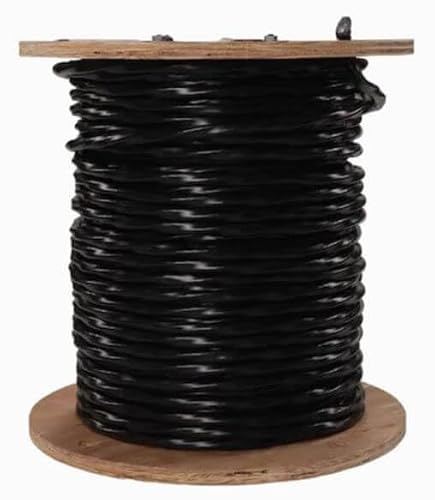
- Price the wire. At 80 amps the conductors are a material cost, not a rounding error - best wire for an EV charger has the gauges, and the 4 AWG roll we show alongside this page is the 60-amp cable, not the 100-amp one.
- Decide what overnight really needs to be. If the truck does 40 miles a day, 40 amps refills that in under two hours and the whole 80-amp conversation is optional. The case for 19.2 kW is a big pack run genuinely low, often.
Where the 80-amp route is the wrong purchase
If your truck is a pre-2024 Hummer EV or a trim GM lists at 11.5 kW, stop at 48 amps. If your service is 100 or 150 amps in total, stop at 48 amps and spend the difference on nothing. And if two vehicles share the driveway, a load-balancing pair or a dual-port unit is worth more than peak rate on one of them - best dual-port chargers.
What we have not done
We have not tested any charger here and we have no lab, and we have not measured any GMC truck. Every vehicle figure on this page is attributed: the 19.2 kW onboard charger and the 212 kWh usable pack come from InsideEVs' reporting, the Level 2 rate list and the per-trim miles-per-hour estimates from GMC's own charging pages, and GM's PowerShift and PowerUp 2 ratings from GM Energy. Sources differ on the Hummer EV's pack size depending on the measurement standard used, and we have said so rather than picking a number. The scores on each pick are judgments from documented research against the rubric on our methodology page, not measurements.