Skip to content
The Charge Curve

HUB 02 · Cables & Adapters

The Best Wire for an EV Charger

Your charger is capped by the thinnest thing in the circuit, and that is almost always the wire. Here is the right gauge for each breaker size, ranked, with the code table that decides it.

By Stephen V.Updated How we compare
#ad

We earn a commission when you buy through our Amazon links, at no extra cost to you. It never affects our rankings, and we say so when the cheaper product is the better buy. How this works.

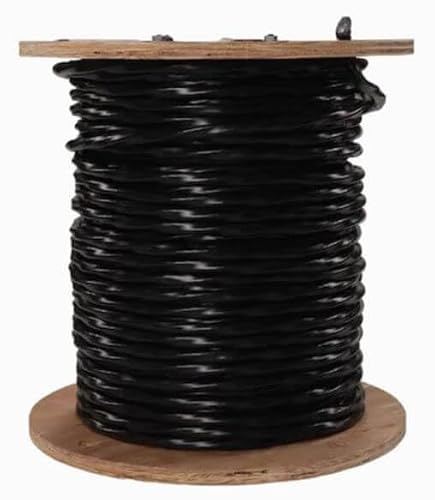
Generic 6/3 NM-B Cable With Ground, 50 ft

Our top pick

Best Charger Wire

6/3 NM-B Cable With Ground, 50 ft

8.3/10
$209.88Check Price

In stock at Amazon as of November 21, 2026.

#ad · we may earn a commission

Best for: A 50-amp circuit for a 40-amp charger

The cable a 40-amp charger circuit is actually made of: 6 AWG copper, three conductors plus ground, in a 50-foot roll that covers the run most garages need.

Read the full review ↓Compare all 6 picks ↓

The short answer

Quick picks

#ad · Live prices from the Amazon Product API, as of November 21, 2026. Where we have no verified live price, we show none — we would rather leave a gap than print a number that has gone stale.

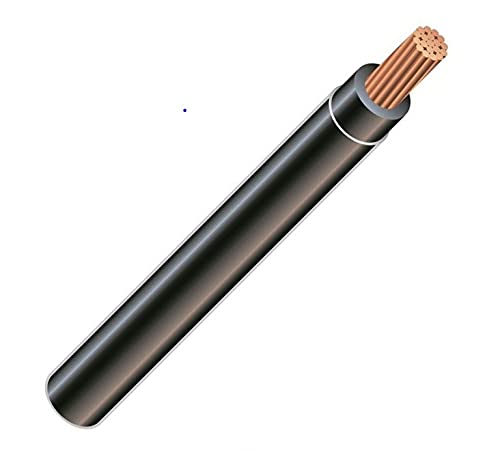
For most home EV charger installs the wire to buy is 6/3 NM-B cable: 6 AWG copper, three conductors plus a ground, which is rated 55 amps in the column Romex is held to and therefore covers the 50-amp circuit a 40-amp charger needs. If the run goes through conduit instead of through framing, buy 6 AWG stranded THHN instead - it terminates at a higher temperature, so the same gauge legally carries the 60-amp circuit a 48-amp charger requires. If your charger is 32 amps, 8/3 NM-B does the job for a little over half the money. And our budget pick is 10/3 NM-B, the 30-amp circuit that gives you 24-amp charging for the least cash of anything here.

This is the part of an EV charger project that people get wrong in the most expensive direction. A charger is a box on a wall; the circuit behind it is the actual purchase, and the wire is the component that fixes your charging speed permanently. You can swap a charger in ten minutes. Changing the wire means opening the wall again. Buy the gauge for the charging speed you want in five years, not the one that matches the charger in your cart today.

The one table that decides everything

Under NEC Article 625 an EV charger is a continuous load, which means the branch circuit is sized at 125 percent of the charger - the plain-English version being that the charger may draw no more than 80 percent of the breaker. So a 40-amp charger needs a 50-amp circuit, a 48-amp charger needs 60, a 32-amp charger needs 40, and a 24-amp charger needs 30. The wire then has to be rated for the breaker.

Here is the part almost every forum post gets muddled. Type NM-B cable - Romex - is built with 90 degree C insulation, but NEC 334.80 caps its allowable ampacity at the 60 degree C column of Table 310.16 no matter what the jacket says. Conductors pulled into a conduit and landed on 75 degree C terminations are used at the 75 degree C column. That single difference is why 6 AWG is a 50-amp wire as cable and a 60-amp wire in conduit.

Copper sizeNM-B cable (60C)In conduit (75C)Breaker it supportsCharger it supports
10 AWG30 A35 A30 A24 A / 5.8 kW
8 AWG40 A50 A40 A32 A / 7.7 kW
6 AWG55 A65 A50 A as cable, 60 A in conduit40 A, or 48 A in conduit
4 AWG70 A85 A60 A48 A / 11.5 kW

Those ampacity numbers are the published code table, sourced at the foot of this page. They are not our measurements and they are not negotiable by a listing's marketing copy. If a product page tells you its 8 AWG cable is good for 50 amps, it is quoting the 90 degree C column that 334.80 forbids you from using.

Which wire is yours

Your installBuyWhy
40-amp charger, indoor run through framing6/3 NM-B, 50 ft55 A at 60C covers a 50-amp breaker, in one cable with the ground inside
48-amp charger, or any outdoor run6 AWG stranded THHN in conduit65 A at 75C clears a 60-amp breaker, and conduit may go outside
48-amp charger, indoor, no conduit4/3 Romex SIMpull70 A at 60C - the only cable here that reaches a 60-amp circuit
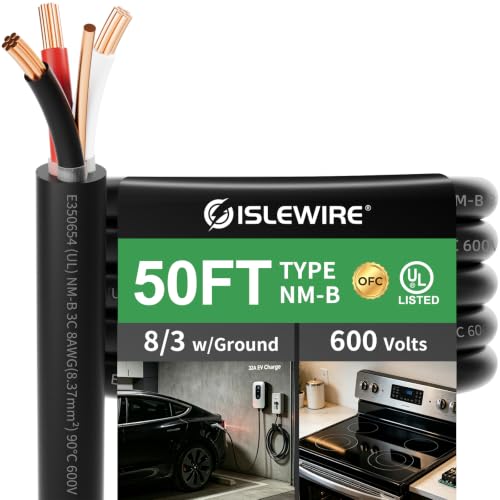
32-amp charger, or a car capped at 7.7 kW8/3 NM-B, 50 ftExactly 40 A at 60C, far cheaper and much easier to pull
Long diagonal run, 40-amp circuitSouthwire 8/3, 125 ftName-brand Romex long enough to avoid a splice
30-amp circuit beside the laundry10/3 NM-B, 25 ftBudget pick: 30 A at 60C, which is 24-amp charging

How we picked these six

  1. One gauge per circuit size. 10, 8, 6 and 4 AWG copper, which is the whole usable range for a residential charger between 24 and 48 amps. We did not rank two products for one job except where length genuinely changes the answer.
  2. A live price on the refresh behind this page.Every pick returned a live price from Amazon's Product Advertising API. No pick here is on a remembered number.
  3. Copper only. Aluminum feeders are legitimate and an electrician may propose one for a long run, but the sizing, the terminations and the anti-oxidant paste are a different conversation - copper vs aluminum covers it.
  4. Three conductors plus ground, where it is a cable. A 240-volt charger circuit is two hots and a ground; the cables here carry a neutral as well, which is what a charger needing 120 volts internally or a future 14-50 outlet will want.
  5. Length honesty. We ranked 25, 50 and 125-foot rolls separately because buying 125 feet for a 30-foot run is the most common way to waste money on this page.

Measure the run before you buy the roll

Measure the actual cable path, not the straight line. From the breaker up to the top of the panel, along the joists, down the stud bay, and then add about four feet for the loop inside the panel and the slack at the charger. People routinely under-buy by fifteen feet by measuring across a basement that the cable has to go around.

On runs past roughly 50 feet, voltage drop starts to matter as well as ampacity, and it is the reason an electrician sometimes specifies one size up from the table. How far can a charger be from the panel has the distance arithmetic, and wire and breaker size is the full version of the table above.

What the wire does not cover

Wire is one line on the materials list. A plug-in install also needs a 14-50 receptacle, and under NEC 625.54 the outlet that feeds a charger needs GFCI protection - a 50-amp two-pole GFCI breaker, which is not a cheap part. A hardwired install may need a disconnect. An outdoor or detached-garage run needs conduit, because no NM-B cable may leave the building. We rank all of those: GFCI breakers, 14-50 receptacles, conduit and disconnect switches. The panel parts under $200 page is the short version of the whole list.

Every price on this page is live, read from Amazon's Product Advertising API and stamped with the date our price layer last checked it. Wire prices move with the copper market more than almost anything else we rank, which is exactly why no number is typed into a sentence here.

In detail

The picks, in full

01
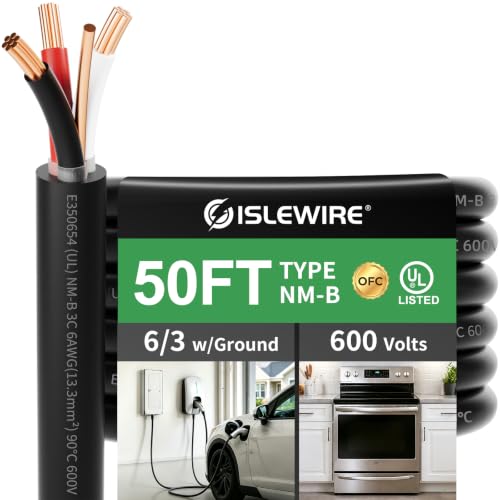
Generic 6/3 NM-B Cable With Ground, 50 ft

A 50-amp circuit for a 40-amp charger

6/3 NM-B Cable With Ground, 50 ft

6 AWG copper3 conductors + ground50 ft roll55A at 60C (NEC 310.16)
8.3/10

The cable a 40-amp charger circuit is actually made of: 6 AWG copper, three conductors plus ground, in a 50-foot roll that covers the run most garages need.

Ampacity headroom
8
Install difficulty
7
Length fit
9
Value
9

Pros

  • 6 AWG copper is rated 55 amps in the 60 degree C column NM-B is held to, which covers a 50-amp breaker with margin
  • A 50-foot roll is the length a panel-to-garage run usually lands on, so you are not buying 125 feet to use 40
  • Solid conductors with the ground inside the jacket means one cable, one staple schedule and no conduit

Cons

  • Solid 6 AWG is stiff - pulling it through drilled studs and a tight panel knockout is genuinely hard work
  • NM-B is an indoor, dry-location cable: it cannot be run outdoors, buried, or in a wet location

Don't buy this if…

…any part of the run leaves the building or goes underground, or you want a 60-amp circuit for 48-amp charging. Use THHN in conduit for the first and 4 AWG for the second.

$209.88View on Amazon

Price as of November 21, 2026. Prices change — Amazon's is the one that counts.

#ad · we may earn a commission from this link to 6/3 NM-B Cable With Ground, 50 ft

02
Wirenco Wirenco 6 AWG 19-Stranded THHN, 125 ft

A conduit run, or 60 amps on 6 AWG

Wirenco 6 AWG 19-Stranded THHN, 125 ft

6 AWG copper19-strand THHN125 ft spool65A at 75C in conduit
7.8/10

The wire you buy when the run goes through conduit instead of through studs - and the only 6-gauge option here that can legally carry a 60-amp circuit for a 48-amp charger.

Ampacity headroom
10
Install difficulty
6
Length fit
8
Value
7

Pros

  • Terminated at 75 degrees C rather than the 60 degrees NM-B is capped at, so 6 AWG THHN is rated 65 amps - enough for the 60-amp circuit a 48-amp charger needs
  • A 19-strand conductor pulls around bends far more easily than solid 6 AWG, which matters on any run with more than two elbows
  • In conduit it may run outdoors, along an exterior wall, or to a detached garage, which no NM-B cable is permitted to do

Cons

  • This is ONE conductor on a spool - a 240-volt charger circuit needs two hots, and you buy each color separately plus a ground
  • It is only permitted inside a raceway, so the conduit, the fittings and the labor to run them are on top of the wire price

Don't buy this if…

…your run is a straight indoor path through framing. A single 6/3 NM-B cable does that job for one price and one pull, with no conduit to buy.

$204.21View on Amazon

Price as of November 21, 2026. Prices change — Amazon's is the one that counts.

#ad · we may earn a commission from this link to Wirenco 6 AWG 19-Stranded THHN, 125 ft

03
Generic 8/3 NM-B Cable With Ground, 50 ft

A 40-amp circuit for 32-amp charging

8/3 NM-B Cable With Ground, 50 ft

8 AWG copper3 conductors + ground50 ft roll40A at 60C (NEC 310.16)
8.3/10

The right cable for a 40-amp circuit and a 32-amp charger - the setting a great many cars top out at anyway - at a little over half the price of 6 AWG.

Ampacity headroom
6
Install difficulty
8
Length fit
9
Value
10

Pros

  • 8 AWG copper is rated exactly 40 amps in the 60 degree C column, which is a 40-amp breaker and 32 amps of continuous charging
  • Markedly cheaper and far easier to pull than 6 AWG, and on a car that accepts 7.7 kW it costs you nothing in charging speed
  • Published as 600V UL listed on the live retail listing, which is the baseline claim to look for on any cable

Cons

  • 40 amps is the hard ceiling - you cannot later put a 50-amp breaker on this cable to get 40-amp charging
  • The same NM-B restriction as any Romex: indoor and dry locations only

Don't buy this if…

…you are installing a 40-amp or 48-amp charger, or you expect to change cars. Running 6 AWG now costs less than running wire twice.

$139.88View on Amazon

Price as of November 21, 2026. Prices change — Amazon's is the one that counts.

#ad · we may earn a commission from this link to 8/3 NM-B Cable With Ground, 50 ft

04
Southwire Southwire 4/3 Romex SIMpull NM-B, 125 ft

A 60-amp circuit for a 48-amp charger

Southwire 4/3 Romex SIMpull NM-B, 125 ft

4 AWG copper3 conductors + ground125 ft roll70A at 60C (NEC 310.16)
7.3/10

The only cable here that can carry the 60-amp circuit a 48-amp charger requires, in a single indoor pull rather than conduit and three spools.

Ampacity headroom
10
Install difficulty
5
Length fit
9
Value
5

Pros

  • 4 AWG copper is rated 70 amps in the 60 degree C column, which clears a 60-amp breaker and 48 amps of continuous charging
  • The SIMpull jacket is Southwire's lower-friction sheath, which is a real help on a cable this size through drilled framing
  • Does in one indoor cable what otherwise takes conduit plus three separate THHN spools

Cons

  • By far the most expensive wire on this page, and the price is per 125-foot roll whether you need the length or not
  • 4 AWG NM-B is thick and heavy - this is the gauge at which most people stop doing it themselves

Don't buy this if…

…your charger is 40 amps or less, or your car cannot accept more than 9.6 kW. 6 AWG is a fraction of the cost and 40-amp charging is the same speed on most cars.

$1,080.00View on Amazon

Price as of November 21, 2026. Prices change — Amazon's is the one that counts.

#ad · we may earn a commission from this link to Southwire 4/3 Romex SIMpull NM-B, 125 ft

05
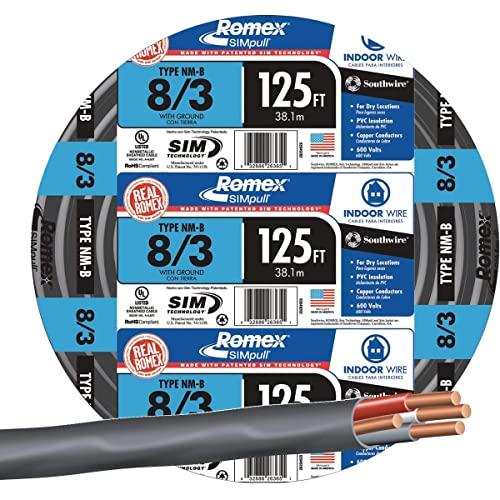
Southwire Southwire 8/3 Romex NM-B, 125 ft

A long 40-amp run, from a known brand

Southwire 8/3 Romex NM-B, 125 ft

8 AWG copper3 conductors + ground125 ft roll40A at 60C (NEC 310.16)
7.8/10

A named-brand Romex roll long enough for a panel-to-far-corner run, from the manufacturer whose print legend inspectors read every day.

Ampacity headroom
6
Install difficulty
8
Length fit
10
Value
7

Pros

  • 125 feet covers the long diagonal runs - panel in a basement corner, charger on the far garage wall - without a splice
  • Southwire is the name on most of what is already in a US house, and Romex is its trademark, so nothing about the cable will surprise an inspector
  • One long roll is usually cheaper per foot than two short ones and leaves slack for the loop inside the panel

Cons

  • You pay for 125 feet whether your run is 40 feet or 120, and the offcut has no second use
  • Still 8 AWG, so still a 40-amp circuit and 32 amps of charging - length does not change ampacity

Don't buy this if…

…your run is under about 50 feet. The 50-foot roll of the same gauge costs a fraction of this and does the identical job.

$327.97View on Amazon

Price as of November 21, 2026. Prices change — Amazon's is the one that counts.

#ad · we may earn a commission from this link to Southwire 8/3 Romex NM-B, 125 ft

06
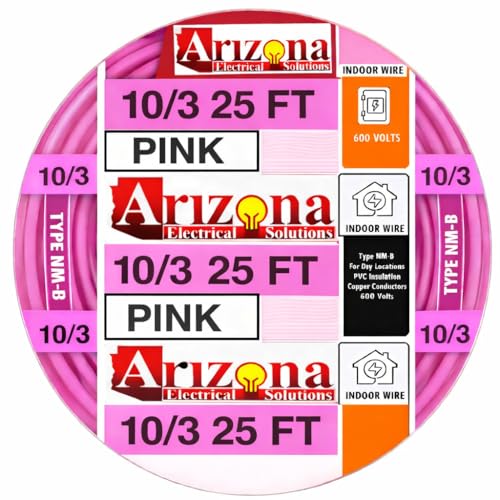
Generic 10/3 NM-B Cable With Ground, 25 ft

A 30-amp circuit for 24-amp charging

10/3 NM-B Cable With Ground, 25 ft

10 AWG copper3 conductors + ground25 ft roll30A at 60C (NEC 310.16)
7.8/10

Budget pick: the cheapest wire here that still does a real EV job - a 30-amp circuit for a 24-amp charger, which is exactly what a dryer-outlet install already is.

Ampacity headroom
4
Install difficulty
10
Length fit
7
Value
10

Pros

  • Budget pick: 10 AWG copper is rated 30 amps at 60 degrees C, which is a 30-amp breaker and 24 amps of continuous charging
  • Easy enough to pull and terminate that a 30-amp circuit is the realistic first EV circuit for a competent homeowner
  • A 25-foot roll is the right size for the short run most laundry-adjacent installs need

Cons

  • 24 amps is 5.8 kW - roughly half the speed of a 48-amp charger, and no setting changes that
  • Only worth running at all if the panel is genuinely close; the wire saving disappears on a long run

Don't buy this if…

…you have room in the panel for a 50-amp breaker. The wire is the cheap part of the job and the difference between 24 and 40 amps is permanent.

$52.00View on Amazon

Price as of November 21, 2026. Prices change — Amazon's is the one that counts.

#ad · we may earn a commission from this link to 10/3 NM-B Cable With Ground, 25 ft

Four checks before you cut anything

  1. Does your jurisdiction let you do this at all? A charger circuit is a permitted, inspected job in most of the US. Can I install it myself and permits and inspection are the two to read first. Buying the wire is not the point at which to find out.
  2. Is the run wet, outdoors, or buried? NM-B is dry-location only. The moment any part of the path leaves the building, you are in conduit with THHN or in underground-rated cable, and the cable picks here do not apply.
  3. Does your panel have room, and capacity? Two adjacent slots for a two-pole breaker is the easy part; the load calculation is the real one. Load calculation and do I need a panel upgrade decide whether a 60-amp circuit is even available to you.
  4. What does your car actually accept? This is the cheapest check and the one most likely to save you money. If the car tops out at 7.7 kW, a 60-amp circuit buys nothing - what amp charger do I need.

Where a thicker wire is the wrong purchase

Three cases. If your panel cannot support a 60-amp circuit without an upgrade, 6 AWG and a 50-amp breaker is the whole answer and the 4 AWG roll is money burned. If your car is capped at 32 or 40 amps, the same applies one size down. And if the run is short and the panel is right there, the labor saving from easier-to-pull 8 AWG can be worth more than the charging speed you give up - on a car that cannot use it, you give up nothing at all.

What we have not done

We have not tested any wire and we do not have a lab. The gauge, conductor count, length and construction of each pick are the live retail listing's own published figures, and the ampacity figures are the published NEC table, sourced below. The scores on each pick are judgments from that documented research against the rubric on our methodology page, not measurements. We make no claim about any manufacturer's long-term quality, and on generic-brand wire in particular we would say plainly that the print legend on the jacket is the thing your inspector will read, not our opinion.
How we picked

We do not run a testing lab

We compiled published specifications from manufacturer manuals and spec sheets, verified the safety listings (UL / ETL), computed the real running and installation costs, checked the wiring math against the NEC continuous-load rule, and read aggregated owner reviews — then scored each product against a published rubric. The scores are judgments from documented research — they are not bench measurements, because we do not have a test lab and we are not going to pretend we do. Every spec and cost figure is cited in Sources.

Questions

Frequently asked

What size wire do I need for a 50-amp EV charger circuit?

6 AWG copper. In Type NM-B cable, 6 AWG is rated 55 amps at the 60 degree C column that NEC 334.80 holds NM to, which covers a 50-amp breaker and the 40-amp charger on it. In conduit, the same 6 AWG is rated 65 amps at 75 degrees C, which is why conduit runs can go to a 60-amp breaker on the same gauge.

What wire does a 48-amp EV charger need?

A 60-amp circuit, which means 4 AWG copper as NM-B cable (70 amps at 60 degrees C) or 6 AWG stranded THHN in conduit (65 amps at 75 degrees C). The conduit route is usually cheaper in materials and much easier to pull, which is why most 48-amp installs are done that way.

Can I use 8 AWG wire for an EV charger?

Yes, on a 40-amp breaker with a charger set to 32 amps. 8 AWG copper is rated exactly 40 amps at 60 degrees C. What you cannot do is put a 50-amp breaker on 8 AWG cable to get 40-amp charging - that is the single most common mistake in this whole subject.

Is Romex OK for an EV charger?

Indoors and in dry locations, yes - it is what most residential charger circuits are run in. Its ampacity is capped at the 60 degree C column, so size it from that column. It may not be run outdoors, in a wet location, or underground; those runs need conduit with THHN or a cable type rated for the condition.

How many feet of wire should I buy?

Measure the cable path rather than the straight-line distance - up the panel, along the joists, down the stud bay - then add about four feet for the loop inside the panel and slack at the charger. Rolls here come in 25, 50 and 125 feet, and buying the next size up costs far less than coming up short.

Does thicker wire make my EV charge faster?

Only up to the point where something else becomes the limit. Thicker wire allows a bigger breaker, which allows a higher charger setting - but the car's own onboard charger is the final ceiling. If your car accepts 7.7 kW, a 60-amp circuit charges it at exactly the same speed as a 40-amp one.

Keep reading

More in this section

More Cables & Adapters

All cables & adapters →

Receipts

Sources

We do not run a testing lab, and we do not pretend to. Where a measured number came from someone else's lab, we name them and link them. Where we could not verify something, we say so on the page rather than quietly leaving it out. Read our full method.