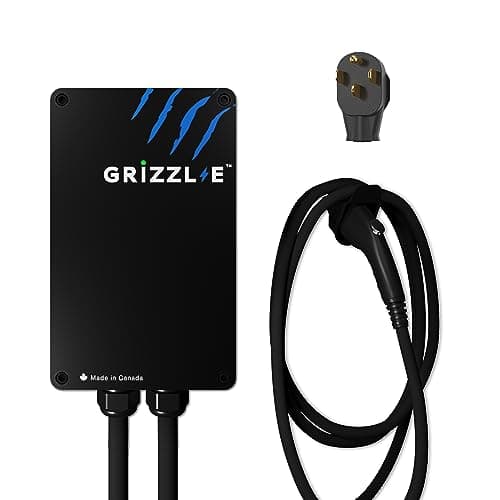
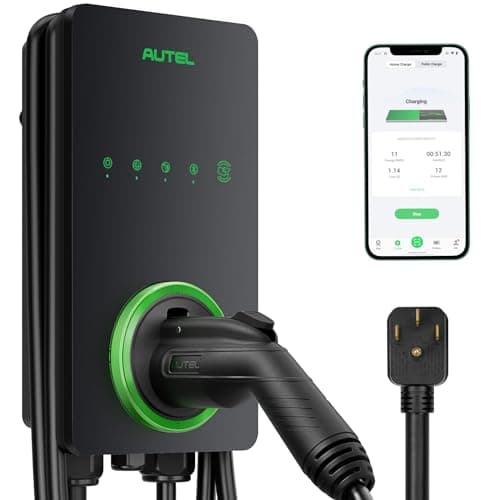
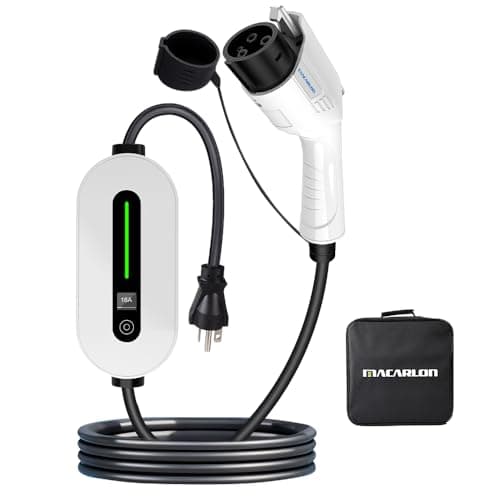
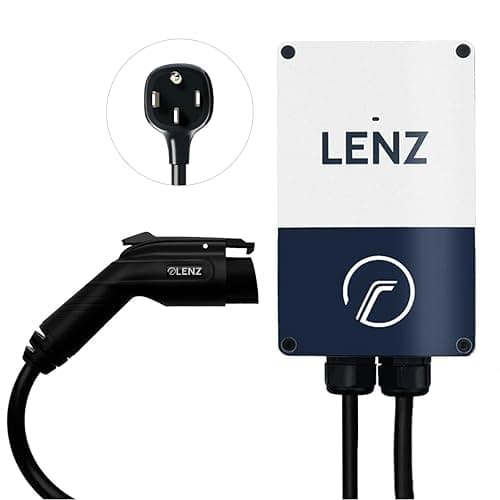
For a MINI or a Fiat 500e, the charger to buy is the LENZ Level 2: a full 40 amps, an ETL listing against UL 2594 and a metal NEMA 4X enclosure, on a plug-in NEMA 14-50 install - and 40 amps is at or above the ceiling of every car on this page, so there is nothing faster to buy. If the charger lives on an exposed wall, the Grizzl-E Classic spends the same money on a cast-aluminum Type 4 box. If you want an app and energy data, the Autel MaxiCharger is the one. And our budget pick is the MACARLON 16A Level 1/2 cord, which on a 500e-sized battery is a genuinely sufficient overnight charger for a fraction of everything else here.
Most charger advice is written for a 75 to 100 kWh crossover. These cars are not that, and the difference changes what you should buy. A small battery and a modest onboard charger means the expensive end of the charger market is unreachable by your car: it will draw what it can draw and ignore the rest. Spending up here is one of the clearest cases of buying performance you physically cannot use.
What these cars actually accept
The published figures, with their sources, because they differ between markets and model years and the US numbers are the ones that matter here:
| Car | Published AC rate | Published Level 2 time | Charger that reaches it |
|---|
| MINI Countryman SE ALL4 | 9.6 kW (240V, 40A) on the US spec sheet | 8 hr 15 min, 0-100 percent | 40 A |
| MINI Cooper SE | Up to 7.4 kW reported on 240V Level 2 | About 20 percent of charge per hour at 32 A or more | 32 A |
| Fiat 500e (2024 US) | 11 kW onboard charger | About 5 hr per Fiat; 6.2 hr per KBB on 240V | 48 A to reach 11 kW; 40 A gets most of it |
Two things are worth drawing out of that table. First, BMW's US specification sheet lists the Countryman SE's Level 2 charging at 9.6 kW - 240 volts, 40 amps - which is exactly what a 40-amp charger delivers. A 48-amp unit on that car is strictly wasted. The European sheets quote 7.4 kW single-phase and 11 kW three-phase, which is why you will see different numbers quoted online; three-phase is not a residential US supply.
Second, the Fiat is the one car here that can use more than 40 amps - the 2024 US car moved to an 11 kW onboard charger, up from about 6 kW on the first-generation car. But note what Fiat itself ships: the included Free2move Charge Home package is a 40-amp, up-to-9.6 kW unit. The manufacturer's own answer to its own car is a 40-amp charger, and a test by Recharged puts a 40-amp setup at roughly 4 to 4.5 hours against 3.5 to 4 at 48 amps. Half an hour, overnight, for a 60-amp circuit.
Which one is yours
| Your situation | Pick | Why |
|---|
| You have, or can add, a NEMA 14-50 | LENZ Level 2 | Listed 40 A plug-in, metal shell, lowest price of the listed wall units |
| Exposed outdoor wall or unheated garage | Grizzl-E Classic | Cast-aluminum UL Type 4 enclosure, no app to fail |
| You want scheduling and energy data | Autel MaxiCharger | Wi-Fi and Bluetooth, 25-foot cable, holster included |
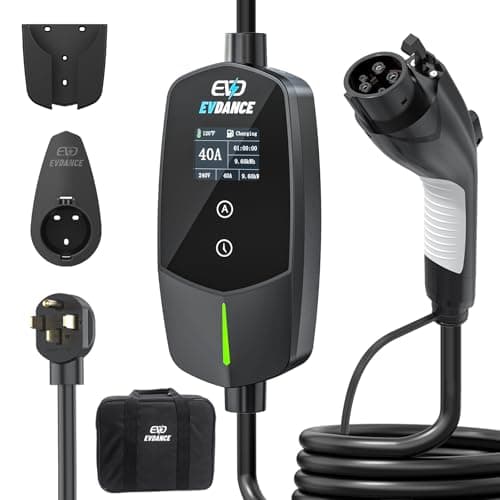
| You want one charger for home and the trunk | EVDANCE 40A Portable | 40 A with an on-box delay timer, no app required |
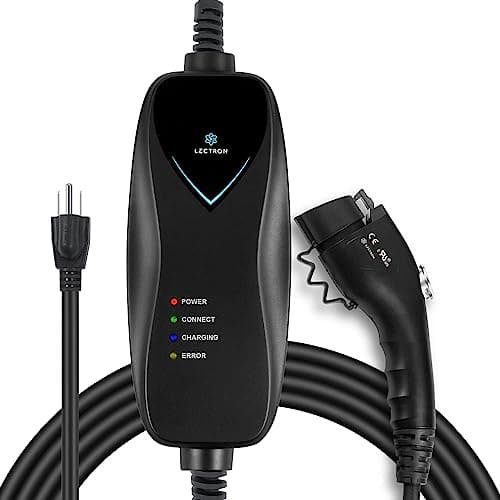
| No 240-volt circuit and a short commute | Lectron Level 1 | The certified 120-volt cord, ETL against UL 2594 |
| Cheapest route, with a 240-volt upgrade path | MACARLON 16A Level 1/2 | Budget pick: 12 A on a wall socket, 16 A on a 6-20 later |
The case for not installing Level 2 at all
We would not make this argument on a page about a Hummer EV, but it is honest here. The DOE's figures put Level 1 at roughly 3 to 5 miles of range per hour. Over a twelve-hour overnight window that is 36 to 60 miles - and on a small-battery car with a short commute, that is the whole day's driving replaced while you sleep, for the cost of a cord and no electrician at all.
The cases where that breaks down are real and worth naming: a long commute, two drivers sharing one car, cold weather (a small pack loses a larger proportion of its range to heating), or a car parked for only a few hours. If any of those is you, install the 14-50 and buy the 40-amp unit. Level 1 vs Level 2 is the full comparison, best Level 1 chargers is the field, and cold-weather range loss is the seasonal caveat.
A 6-20 is the cheap middle step nobody mentions
There is a tier between a household outlet and a 50-amp circuit, and on these cars it is the best-value install available. A NEMA 6-20 is a 20-amp 240-volt circuit - far cheaper to run than a 14-50, often doable within an existing panel without drama - and a 16-amp charger on it delivers about 3.8 kW, which is roughly three times Level 1. For a 500e or a Cooper SE that is a full charge overnight with hours spare. Our budget pick is a 6-20 charger with a 120-volt adapter in the box, which means you can buy it today and add the circuit whenever.
Every price above is live, read from Amazon's Product Advertising API and stamped with the date our price layer last checked it.
Three checks before you buy
- Look up your own car's onboard AC rating, by model year. The Fiat 500e doubled its onboard charger between generations and the MINI figures differ between the US and European sheets. The number on your window sticker or in your manual is the one that decides what charger is worth buying.
- Work out your real daily mileage, not your worst week. This is the single calculation that decides whether you need Level 2 at all on a car this size.
- Check the connector. These cars use J1772 in the US, which every pick here matches directly. If you also have a NACS-port car in the household, read mixed Tesla and J1772 households.
Where spending more is wrong on these cars
A 48-amp charger and the 60-amp circuit it needs. On the Countryman SE, whose US sheet says 9.6 kW, it delivers precisely nothing. On the Cooper SE, which is reported at up to 7.4 kW, it delivers less than nothing - a 32-amp charger already exceeds the car. Only the 500e can use any of it, and its own manufacturer ships a 40-amp charger with the car. An 80-amp unit is not a consideration on any car on this page.
What we have not done
We have not tested any charger here and we have no lab, and we have not measured any car. Every vehicle figure is attributed: the Countryman SE's 9.6 kW / 40 A and 8:15 Level 2 time to BMW Group's US specification sheet, the Cooper SE's 7.4 kW to InsideEVs, the 500e's 11 kW onboard charger and charging times to Recharged and KBB, and the included 40-amp home unit to FIAT USA. Where sources disagree - and on these cars they do, mostly because European three-phase figures circulate alongside US ones - we have said so rather than picking the flattering number. The scores are judgments from documented research against the rubric on our methodology page.