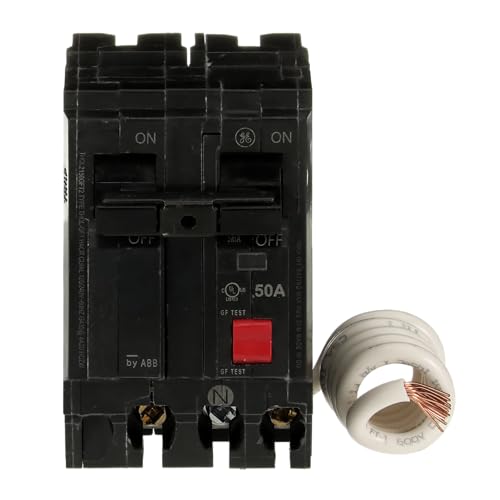
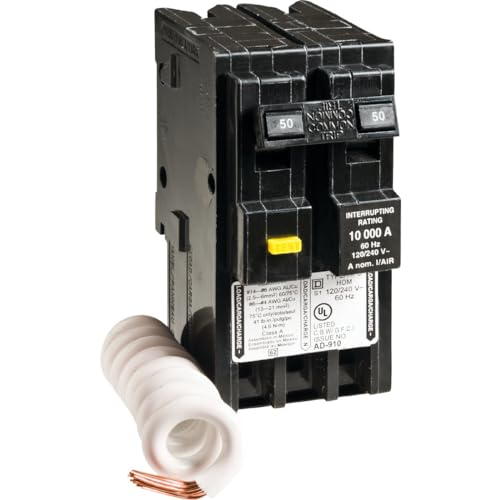
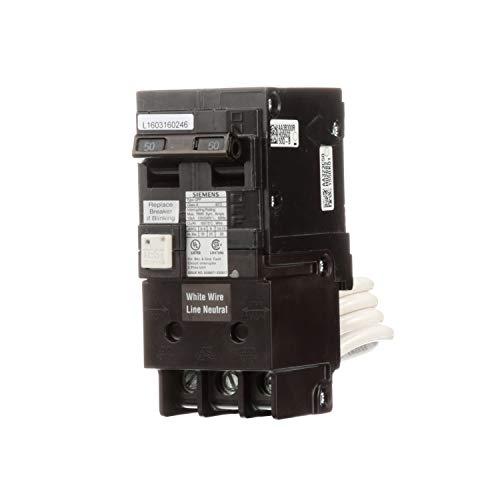
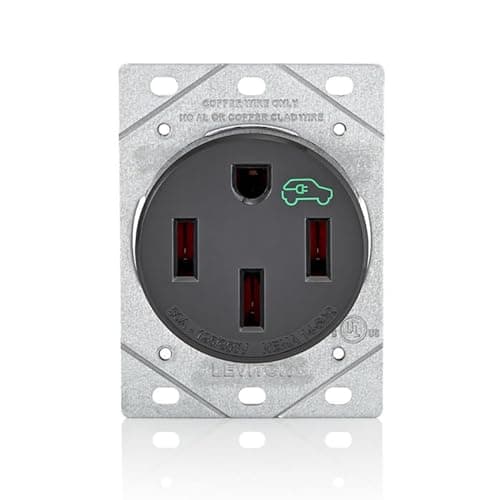
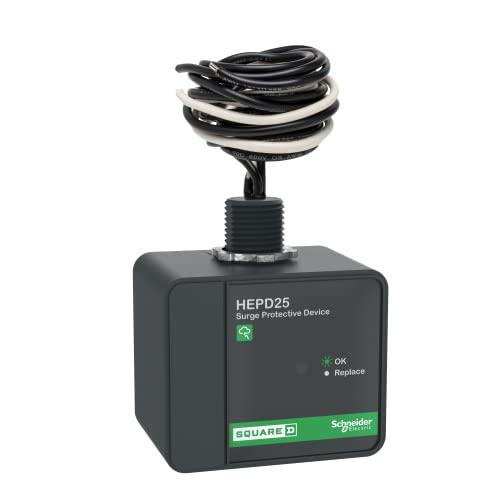
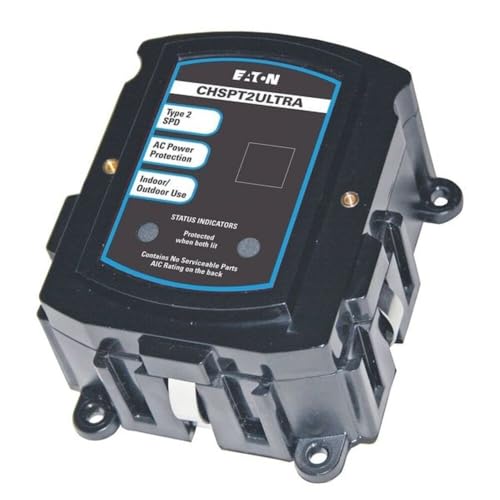
The one panel part under $200 we would buy first is the Eaton CHSPT2ULTRA whole-home surge protector: it is the component that protects the charger, the car's onboard charger and everything else on the service, and the labor is effectively free while the electrician is already in the panel. After that it is a breaker, and the right breaker is decided by your panel brand rather than by a ranking - the ABB Q-Line is the lowest-priced 50-amp GFCI here for a GE or ABB bus, the Square D Homeline for a Homeline panel, the Siemens QF250A for a Siemens, Murray or ITE. For a plug-in install, add the Leviton 1450R EV-rated receptacle. And our budget pick is the Square D HEPD25, the least you can spend and still have real panel-level surge protection.
Two hundred dollars is the useful ceiling for this category because it is where the panel-side parts list stops and the labor starts. Everything on this page is a component you or your electrician screws in; none of it is the charger and none of it is the wire. What makes the list worth having in one place is that most people price the charger, get a quote for the install, and are then surprised by a hundred and fifty dollars of breaker.
What each part is for, and whether you need it
| Part | Who needs it | Why |
|---|
| Whole-home surge protector (SPD) | Anyone adding a charger circuit | A 240-volt charger circuit cannot use a plug-in surge strip |
| 50-amp two-pole GFCI breaker | Every plug-in install | NEC 625.54 requires GFCI protection on the charger receptacle |
| EV-rated NEMA 14-50 receptacle | Every plug-in install | Charging duty is continuous; a cheap RV outlet is not built for it |
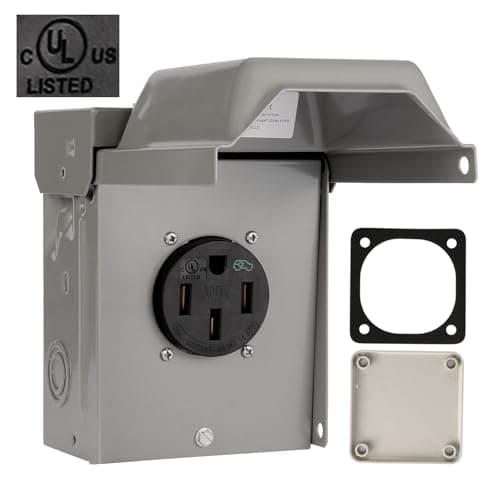
| Weatherproof outlet box | Outdoor or surface-mount installs | A 14-50 on an exterior wall needs a rated, lockable enclosure |
| Budget SPD | Tight budgets, low-surge areas | Real panel-level protection at a quarter of the flagship rating |
If your charger is hardwired rather than plug-in, the breaker question changes shape: there is no receptacle to GFCI-protect under 625.54, and many hardwired chargers provide their own ground-fault protection internally. The surge protector is just as relevant either way. GFCI breakers and EV chargers covers which installs need one, and best GFCI breakers for EV chargers is the full field including the 30 and 60-amp versions.
The breaker is chosen by your panel, not by us
This is the single most useful thing on this page. A circuit breaker is listed for one manufacturer's bus, and a breaker that is not listed for your panel is not a cheaper option - it is an unlisted installation, and an inspector who notices will fail it. So three of the seven picks here are the same part for different panels, and the right one is whichever matches the label inside your panel door. Open it and read it before you buy anything.
Prices across the three vary by more than you would expect for an identical function, which is why we rank them at all: if you happen to have a GE or ABB Q-Line panel, you get the cheapest 50-amp GFCI on this page, and if you have a Square D QO you pay the most. That is not a quality difference, it is a bus difference.
How we picked these seven
- A live price under the cap.Every pick returned a live price below $200 from Amazon's Product Advertising API on the refresh behind this page. Fifteen registry products qualified; seven are ranked.
- One part per job. Surge, breaker, receptacle, outdoor box, budget surge. Where one job has several right answers because of panel brand, we ranked one per brand and said why.
- Panel-side parts only. No chargers, no holsters, no adapters, no cables. The accessories under $100 page is the use-side list and shares not one product with this page.
- Published ratings. kA rating and UL 1449 edition for the SPDs; amperage, pole count and bus family for the breakers; EV-duty rating for the receptacle.
- No fabricated certifications.Where a listing claims a standard without a published file, we describe it as the listing's claim on that pick's card.
What this page deliberately leaves out
The wire and the conduit, because they are not panel parts and they are not reliably under $200 - a 125-foot roll of 4 AWG is multiples of this page's cap on its own. Best wire for an EV charger and best conduit are those pages. A disconnect switch, which only some installs need, is on best disconnect switches. And the labor, which on most installs is larger than everything on this page combined - installation cost is the honest number, and what to ask for in a quote is how to keep it down.
Every price above is live, read from Amazon's Product Advertising API and stamped with the date our price layer last checked it. In a price-band roundup a stale number is not a small error, it is the whole page being wrong, which is why no number here is typed into a sentence.
Three checks before you buy at this price
- Open the panel door and read the label. Homeline, QO, BR, Q-Line, QP-style. That word decides which breaker on this page is the one for you, and no amount of price comparison changes it.
- Decide plug-in or hardwired first. It determines whether you need a receptacle and a GFCI breaker at all - hardwired vs plug-in.
- Ask whether the panel has capacity, not just space. Two free slots is not the same as enough service. Load calculation is the check, and smart panels vs a panel upgrade is what to do if it fails.
Where spending more is worth it
On the surge protector, and only there. The budget SPD here is a quarter of the kA rating of the flagships for roughly half the price, and in an area with frequent lightning or utility switching that is a false economy - the device wears out protecting you. On breakers and receptacles, the parts are listed for their job and a more expensive one does not protect you better; buy the one that fits your bus.
What we have not done
We have not tested any of these parts and we have no lab. kA ratings, UL 1449 editions, amperage, pole count, bus family and enclosure ratings are each manufacturer's or listing's published figures. The code requirements are the NEC's, sourced below. The scores are judgments from that documented research against the rubric on our methodology page, not measurements, and we make no claim about failure rates for any product here.