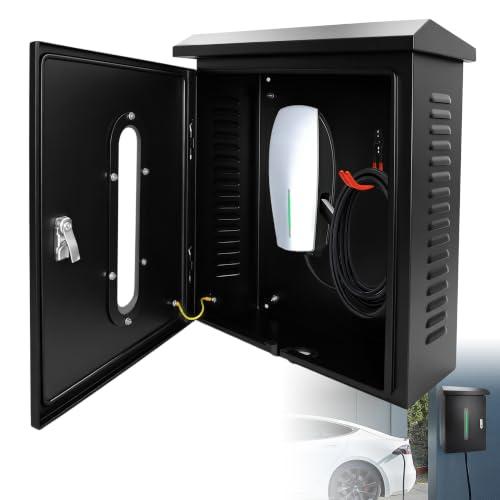
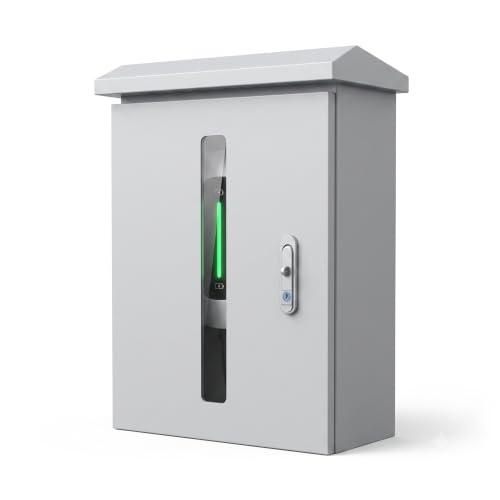
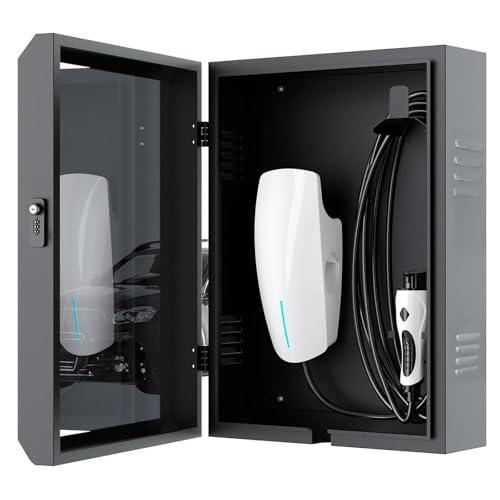
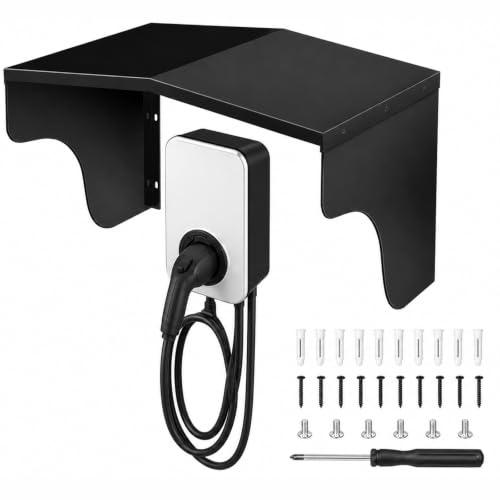
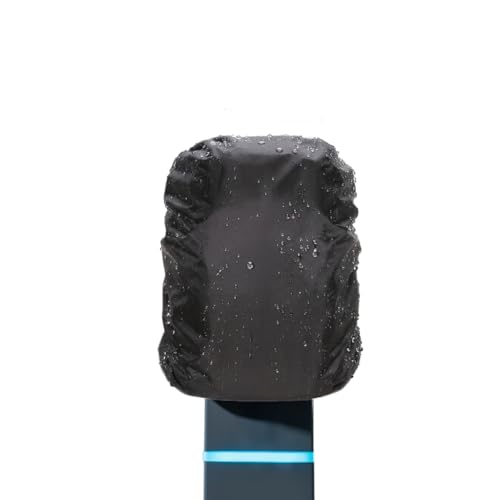
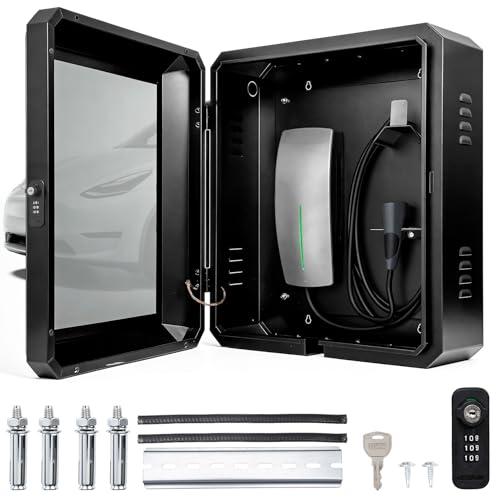
If the charger is on a street-facing wall and you want it locked away, buy the large wall-mount EV charger lock enclosure: it is the one that publishes named fitment for the Tesla Wall Connector Gen 1 to 3, ChargePoint, Grizzl-E and Autel, which is the only spec that matters on a box built around a specific unit. If you would rather still see the status light, the lock box with a viewable window does the same job and costs less. If weather is the whole problem and theft is not, the stainless three-sided rain shield is the better buy and never needs unlocking. And our budget pick is the universal waterproof cover, the cheapest item here that measurably extends a charger's life.
These products get shopped as one category and they are not one category. A lockable steel enclosure is a security product that also happens to shed rain. A rain shield or a fabric cover is a weather product with no security value at all, and we score them that way rather than pretending a cover deters anyone. Work out which problem you have first, because the answers cost very different amounts and solve different things.
Which problem do you actually have
| Your situation | Buy | Why |
|---|
| Charger on a driveway visible from the street | Large lock enclosure | Lockable, large enough for the coiled cable, named fitment |
| You want it locked but still want the status light | Lock box with window | Published at 23.6 x 16.9 x 8.3 in, with a viewing window |
| Theft is the main worry, in a taller charger body | Rainproof steel box, 18 x 24 x 9 in | States steel construction, which most of this class does not |
| Tesla Wall Connector, mid budget | PROHIKER enclosure | Names the most common US wall unit, at about half the price |
| Sun, rain and snow, no theft risk | Stainless 3-sided shield | No lock to open, no trapped heat, will not rust-streak |
| Cheapest thing that genuinely helps | Universal waterproof cover | Budget pick: keeps standing water and UV off for very little |
Three things to measure before you buy any of them
Fitment is where this category goes wrong, and it goes wrong in a way that is annoying to fix. Measure the charger body's height, width and - the one people forget - its depth off the wall including the cable gland. Then decide where the coiled cable is going to live. A box that fits the charger and not the cable means the cable hangs out of the bottom, which defeats both the weather sealing and most of the security.
The third measurement is the wall itself. These are heavy steel boxes with a charger inside them, and the mounting has to go into studs or into masonry anchors rated for the load - not into drywall. If you are mounting onto siding, you are looking for the stud line behind it.
The heat question nobody raises
A charger working at 40 or 48 amps for six hours produces heat, and manufacturers specify their enclosure ratings and clearances on the assumption of open air around the unit. Putting a sealed steel box around a hard-working charger changes that. We would say plainly: check your charger manufacturer's clearance guidance before you enclose it, and if you are in a hot climate, favor the open-bottomed shield or leave the enclosure door open while charging. A charger that is thermally throttling inside a locked box is a slower charger, and that is the opposite of what you paid for.
This is also an argument for buying the right charger rather than a box for the wrong one. If your unit is going to live outdoors permanently, a cast-metal, properly weather-rated charger needs far less help - best outdoor EV chargers is that field, and NEMA vs IP ratings explains what the rating on the body already promises you.
How we picked these six
- Separated security from weather, and scored them separately. Every pick carries a security score and a weather score, and the two covers here score honestly low on security because they offer none.
- Published fitment or published dimensions. We ranked the enclosures that name the chargers they fit, or state their external size, above the ones that say neither.
- Material, where the listing states it.Steel and stainless are named on two picks and we say so; on the others we describe the listing's own wording rather than assuming.
- Wall-mount only. We did not rank pedestal enclosures here - pedestals and stands is the page for a freestanding post.
- A live price on the refresh behind this page.Every pick returned a live price from Amazon's Product Advertising API.
One honest caveat on the whole category. We have not attacked any of these boxes and we have no basis for telling you how long one resists a determined thief. What a locked steel enclosure reliably does is remove the opportunistic theft - the cable cut, the connector walked off with - and that is the threat most owners are actually exposed to. EV charger theft prevention covers the rest, including the things that cost nothing.
Every price above is live, read from Amazon's Product Advertising API and stamped with the date our price layer last checked it.
Four checks before you buy
- Measure depth, not just height and width.The charger plus its cable gland plus a finger's clearance. Depth is the dimension these boxes are tightest on.
- Decide where the cable lives. Inside the box, or coiled on a hook outside it. If outside, you are buying weather protection for the charger and a holster for the cable.
- Read your charger's clearance guidance. Enclosing a unit that specifies open air around it is outside its instructions, and in a hot climate it can cost you charging speed.
- Check the mounting surface. Studs or rated masonry anchors. A loaded steel box on drywall anchors is a repair waiting to happen.
When none of these is the right answer
If the charger is inside a garage you lock anyway, you are buying a second lock for a locked door - spend the money on a holster that gets the connector off the floor instead. If the problem is a charger that was never rated for outdoors, the real fix is a charger that is. And if the problem is the cable rather than the charger, a lock box does not help: the cable is the thing that gets cut, and theft prevention is the page.
What we have not done
We have not tested any enclosure, cover or lock, we have not attempted to defeat any of them, and we have no lab. Dimensions, materials, lock type and named charger compatibility are each listing's own published claims. The security scores are judgments from that documented research against the rubric on our methodology page - they are not a rating of resistance to attack, and nobody should read them as one.