Skip to content
The Charge Curve

HUB 02 · Cables & Adapters

NEMA 14-50 Alternatives

Everyone tells you to install a 14-50. It is a good answer and it is not the only one. Here is what to buy when a 50-amp receptacle is not happening.

By Stephen V.Updated How we compare
#ad

We earn a commission when you buy through our Amazon links, at no extra cost to you. It never affects our rankings, and we say so when the cheaper product is the better buy. How this works.

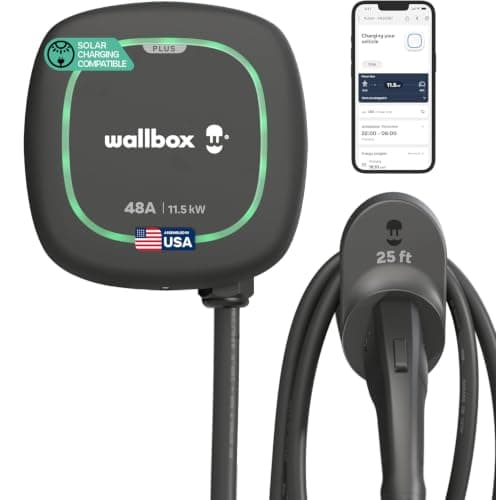
Wallbox Wallbox Pulsar Plus (48A)

Our top pick

Best 14-50 Alternative

Wallbox Pulsar Plus (48A)

8.4/10
$689.99Check Price

In stock at Amazon as of November 21, 2026.

#ad · we may earn a commission

Best for: A compact, fast, hardwired install

One of the smallest 48-amp chargers you can hang on a wall — full-speed hardwired charging in a box that barely announces itself.

Read the full review ↓Compare all 6 picks ↓

The short answer

Quick picks

  • Wallbox Wallbox Pulsar Plus (48A)
    01 Wallbox Pulsar Plus (48A)
    8.4

    One of the smallest 48-amp chargers you can hang on a wall — full-speed hardwired charging in a box that barely announces itself.

    Best for: A compact, fast, hardwired install

    $689.99Amazon
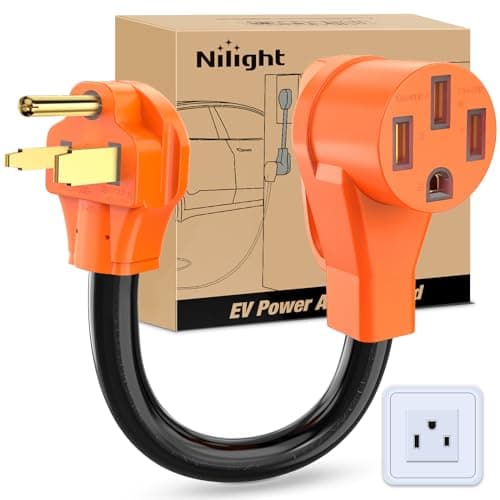
  • Nilight Nilight 6-50P to 14-50R Adapter
    02 Nilight 6-50P to 14-50R Adapter
    7.8

    For a garage that already has a welder outlet: a 6-50 plug into a 14-50 socket, 10-gauge copper, and a genuine 50-amp circuit behind it instead of a 30-amp one.

    Best for: A 6-50 welder outlet in the garage

    $22.49Amazon
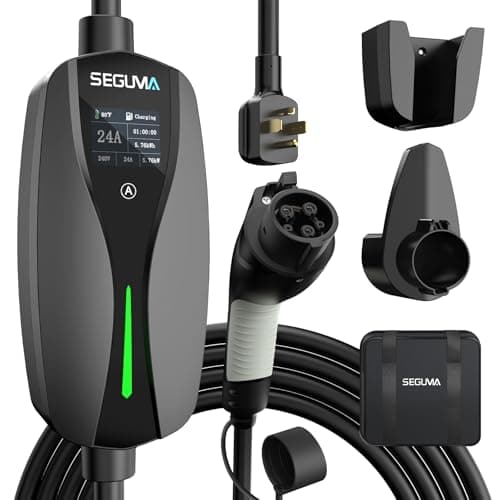
  • SEGUMA SEGUMA 24A NEMA 14-30 (J1772)
    03 SEGUMA 24A NEMA 14-30 (J1772)
    6.8

    A plain J1772 alternative to the EVDANCE: the same 24-amp ceiling on a 14-30 plug, a 25-foot cable and a status screen - the one to check if the EVDANCE is out of stock or priced higher on the day.

    Best for: A J1772 alternative to the EVDANCE

    $229.49Amazon
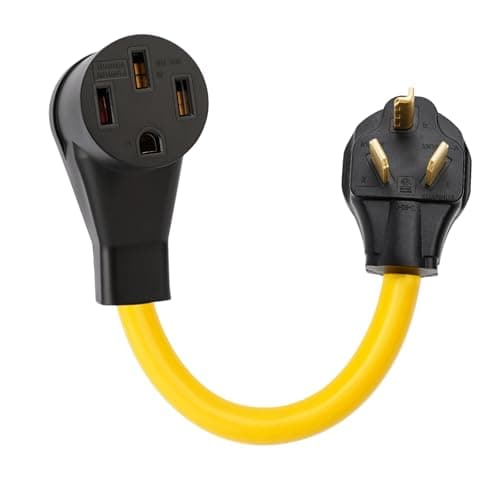
  • ACKING ACKING 10-30P to 14-50R Adapter
    04 ACKING 10-30P to 14-50R Adapter
    8.0

    The pick for a pre-1996 house: a 3-prong 10-30 dryer plug on one end, a 14-50 socket on the other, and an ETL listing - which almost nothing in this niche carries.

    Best for: An old 3-prong (10-30) dryer outlet

    $18.39Amazon
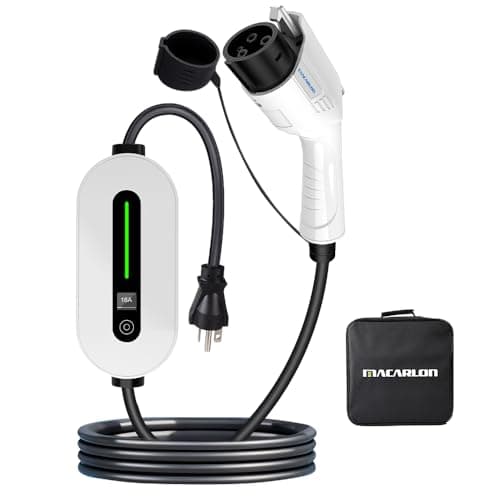
  • MACARLON MACARLON 16A Level 1/2
    05 MACARLON 16A Level 1/2
    8.0

    A 120-volt cord that also does Level 2 - it ships with a NEMA 6-20 plug and a 5-15 adapter, so a spare 240-volt outlet roughly doubles your charging speed for no extra hardware.

    Best for: A 120V cord with a 240V upgrade path

    $75.05Amazon
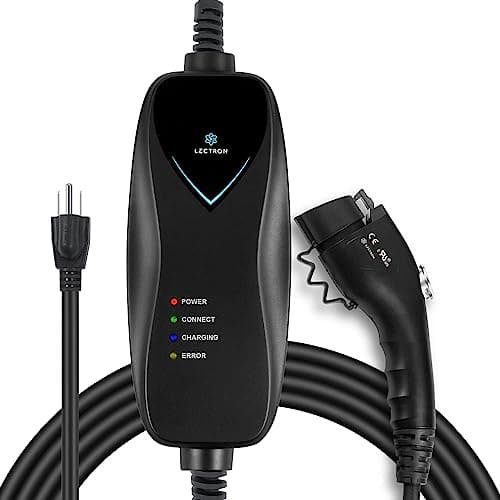
  • Lectron Lectron Level 1 (15A)
    06 Lectron Level 1 (15A)
    7.0

    The Level 1 cord to buy if you buy only one: ETL certified to UL 2594 and Energy Star listed, which most of the 120-volt field on Amazon cannot claim.

    Best for: The certified 120V cord

    $159.99Amazon

#ad · Live prices from the Amazon Product API, as of November 21, 2026. Where we have no verified live price, we show none — we would rather leave a gap than print a number that has gone stale.

The best alternative to a NEMA 14-50 is to skip the receptacle entirely and hardwire the charger: the Wallbox Pulsar Plus is our pick for that, because a hardwired 48-amp unit is both faster than anything a 14-50 can deliver and removes the single most common hot-connection failure point in home charging. If you already have a 6-50 welder outlet in the garage, a Nilight 6-50P to 14-50R adapter is a few dollars and you are done. If the only 240-volt circuit in the house is the dryer's, buy a charger built for it. And our budget pick is the MACARLON 16A Level 1/2 cord, which runs from an ordinary household outlet today and from a 240-volt 6-20 the day you add one.

A NEMA 14-50 is the default recommendation for home charging for sound reasons: it is a 50-amp receptacle, it supports 40-amp charging, it is what most plug-in chargers ship with, and it leaves the charger removable. It is also a 50-amp circuit, which means 6 AWG copper, a two-pole breaker with GFCI protection under NEC 625.54, a rated receptacle, a box, and in most places a permit and an inspection. For a lot of houses, that quote is the reason the car is still charging from a wall socket.

So this page answers the question people actually ask after the quote: what else is there. There are five real answers and they cost very different amounts.

The five routes around a 14-50

RouteCharging speedWhat it needs
Hardwire the chargerUp to 48 A / 11.5 kWA 60-amp circuit; no receptacle, no 14-50, often no GFCI breaker
An existing 6-50 welder outlet40 A / 9.6 kWA 6-50P to 14-50R adapter; the outlet is already a 50-amp circuit
The dryer circuit (14-30)24 A / 5.8 kWA charger built for 30 amps; no new circuit at all
An old three-prong dryer outlet (10-30)24 A / 5.8 kWA 10-30P to 14-50R adapter and a charger set to 24 amps
120 volts, or a 6-2012-16 A / 1.4-3.8 kWNothing, or a small 240-volt circuit later

The DOE's own figures frame the trade-off: Level 1 on a 120-volt outlet adds roughly 3 to 5 miles of range per hour, and Level 2 on a 240-volt circuit adds roughly 20 to 25. The gap between the bottom row and the rest of this table is therefore large. The gap between the top four rows is much smaller than people expect, and on many cars it is zero.

Why hardwiring is our first answer, not a compromise

It feels backwards to answer "I do not want to pay for a 50-amp outlet" with "hardwire it instead", so here is the reasoning. A 14-50 receptacle is a mechanical connection carrying 40 amps for hours a night, and a worn or cheap one running hot is the most common failure in home charging - which is exactly why EV-rated receptacles exist and why NEC 625.54 wants the outlet GFCI-protected. Hardwiring deletes that connection. It also deletes the receptacle, the box and in many cases the GFCI breaker from your parts list, which offsets a meaningful part of the cost difference.

What hardwiring costs you is portability: the charger is now part of the house. And 48-amp charging needs a 60-amp circuit, which is thicker wire and more panel capacity than a 14-50 needs - so this route is cheaper in parts but not necessarily cheaper overall. Hardwired vs plug-in is the honest comparison, and best hardwired chargers is the field.

The outlet you may already have

Before you price any of this, go and look at your garage and your laundry room. Three existing circuits turn into EV charging for the price of an adapter:

  1. A 6-50 welder outlet. Already a 50-amp circuit, already 240 volts, no neutral. An adapter to 14-50 gets you full 40-amp charging, and this is by far the best value route on this page. 14-50 vs 6-50 covers the difference, and 6-50 chargers is the direct-plug option.
  2. A four-prong 14-30 dryer outlet. A 30-amp circuit, so 24-amp charging. Buy a charger built for it rather than adapting a 40-amp one - 14-30 chargers.
  3. A three-prong 10-30 dryer outlet. Older, no neutral, still a 30-amp circuit. An adapter plus a charger you can hold at 24 amps.

The adapter routes carry the same caution as everywhere else on this site: an adapter does not limit current. On a 30-amp circuit the charger has to be set to 24 amps and stay there, and if it cannot, buy the charger built for the circuit.

When 120 volts is genuinely the right answer

If you drive under about 40 miles a day and the car sits home overnight, a 120-volt cord refills that every night with hours to spare and costs nothing to install. People talk themselves out of this far too quickly. Our budget pick here is the dual-voltage cord because it hedges: 16 amps on a 240-volt 6-20 - a far cheaper circuit than a 14-50 - and 12 amps on an ordinary outlet until then. Best Level 1 chargers is the field, and can I plug a charger into a regular outlet covers doing it safely.

Every price above is live, read from Amazon's Product Advertising API and stamped with the date our price layer last checked it.

In detail

The picks, in full

01
Wallbox Wallbox Pulsar Plus (48A)

A compact, fast, hardwired install

Wallbox Pulsar Plus (48A)

Hardwired 48A / 11.5kWJ177225ft cableEnergy Star + UL
8.4/10

One of the smallest 48-amp chargers you can hang on a wall — full-speed hardwired charging in a box that barely announces itself.

Charge speed
10
Build & weather
8
Smart features
8
Cable & connector
8
Value
8

Pros

  • Physically tiny for a 48-amp unit — the least obtrusive charger in our home roundup
  • Full 48-amp hardwired speed, matching the fastest home chargers
  • Energy Star and UL certified

Cons

  • Hardwired only at 48A — no plug-in convenience if you might move it
  • The app has historically drawn more owner complaints than the hardware itself

Don't buy this if…

…you rent or might take the charger with you. This is a permanent fixture — a plug-in unit or a portable EVSE is the right call for anyone who could move.

$689.99View on Amazon

Price as of November 21, 2026. Prices change — Amazon's is the one that counts.

#ad · we may earn a commission from this link to Wallbox Pulsar Plus (48A)

02
Nilight Nilight 6-50P to 14-50R Adapter

A 6-50 welder outlet in the garage

Nilight 6-50P to 14-50R Adapter

6-50P to 14-50R10 AWG pure copper250V, 50A to 50AWelder outlet
7.8/10

For a garage that already has a welder outlet: a 6-50 plug into a 14-50 socket, 10-gauge copper, and a genuine 50-amp circuit behind it instead of a 30-amp one.

Safety listing
6
Build quality
8
Fit
8
Value
9

Pros

  • A 6-50 welder outlet is normally on a real 50-amp circuit, so this is the one adapter here that does not force you down to 24 amps
  • Listed as 10-gauge pure copper, the same conductor spec as Nilight's 14-30 cord
  • A 6-50 outlet already has a proper equipment ground - no neutral-as-ground compromise
  • Turns an existing workshop circuit into a charging point with no electrician and no panel work

Cons

  • A 6-50 has two hots and a ground but no neutral, so the 14-50 socket it presents has no 120-volt leg - fine for an EV charger, useless and unsafe for an RV
  • We would still cap the charger at 32 amps on a 10-gauge adapter cord rather than the 40 amps a 50-amp circuit allows; Tesla's own 6-50 adapter limits to 32 amps
  • No UL or ETL listing is stated on the listing
  • Confirm the welder outlet really is on a 50-amp breaker before assuming the higher rate - check the panel, not the socket

Don't buy this if…

…the only 240-volt outlet you have is the dryer's. This plug will not fit it, and the amperage argument for buying it disappears on a 30-amp circuit anyway.

$22.49View on Amazon

$24.9910% off

Price as of November 21, 2026. Prices change — Amazon's is the one that counts.

#ad · we may earn a commission from this link to Nilight 6-50P to 14-50R Adapter

03
SEGUMA SEGUMA 24A NEMA 14-30 (J1772)

A J1772 alternative to the EVDANCE

SEGUMA 24A NEMA 14-30 (J1772)

24A max / 5.76kWJ1772NEMA 14-30 plug25ft UL-listed cable
6.8/10

A plain J1772 alternative to the EVDANCE: the same 24-amp ceiling on a 14-30 plug, a 25-foot cable and a status screen - the one to check if the EVDANCE is out of stock or priced higher on the day.

Charge speed
6
Build & weather
7
Smart features
5
Cable & connector
8
Value
8

Pros

  • Four settings - 10, 16, 20 and 24 amps - so its top setting is the 30-amp circuit's continuous limit
  • 25-foot cable the listing describes as UL listed, plus a storage bag for travel
  • 1.77-inch screen shows charging rate, voltage and time; IP66 control box rated from -22 to 122 degrees F

Cons

  • Like its NACS sibling, the listing claims a UL-listed cable and UL 94 V-0 housing material, not a UL or ETL listing for the charger as a whole
  • The listing is inconsistent about 120 volts: the title names a NEMA 5-15 plug while a bullet says 5-15 outlets need an extra adapter - confirm what is in the box before counting on Level 1
  • No delay timer or charging schedule is described on this listing

Don't buy this if…

…you want off-peak charging without an app. The EVDANCE's delay start does that; this listing describes no timer.

$229.49View on Amazon

$269.9915% off

Price as of November 21, 2026. Prices change — Amazon's is the one that counts.

#ad · we may earn a commission from this link to SEGUMA 24A NEMA 14-30 (J1772)

04
ACKING ACKING 10-30P to 14-50R Adapter

An old 3-prong (10-30) dryer outlet

ACKING 10-30P to 14-50R Adapter

10-30P to 14-50RETL Listed3-prong dryer plug30A to 50A
8.0/10

The pick for a pre-1996 house: a 3-prong 10-30 dryer plug on one end, a 14-50 socket on the other, and an ETL listing - which almost nothing in this niche carries.

Safety listing
9
Build quality
7
Fit
8
Value
8

Pros

  • ETL Listed, meaning a Nationally Recognized Testing Laboratory evaluated it - rare at this price and the single best reason to pick it
  • Fits the 3-prong L-shaped dryer outlet found in most houses wired before the 1996 NEC required 4-wire dryer circuits
  • Cheaper than the long-cord alternatives when the charger can live beside the outlet
  • Solves the most common no-install charging problem in an older home without touching the panel

Cons

  • A NEMA 10-30 outlet has no separate equipment grounding conductor, so the adapter has to tie the 14-50 socket's ground pin to the circuit's neutral - allowed only because NEC 250.140 grandfathers existing 3-wire dryer circuits
  • Cord length is not published on the listing
  • Presents a full 14-50 socket, so a charger left on its default setting will try for 40 amps on a 30-amp breaker

Don't buy this if…

…your dryer outlet has four slots. That is a 14-30, it has a real ground, and the Nilight or MECMO 14-30 cord is the better buy - there is no reason to give up the grounding conductor.

$18.39View on Amazon

$22.9920% off

Price as of November 21, 2026. Prices change — Amazon's is the one that counts.

#ad · we may earn a commission from this link to ACKING 10-30P to 14-50R Adapter

05
MACARLON MACARLON 16A Level 1/2

A 120V cord with a 240V upgrade path

MACARLON 16A Level 1/2

Level 1/2 · 120-240V8-16A adjustableNEMA 6-20 + 5-1525ft, IP66
8.0/10

A 120-volt cord that also does Level 2 - it ships with a NEMA 6-20 plug and a 5-15 adapter, so a spare 240-volt outlet roughly doubles your charging speed for no extra hardware.

Charge speed
5
Portability
9
Build & weather
8
Cable & connector
9
Value
9

Pros

  • Runs Level 1 on a household outlet (120V / 12A) and Level 2 on a 240V outlet with the included NEMA 6-20 plug - the cheapest way to leave the Level 1 ceiling behind
  • Adjustable current (8/10/13/16A) plus a charge schedule, so it can be dialed down for a weak outlet or set to run off-peak
  • Long 25-foot cable and an IP66-rated body

Cons

  • Its Level 2 mode is 16 amps, not the 40 amps a full-size Level 2 charger delivers - it is a step up from 120V, not a replacement for a wall unit
  • The 240V half only helps if you actually have (or add) a NEMA 6-20 outlet

Don't buy this if…

…you have a 240-volt 50-amp outlet available. At that point a 40-amp portable charges several times faster for not much more money.

$75.05View on Amazon

$79.005% off

Price as of November 21, 2026. Prices change — Amazon's is the one that counts.

#ad · we may earn a commission from this link to MACARLON 16A Level 1/2

06
Lectron Lectron Level 1 (15A)

The certified 120V cord

Lectron Level 1 (15A)

Level 1 · 110V15A / 1.65kWNEMA 5-15 plugETL (UL 2594), IP65
7.0/10

The Level 1 cord to buy if you buy only one: ETL certified to UL 2594 and Energy Star listed, which most of the 120-volt field on Amazon cannot claim.

Charge speed
3
Portability
9
Build & weather
8
Cable & connector
7
Value
8

Pros

  • ETL certified to the UL 2594 standard and Energy Star listed - a real third-party safety listing on a cord you leave plugged in unattended overnight
  • IP65 rated with over-voltage, over-current and short-circuit protection
  • 16-foot cable and a plain NEMA 5-15 plug, so it works at any grounded household outlet

Cons

  • Costs more than the no-name 120-volt cords it sits beside - the certification is what you are paying for
  • A 15-amp draw is above the 12-amp continuous limit of a standard 15-amp household circuit, so it wants a 20-amp circuit to run flat out

Don't buy this if…

…you drive enough to need a real overnight refill. Level 1 adds roughly 3-5 miles of range per hour no matter whose cord it is - if that will not keep up, buy a Level 2 charger and a 240V outlet.

$159.99View on Amazon

$179.9911% off

Price as of November 21, 2026. Prices change — Amazon's is the one that counts.

#ad · we may earn a commission from this link to Lectron Level 1 (15A)

Four checks before you choose a route

  1. Walk the house and read every 240-volt outlet. 6-50, 14-30, 10-30, 14-50. Photograph the face of each one. An existing circuit beats a new circuit on cost every single time.
  2. Find out what your car accepts. If the onboard charger tops out at 7.7 kW, the dryer-circuit route costs you almost nothing and the 48-amp route buys nothing - what amp charger do I need.
  3. Get the quote before you buy the charger. On almost every install the circuit costs more than the charger, and the route you pick changes the circuit more than it changes the charger - installation cost.
  4. Ask whether the charger can hold a current setting. Every adapter route on this page depends on it. If the unit forgets its setting after a power cut, pick a different route.

When to just install the 14-50 after all

If you want the charger to be removable, if you may move house, or if you want the circuit to serve something else one day, a 14-50 is a genuinely good piece of infrastructure and the reason everyone recommends it. Two further cases: if you rent out the property, a plug-in charger on a 14-50 can be swapped in ten minutes by someone who is not an electrician; and if your panel cannot support a 60-amp circuit, the 50-amp route is the fastest charging available to you. Our 14-50 receptacles page ranks the outlets and 14-50 chargers ranks what plugs into them.

What we have not done

We have not bench-tested any product here and we have no lab. Amperage, plug and receptacle types, conductor sizes and certifications are the manufacturers' and listings' own published claims; the charging-speed ranges are the US Department of Energy's and the 80-percent circuit arithmetic is the NEC's, both sourced below. The scores are judgments from that documented research against the rubric on our methodology page, not measurements.
The gear

Recommended gear for this guide

The products this guide refers to, with prices pulled live from Amazon and dated on each card.

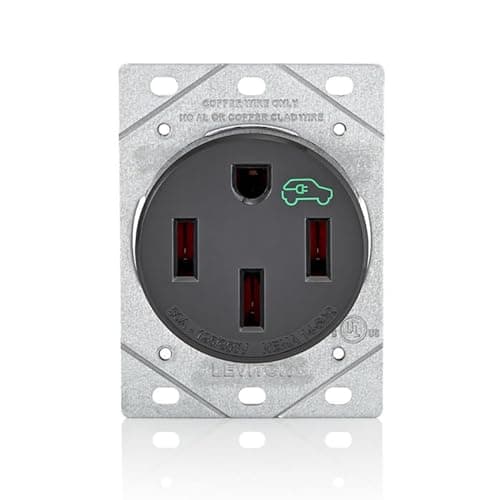
  • Leviton Leviton 1450R EV Receptacle

    The dedicated EV-rated receptacle

    Leviton 1450R EV Receptacle

    The receptacle Leviton built specifically for EV charging - rated for the long charge sessions and constant plug cycles a home charger puts a range outlet through, from a brand electricians already trust.

#ad · As an Amazon Associate we earn from qualifying purchases.

How we picked

We do not run a testing lab

We compiled published specifications from manufacturer manuals and spec sheets, verified the safety listings (UL / ETL), computed the real running and installation costs, checked the wiring math against the NEC continuous-load rule, and read aggregated owner reviews — then scored each product against a published rubric. The scores are judgments from documented research — they are not bench measurements, because we do not have a test lab and we are not going to pretend we do. Every spec and cost figure is cited in Sources.

Questions

Frequently asked

Do I have to install a NEMA 14-50 to charge an EV at home?

No. You can hardwire the charger instead, use an existing 6-50 welder outlet or a 14-30 dryer circuit with the right charger, or charge at 120 volts with no new circuit at all. A 14-50 is the most common recommendation because it balances speed and removability, not because it is the only option.

Is hardwiring cheaper than installing a 14-50?

In parts, often yes - you skip the receptacle, the box and in many cases the GFCI breaker that NEC 625.54 requires on a charger outlet. In total it depends on the circuit: 48-amp hardwired charging needs a 60-amp circuit and thicker wire than a 50-amp 14-50 install, so get both quoted.

Can I charge an EV from a welder outlet?

Yes. A NEMA 6-50 welder outlet is a 50-amp 240-volt circuit with no neutral, which supports 40-amp charging. Either buy a charger with a 6-50 plug or use a 6-50P to 14-50R adapter with a standard 14-50 charger. It is the cheapest route to full-speed Level 2 on this page.

What is the cheapest way to charge an EV at home?

A 120-volt cord into an existing outlet, which costs nothing to install and adds roughly 3 to 5 miles of range per hour - enough for most daily driving if the car sits overnight. The cheapest Level 2 route is an adapter onto a 240-volt circuit you already have.

Is a 14-50 adapter safe on a 30-amp dryer circuit?

Only with a charger you can set to 24 amps and that keeps the setting. The adapter itself imposes no current limit, so the entire safety of that arrangement depends on the charger's configuration. A charger built for a 30-amp circuit removes the dependency, and we would always prefer that.

Does a 14-50 outlet need a GFCI breaker?

NEC 625.54 requires GFCI protection for the receptacle that supplies EV charging equipment, which in practice means a two-pole GFCI breaker - a real cost line that hardwiring often avoids. GFCI breakers is the page.

Keep reading

More in this section

More Cables & Adapters

All cables & adapters →

Receipts

Sources

We do not run a testing lab, and we do not pretend to. Where a measured number came from someone else's lab, we name them and link them. Where we could not verify something, we say so on the page rather than quietly leaving it out. Read our full method.