Skip to content
The Charge Curve

HUB 02 · Cables & Adapters

The Best EV Charger Cable Protectors

Nothing you buy for a charger is cheaper than the part that stops a car wheel from landing on 25 feet of cable.

By Stephen V.Updated How we compare
#ad

We earn a commission when you buy through our Amazon links, at no extra cost to you. It never affects our rankings, and we say so when the cheaper product is the better buy. How this works.

VEVOR VEVOR 1-Channel Rubber Cable Protector Ramp (4-Pack)

Our top pick

Best Cable Protector

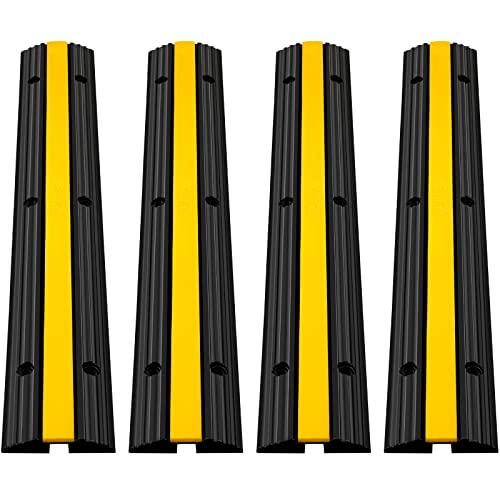
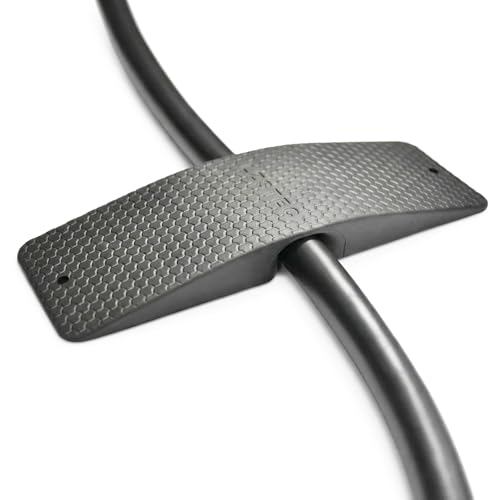
VEVOR 1-Channel Rubber Cable Protector Ramp (4-Pack)

9.0/10
$33.92Check Price

$39.9015% off

In stock at Amazon as of November 24, 2026.

#ad · we may earn a commission

Best for: A cable that crosses the drive

The pick for the one failure that actually destroys a charging cable: a car crossing it. Four single-channel rubber ramps with a published 18,000-pound load rating, which is what a crossed cable needs under it.

Read the full review ↓Compare all 6 picks ↓

The short answer

Quick picks

#ad · Live prices from the Amazon Product API, as of November 24, 2026. Where we have no verified live price, we show none — we would rather leave a gap than print a number that has gone stale.

Buy for the threat you actually have. If the cable crosses where a car drives, buy the rated drive-over ramp - the four-pack of single-channel rubber ramps with a published 18,000-pound load rating, which is the only kind of protection that survives a tire. If you charge with the garage door closed on the cable, buy the soft rubber pass-through guard; it is the cheapest item here and it stops the damage nobody notices until the jacket splits. If the problem is abrasion, pets or sun, buy the 26-foot sleeve, which is long enough to cover a whole home charging cable rather than part of one.

Home charging cable damage is nearly always one of three things, and the products that fix them are not interchangeable. A sleeve will not save a cable from a wheel. A ramp will not stop a dog chewing it. A door guard does nothing at all unless you charge with the door closed. The useful version of this page is therefore not a ranking of rubber - it is a diagnosis, followed by the right part.

Which of the three is your problem

What is happeningWhat you needWhat to look for
The cable crosses a drive, apron or shared parking areaA rated drive-over rampA published load rating in the thousands of pounds, and a channel sized for one cable
You charge with the garage door closed on the cableA door pass-through guardA published maximum cable diameter, and soft rubber that seals an uneven slab
The cable crosses a path where people walkA low-profile floor cord coverA walk-over profile in one continuous length - not a vehicle ramp
Jacket wear, pets, sun, or scraping on concreteA sleeveLength that covers the full cable, and a published inside diameter
Two cables or a hose share one crossingA two-channel rampSeparate channels, so nothing is stacked, and the higher load rating

Note what is not on that list: nothing here protects a cable from theft or from weather at the charger itself. Those are different purchases, and we rank them separately on EV charger lock boxes and covers and in EV charger theft prevention.

Why the drive-over case is the one that matters

A Level 2 charger is a 240-volt appliance delivering roughly 25 miles of range an hour, and the cable is the part of it you handle. NEC 625.17 allows a listed charger up to 25 feet of usable output cable unless it ships with a cable management system - so on a typical install there is a lot of cable, and on anything other than a one-car attached garage some of it ends up across a path a vehicle uses.

That is the failure with a real cost attached. A crushed cable on a portable EVSE means buying another EVSE. On a hardwired wall unit the cable assembly is often not separately replaceable, which turns a tire print into a charger replacement. Against that, a four-pack of rated rubber ramps is trivial money - and it is the one item on this page we would call mandatory rather than nice to have, for anyone whose cable crosses a drive.

The spec that matters is the published load rating, and the numbers in this class are large for a reason: a ramp is rated per axle, and the rating is what tells you the channel will not collapse onto the cable under a wheel. The two ramp picks here publish 18,000 and 22,000 pounds. Anything advertising "heavy duty" with no number is a cord cover with ambitions.

The garage door case nobody plans for

Charging with the door closed is extremely common - you want the car charging, you do not want the garage open all night, and the cable only needs an inch of gap. The problem is that the door is heavy, its seal is designed to compress against a flat slab, and the cable is now the highest point under it. Night after night, that is a concentrated load on one spot of jacket, and the slab edge is doing the same thing from below.

A pass-through guard is a shaped piece of rubber that holds the door off the cable and gives the cable a channel through the gap. The spec to check is the published maximum cable diameter, because a guard sized for a thin portable's cord will not close over a 48-amp cable. Our budget pick publishes a 0.83-inch maximum, which covers most home charging cables - measure yours first.

If your garage door is the recurring problem, also read the cable length guide: sometimes the honest fix is a charger mounted where the cable does not need to leave the building at all.

Sleeves: what they are for and what they are not

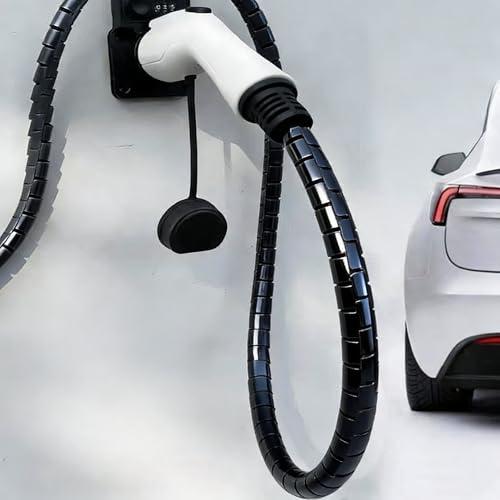
A sleeve is a wear surface. It stops the jacket being sanded by a concrete slab every time you coil the cable, it keeps teeth off it, and it takes the UV on an outdoor run. It does not add crush resistance in any meaningful way, and we would not want a reader buying one in the belief that it makes the cable drive-over safe.

Two specs decide a sleeve: length and inside diameter. Length matters because a cable that is 90 percent covered has a bare 10 percent, and the bare part is where the damage goes. The 26-foot pick here covers a full-length home cable end to end; the premium split-sleeve option is 20 feet, which leaves the last stretch exposed on a 24-foot cable - a trade-off we have named in its cons rather than hidden. Inside diameter decides whether your cable fits at all, and a split sleeve has the practical advantage of going on and coming off without unplugging anything.

How we picked these six

  1. One product per threat. Drive-over, two-channel drive-over, garage door, walkway, abrasion, premium abrasion. No two picks here answer the same question, and the page says plainly which one is yours.
  2. Published load ratings, where a load is involved. For anything a vehicle crosses, a number or it does not rank. The walk-over floor cover is ranked explicitly as a pedestrian product, with no vehicle rating claimed for it.
  3. Published cable diameters, where fit is involved. Door guards and sleeves either state a diameter or get flagged for not stating one.
  4. A live price and an in-stock offerfrom Amazon's Product Advertising API on the refresh behind this page, for all six.
  5. Length honesty.We ranked by what a pack actually contains - four ramp sections versus one, 26 feet of sleeve versus 20 - because "cheapest" in this category is usually a quantity trick.

The order to buy in

If you are starting from nothing and the cable crosses a drive, buy the ramp first and nothing else; it is the only item here that prevents a cable replacement. Add the door guard if you charge with the door closed - it is cheap enough that it is not really a second decision. Add a sleeve last, and only if you can see wear on the jacket or you have a pet that takes an interest. And if you find yourself buying all three, the real fix may be upstream: a charger closer to the car, or a pedestal out where the car parks, which removes the crossing entirely. A cable retractor solves the same problem from above for an indoor bay.

Every price on this page is live, read from Amazon's Product Advertising API and stamped with the date our price layer last checked it. Rubber goods in this category move on multi-pack promotions constantly, which is exactly why no number is typed into a sentence here.

In detail

The picks, in full

01
VEVOR VEVOR 1-Channel Rubber Cable Protector Ramp (4-Pack)

A cable that crosses the drive

VEVOR 1-Channel Rubber Cable Protector Ramp (4-Pack)

1 channel18,000 lb load rating4-packRubber, indoor or outdoor
9.0/10

The pick for the one failure that actually destroys a charging cable: a car crossing it. Four single-channel rubber ramps with a published 18,000-pound load rating, which is what a crossed cable needs under it.

Protection
10
Fitment clarity
8
Durability
9
Value
9

Pros

  • A published load rating in five figures, which is the difference between a cable protector and a cosmetic cord cover
  • Four sections in the box, so a single order covers a realistic crossing width rather than one tire track
  • Single-channel is the right size for one EV cable - the channel grips it instead of letting it slide around

Cons

  • Rubber ramps are heavy and they move if they are not anchored, which on a sloped drive means drilling or adhesive
  • A ramp is a trip edge as well as a protector, and four sections of it is a noticeable curb across a walkway

Don't buy this if…

…nothing drives over the cable. Indoors, a flat floor cover or a sleeve does the job without the ramp.

$33.92View on Amazon

$39.9015% off

Price as of November 24, 2026. Prices change — Amazon's is the one that counts.

#ad · we may earn a commission from this link to VEVOR 1-Channel Rubber Cable Protector Ramp (4-Pack)

02
LZSTEC LZSTEC EV Charger Cable Garage Door Pass-Through Guard

Charging with the door closed

LZSTEC EV Charger Cable Garage Door Pass-Through Guard

Garage door pass-throughFits cables up to 0.83 inSoft rubberSeals uneven floors
8.3/10

Budget pick, and the fix for the damage people do not see coming: a soft rubber pass-through that lets the cable leave a closed garage door without the door's weight landing on it. Published to fit EV cables up to 0.83 inch.

Protection
7
Fitment clarity
9
Durability
7
Value
10

Pros

  • Budget pick: the cheapest item on this page and it addresses the one scenario where a cable gets crushed every single night
  • Publishes a maximum cable diameter, so you can check it against your own cable before ordering
  • Soft rubber conforms to an uneven slab, which is where a rigid guard leaves a gap for water and insects

Cons

  • It protects the cable at the threshold only - the rest of the run across the drive is still exposed
  • No published load rating, so it is a door guard rather than something to drive over

Don't buy this if…

…you charge with the door open, or the charger is outside. There is nothing for this to do.

$11.84View on Amazon

$14.9921% off

Price as of November 24, 2026. Prices change — Amazon's is the one that counts.

#ad · we may earn a commission from this link to LZSTEC EV Charger Cable Garage Door Pass-Through Guard

03
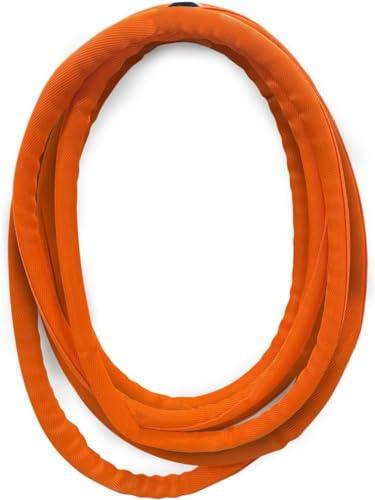
Generic EV Charger Cable Protector Sleeve, 26 ft

Covering the whole cable

EV Charger Cable Protector Sleeve, 26 ft

26 ft length7/8 in inside diameterFlexible split sleeveAbrasion and pet resistant
7.8/10

Twenty-six feet of flexible 7/8-inch sleeve, which is the length that actually covers a full home charging cable rather than part of one - aimed at abrasion, pets and door squeeze.

Protection
7
Fitment clarity
8
Durability
7
Value
9

Pros

  • Long enough for a 24 or 25-foot charger cable end to end, so there is no bare section left for a pet or a tire
  • Publishes an inside diameter, which is the spec that decides whether your cable will actually go in
  • Adds a wear surface over the part of the cable that drags on concrete every time you coil it

Cons

  • A sleeve is abrasion protection, not crush protection - it will not save a cable from a car wheel
  • Sleeving a thick cable makes it noticeably stiffer, which is a real cost on a cable you handle twice a day

Don't buy this if…

…the threat is a vehicle. Buy the ramp; the sleeve is for abrasion, teeth and UV.

$22.99View on Amazon

Price as of November 24, 2026. Prices change — Amazon's is the one that counts.

#ad · we may earn a commission from this link to EV Charger Cable Protector Sleeve, 26 ft

04
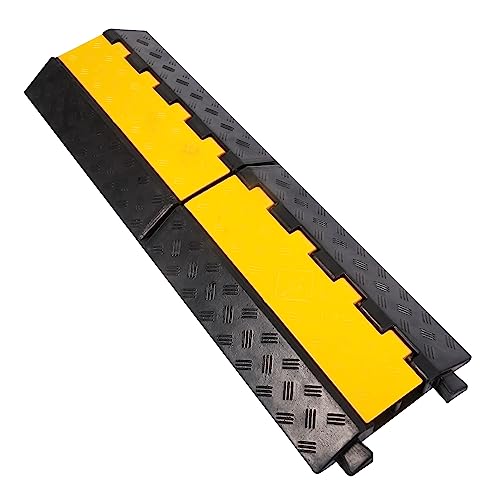
YONSHENG YONSHENG 2-Channel Rubber Cable Ramp (1-Pack)

Two cables in one crossing

YONSHENG 2-Channel Rubber Cable Ramp (1-Pack)

2 channels22,000 lb load rating1-pack sectionAsphalt, concrete or gravel
8.5/10

Two channels and a published 22,000-pound rating, sold as a single section: for the driveway where a charging cable and something else - a hose, an extension lead, a second cable - cross the same line.

Protection
10
Fitment clarity
8
Durability
9
Value
7

Pros

  • The highest published load rating of the two ramp picks here, and two separate channels so cables are not stacked on each other
  • Sold as one section, so you buy the exact length you need instead of a four-pack you have to store
  • Published for gravel as well as asphalt and concrete, which most ramp listings do not state

Cons

  • Costs more per section than the four-pack, so covering a wide crossing with these gets expensive quickly
  • Two channels makes it wider and taller than a single-channel ramp - more curb to walk over and more to drive over

Don't buy this if…

…you only have one cable to protect. The single-channel four-pack covers more ground for less money.

$44.99View on Amazon

Price as of November 24, 2026. Prices change — Amazon's is the one that counts.

#ad · we may earn a commission from this link to YONSHENG 2-Channel Rubber Cable Ramp (1-Pack)

05
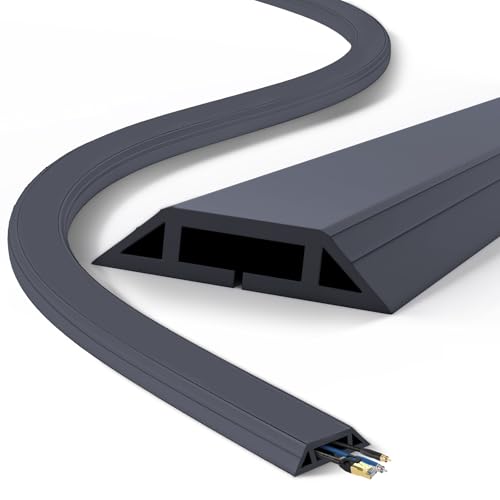
Eapele Eapele Rubber Floor Cord Cover, 10 ft

A cable across a walkway

Eapele Rubber Floor Cord Cover, 10 ft

10 ft lengthLow-profile rubberIndoor or outdoorWalk-over profile
7.8/10

A low-profile rubber floor cover for the stretch of cable that crosses where people walk - the trip hazard answer, in a shape you can step on rather than over.

Protection
7
Fitment clarity
8
Durability
8
Value
8

Pros

  • Ten continuous feet in one piece, so a cable crossing a garage doorway or a path is covered without joins to catch a toe
  • Low enough to walk over comfortably, which a drive-over ramp is not
  • Published for outdoor as well as indoor use, so it can stay down on a path through the winter

Cons

  • A walk-over profile is not a drive-over profile - it has no published vehicle load rating and should not be used where a car crosses
  • Ten feet is a short run; a long driveway crossing needs several, and the joins are where they lift

Don't buy this if…

…a vehicle crosses the cable. Buy the rated ramp instead - this is a pedestrian fix.

$31.99View on Amazon

Price as of November 24, 2026. Prices change — Amazon's is the one that counts.

#ad · we may earn a commission from this link to Eapele Rubber Floor Cord Cover, 10 ft

06
Design Engineering Design Engineering EV Charging Cable Protector, 20 ft Split Sleeve

A brand-name sleeve

Design Engineering EV Charging Cable Protector, 20 ft Split Sleeve

20 ft lengthSplit-sleeve designNamed manufacturerEV cable specific
7.5/10

The named-brand sleeve: 20 feet of split-sleeve cover from a company whose day job is heat and abrasion protection in motorsport, for the owner who wants a manufacturer behind the part.

Protection
8
Fitment clarity
8
Durability
9
Value
5

Pros

  • Split-sleeve construction goes on without unplugging anything and comes off the same way, which a closed sleeve cannot do
  • Sold by an established thermal and abrasion-protection manufacturer rather than an anonymous seller, so there is somebody to warranty it
  • Marketed specifically for EV charging cables, so the diameter and flexibility are chosen for this job

Cons

  • By far the most expensive sleeve here, at several times the price per foot of the generic option
  • Twenty feet is shorter than a 24-foot charger cable, so the last few feet stay bare

Don't buy this if…

…you want the whole cable covered for the least money. The 26-foot generic sleeve is longer and much cheaper.

$82.19View on Amazon

$94.7513% off

Price as of November 24, 2026. Prices change — Amazon's is the one that counts.

#ad · we may earn a commission from this link to Design Engineering EV Charging Cable Protector, 20 ft Split Sleeve

Four checks before you buy

  1. Measure your cable's diameter. One number, thirty seconds, and it decides whether a door guard closes over it and whether a sleeve will take it. Home charging cables commonly sit between roughly half an inch and seven-eighths; the picks here publish their limits.
  2. Measure the crossing, not the cable. Ramps are sold in sections about three feet long. A single-car apron may need two; a double driveway needs four or more. Buying one section for a wide crossing leaves the cable exposed either side of it, which is where the tire finds it.
  3. Decide whether anything drives over it. This is the only question that changes the product category. Walk-over covers and sleeves have no vehicle rating and should not be used where a car crosses, no matter how solid they feel.
  4. Check the slope. On a sloped drive, unanchored rubber walks downhill over a few weeks. Plan to anchor with adhesive or fasteners, or accept that you will be straightening them.

What protects the cable that these products do not

Three things, and they are all free. Unplug by the connector, never by pulling the cable - the strain relief at the coupler is the most expensive place to cause a fault. Coil loosely in big loops rather than tight ones around a hook; a cable has a bend radius and a tight hook exceeds it. And look at the connector face every few weeks: discoloration or pitting on the contacts is the early warning that heat is building in a joint, and no amount of rubber on the drive fixes that.

Where a cable protector is the wrong purchase

If the cable is already damaged, stop. A split jacket, a cut, exposed braid or a cracked connector housing is a replace-it situation, not a cover-it-up situation - the AFDC's own home charging guidance is to use safety-certified equipment tested by a nationally recognized testing laboratory, and a damaged cable is no longer the thing that was tested. If the cable is being driven over because it is strung across a public sidewalk, that is usually a code and liability problem rather than a product problem, and a ramp does not make it legal.

What we have not done

We have not tested any of these products and we do not have a lab. Load ratings, lengths, channel counts and cable diameter limits are the live retail listings' own published figures; we have not loaded a ramp to its rating or crushed a sleeve. The scores are judgments from that documented research against the rubric on our methodology page. On the unbranded items in particular, our honest advice is that the published load rating and the return window are the two things worth buying on.
How we picked

We do not run a testing lab

We compiled published specifications from manufacturer manuals and spec sheets, verified the safety listings (UL / ETL), computed the real running and installation costs, checked the wiring math against the NEC continuous-load rule, and read aggregated owner reviews — then scored each product against a published rubric. The scores are judgments from documented research — they are not bench measurements, because we do not have a test lab and we are not going to pretend we do. Every spec and cost figure is cited in Sources.

Questions

Frequently asked

Can you drive over an EV charging cable?

Not deliberately, and not without protection. The cable carries 240 volts at up to 48 amps on a typical home install and its jacket is not designed to take a vehicle wheel; a crush can damage conductors or the connector housing without leaving an obvious mark. Where a cable has to cross a drive, a rubber ramp with a published load rating is the part that makes it survivable - and on a hardwired charger whose cable is not separately replaceable, that ramp is cheap insurance.

Is it safe to close the garage door on the charging cable?

It is extremely common, and it is the slow kind of damage: the door's weight and seal press on one spot of jacket every night, with the slab edge pressing from below. A rubber pass-through guard holds the door off the cable and gives it a channel through the gap. Check the guard's published maximum cable diameter against your own cable before buying.

Do cable sleeves stop a car crushing the cable?

No, and we would not want anyone buying one for that. A sleeve is abrasion, pet and UV protection - it adds a wear surface, not crush resistance. If a vehicle crosses the cable, the product you need is a rated drive-over ramp.

What load rating does a cable ramp need?

The ratings in this class are published per axle and run into the thousands of pounds - the two ramp picks here state 18,000 and 22,000. The specific number matters less than its presence: a ramp that publishes a rating has been designed to keep a channel open under a wheel, and one that only says "heavy duty" has not told you anything.

How long should a cable sleeve be?

Long enough to cover the whole cable. A listed home charger can have up to 25 feet of output cable under NEC 625.17, so a 20-foot sleeve leaves a bare section on a typical 24 or 25-foot unit - and the bare section is where the wear goes. The 26-foot pick here covers a full-length cable end to end.

Is a cable protector or a retractor the better buy?

It depends on where the cable lives. Indoors, a retractor lifts the whole cable off the floor and removes the problem rather than armoring it. Outdoors, or where the cable has to cross a drive to reach the car, there is nothing to mount a retractor to and a rated ramp is the answer. Plenty of installs want one of each.

Keep reading

More in this section

More Cables & Adapters

All cables & adapters →

Receipts

Sources

We do not run a testing lab, and we do not pretend to. Where a measured number came from someone else's lab, we name them and link them. Where we could not verify something, we say so on the page rather than quietly leaving it out. Read our full method.